Great video.
-
@wackJackle @adapalmer
Since it is about info distribution logistics, about logistic bridges, we should see trolls under them. Look, Big Tech.@wackJackle @adapalmer
Little nugget: mass produced commodity needs distribution.Interesting modern direction: mass produced 3D printers to let people produce artisanal-scale whatever/artifacts.
-
@otyugh @wackJackle but this only conclusion seems kind of obvious when you look at the state of social media, the tech oligarchy and how they affect the world.
If you would know about any other resources from Palmer or other on the topic I would definitely be interested to know more!
2/2
@otyugh @wackJackle I found something to dig more into the topic: https://reactionwheel.net/2024/10/the-illusion-of-acceleration.html
After reading the article, it seems to be that this parallel between the printing press and the IT revolution is another example that could be use to support the thesis of the article.
-
Great video. Watch it!
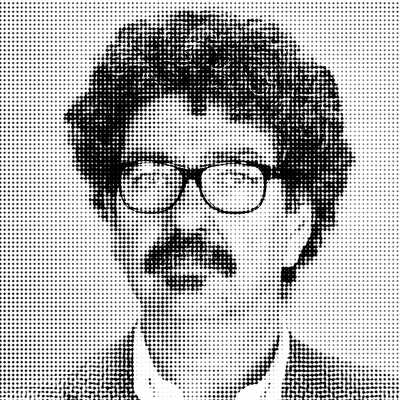
(This is Prof. Ada Palmer)
@wackJackle @adapalmer Doesnt apply to AI. AI represents a bypass of the scentific method and is therefor an abomination in the face of every bit of progress ever made.
-
Great video. Watch it!
(This is Prof. Ada Palmer)
@wackJackle @adapalmer full interview here: https://www.dwarkesh.com/p/ada-palmer
-
Great video. Watch it!
(This is Prof. Ada Palmer)
Nice, but I would say, there are other aspects of the late medieval media revolution, which are else or even more important as Gutenberg's press. One is simple: Paper. Paper instead of parchment as the main material to write on. Nobody would have needed a machine that prints many pages in minutes, when you need hours or days to produce the material for them.
1/x -
Nice, but I would say, there are other aspects of the late medieval media revolution, which are else or even more important as Gutenberg's press. One is simple: Paper. Paper instead of parchment as the main material to write on. Nobody would have needed a machine that prints many pages in minutes, when you need hours or days to produce the material for them.
1/xPaper was known in Europe since 12th century, but until around 1400 it was barely used, then the paper mills spread like mushrooms. And the reason for that was that many more people wrote down their everyday business, on cheap paper not on expensive parchment. Because they got the education to do it, what was another important aspect of this revolution.
2/x -
Paper was known in Europe since 12th century, but until around 1400 it was barely used, then the paper mills spread like mushrooms. And the reason for that was that many more people wrote down their everyday business, on cheap paper not on expensive parchment. Because they got the education to do it, what was another important aspect of this revolution.
2/xFrom mid-1300s on not only clergy and high nobility learned to read and write, also the lesser nobility, town citizens and even the free and more rich part of the rural folk went to schools. If Hans Luther, a miner's son from the small village Möhra in Thuringia, wouldn't have gone to school, he would never sent his son Martin to university and the history would look quite different - and the printing presses would had much less pamphlets to print.
3/3 -
@adapalmer My new crush. Watching the whole podcast now, sipping rye and drinking beer.
@GeePawHill @adapalmer Where IS the whole episode? I don't need to watch, just listen.
-
Great video. Watch it!
(This is Prof. Ada Palmer)
-
-
Great video. Watch it!
(This is Prof. Ada Palmer)
along these lines, the issues we're seeing with the "supercharged confusion" stemming from academia & industry embracing intentionally misleading terms like "AI" to describe almost any kind of statistical inference can be viewed not as a new thing, but as another iteration of the confusion that misuse of statistics have always generated. what's changed is that people used to dislike statistics, marginalizing its use. now repackaged in an easier-to-digest form, it expands
-
R relay@relay.infosec.exchange shared this topic