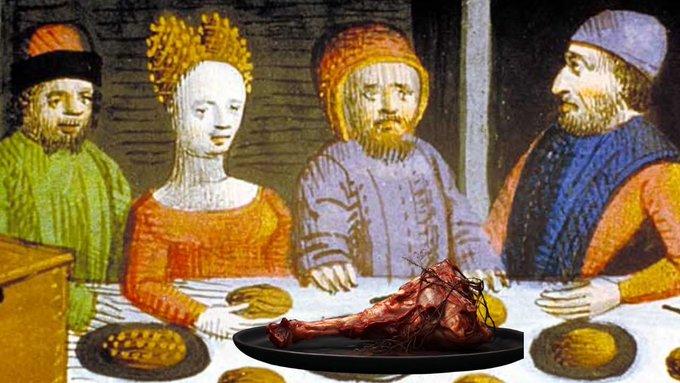
There's a widespread myth that medieval people used spices to cover up the taste of rotten meat.
-
There's a widespread myth that medieval people used spices to cover up the taste of rotten meat.
The whole story traces back to one book. In 1939, a scientist named J.C. Drummond published The Englishman's Food and suggested that medieval recipes were so heavily spiced because the meat was frequently tainted. No evidence. Just an assumption. One sentence in one book published 85 years ago.
@Dr_TheHistories #medieval #spices #food #history
-
There's a widespread myth that medieval people used spices to cover up the taste of rotten meat.
The whole story traces back to one book. In 1939, a scientist named J.C. Drummond published The Englishman's Food and suggested that medieval recipes were so heavily spiced because the meat was frequently tainted. No evidence. Just an assumption. One sentence in one book published 85 years ago.
@Dr_TheHistories #medieval #spices #food #history
And it has been repeated as fact in classrooms and documentaries ever since. Here is the major problem with it.
The only people who could afford spices in medieval Europe were the wealthy. Pepper from Asia cost roughly ten times what it costs today and saffron ran about 183 pence per pound in 15th century London. Gold was 240 pence per pound. Saffron was nearly as expensive as gold. The idea that someone wealthy enough to buy saffron was also eating rotten meat makes no logical sense.
-
There's a widespread myth that medieval people used spices to cover up the taste of rotten meat.
The whole story traces back to one book. In 1939, a scientist named J.C. Drummond published The Englishman's Food and suggested that medieval recipes were so heavily spiced because the meat was frequently tainted. No evidence. Just an assumption. One sentence in one book published 85 years ago.
@Dr_TheHistories #medieval #spices #food #history
Professor Paul Freedman of Yale, who wrote the definitive academic study on medieval spices, called the rotten meat theory a compelling but false idea that constitutes something of an urban legend, a story so instinctively attractive that mere fact seems unable to wipe it out.
Medieval people did not eat rotten meat because they had no reason to. Livestock was slaughtered when needed, not stockpiled. Fish ponds were kept on estates specifically so fish could be caught and eaten the same day.
-
And it has been repeated as fact in classrooms and documentaries ever since. Here is the major problem with it.
The only people who could afford spices in medieval Europe were the wealthy. Pepper from Asia cost roughly ten times what it costs today and saffron ran about 183 pence per pound in 15th century London. Gold was 240 pence per pound. Saffron was nearly as expensive as gold. The idea that someone wealthy enough to buy saffron was also eating rotten meat makes no logical sense.
There's a story about a tang Dynasty empress who didn't allow white pepper into the palace because it was as expensive as gold and they didn't want to be seen as extravagant and lose the mandate of heaven to lord over the people.
Between climate change, WW3, and just stupidity in leadership positions in general, I fear spices will become a luxury again, along with basic food.
-
There's a widespread myth that medieval people used spices to cover up the taste of rotten meat.
The whole story traces back to one book. In 1939, a scientist named J.C. Drummond published The Englishman's Food and suggested that medieval recipes were so heavily spiced because the meat was frequently tainted. No evidence. Just an assumption. One sentence in one book published 85 years ago.
@Dr_TheHistories #medieval #spices #food #history
@globalmuseum The truth is very probably of an utter banality: they used them because they were there and created exciting flavours.
-
Professor Paul Freedman of Yale, who wrote the definitive academic study on medieval spices, called the rotten meat theory a compelling but false idea that constitutes something of an urban legend, a story so instinctively attractive that mere fact seems unable to wipe it out.
Medieval people did not eat rotten meat because they had no reason to. Livestock was slaughtered when needed, not stockpiled. Fish ponds were kept on estates specifically so fish could be caught and eaten the same day.
@globalmuseum The version that I heard was that indigenous people came up with recipes like jerk to cover up rotten meat. Seemed a bit racist to me but yeah there’s another thread to pull
-
Professor Paul Freedman of Yale, who wrote the definitive academic study on medieval spices, called the rotten meat theory a compelling but false idea that constitutes something of an urban legend, a story so instinctively attractive that mere fact seems unable to wipe it out.
Medieval people did not eat rotten meat because they had no reason to. Livestock was slaughtered when needed, not stockpiled. Fish ponds were kept on estates specifically so fish could be caught and eaten the same day.
It's interesting that there is an unspoken idea that our forebears were so stupid that they couldn't make the connection between eating rotten meat and being sick afterward. Most animals are very good at avoiding food similar to what has sickened them previously.
Spices might be used to cover up a slightly unpleasant flavor, or a taste that suggests the food is about to spoil, but that situation is not necessarily the same as "rotten" food.
-
There's a widespread myth that medieval people used spices to cover up the taste of rotten meat.
The whole story traces back to one book. In 1939, a scientist named J.C. Drummond published The Englishman's Food and suggested that medieval recipes were so heavily spiced because the meat was frequently tainted. No evidence. Just an assumption. One sentence in one book published 85 years ago.
@Dr_TheHistories #medieval #spices #food #history
@globalmuseum Like viruses not being in the air. One book. One person's thought. That's it. Scientific evidence to the contrary be darned humans can't get over that first comment that gets traction.
It's very true that rumors make their way around the world before the truth can put its shoes on.
-
There's a widespread myth that medieval people used spices to cover up the taste of rotten meat.
The whole story traces back to one book. In 1939, a scientist named J.C. Drummond published The Englishman's Food and suggested that medieval recipes were so heavily spiced because the meat was frequently tainted. No evidence. Just an assumption. One sentence in one book published 85 years ago.
@Dr_TheHistories #medieval #spices #food #history
Yet another example of the #Chortlemuffin effect (as identified by Sonja Drimmer)
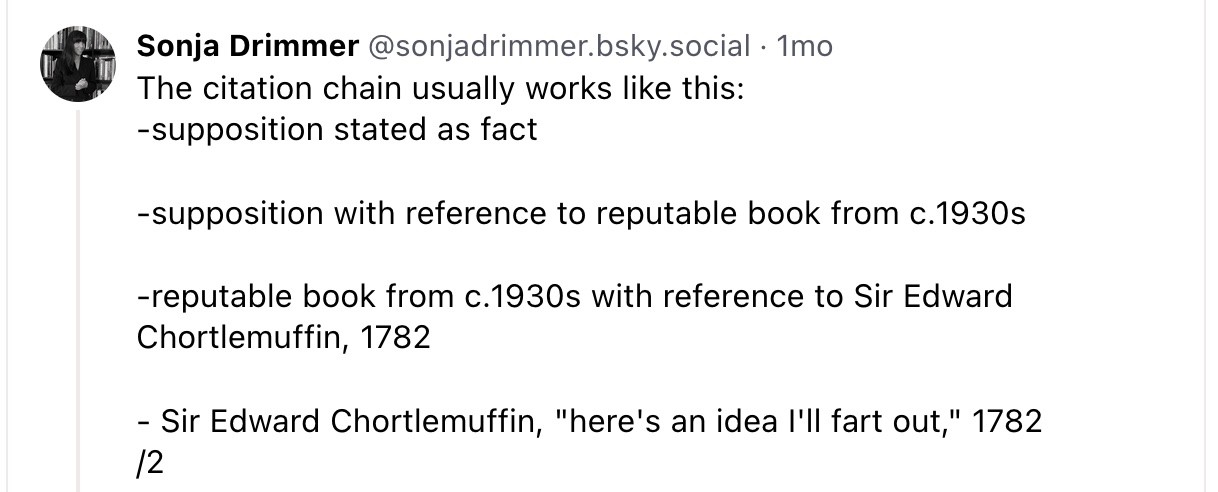
Now @christinkallama@hcommons (@christinkallama@mastodon.social)
Attached: 1 image On the #Chortlemuffin Effect, from its originator:

Mastodon (mastodon.social)
-
There's a story about a tang Dynasty empress who didn't allow white pepper into the palace because it was as expensive as gold and they didn't want to be seen as extravagant and lose the mandate of heaven to lord over the people.
Between climate change, WW3, and just stupidity in leadership positions in general, I fear spices will become a luxury again, along with basic food.
@chu that's a great story about white pepper... which I hadn't heard before. Thanks
-
R relay@relay.publicsquare.global shared this topic