#ClimateInflation, 2023 #Food edition
-
" When enough early adopters begin experimenting with regenerative techniques, others can take notice. Perceptions shift. A new normal becomes possible.
Yet these pro-change norms are rarely included in global models. This limits our ability to understand where transformation might take off, or how policy and community support could accelerate it. "
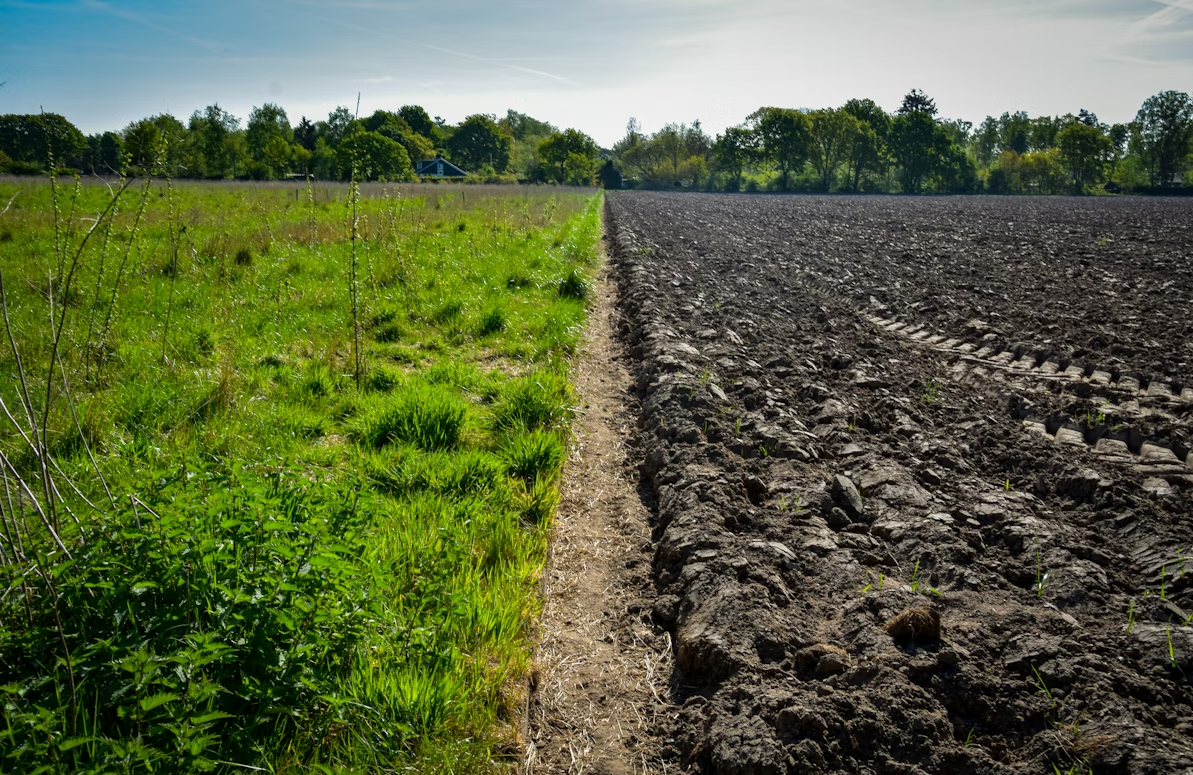
Why regenerative farming needs social change - Earth4All
The release of the new EAT-Lancet report on healthy, sustainable, and just food systems once more highlights a stark reality: agriculture is now

Earth4All (earth4all.life)
"As carbon dioxide increases, so does carbon uptake, and more carbon means more carbohydrates, like sugars and starch. However, critical nutrients such as iron, zinc, and protein all decreased. Our food might have more carbs but fewer essential nutrients."
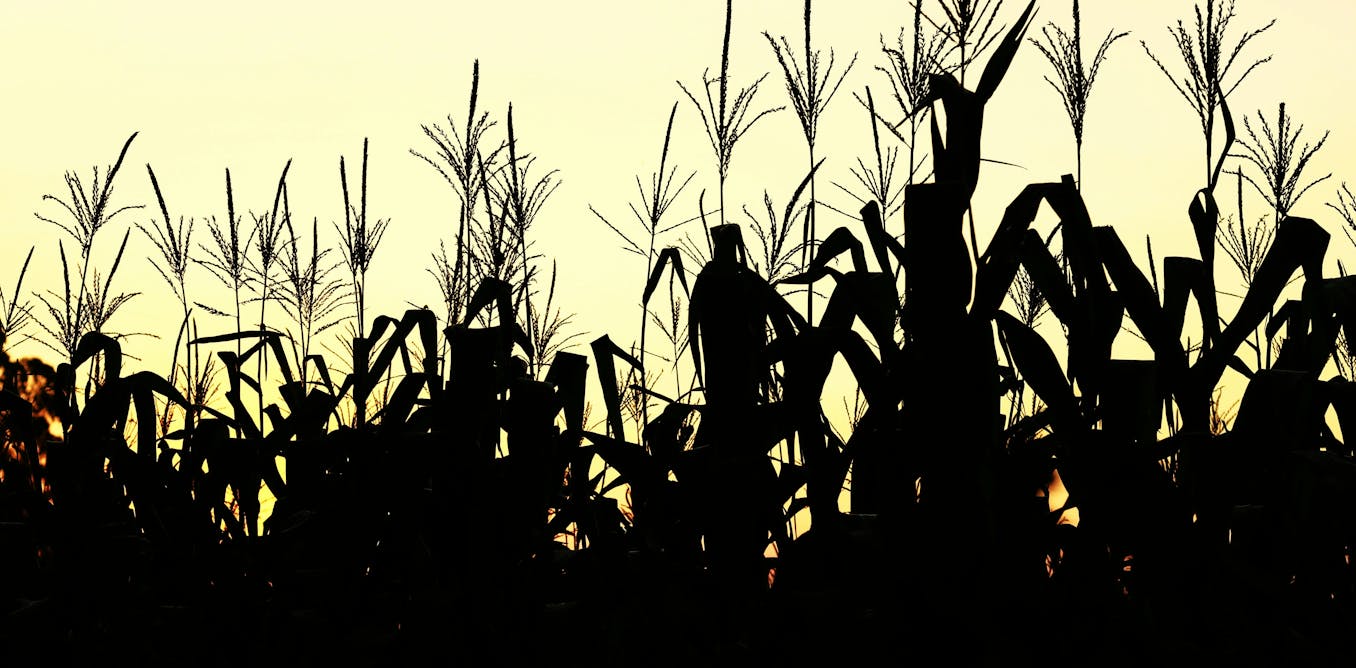
Climate change is affecting your food – and not in your favour
Our food is becoming more calorifc, less nutritious – and possibly more toxic.

The Conversation (theconversation.com)
-
"As carbon dioxide increases, so does carbon uptake, and more carbon means more carbohydrates, like sugars and starch. However, critical nutrients such as iron, zinc, and protein all decreased. Our food might have more carbs but fewer essential nutrients."
Climate change is affecting your food – and not in your favour
Our food is becoming more calorifc, less nutritious – and possibly more toxic.
The Conversation (theconversation.com)
“Climate change and weather extremes will drive down global caloric yields by about 24% under high future emissions.
“This would result in higher food prices, which in rich countries would feel like inflation. In poor countries, this would exacerbate food security problems and could negatively affect political stability.”
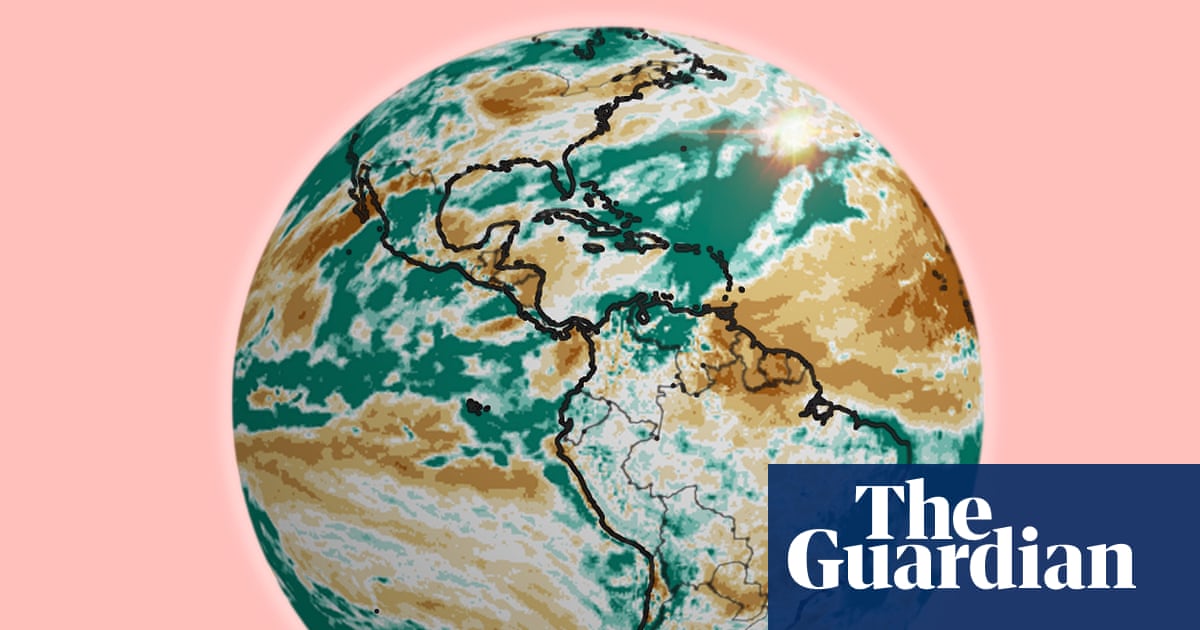
How climate breakdown is putting the world’s food in peril – in maps and charts
From floods to droughts, erratic weather patterns are affecting food security, with crop yields projected to fall if changes are not made
the Guardian (www.theguardian.com)
-
“Climate change and weather extremes will drive down global caloric yields by about 24% under high future emissions.
“This would result in higher food prices, which in rich countries would feel like inflation. In poor countries, this would exacerbate food security problems and could negatively affect political stability.”
How climate breakdown is putting the world’s food in peril – in maps and charts
From floods to droughts, erratic weather patterns are affecting food security, with crop yields projected to fall if changes are not made
the Guardian (www.theguardian.com)
For food security, one must look beyond the staples, and consider regional variability.
"Overall, India is producing record levels of paddy and wheat, but marginal production of other crops affects nutrient intake.
Agricultural districts most vulnerable to climate change are often in arid or semi-arid regions, coastal zones and rainfed areas. Protecting these from crop losses would not only secure food supply and livelihoods but also ensure better health."

Changing Climate Is Impacting India’s Nutrition Security
Changing Climate Is Impacting India’s Nutrition Security
(www.indiaspend.com)
-
For food security, one must look beyond the staples, and consider regional variability.
"Overall, India is producing record levels of paddy and wheat, but marginal production of other crops affects nutrient intake.
Agricultural districts most vulnerable to climate change are often in arid or semi-arid regions, coastal zones and rainfed areas. Protecting these from crop losses would not only secure food supply and livelihoods but also ensure better health."
Changing Climate Is Impacting India’s Nutrition Security
Changing Climate Is Impacting India’s Nutrition Security
(www.indiaspend.com)
CO2 "plant food"? -- Not so fast.
"The results, she said, were a shock: although crop yields increase, they become less nutrient-dense. While zinc levels in particular drop, lead levels increase."
“We aren’t seeing a simple dilution effect but rather a complete shift in the composition of our foods … This also raises the question of whether we should adjust our diets in some way, or how we grow or produce our food.”
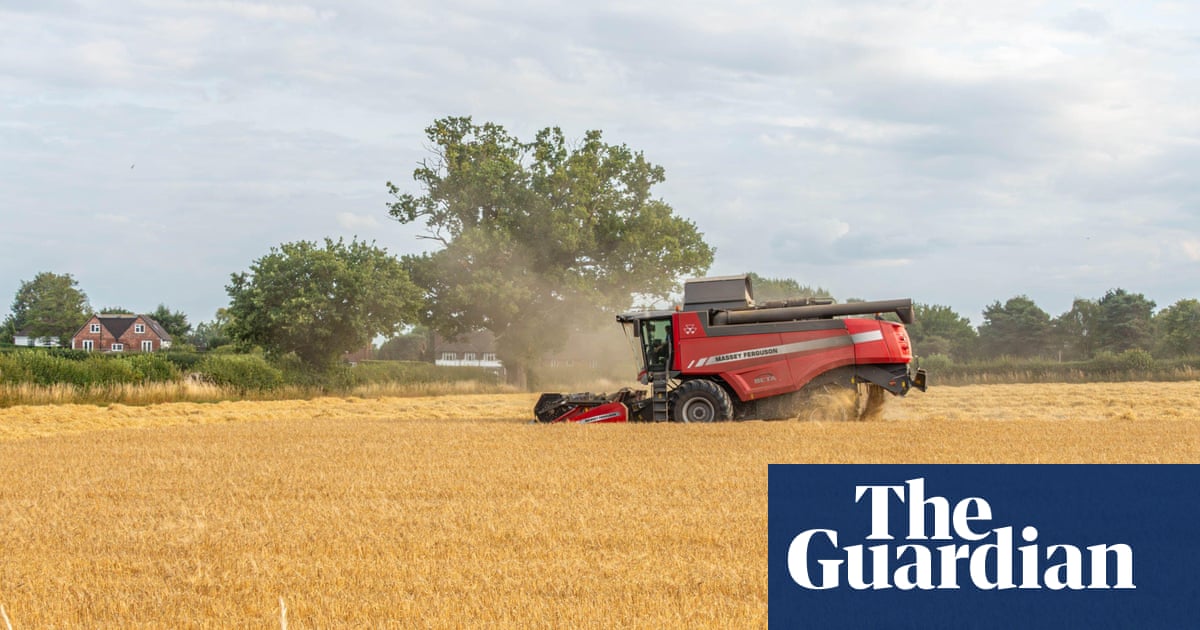
Food becoming more calorific but less nutritious due to rising carbon dioxide
Researchers noticed ‘dramatic’ changes in nutrients in crops, including drop in zinc and rise in lead
the Guardian (www.theguardian.com)
-
CO2 "plant food"? -- Not so fast.
"The results, she said, were a shock: although crop yields increase, they become less nutrient-dense. While zinc levels in particular drop, lead levels increase."
“We aren’t seeing a simple dilution effect but rather a complete shift in the composition of our foods … This also raises the question of whether we should adjust our diets in some way, or how we grow or produce our food.”
Food becoming more calorific but less nutritious due to rising carbon dioxide
Researchers noticed ‘dramatic’ changes in nutrients in crops, including drop in zinc and rise in lead
the Guardian (www.theguardian.com)
‘Borrowed time’: crop pests and food losses supercharged by climate crisis
"Researchers said the world was lucky to have so far avoided a major shock and was living on borrowed time, with action needed to diversify crops and boost natural predators of pests.
The key global crops, wheat, rice and maize, are expected to see the losses to pests increase by about 46%, 19% and 31% respectively when global heating reaches 2C, the scientists said."

‘Borrowed time’: crop pests and food losses supercharged by climate crisis
Heating means pests breeding and spreading faster, warn scientists, with simplified current food system already vulnerable
the Guardian (www.theguardian.com)
-
‘Borrowed time’: crop pests and food losses supercharged by climate crisis
"Researchers said the world was lucky to have so far avoided a major shock and was living on borrowed time, with action needed to diversify crops and boost natural predators of pests.
The key global crops, wheat, rice and maize, are expected to see the losses to pests increase by about 46%, 19% and 31% respectively when global heating reaches 2C, the scientists said."
‘Borrowed time’: crop pests and food losses supercharged by climate crisis
Heating means pests breeding and spreading faster, warn scientists, with simplified current food system already vulnerable
the Guardian (www.theguardian.com)
"Unless urgent action is taken, the number of Somalis in need of humanitarian aid could reach 7.1 million by April this year.
This because the situation is expected to worsen during the peak of the dry season, from mid-December to March. Drought conditions worsened this year after failed rains in Somali regions, with some areas along rivers reporting a reduction in river flow, which has further impacted crop production reliant on rainfall and river water."
-
"Unless urgent action is taken, the number of Somalis in need of humanitarian aid could reach 7.1 million by April this year.
This because the situation is expected to worsen during the peak of the dry season, from mid-December to March. Drought conditions worsened this year after failed rains in Somali regions, with some areas along rivers reporting a reduction in river flow, which has further impacted crop production reliant on rainfall and river water."
"Climate change is taking a toll on Karnataka's agriculture sector, with localised floods and droughts causing significant crop losses. Over the past five years, farmers have received Rs 7,079 crore (USD 772 million) in compensation for these losses.
Agriculture Department data shows that the number of farmers availing crop insurance has doubled over this period, while compensation payouts have tripled, highlighting the increasing vulnerability of farming."

Climate shocks trigger massive crop losses in Karnataka, insurance claims soar
Crop Insurance Karnataka: Explore how climate change impacts crop insurance and compensation in Karnataka's agriculture sector.
Deccan Herald (www.deccanherald.com)
-
"Climate change is taking a toll on Karnataka's agriculture sector, with localised floods and droughts causing significant crop losses. Over the past five years, farmers have received Rs 7,079 crore (USD 772 million) in compensation for these losses.
Agriculture Department data shows that the number of farmers availing crop insurance has doubled over this period, while compensation payouts have tripled, highlighting the increasing vulnerability of farming."
Climate shocks trigger massive crop losses in Karnataka, insurance claims soar
Crop Insurance Karnataka: Explore how climate change impacts crop insurance and compensation in Karnataka's agriculture sector.
Deccan Herald (www.deccanherald.com)
"Extreme weather in the global coffee-growing regions (“the bean belt”) is at least partly to blame for recent coffee price surges.
Coffee plants thrive under specific temperature and rainfall ranges. Suboptimal conditions can harm the quality and quantity of bean harvests.
Climate change is bringing more excessive heat to major coffee-growing regions, according to a new analysis using Climate Central’s Climate Shift Index."
More Coffee-Harming Heat Due to Carbon Pollution | Climate Central
Coffee is one of the most popular beverages worldwide — but climate change is heating up coffee-growing regions, making it harder to produce and more expensive to buy.

(www.climatecentral.org)
-
"Extreme weather in the global coffee-growing regions (“the bean belt”) is at least partly to blame for recent coffee price surges.
Coffee plants thrive under specific temperature and rainfall ranges. Suboptimal conditions can harm the quality and quantity of bean harvests.
Climate change is bringing more excessive heat to major coffee-growing regions, according to a new analysis using Climate Central’s Climate Shift Index."
More Coffee-Harming Heat Due to Carbon Pollution | Climate Central
Coffee is one of the most popular beverages worldwide — but climate change is heating up coffee-growing regions, making it harder to produce and more expensive to buy.
(www.climatecentral.org)
"The model found that, if the world continues to emit a high level of greenhouse gas emissions, over 1.1 billion people globally, including more than 600 million children, will have been exposed to at least one severe food crisis by 2100.
[In] Africa with more than 170 million people [are] predicted to be exposed to food crises - the worst of which would be starvation - in 2099 alone – a number equivalent to the current combined population of Italy, France, and Spain."
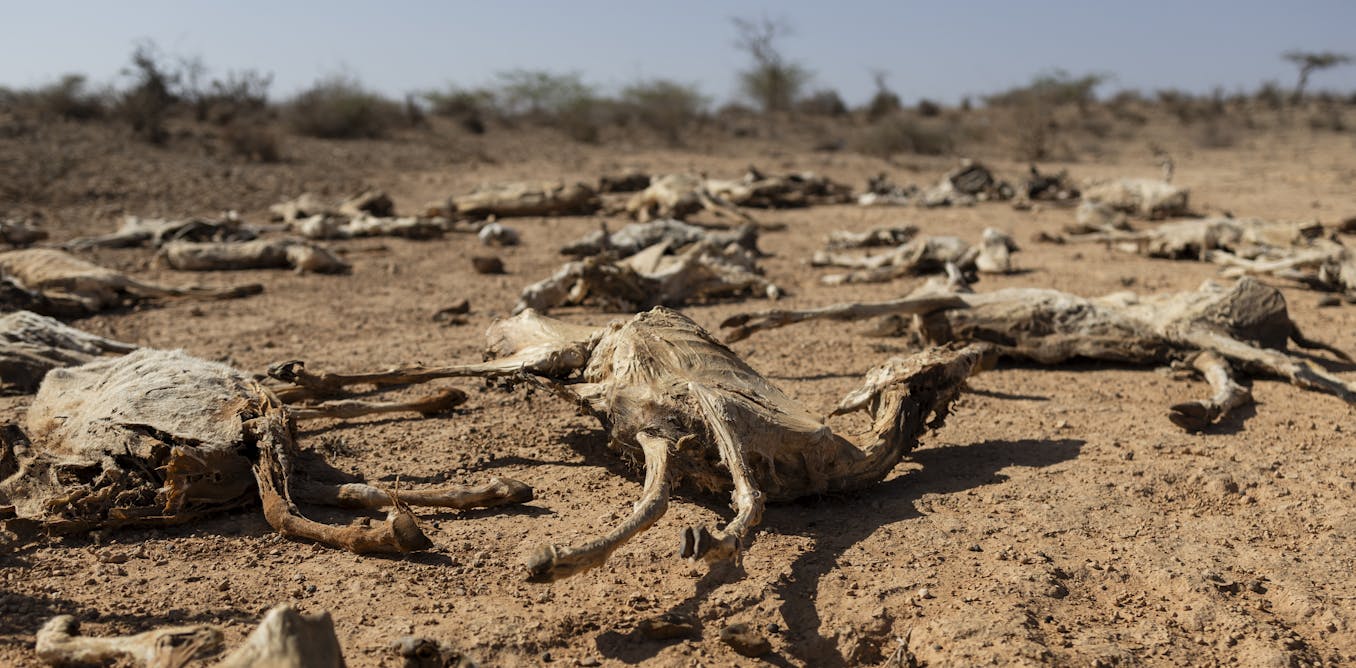
Climate change could expose 1.1 billion people to hunger by 2100 (but there’s good news too) – AI modelling study
Without rapid cuts to fossil fuels and a shift to clean energy, climate change could drive over a billion into hunger by 2100, hitting Africa hard.
The Conversation (theconversation.com)
-
"The model found that, if the world continues to emit a high level of greenhouse gas emissions, over 1.1 billion people globally, including more than 600 million children, will have been exposed to at least one severe food crisis by 2100.
[In] Africa with more than 170 million people [are] predicted to be exposed to food crises - the worst of which would be starvation - in 2099 alone – a number equivalent to the current combined population of Italy, France, and Spain."
Climate change could expose 1.1 billion people to hunger by 2100 (but there’s good news too) – AI modelling study
Without rapid cuts to fossil fuels and a shift to clean energy, climate change could drive over a billion into hunger by 2100, hitting Africa hard.
The Conversation (theconversation.com)
Pakistan: Harvest of pulses significantly decreased due to low returns, export restrictions -- and climate change
https://mastodon.social/@Snoro/116116699598224092
#ClimateInflation -
Pakistan: Harvest of pulses significantly decreased due to low returns, export restrictions -- and climate change
https://mastodon.social/@Snoro/116116699598224092
#ClimateInflationFood insecurity
"One shock could spark social unrest and even food riots in the UK, according to dozens of the country’s top food experts, because chronic issues have left the food system a “tinderbox”.
The group first identified a series of issues that are making access to food vulnerable in the UK, including the climate crisis, low incomes, poor farming policy and fragile just-in-time supply chains. These have left the UK dangerously exposed, the researchers said."

‘Tinderbox’ UK may be one shock away from food riots, experts say
Weakened food security could tip into unrest after a cyber-attack, extreme weather or conflict, analysis finds
the Guardian (www.theguardian.com)
-
Food insecurity
"One shock could spark social unrest and even food riots in the UK, according to dozens of the country’s top food experts, because chronic issues have left the food system a “tinderbox”.
The group first identified a series of issues that are making access to food vulnerable in the UK, including the climate crisis, low incomes, poor farming policy and fragile just-in-time supply chains. These have left the UK dangerously exposed, the researchers said."
‘Tinderbox’ UK may be one shock away from food riots, experts say
Weakened food security could tip into unrest after a cyber-attack, extreme weather or conflict, analysis finds
the Guardian (www.theguardian.com)
Persistent rains devastate crops in Spain, Portugal, France, and Morocco.
This will have implications for food supply in the UK and in northern Europe.
-
Persistent rains devastate crops in Spain, Portugal, France, and Morocco.
This will have implications for food supply in the UK and in northern Europe.
"India recorded about 118 days per year (between 2021 and 2025) above 30 degrees celsius, the temperature threshold beyond which the heat harms the coffee plants. Roughly 30 of those days were driven by climate change, the analysis shows."
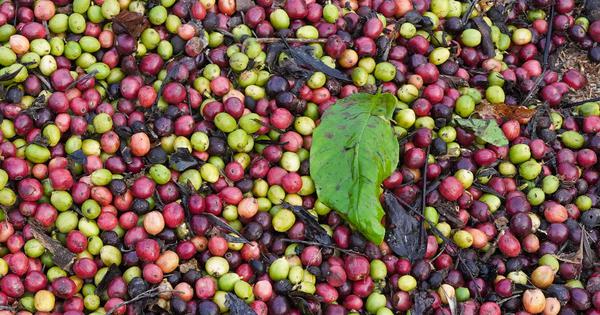
In India’s coffee-growing belt, climate change has added at least 30 days of dangerously warm days
Temperatures above 30 degrees celsius reduce yields, affect bean quality and increase plant stress.

Scroll.in (scroll.in)
-
"India recorded about 118 days per year (between 2021 and 2025) above 30 degrees celsius, the temperature threshold beyond which the heat harms the coffee plants. Roughly 30 of those days were driven by climate change, the analysis shows."
In India’s coffee-growing belt, climate change has added at least 30 days of dangerously warm days
Temperatures above 30 degrees celsius reduce yields, affect bean quality and increase plant stress.
Scroll.in (scroll.in)
"Livestock farmers and other stakeholders have called on the federal government to urgently address the growing impact of climate change on Nigeria’s livestock sector, warning that extreme weather conditions, drought and rising feed costs are worsening productivity and threatening national meat supply."
-
"Livestock farmers and other stakeholders have called on the federal government to urgently address the growing impact of climate change on Nigeria’s livestock sector, warning that extreme weather conditions, drought and rising feed costs are worsening productivity and threatening national meat supply."
"Flooding is the most frequent, most lethal, and most economically destructive natural hazard in Nigeria, its frequency and severity are increasing measurably under anthropogenic climate change.
The stakes of inadequate flood management are extraordinary: floods destroy livelihoods, contaminate water supplies, trigger disease outbreaks, devastate agricultural output that accounts for over 31% of GDP, and deepen the poverty of communities already living on the margins."
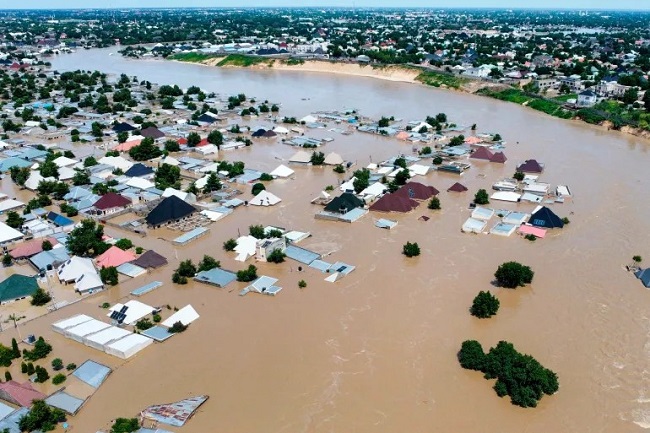
Extreme flooding and intensifying rainfall variability in Nigeria - EnviroNews - latest environment news, climate change, renewable energy
Synopsis Climate change and natural climate variability are the major causes of weather extremes such as heavy rainfall. There have been reports from multiple ecological zones in Nigeria, indicating rainfall events in December 2025 through February 2026. These situations hint at an increasing crisis of rainfall variability that is imposing an increasingly severe humanitarian, economic, […]

EnviroNews - latest environment news, climate change, renewable energy (www.environewsnigeria.com)
-
"Flooding is the most frequent, most lethal, and most economically destructive natural hazard in Nigeria, its frequency and severity are increasing measurably under anthropogenic climate change.
The stakes of inadequate flood management are extraordinary: floods destroy livelihoods, contaminate water supplies, trigger disease outbreaks, devastate agricultural output that accounts for over 31% of GDP, and deepen the poverty of communities already living on the margins."
Extreme flooding and intensifying rainfall variability in Nigeria - EnviroNews - latest environment news, climate change, renewable energy
Synopsis Climate change and natural climate variability are the major causes of weather extremes such as heavy rainfall. There have been reports from multiple ecological zones in Nigeria, indicating rainfall events in December 2025 through February 2026. These situations hint at an increasing crisis of rainfall variability that is imposing an increasingly severe humanitarian, economic, […]
EnviroNews - latest environment news, climate change, renewable energy (www.environewsnigeria.com)
This is not a consequence of climate change, but synthetic fertilisers are a fossil fuel product.
"Oil powers cars. Nitrogen powers crops. If the strait of Hormuz closes, the most consequential price may not be Brent crude but the cost of feeding the world.
A sustained disruption of traffic through Hormuz ... would also represent a fertiliser shock (where prices go up dramatically and supply goes down) – and, by extension, a direct risk to global food security."

How the Iran war could create a ‘fertiliser shock’ – an often ignored global risk to food prices and farming
Without this form of fertiliser, crops will not produce yields on which the world’s population depends, leaving people starving.
The Conversation (theconversation.com)
-
This is not a consequence of climate change, but synthetic fertilisers are a fossil fuel product.
"Oil powers cars. Nitrogen powers crops. If the strait of Hormuz closes, the most consequential price may not be Brent crude but the cost of feeding the world.
A sustained disruption of traffic through Hormuz ... would also represent a fertiliser shock (where prices go up dramatically and supply goes down) – and, by extension, a direct risk to global food security."
How the Iran war could create a ‘fertiliser shock’ – an often ignored global risk to food prices and farming
Without this form of fertiliser, crops will not produce yields on which the world’s population depends, leaving people starving.
The Conversation (theconversation.com)
"The haul of lobsters, Maine’s best known export and a key piece of the state’s identity and culture, has declined every year since 2021, and some scientists have cited as a reason warming oceans that spur migration to Canadian waters."
https://www.canoncitydailyrecord.com/2026/03/06/maine-lobster-catch/
#ClimateInflation -
"The haul of lobsters, Maine’s best known export and a key piece of the state’s identity and culture, has declined every year since 2021, and some scientists have cited as a reason warming oceans that spur migration to Canadian waters."
https://www.canoncitydailyrecord.com/2026/03/06/maine-lobster-catch/
#ClimateInflationFar more countries face critical food insecurity if world heats up by 2C, analysis shows
"Food systems of low-income nations projected to deteriorate seven times as fast as those of wealthy ones.
“High-income countries will experience massive agricultural shocks, but they have the wealth to buy their way out of a domestic crop failure on the global market,” Bharadwaj said."
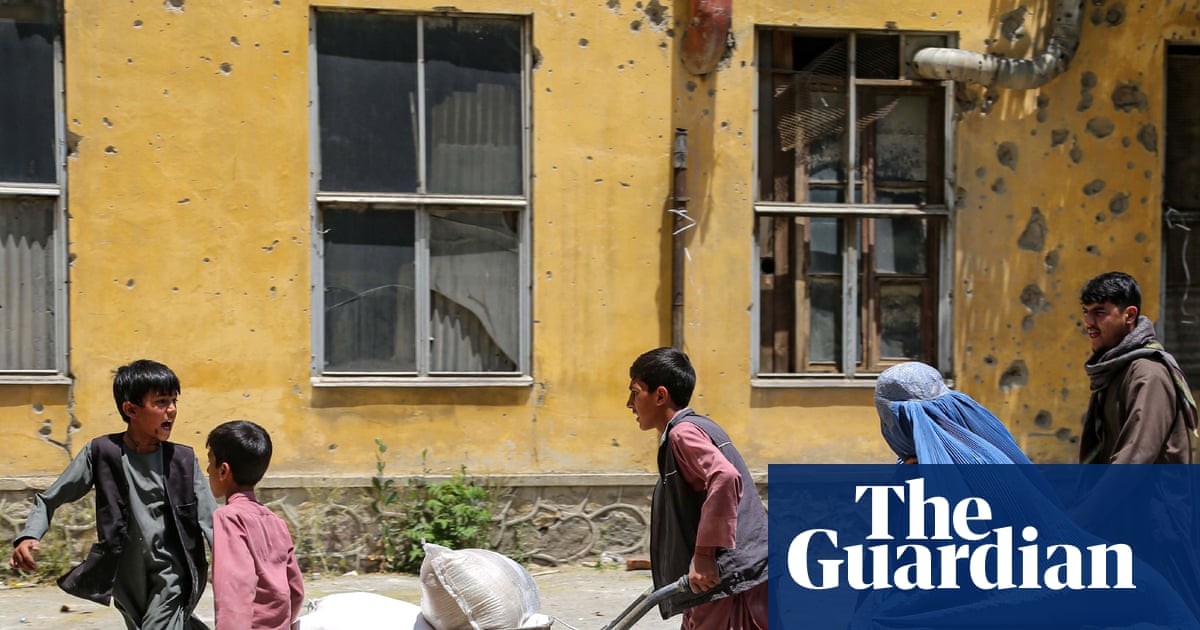
Far more countries face critical food insecurity if world heats up by 2C, analysis shows
Exclusive: Food systems of low-income nations projected to deteriorate seven times as fast as those of wealthy ones
the Guardian (www.theguardian.com)
-
Far more countries face critical food insecurity if world heats up by 2C, analysis shows
"Food systems of low-income nations projected to deteriorate seven times as fast as those of wealthy ones.
“High-income countries will experience massive agricultural shocks, but they have the wealth to buy their way out of a domestic crop failure on the global market,” Bharadwaj said."
Far more countries face critical food insecurity if world heats up by 2C, analysis shows
Exclusive: Food systems of low-income nations projected to deteriorate seven times as fast as those of wealthy ones
the Guardian (www.theguardian.com)
"South Punjab’s world-famous mango industry is facing a serious setback this season, as climate change has impacted the production of Summer Bahisht Chaunsa, one of the most prized mango varieties in Pakistan.
According to local growers, the first week of March brought an unexpected rise in temperature, which disrupted the natural flowering and fruit-setting process."
https://borneobulletin.com.bn/climate-change-hits-pakistans-world-famous-mango-produce/
#ClimateInflation -
"South Punjab’s world-famous mango industry is facing a serious setback this season, as climate change has impacted the production of Summer Bahisht Chaunsa, one of the most prized mango varieties in Pakistan.
According to local growers, the first week of March brought an unexpected rise in temperature, which disrupted the natural flowering and fruit-setting process."
https://borneobulletin.com.bn/climate-change-hits-pakistans-world-famous-mango-produce/
#ClimateInflationRabobank report:
"The analysis says that 8% of current arabica growing areas globally are already classified as climatically unsuitable, while that figure could rise to about 20% over the next 25 years under the report’s warming scenario.An [earlier] analysis from Climate Central found that coffee-growing regions in major producing countries have been exposed to significantly more coffee-harming heat in recent years because of climate change."