Skip to content
  • Categories
  • Recent
  • Tags
  • Popular
  • World
  • Users
  • Groups
Skins
  • Light
  • Brite
  • Cerulean
  • Cosmo
  • Flatly
  • Journal
  • Litera
  • Lumen
  • Lux
  • Materia
  • Minty
  • Morph
  • Pulse
  • Sandstone
  • Simplex
  • Sketchy
  • Spacelab
  • United
  • Yeti
  • Zephyr
  • Dark
  • Cyborg
  • Darkly
  • Quartz
  • Slate
  • Solar
  • Superhero
  • Vapor

  • Default (Cyborg)
  • No Skin
Collapse
Brand Logo

CIRCLE WITH A DOT

  1. Home
  2. Uncategorized
  3. #ScienceFiction is informed by #Science

#ScienceFiction is informed by #Science
Scheduled Pinned Locked Moved Uncategorized
sciencefictionsciencestarwarsdaymaythe4thmaythe4thbewith
41 Posts 13 Posters 7 Views
  • Oldest to Newest
  • Newest to Oldest
  • Most Votes
Reply
  • Reply as topic
Log in to reply
This topic has been deleted. Only users with topic management privileges can see it.
  • benroyce@mastodon.socialB benroyce@mastodon.social

    @martinvermeer @rozeboosje

    so like the pleiades!

    also seven sisters

    rozeboosje@masto.aiR This user is from outside of this forum
    rozeboosje@masto.aiR This user is from outside of this forum
    rozeboosje@masto.ai
    wrote last edited by
    #30

    @benroyce @martinvermeer At least one of them is a blue giant so yeah, it's young and it won't be long lived ...

    martinvermeer@fediscience.orgM 1 Reply Last reply
    0
    • nomenloony@nomenloony.comN nomenloony@nomenloony.com

      @benroyce I always remember reading "our sun is a very average yellow star" and now we say "our sun is an uncommon lone star, unlike most stars which exist in multiple systems"

      nuintari@mastodon.bsd.cafeN This user is from outside of this forum
      nuintari@mastodon.bsd.cafeN This user is from outside of this forum
      nuintari@mastodon.bsd.cafe
      wrote last edited by
      #31

      @nomenloony @benroyce Telescopes got muuuch better.

      And we collectivly took a step into a larger world.

      1 Reply Last reply
      0
      • benroyce@mastodon.socialB benroyce@mastodon.social

        @martinvermeer @rozeboosje

        so like the pleiades!

        also seven sisters

        martinvermeer@fediscience.orgM This user is from outside of this forum
        martinvermeer@fediscience.orgM This user is from outside of this forum
        martinvermeer@fediscience.org
        wrote last edited by
        #32

        @benroyce @rozeboosje Yep. On long-exposure photographs, also the Pleiades show a dust nebula containing the cluster, and illuminated by it in reflected light.

        The Pleiades are a bit older but not very old, some 100 million years. How do we know? From its colour-magnitude diagram. The cluster contains hot, bright blue stars that are still burning hydrogen, which would have branched off and turned into red giants burning helium, if the cluster were older.

        Link Preview Image
        1 Reply Last reply
        0
        • rozeboosje@masto.aiR rozeboosje@masto.ai

          @benroyce @martinvermeer At least one of them is a blue giant so yeah, it's young and it won't be long lived ...

          martinvermeer@fediscience.orgM This user is from outside of this forum
          martinvermeer@fediscience.orgM This user is from outside of this forum
          martinvermeer@fediscience.org
          wrote last edited by
          #33

          @rozeboosje @benroyce They are all B type, but you mean component A which is B3V?

          rozeboosje@masto.aiR 1 Reply Last reply
          0
          • benroyce@mastodon.socialB benroyce@mastodon.social

            #ScienceFiction is informed by #Science

            And Science in turn stares at Science Fiction, nods, and smiles broadly

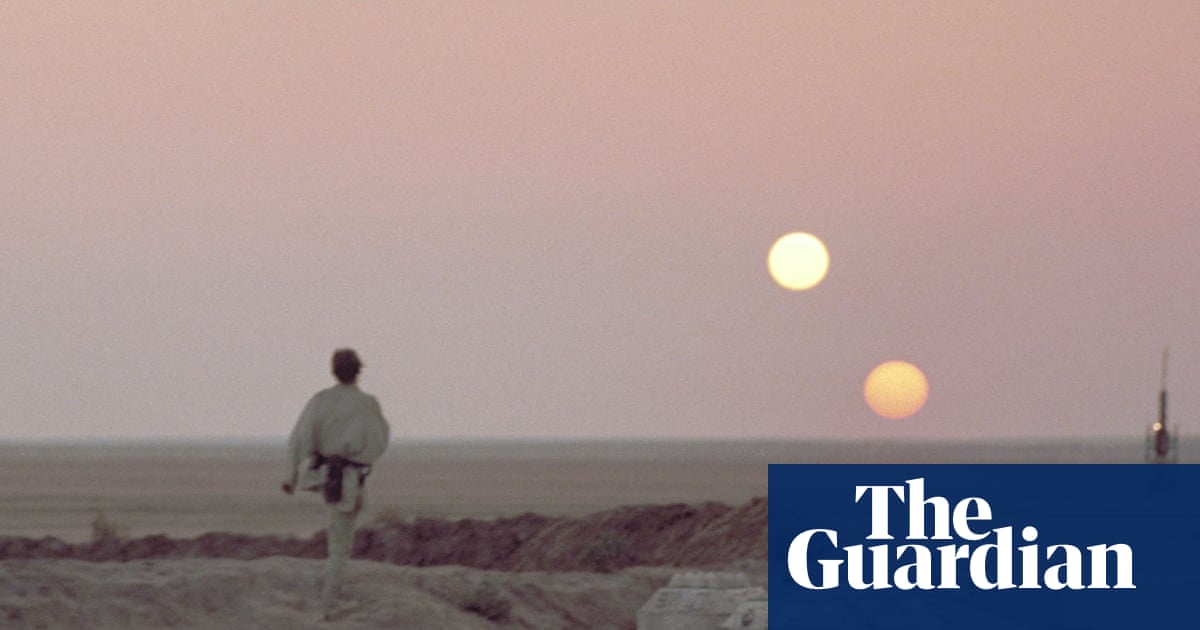
            "On ‘ #StarWarsDay’, researchers more than double the number of potential known ‘circumbinary’ planets like the fictional Tatooine, home to Luke Skywalker"

            A circumbinary planet is a planet that orbits two suns

            More than half of all stars exist in binary star systems or star systems with even more than two stars
            Link Preview Image
            Scientists discover 27 potential new planets that orbit two stars in solar systems far, far away

            On ‘Star Wars day’, researchers more than double the number of potential known ‘circumbinary’ planets like the fictional Tatooine, home to Luke Skywalker

            favicon

            the Guardian (www.theguardian.com)

            #MayThe4th #MayThe4thBeWithYou

            scrimshaw9@mastodon.socialS This user is from outside of this forum
            scrimshaw9@mastodon.socialS This user is from outside of this forum
            scrimshaw9@mastodon.social
            wrote last edited by
            #34

            @benroyce Star Wars is science fiction? I always thought it was consumerism and merchandising based on awful fantasy movies with a weak allegory of the Vietnam conflict and ripped off Authurian legend, annoying characters and bad romance writing.

            benroyce@mastodon.socialB 1 Reply Last reply
            0
            • scrimshaw9@mastodon.socialS scrimshaw9@mastodon.social

              @benroyce Star Wars is science fiction? I always thought it was consumerism and merchandising based on awful fantasy movies with a weak allegory of the Vietnam conflict and ripped off Authurian legend, annoying characters and bad romance writing.

              benroyce@mastodon.socialB This user is from outside of this forum
              benroyce@mastodon.socialB This user is from outside of this forum
              benroyce@mastodon.social
              wrote last edited by
              #35

              @Scrimshaw9

              well, truthfully, it's more space opera than science fiction

              1 Reply Last reply
              0
              • rozeboosje@masto.aiR rozeboosje@masto.ai

                @benroyce I read an article recently that explained that such systems are inherently unstable and such planets are bound to either end up being swallowed by one of the stars or yeeted out of the system. But do you think I can find it now? Can I 'eck.... sorry

                rupert@mastodon.nzR This user is from outside of this forum
                rupert@mastodon.nzR This user is from outside of this forum
                rupert@mastodon.nz
                wrote last edited by
                #36

                @rozeboosje @benroyce Technically our solar system is unstable, too.

                1 Reply Last reply
                0
                • benroyce@mastodon.socialB benroyce@mastodon.social

                  @ChuckMcManis @johnlogic

                  it's probably the difference between

                  "there's one... and there's one"

                  and

                  "holy shit, in this field of view... that's a lot"

                  😅

                  chuckmcmanis@chaos.socialC This user is from outside of this forum
                  chuckmcmanis@chaos.socialC This user is from outside of this forum
                  chuckmcmanis@chaos.social
                  wrote last edited by
                  #37

                  @benroyce
                  Well if there are a lot of planets it's gonna put a big crimp in interstellar travel. 😉
                  @johnlogic

                  benroyce@mastodon.socialB 1 Reply Last reply
                  0
                  • martinvermeer@fediscience.orgM martinvermeer@fediscience.org

                    @rozeboosje @benroyce They are all B type, but you mean component A which is B3V?

                    rozeboosje@masto.aiR This user is from outside of this forum
                    rozeboosje@masto.aiR This user is from outside of this forum
                    rozeboosje@masto.ai
                    wrote last edited by
                    #38

                    @martinvermeer @benroyce possibly.... I lost the link where I read that 😬

                    1 Reply Last reply
                    0
                    • chuckmcmanis@chaos.socialC chuckmcmanis@chaos.social

                      @benroyce
                      Well if there are a lot of planets it's gonna put a big crimp in interstellar travel. 😉
                      @johnlogic

                      benroyce@mastodon.socialB This user is from outside of this forum
                      benroyce@mastodon.socialB This user is from outside of this forum
                      benroyce@mastodon.social
                      wrote last edited by
                      #39

                      @ChuckMcManis @johnlogic

                      on the contrary:

                      if we map it well enough, think of the gravitational slingshots

                      we always talk about the need to go straight line and have constant thrust over huge distances (and then braking)

                      but what if we had amazing maps, and were able to plot courses on gravitational slingshots one after the other over huge distances?

                      it would require exquisite mapping, even little objects would kill

                      and it would require extreme computation, as all these things are moving

                      johnlogic@sfba.socialJ 1 Reply Last reply
                      0
                      • R relay@relay.publicsquare.global shared this topic
                      • benroyce@mastodon.socialB benroyce@mastodon.social

                        @ChuckMcManis @johnlogic

                        on the contrary:

                        if we map it well enough, think of the gravitational slingshots

                        we always talk about the need to go straight line and have constant thrust over huge distances (and then braking)

                        but what if we had amazing maps, and were able to plot courses on gravitational slingshots one after the other over huge distances?

                        it would require exquisite mapping, even little objects would kill

                        and it would require extreme computation, as all these things are moving

                        johnlogic@sfba.socialJ This user is from outside of this forum
                        johnlogic@sfba.socialJ This user is from outside of this forum
                        johnlogic@sfba.social
                        wrote last edited by
                        #40

                        @benroyce @ChuckMcManis

                        The computation for gravitational slingshots shouldn't be very extreme. It's straightforward, but would require a fair amount of data. Once out of a star's system, it should be easier to slingshot around stars than planets.

                        benroyce@mastodon.socialB 1 Reply Last reply
                        0
                        • johnlogic@sfba.socialJ johnlogic@sfba.social

                          @benroyce @ChuckMcManis

                          The computation for gravitational slingshots shouldn't be very extreme. It's straightforward, but would require a fair amount of data. Once out of a star's system, it should be easier to slingshot around stars than planets.

                          benroyce@mastodon.socialB This user is from outside of this forum
                          benroyce@mastodon.socialB This user is from outside of this forum
                          benroyce@mastodon.social
                          wrote last edited by
                          #41

                          @johnlogic @ChuckMcManis

                          That would be pretty neat if we could ping pong our way somewhere else doing that. Assuming there were enough rogue planets sitting there in the dark. Below a certain density it doesn't offer much but above a certain density it would be a goldmine. I would assume we could gain speed with each slingshot


                          1 Reply Last reply
                          0
                          Reply
                          • Reply as topic
                          Log in to reply
                          • Oldest to Newest
                          • Newest to Oldest
                          • Most Votes


                          • Login

                          • Login or register to search.
                          • First post
                            Last post
                          0
                          • Categories
                          • Recent
                          • Tags
                          • Popular
                          • World
                          • Users
                          • Groups