Skip to content
  • Categories
  • Recent
  • Tags
  • Popular
  • World
  • Users
  • Groups
Skins
  • Light
  • Brite
  • Cerulean
  • Cosmo
  • Flatly
  • Journal
  • Litera
  • Lumen
  • Lux
  • Materia
  • Minty
  • Morph
  • Pulse
  • Sandstone
  • Simplex
  • Sketchy
  • Spacelab
  • United
  • Yeti
  • Zephyr
  • Dark
  • Cyborg
  • Darkly
  • Quartz
  • Slate
  • Solar
  • Superhero
  • Vapor

  • Default (Cyborg)
  • No Skin
Collapse
Brand Logo

CIRCLE WITH A DOT

  1. Home
  2. Uncategorized
  3. #ScienceFiction is informed by #Science

#ScienceFiction is informed by #Science
Scheduled Pinned Locked Moved Uncategorized
sciencefictionsciencestarwarsdaymaythe4thmaythe4thbewith
41 Posts 13 Posters 7 Views
  • Oldest to Newest
  • Newest to Oldest
  • Most Votes
Reply
  • Reply as topic
Log in to reply
This topic has been deleted. Only users with topic management privileges can see it.
  • benroyce@mastodon.socialB benroyce@mastodon.social

    #ScienceFiction is informed by #Science

    And Science in turn stares at Science Fiction, nods, and smiles broadly

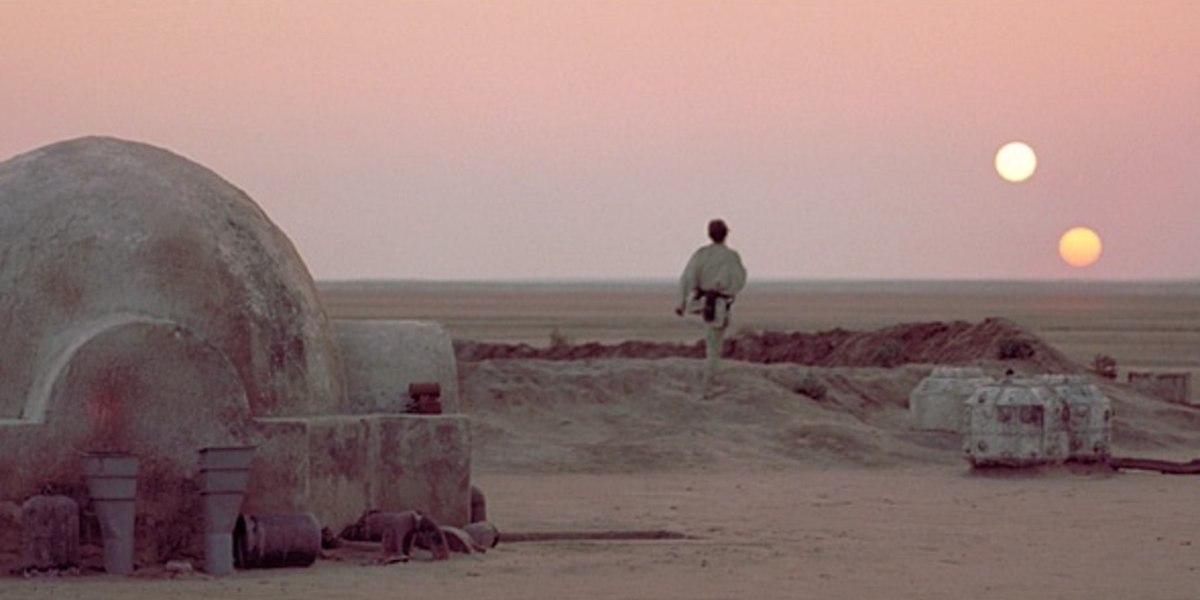
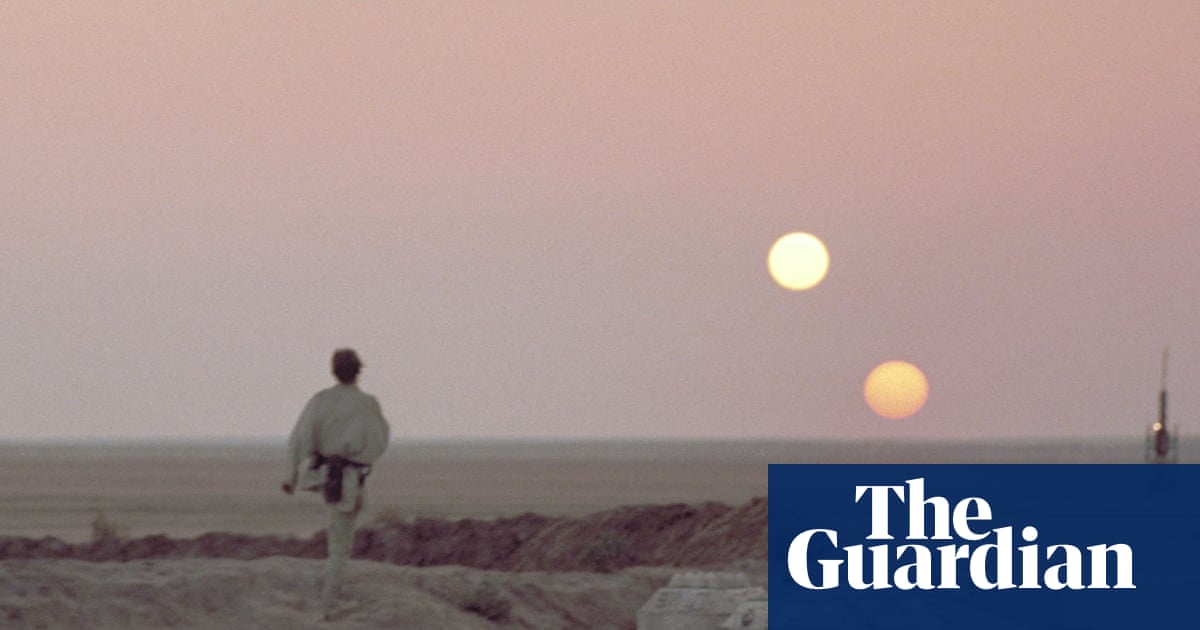
    "On ‘ #StarWarsDay’, researchers more than double the number of potential known ‘circumbinary’ planets like the fictional Tatooine, home to Luke Skywalker"

    A circumbinary planet is a planet that orbits two suns

    More than half of all stars exist in binary star systems or star systems with even more than two stars
    Link Preview Image
    Scientists discover 27 potential new planets that orbit two stars in solar systems far, far away

    On ‘Star Wars day’, researchers more than double the number of potential known ‘circumbinary’ planets like the fictional Tatooine, home to Luke Skywalker

    favicon

    the Guardian (www.theguardian.com)

    #MayThe4th #MayThe4thBeWithYou

    johnlogic@sfba.socialJ This user is from outside of this forum
    johnlogic@sfba.socialJ This user is from outside of this forum
    johnlogic@sfba.social
    wrote last edited by
    #16

    @benroyce

    It seems worth noting that the film Star Wars was released before any planets had been discovered outside of our own solar system.

    benroyce@mastodon.socialB 1 Reply Last reply
    0
    • R relay@relay.mycrowd.ca shared this topic
    • martinvermeer@fediscience.orgM martinvermeer@fediscience.org

      @benroyce @rozeboosje This is not at all uncommon. Castor, Alpha in the Twins (Gemini) is sixfold. Stable systems like this typically are binaries of binaries, where the 'inner' binaries are small members of an 'outer' binary, so for the purpose of celestial mechanics, the may be treated almost as point masses. A bit like, when modelling the solar system as a whole, you may consider the Earth-Moon system a single planet.

      Link Preview Image
      Castor (star) - Wikipedia

      favicon

      (en.wikipedia.org)

      martinvermeer@fediscience.orgM This user is from outside of this forum
      martinvermeer@fediscience.orgM This user is from outside of this forum
      martinvermeer@fediscience.org
      wrote last edited by
      #17

      @benroyce @rozeboosje And then there is Mizar. Astronomic history!

      Link Preview Image
      Mizar - Wikipedia

      favicon

      (en.wikipedia.org)

      benroyce@mastodon.socialB 1 Reply Last reply
      0
      • johnlogic@sfba.socialJ johnlogic@sfba.social

        @benroyce

        It seems worth noting that the film Star Wars was released before any planets had been discovered outside of our own solar system.

        benroyce@mastodon.socialB This user is from outside of this forum
        benroyce@mastodon.socialB This user is from outside of this forum
        benroyce@mastodon.social
        wrote last edited by
        #18

        @johnlogic

        but it kind of makes sense doesn't it? it just follows logically

        unsupported as yet by science (we've only seen a few), but it just "makes sense":

        that interstellar space isn't empty, but riddled with gas giants

        stars, essentially, not massive enough to ignite. just sitting there in the dark

        they should outnumber the number of stars. just as a sheer result of gaussian distribution, and those that ignite are on the right side of the curve in size

        chuckmcmanis@chaos.socialC riley@toot.catR 2 Replies Last reply
        2
        0
        • martinvermeer@fediscience.orgM martinvermeer@fediscience.org

          @benroyce @rozeboosje This is not at all uncommon. Castor, Alpha in the Twins (Gemini) is sixfold. Stable systems like this typically are binaries of binaries, where the 'inner' binaries are small members of an 'outer' binary, so for the purpose of celestial mechanics, the may be treated almost as point masses. A bit like, when modelling the solar system as a whole, you may consider the Earth-Moon system a single planet.

          Link Preview Image
          Castor (star) - Wikipedia

          favicon

          (en.wikipedia.org)

          benroyce@mastodon.socialB This user is from outside of this forum
          benroyce@mastodon.socialB This user is from outside of this forum
          benroyce@mastodon.social
          wrote last edited by
          #19

          @martinvermeer @rozeboosje

          it's alien to us. with our single star

          but in the wider galaxy, we are the alien ones

          1 Reply Last reply
          0
          • martinvermeer@fediscience.orgM martinvermeer@fediscience.org

            @benroyce @rozeboosje And then there is Mizar. Astronomic history!

            Link Preview Image
            Mizar - Wikipedia

            favicon

            (en.wikipedia.org)

            benroyce@mastodon.socialB This user is from outside of this forum
            benroyce@mastodon.socialB This user is from outside of this forum
            benroyce@mastodon.social
            wrote last edited by
            #20

            @martinvermeer @rozeboosje

            did you hear about this one?

            septuple system

            (!)

            Link Preview Image
            Nu Scorpii - Wikipedia

            favicon

            (en.wikipedia.org)

            martinvermeer@fediscience.orgM 1 Reply Last reply
            0
            • benroyce@mastodon.socialB benroyce@mastodon.social

              @johnlogic

              but it kind of makes sense doesn't it? it just follows logically

              unsupported as yet by science (we've only seen a few), but it just "makes sense":

              that interstellar space isn't empty, but riddled with gas giants

              stars, essentially, not massive enough to ignite. just sitting there in the dark

              they should outnumber the number of stars. just as a sheer result of gaussian distribution, and those that ignite are on the right side of the curve in size

              chuckmcmanis@chaos.socialC This user is from outside of this forum
              chuckmcmanis@chaos.socialC This user is from outside of this forum
              chuckmcmanis@chaos.social
              wrote last edited by
              #21

              @benroyce It's an interesting hypothesis, and testable! Given that we're all orbiting the giant black hole at the center of the Milky Way, and orbits closer to the center are faster than ours. Stars closer to the center would occasionally be occluded by these 'dark giants'. That would show up in our repeated observations. Those occlusions would completely block the star, unlike planets orbiting the star.

              @johnlogic

              benroyce@mastodon.socialB 1 Reply Last reply
              0
              • benroyce@mastodon.socialB benroyce@mastodon.social

                @johnlogic

                but it kind of makes sense doesn't it? it just follows logically

                unsupported as yet by science (we've only seen a few), but it just "makes sense":

                that interstellar space isn't empty, but riddled with gas giants

                stars, essentially, not massive enough to ignite. just sitting there in the dark

                they should outnumber the number of stars. just as a sheer result of gaussian distribution, and those that ignite are on the right side of the curve in size

                riley@toot.catR This user is from outside of this forum
                riley@toot.catR This user is from outside of this forum
                riley@toot.cat
                wrote last edited by
                #22

                @benroyce There's all sorts of things that can make dark gas glow. Even gravitational interactions. If dark gas existed in such huge lumps, we should be able to occasionally see the glow even if the stars don't get ignited up properly.

                @johnlogic

                benroyce@mastodon.socialB 1 Reply Last reply
                0
                • chuckmcmanis@chaos.socialC chuckmcmanis@chaos.social

                  @benroyce It's an interesting hypothesis, and testable! Given that we're all orbiting the giant black hole at the center of the Milky Way, and orbits closer to the center are faster than ours. Stars closer to the center would occasionally be occluded by these 'dark giants'. That would show up in our repeated observations. Those occlusions would completely block the star, unlike planets orbiting the star.

                  @johnlogic

                  benroyce@mastodon.socialB This user is from outside of this forum
                  benroyce@mastodon.socialB This user is from outside of this forum
                  benroyce@mastodon.social
                  wrote last edited by
                  #23

                  @ChuckMcManis @johnlogic

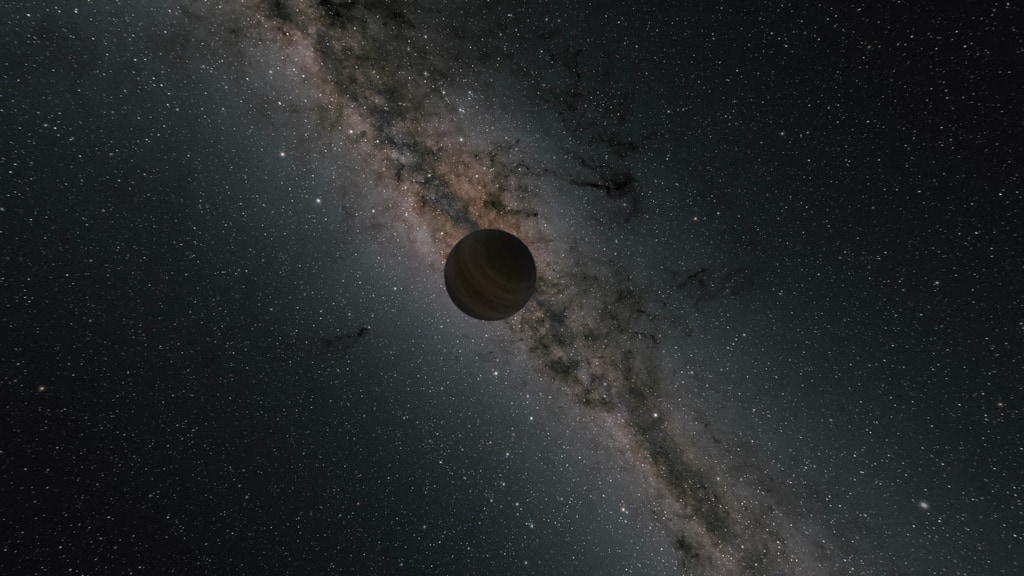
                  not only testable, but in 4 months NASA is launching a craft to look for rogue planets/ brown dwarfs/ solitary gas giants sitting there in the dark (among other things)
                  Link Preview Image
                  Unveiling Rogue Planets With NASA’s Roman Space Telescope - NASA

                  New simulations show that NASA’s Nancy Grace Roman Space Telescope will be able to reveal myriad rogue planets – freely floating bodies that drift through our

                  favicon

                  NASA (www.nasa.gov)

                  Link Preview Image
                  Nancy Grace Roman Space Telescope - Wikipedia

                  favicon

                  (en.wikipedia.org)

                  named after Nancy Roman:

                  Link Preview Image
                  Nancy Roman - Wikipedia

                  favicon

                  (en.wikipedia.org)

                  chuckmcmanis@chaos.socialC 1 Reply Last reply
                  2
                  0
                  • riley@toot.catR riley@toot.cat

                    @benroyce There's all sorts of things that can make dark gas glow. Even gravitational interactions. If dark gas existed in such huge lumps, we should be able to occasionally see the glow even if the stars don't get ignited up properly.

                    @johnlogic

                    benroyce@mastodon.socialB This user is from outside of this forum
                    benroyce@mastodon.socialB This user is from outside of this forum
                    benroyce@mastodon.social
                    wrote last edited by
                    #24

                    @riley @johnlogic

                    that's rather creepy

                    "why is there a faint glow nearby... and why does it seem to trace a path heading towards us"

                    😱

                    riley@toot.catR 1 Reply Last reply
                    0
                    • benroyce@mastodon.socialB benroyce@mastodon.social

                      @riley @johnlogic

                      that's rather creepy

                      "why is there a faint glow nearby... and why does it seem to trace a path heading towards us"

                      😱

                      riley@toot.catR This user is from outside of this forum
                      riley@toot.catR This user is from outside of this forum
                      riley@toot.cat
                      wrote last edited by
                      #25

                      @benroyce Must be the Sky Coyote's bright eyes on their way to some new tricksting!

                      @johnlogic

                      1 Reply Last reply
                      0
                      • benroyce@mastodon.socialB benroyce@mastodon.social

                        @ChuckMcManis @johnlogic

                        not only testable, but in 4 months NASA is launching a craft to look for rogue planets/ brown dwarfs/ solitary gas giants sitting there in the dark (among other things)

                        Link Preview Image
                        Unveiling Rogue Planets With NASA’s Roman Space Telescope - NASA

                        New simulations show that NASA’s Nancy Grace Roman Space Telescope will be able to reveal myriad rogue planets – freely floating bodies that drift through our

                        favicon

                        NASA (www.nasa.gov)

                        Link Preview Image
                        Nancy Grace Roman Space Telescope - Wikipedia

                        favicon

                        (en.wikipedia.org)

                        named after Nancy Roman:

                        Link Preview Image
                        Nancy Roman - Wikipedia

                        favicon

                        (en.wikipedia.org)

                        chuckmcmanis@chaos.socialC This user is from outside of this forum
                        chuckmcmanis@chaos.socialC This user is from outside of this forum
                        chuckmcmanis@chaos.social
                        wrote last edited by
                        #26

                        @benroyce
                        ooh, neat. Yeah if you could see the lensing you'd be MUCH more likely to see one as that would eliminate the need for a conjunction. Still I'm wondering if we could sift through snaps from Kepler and get lucky.

                        @johnlogic

                        benroyce@mastodon.socialB 1 Reply Last reply
                        0
                        • benroyce@mastodon.socialB benroyce@mastodon.social

                          @martinvermeer @rozeboosje

                          did you hear about this one?

                          septuple system

                          (!)

                          Link Preview Image
                          Nu Scorpii - Wikipedia

                          favicon

                          (en.wikipedia.org)

                          martinvermeer@fediscience.orgM This user is from outside of this forum
                          martinvermeer@fediscience.orgM This user is from outside of this forum
                          martinvermeer@fediscience.org
                          wrote last edited by
                          #27

                          @benroyce @rozeboosje Yep. But this is a young system - under five million years, and still associated with the galactic clouds it likely formed from - so perhaps not long-term stable.

                          Young, known-unstable multiple star systems are often called 'trapezia' after the Trapezium in the Orion nebula. But that is perhaps better described as an open star cluster in formation.

                          Link Preview Image
                          The star formation history of Upper Scorpius and Ophiuchus

                          Abstract page for arXiv paper 2209.12938: The star formation history of Upper Scorpius and Ophiuchus

                          favicon

                          arXiv.org (arxiv.org)

                          Link Preview Image
                          Trapezium Cluster - Wikipedia

                          favicon

                          (en.wikipedia.org)

                          benroyce@mastodon.socialB 1 Reply Last reply
                          0
                          • martinvermeer@fediscience.orgM martinvermeer@fediscience.org

                            @benroyce @rozeboosje Yep. But this is a young system - under five million years, and still associated with the galactic clouds it likely formed from - so perhaps not long-term stable.

                            Young, known-unstable multiple star systems are often called 'trapezia' after the Trapezium in the Orion nebula. But that is perhaps better described as an open star cluster in formation.

                            Link Preview Image
                            The star formation history of Upper Scorpius and Ophiuchus

                            Abstract page for arXiv paper 2209.12938: The star formation history of Upper Scorpius and Ophiuchus

                            favicon

                            arXiv.org (arxiv.org)

                            Link Preview Image
                            Trapezium Cluster - Wikipedia

                            favicon

                            (en.wikipedia.org)

                            benroyce@mastodon.socialB This user is from outside of this forum
                            benroyce@mastodon.socialB This user is from outside of this forum
                            benroyce@mastodon.social
                            wrote last edited by
                            #28

                            @martinvermeer @rozeboosje

                            so like the pleiades!

                            also seven sisters

                            rozeboosje@masto.aiR martinvermeer@fediscience.orgM 2 Replies Last reply
                            0
                            • chuckmcmanis@chaos.socialC chuckmcmanis@chaos.social

                              @benroyce
                              ooh, neat. Yeah if you could see the lensing you'd be MUCH more likely to see one as that would eliminate the need for a conjunction. Still I'm wondering if we could sift through snaps from Kepler and get lucky.

                              @johnlogic

                              benroyce@mastodon.socialB This user is from outside of this forum
                              benroyce@mastodon.socialB This user is from outside of this forum
                              benroyce@mastodon.social
                              wrote last edited by
                              #29

                              @ChuckMcManis @johnlogic

                              it's probably the difference between

                              "there's one... and there's one"

                              and

                              "holy shit, in this field of view... that's a lot"

                              😅

                              chuckmcmanis@chaos.socialC 1 Reply Last reply
                              0
                              • benroyce@mastodon.socialB benroyce@mastodon.social

                                @martinvermeer @rozeboosje

                                so like the pleiades!

                                also seven sisters

                                rozeboosje@masto.aiR This user is from outside of this forum
                                rozeboosje@masto.aiR This user is from outside of this forum
                                rozeboosje@masto.ai
                                wrote last edited by
                                #30

                                @benroyce @martinvermeer At least one of them is a blue giant so yeah, it's young and it won't be long lived ...

                                martinvermeer@fediscience.orgM 1 Reply Last reply
                                0
                                • nomenloony@nomenloony.comN nomenloony@nomenloony.com

                                  @benroyce I always remember reading "our sun is a very average yellow star" and now we say "our sun is an uncommon lone star, unlike most stars which exist in multiple systems"

                                  nuintari@mastodon.bsd.cafeN This user is from outside of this forum
                                  nuintari@mastodon.bsd.cafeN This user is from outside of this forum
                                  nuintari@mastodon.bsd.cafe
                                  wrote last edited by
                                  #31

                                  @nomenloony @benroyce Telescopes got muuuch better.

                                  And we collectivly took a step into a larger world.

                                  1 Reply Last reply
                                  0
                                  • benroyce@mastodon.socialB benroyce@mastodon.social

                                    @martinvermeer @rozeboosje

                                    so like the pleiades!

                                    also seven sisters

                                    martinvermeer@fediscience.orgM This user is from outside of this forum
                                    martinvermeer@fediscience.orgM This user is from outside of this forum
                                    martinvermeer@fediscience.org
                                    wrote last edited by
                                    #32

                                    @benroyce @rozeboosje Yep. On long-exposure photographs, also the Pleiades show a dust nebula containing the cluster, and illuminated by it in reflected light.

                                    The Pleiades are a bit older but not very old, some 100 million years. How do we know? From its colour-magnitude diagram. The cluster contains hot, bright blue stars that are still burning hydrogen, which would have branched off and turned into red giants burning helium, if the cluster were older.

                                    Link Preview Image
                                    1 Reply Last reply
                                    0
                                    • rozeboosje@masto.aiR rozeboosje@masto.ai

                                      @benroyce @martinvermeer At least one of them is a blue giant so yeah, it's young and it won't be long lived ...

                                      martinvermeer@fediscience.orgM This user is from outside of this forum
                                      martinvermeer@fediscience.orgM This user is from outside of this forum
                                      martinvermeer@fediscience.org
                                      wrote last edited by
                                      #33

                                      @rozeboosje @benroyce They are all B type, but you mean component A which is B3V?

                                      rozeboosje@masto.aiR 1 Reply Last reply
                                      0
                                      • benroyce@mastodon.socialB benroyce@mastodon.social

                                        #ScienceFiction is informed by #Science

                                        And Science in turn stares at Science Fiction, nods, and smiles broadly

                                        "On ‘ #StarWarsDay’, researchers more than double the number of potential known ‘circumbinary’ planets like the fictional Tatooine, home to Luke Skywalker"

                                        A circumbinary planet is a planet that orbits two suns

                                        More than half of all stars exist in binary star systems or star systems with even more than two stars

                                        Link Preview Image
                                        Scientists discover 27 potential new planets that orbit two stars in solar systems far, far away

                                        On ‘Star Wars day’, researchers more than double the number of potential known ‘circumbinary’ planets like the fictional Tatooine, home to Luke Skywalker

                                        favicon

                                        the Guardian (www.theguardian.com)

                                        #MayThe4th #MayThe4thBeWithYou

                                        scrimshaw9@mastodon.socialS This user is from outside of this forum
                                        scrimshaw9@mastodon.socialS This user is from outside of this forum
                                        scrimshaw9@mastodon.social
                                        wrote last edited by
                                        #34

                                        @benroyce Star Wars is science fiction? I always thought it was consumerism and merchandising based on awful fantasy movies with a weak allegory of the Vietnam conflict and ripped off Authurian legend, annoying characters and bad romance writing.

                                        benroyce@mastodon.socialB 1 Reply Last reply
                                        0
                                        • scrimshaw9@mastodon.socialS scrimshaw9@mastodon.social

                                          @benroyce Star Wars is science fiction? I always thought it was consumerism and merchandising based on awful fantasy movies with a weak allegory of the Vietnam conflict and ripped off Authurian legend, annoying characters and bad romance writing.

                                          benroyce@mastodon.socialB This user is from outside of this forum
                                          benroyce@mastodon.socialB This user is from outside of this forum
                                          benroyce@mastodon.social
                                          wrote last edited by
                                          #35

                                          @Scrimshaw9

                                          well, truthfully, it's more space opera than science fiction

                                          1 Reply Last reply
                                          0
                                          Reply
                                          • Reply as topic
                                          Log in to reply
                                          • Oldest to Newest
                                          • Newest to Oldest
                                          • Most Votes


                                          • Login

                                          • Login or register to search.
                                          • First post
                                            Last post
                                          0
                                          • Categories
                                          • Recent
                                          • Tags
                                          • Popular
                                          • World
                                          • Users
                                          • Groups