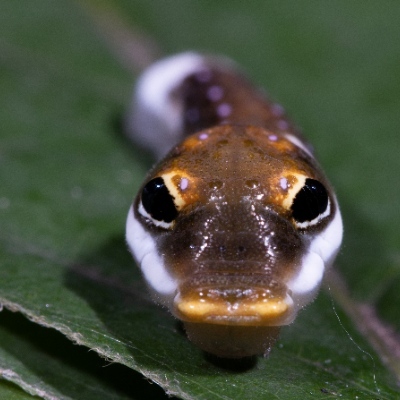
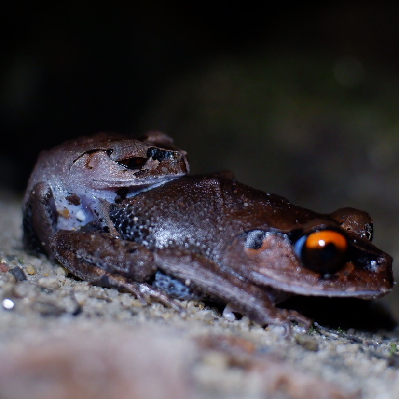
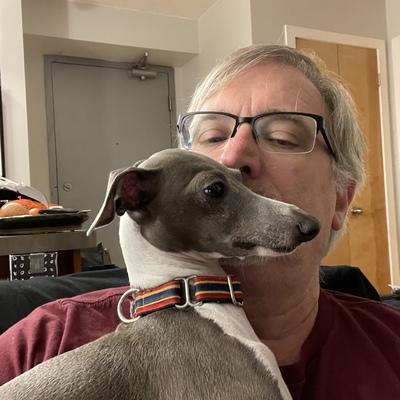
If you think "I can't study nature where I live.
-
@wyatt_h_knott @futurebird @twizzt That mammals are now the dominant large animals is no more or less absurd than that dinosaurs used to be.
(obviously, "rule" and "in charge" or even "dominant" are somewhat silly terms, the planetary ecosystem is not an authoritarian chain of command.)
@datarama @wyatt_h_knott @twizzt
Everyone is so impressed with animals being big. It ain't all that. hmph
-
@wyatt_h_knott @futurebird @twizzt That mammals are now the dominant large animals is no more or less absurd than that dinosaurs used to be.
(obviously, "rule" and "in charge" or even "dominant" are somewhat silly terms, the planetary ecosystem is not an authoritarian chain of command.)
@datarama yep. well said.
-
@datarama @wyatt_h_knott @twizzt
Everyone is so impressed with animals being big. It ain't all that. hmph
@futurebird @wyatt_h_knott @twizzt Being big means you're a lot more likely to leave lots of cool fossils when you die!
It also means you're extra screwed when the asteroid hits.
-
@futurebird @wyatt_h_knott @twizzt Being big means you're a lot more likely to leave lots of cool fossils when you die!
It also means you're extra screwed when the asteroid hits.
@datarama Being little means you can leave complete specimens encased in amber for future study! There's no giant reptiles completely encased in preservatives. All we get from them is rotten old bones.
-
@datarama @wyatt_h_knott @twizzt
Everyone is so impressed with animals being big. It ain't all that. hmph
@futurebird @datarama @wyatt_h_knott @twizzt
When you start as single-celled animals, demonstrating that you can scale up with roughly the same design is impressive.
-
@futurebird @datarama @wyatt_h_knott @twizzt
When you start as single-celled animals, demonstrating that you can scale up with roughly the same design is impressive.
@david_chisnall @futurebird @wyatt_h_knott @twizzt One of the things that impresses me most is "design longevity".
For example, if you met a Calsoyasuchus from 200 million years ago, you would *immediately* recognize it as a type of crocodile.
-
If you think "I can't study nature where I live. There is no nature here." there is another way to look at this.
First you are wrong. There is nature everywhere.
But you can think of your anthropocene environment as "easy mode" you won't be overwhelmed with species, you just need to start by learning the big players.
Just last week @twizzt told me about Evania appendigaster which is a wasp that lays it's eggs in the eggs of roaches. I spot it by the rail-road overpass the next day!
@Fragglemuppet @twizzt @futurebird start with ants, they are everywhere. they are facinatle little doods.
-
If you think "I can't study nature where I live. There is no nature here." there is another way to look at this.
First you are wrong. There is nature everywhere.
But you can think of your anthropocene environment as "easy mode" you won't be overwhelmed with species, you just need to start by learning the big players.
Just last week @twizzt told me about Evania appendigaster which is a wasp that lays it's eggs in the eggs of roaches. I spot it by the rail-road overpass the next day!
@futurebird you will see it everywhere now. It's a bit of a curse... You can't unsee it.
-
@futurebird @datarama this could be a fascinating lecture or even full semester seminar. God may have had an inordinate fondness for beetles, but for every species, he gave it its own parasitic wasp to keep it in check. I would say god hated beetles.... And all other arthropods for that matter.
-
Now... I am glad that I have seen the wasp, but I have so many questions. Roaches don't just lay their eggs and leave them laying around. No, they make a little packet called an ootheca and to keep it safe a female roach will drag this around with her (it contains 15-60 eggs!) until it's just ready to hatch. So these wasps must land on the female roaches? How does it all go down?
You see? Nature is everywhere!
@futurebird I was actually trying to find info on this the other day. The only tool I had at hand was Google so I came up empty. These walls are huge for egg parasitoids too so do they eat most of all the eggs?
Being in a country that doesn't care about copyright, I have a hard time not just stealing papers so I can read about these things.
-
Urban ecology can be a little gross, but all ecologies are gross when you look into it. There is also heroism, great battles and wars are all around you. But you need to tune in to the most common living things in your area first and learn their names and how they live.
By the way this parasitoid wasp? It's a lovely creature. It has dark blue eyes and a waist that'd make a fashion house jealous.
Someone should make a dress based on this wasp. It would win awards.
@futurebird I love one of it's common names too. The ensign wasp. It's like a flag girl. Their search flights and mannerisms are very interesting and unique too. Jet black, dazzling blue eyes... Such an important and beautiful creature.
-
If you think "I can't study nature where I live. There is no nature here." there is another way to look at this.
First you are wrong. There is nature everywhere.
But you can think of your anthropocene environment as "easy mode" you won't be overwhelmed with species, you just need to start by learning the big players.
Just last week @twizzt told me about Evania appendigaster which is a wasp that lays it's eggs in the eggs of roaches. I spot it by the rail-road overpass the next day!
@futurebird also, read never home alone. It's a great book and eye opening. The nature inside your own domicile is vast and abundant!
-
@futurebird I love one of it's common names too. The ensign wasp. It's like a flag girl. Their search flights and mannerisms are very interesting and unique too. Jet black, dazzling blue eyes... Such an important and beautiful creature.
@twizzt @futurebird I am in good company. Evanid wasps have some of the most beautiful blue eyes on any animal.
-
@twizzt @futurebird I am in good company. Evanid wasps have some of the most beautiful blue eyes on any animal.
@ubi @futurebird in Sri Lanka, they are just black. Unfortunate
-
@ubi @futurebird in Sri Lanka, they are just black. Unfortunate
@twizzt @futurebird I've never seen a black eyed evanid, that must be a good character to differentiate species.
-
@twizzt @futurebird I've never seen a black eyed evanid, that must be a good character to differentiate species.
@ubi @futurebird I just threw one in the trash as it was smashed. I seen not to have a single observation on iNat. Very odd. I see them regularly
-
@futurebird I was actually trying to find info on this the other day. The only tool I had at hand was Google so I came up empty. These walls are huge for egg parasitoids too so do they eat most of all the eggs?
Being in a country that doesn't care about copyright, I have a hard time not just stealing papers so I can read about these things.
I have learned that some roaches *do* just leave their ootheca laying around. And these wasps can find them? How? Can they smell them? That seems like a trick worth learning if you wanted to do low impact pest control...
In fact, the roaches that carry them around do so *because of these wasps*
It's an arms race!
-
Urban ecology can be a little gross, but all ecologies are gross when you look into it. There is also heroism, great battles and wars are all around you. But you need to tune in to the most common living things in your area first and learn their names and how they live.
By the way this parasitoid wasp? It's a lovely creature. It has dark blue eyes and a waist that'd make a fashion house jealous.
Someone should make a dress based on this wasp. It would win awards.
@futurebird @twizzt Tangential question: why do wasps have such narrow waists? (Or do they?)
-
@futurebird @twizzt Tangential question: why do wasps have such narrow waists? (Or do they?)
The big hymenopteran innovation is the ovipositor, which is also a stinger in some cases.
What makes it powerful is the precision that wasps, bees and ants have with their sting or eggs.
The thin flexible waist makes this possible.
-
@futurebird I was actually trying to find info on this the other day. The only tool I had at hand was Google so I came up empty. These walls are huge for egg parasitoids too so do they eat most of all the eggs?
Being in a country that doesn't care about copyright, I have a hard time not just stealing papers so I can read about these things.
@twizzt @futurebird if you contact the author they will often send you the “preprint” version of the article for free. They own it, don’t make money (the publisher does), and they just want to do science and get read