to be absolutely clear: alpine is *not* switching to systemd or implementing a 'systemd compatibility layer'.
-
a lightweight operating system built from scratch with one goal in mind — giving old and low-resource computers a new lease on life
Loss32 began as a personal project by a group of open-source enthusiasts frustrated with how quickly modern software has moved past older machines.
The name Loss32 stems from its focus on “losing” unnecessary bloat — keeping only what’s essential — and the fact that it targets 32-bit and low-resource systems that many other distros are abandoning.
is this entire thing an AI hallucination? it's genuinely unbelievably bad, there's basically no relation whatsoever to anything I wrote on loss32.org
@moses_izumi @hikari I see "George" has done it again!
-
@ariadne Woho! Thanks for considering using udev in Alpine! It was the thing which forced me to return to Arch, while I would prefer to use Alpine. I've tried to use mdev + libudev-zero but it had a lot of quirks, so I switched to eudev but it had problems with mounting encrypted USB drives and some other quirks, so I tried to just use mount, but while on (some?) BSDs you can allow mount without root when user have permissions for both a device and a mount point, Linux does not.
Almost everything depends on libudev…
@aelspire Alpine already uses a udev implementation, eudev which is basically compatible with libudev.
-
@aelspire Alpine already uses a udev implementation, eudev which is basically compatible with libudev.
@ariadne Yes, I'm aware of it and tried to use it, but not everything is working. In my case mounting LUKS-encrypted USB drive from Thunar sidebar was not working, and I have almost all my USB drives encrypted. I also remember some quirks with my graphic tablet (Wacom Bamboo) but I'm not sure if those were eudev fault.
-
@ariadne Yeah, it's probably going to happen with something particularly dumb too. I can already see it coming...
-
R relay@relay.an.exchange shared this topic
-
@ariadne linuxjournal is slop too now?

@hexaheximal@mstdn.social @ariadne@treehouse.systems banned by lobste.rs 9 months ago so not even a recent thing
-
eudev exists, at least today, primarily because there's a vocal subset of people who get extremely angry if a package name or file on disk includes the word "systemd" in it, and will not consent to running a udev implementation if any internal filename happens to be /usr/lib/systemd
These people literally configure their package manager to silently delete any files from ANY package matching the glob `*systemd*`. Prank tip: write a program including "systemdetails.py".
-
eudev exists, at least today, primarily because there's a vocal subset of people who get extremely angry if a package name or file on disk includes the word "systemd" in it, and will not consent to running a udev implementation if any internal filename happens to be /usr/lib/systemd
These people literally configure their package manager to silently delete any files from ANY package matching the glob `*systemd*`. Prank tip: write a program including "systemdetails.py".
Also relevant, Gentoo dropped eudev a year and a half ago on the grounds that it serves no purpose given systemd-utils can install standalone udev, and eudev was unmaintained and broken and did not in fact provide the library APIs which software compiled against, due to its being unmaintained:
Nonetheless, Gentoo still proudly supports non-systemd installs.

-
to be absolutely clear: alpine is *not* switching to systemd or implementing a 'systemd compatibility layer'.
https://www.linuxjournal.com/content/alpine-linux-experiments-systemd-compatibility-while-keeping-its-lightweight-identity is literally AI slop
-
Also relevant, Gentoo dropped eudev a year and a half ago on the grounds that it serves no purpose given systemd-utils can install standalone udev, and eudev was unmaintained and broken and did not in fact provide the library APIs which software compiled against, due to its being unmaintained:
Nonetheless, Gentoo still proudly supports non-systemd installs.
@eschwartz @zyx @ariadne oh man maybe i should switch back to gentoo
-
@eschwartz @zyx @ariadne oh man maybe i should switch back to gentoo
@eschwartz @zyx @whitequark its time to INSTALL GENTOO
-
@eschwartz @zyx @whitequark its time to INSTALL GENTOO
@ariadne @eschwartz @zyx @whitequark —omg-optimized
-
@eschwartz @zyx @whitequark its time to INSTALL GENTOO
@ariadne @eschwartz @zyx like it's not even about systemd, i'm using systemd right now, it's about people generally seeming to make more sensible decisions than my experience with debian as a maintainer which has left me very sour
-
@ariadne @eschwartz @zyx like it's not even about systemd, i'm using systemd right now, it's about people generally seeming to make more sensible decisions than my experience with debian as a maintainer which has left me very sour
@eschwartz @zyx @whitequark I mean I don't really have an opinion on systemd. the reason I use and work on Alpine is because it is an integrated OS. systemd offers some of the same benefits for the GNU/Linux crowd and that seems like a positive for GNU/Linux...
-
@eschwartz @zyx @whitequark I mean I don't really have an opinion on systemd. the reason I use and work on Alpine is because it is an integrated OS. systemd offers some of the same benefits for the GNU/Linux crowd and that seems like a positive for GNU/Linux...
@ariadne @eschwartz @zyx i think a lot of the concepts are sound, but a significant part of how it was implemented historically shows a lack of care that i wouldn't really consider acceptable in my work but switching away from it would break KDE which i like enough that it's a nonstarter
-
@ariadne @eschwartz @zyx i think a lot of the concepts are sound, but a significant part of how it was implemented historically shows a lack of care that i wouldn't really consider acceptable in my work but switching away from it would break KDE which i like enough that it's a nonstarter
I'm not really sure what you mean by that... Switching away from systemd would break KDE? Shouldn't be -- KDE Plasma is packaged by alpine (no systemd option) and supported just fine on Gentoo's openrc profiles.
-
I'm not really sure what you mean by that... Switching away from systemd would break KDE? Shouldn't be -- KDE Plasma is packaged by alpine (no systemd option) and supported just fine on Gentoo's openrc profiles.
@eschwartz @ariadne @zyx to be clear this isn't a deeply researched opinion, i just used to run systemd-less debian and at some point half of plasma (networkmanager, power management, etc) broke due to some consolekit related thing i eventually traced down to "i guess i need systemd now"
-
I'm not really sure what you mean by that... Switching away from systemd would break KDE? Shouldn't be -- KDE Plasma is packaged by alpine (no systemd option) and supported just fine on Gentoo's openrc profiles.
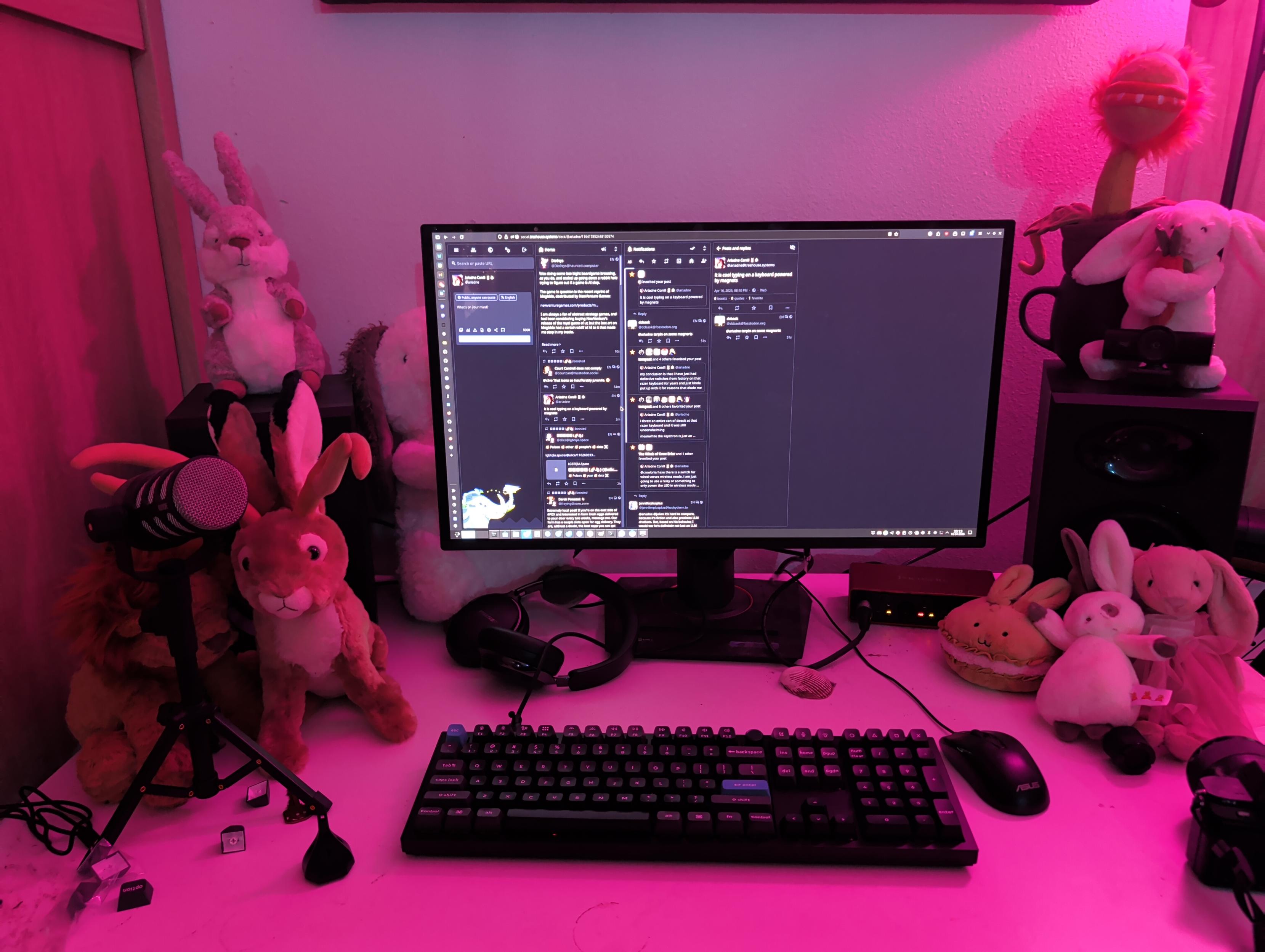
@whitequark @zyx @eschwartz yes can confirm I use plasma as my daily driver on alpine.
-
@whitequark @zyx @eschwartz yes can confirm I use plasma as my daily driver on alpine.
@ariadne @zyx @eschwartz does NM work?
-
@eschwartz @ariadne @zyx to be clear this isn't a deeply researched opinion, i just used to run systemd-less debian and at some point half of plasma (networkmanager, power management, etc) broke due to some consolekit related thing i eventually traced down to "i guess i need systemd now"
I have no particular idea what Debian might have done there, but generally the preferred alternative to systemd is using elogind anyways. Which should work fine. You could also try speaking to the upstream maintainers of $PACKAGE about using libseat where possible. Gentoo should support any configurations possible upstream, and possibly relevantly, Gentoo will *rebuild* if you change your configuration, not use libsystemd.so compiled binaries on openrc.
-
@ariadne @zyx @eschwartz does NM work?
The Gentoo gui installation ISO uses kde and openrc, and connecting to WiFi to begin installation means using the NM applet. It works quite well, except for the part where kde really wants to encrypt your wifi password with the account keyring, which as a live ISO doesn't exist. (So, routine "fail to store the password and then go back into settings and re-enter the password" on every ISO boot.) But that's not the fault of an init system.