What's the most surprising fact you've learned in the last couple of weeks?
-
What's the most surprising fact you've learned in the last couple of weeks? I don't mind if it's quite technical. I just want to hear what you folks are being surprised by!
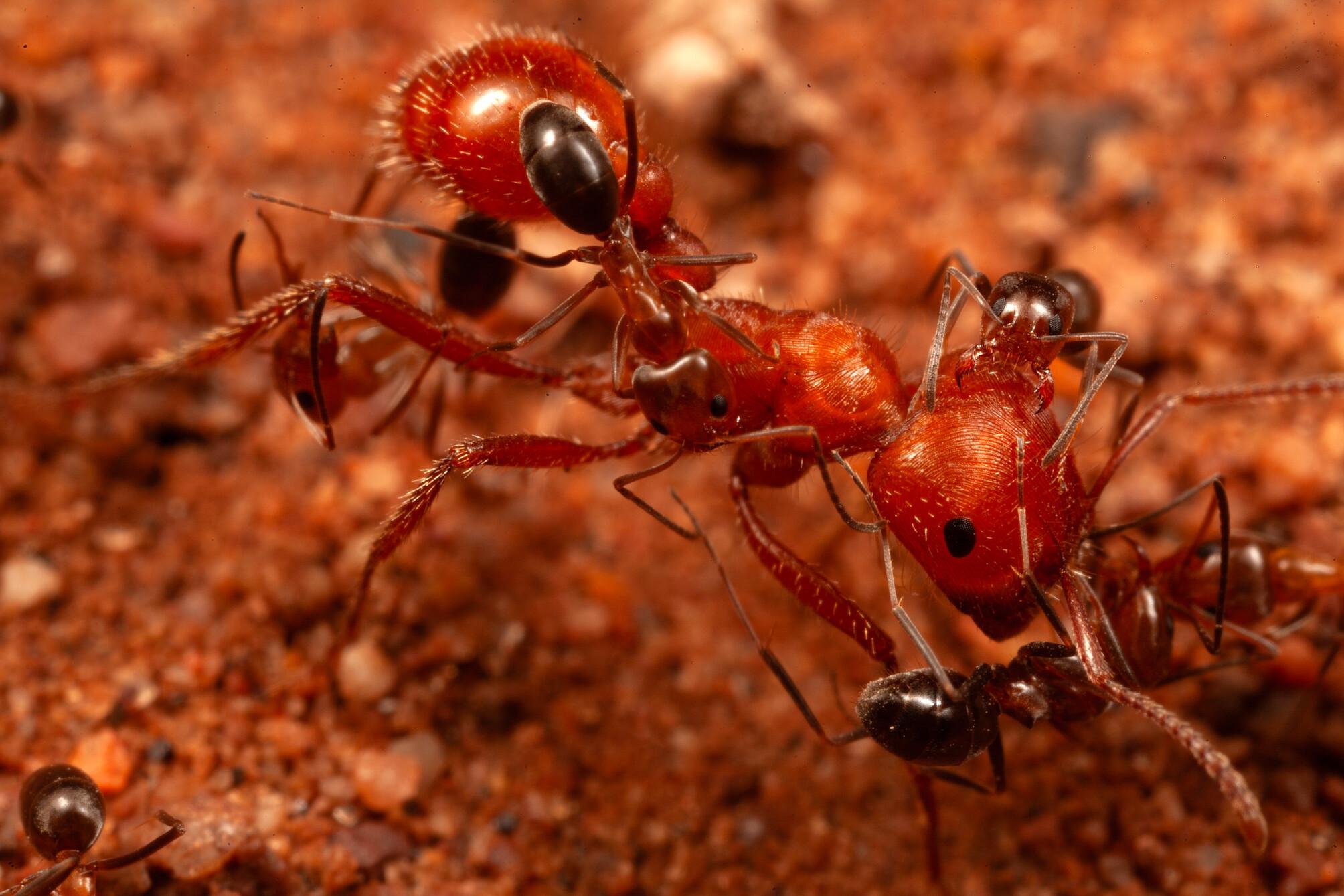
I was surprised to learn that there are small cleaner ants that clean bigger ants of a different species.
If one insect wants help with cleaning, why choose another smaller insect of the same family? One could imagine so many other willing arthropods.
Magnus (@magnus@mastodon.world)
Attached: 1 image Did ants learn this from cleaner fish? There are small ants that clean big ants without meeting any agression, just like small cleaner fish can clean sharks. https://onlinelibrary.wiley.com/doi/10.1002/ece3.73308

Mastodon (mastodon.world)
-
What's the most surprising fact you've learned in the last couple of weeks? I don't mind if it's quite technical. I just want to hear what you folks are being surprised by!
@johncarlosbaez India now has a larger share of new battery electric cars (out of all new cars sold) than USA
-
What's the most surprising fact you've learned in the last couple of weeks? I don't mind if it's quite technical. I just want to hear what you folks are being surprised by!
@johncarlosbaez That a certain crystal structure of some material can suddenly not be produced anymore, a so called "disappearing polymorphism". I learned this from a recent episode of the "Veritasium" YouTube series. I was stunned, I still am. It seems we still do not really know how this happens. It is being hypothesized that a very tiny crystal is enough to "infect" the material to the effect of losing its polymorphism. There's also a very nice Wikipedia article about this.
-
What's the most surprising fact you've learned in the last couple of weeks? I don't mind if it's quite technical. I just want to hear what you folks are being surprised by!
@johncarlosbaez That of the heat the human body loses, 50% is by radiation.
Then 30% by convection, and 20% by evaporation of sweat, the latter being highly variable. Very little by conduction, unless the person is immersed in water.
I did not think radiation would amount to that much.
-
R relay@relay.mycrowd.ca shared this topic
-
@johncarlosbaez There is no recorded case of schizophrenia in anyone congenitally blind. No one knows why.
@glocq There was research a few years ago, into the idea that psychiatric disorders could be diagnosed by eye saccade patterns. And the optic nerves are often included in the CNS. There's something really interesting going on here.
-
What's the most surprising fact you've learned in the last couple of weeks? I don't mind if it's quite technical. I just want to hear what you folks are being surprised by!
@johncarlosbaez Denny Dias, guitarist for Steely Dan, was also a software engineer and worked on the database programming language Clipper.
-
> I learned that the free monad construction, which iterates any container to give you a term monad, is itself a monad on containers,
Makes sense - "free" things are usually left adjoint functors, and "forgetful . free" gives a monad.
> and that its Kleisli arrows determine a class of recursive functions over tree-like data.
Wait, what? A Kleisli arrow would be a natural transformation f -> Free g where f and g are endofunctors; how does that give you a recursive function? Co-Kleisli arrows, sure...
> Moreover, if someone offers to let you test such a function but withholds the Kleisli arrow which generated it, you can recover their secret by a pleasingly small amount of perturbation testing.
SORCERY
@pozorvlak A container is a strictly positive functor, generalising the notion of "algebraic signature". For any such F, its free monad F* gives you the F-terms, seen as containers over sets of variables, where Kleisli arrows X -> F* Y are simultaneous substitutions from variables in X to F-terms over Y. Klesli extension then gives you the action of such a thing on terms in F* X.
Now, indeed, morphisms F -> G in the category of containers correspond exactly to natural transformations from F to G, i.e. parametrically polymorphic functions in forall X. F X -> G X. (There is a representation theorem which gives a more concrete definition of container morphism.) Anyhow, joyously, -* is a monad on containers. A Kleisli arrow is some F -> G*, "compiling" F-operations to G-terms. Kleisli extension then gives you a compositonal F* -> G* compiler for whole F-terms. Instead of "variables and substitution", you get "operations and compilation".
So you can take some F -> G*, Kleisli extend to get an F* -> G*, then instantiate at 0 to get a recursive function in F* 0 -> G* 0 operating only on closed F-terms. If you let me test this function, I can reverse-engineer the Kleisli arrow you got it from.
If, e.g., you take F = G = (X -> 1 + X2), making F* 0 and G* 0 the type of unlabelled binary trees, I will need at most 4 tests to recover your F -> G* (or in degenerate cases, another which gives the same function), and they are the simplest 4 trees you can think of!
-
What's the most surprising fact you've learned in the last couple of weeks? I don't mind if it's quite technical. I just want to hear what you folks are being surprised by!
@johncarlosbaez In the pilot wave interpretation of quantum mechanics the evolution of the configuration depends only on the rate of change of the phase of the wavefunction. So because the ground state of the wavefunction always has constant phase, the configuration will be "frozen". So in particular the QFT vacuum isn't a boiling sea, it's more like a frozen landscape!
-
What's the most surprising fact you've learned in the last couple of weeks? I don't mind if it's quite technical. I just want to hear what you folks are being surprised by!
@johncarlosbaez that sample variance and sample mean being statistically independent can be taken to be a defining feature of the normal distribution.
-
@johncarlosbaez That a certain crystal structure of some material can suddenly not be produced anymore, a so called "disappearing polymorphism". I learned this from a recent episode of the "Veritasium" YouTube series. I was stunned, I still am. It seems we still do not really know how this happens. It is being hypothesized that a very tiny crystal is enough to "infect" the material to the effect of losing its polymorphism. There's also a very nice Wikipedia article about this.
-
What's the most surprising fact you've learned in the last couple of weeks? I don't mind if it's quite technical. I just want to hear what you folks are being surprised by!
Roland Bulirsch (https://en.wikipedia.org/wiki/Roland_Bulirsch), one of the two people who wrote a numerical analysis textbook I frequently refer to (https://doi.org/10.1007/978-0-387-21738-3), as well as someone who wrote quite a bit on the subject of elliptic integrals, was apparently a gym buddy of Arnold Schwarzenegger. Bulirsch, along with their other gym friends, took up a collection to help Schwarzenegger emigrate to America.
-
@johncarlosbaez that sample variance and sample mean being statistically independent can be taken to be a defining feature of the normal distribution.
@Dyoung - wow, cool! I just knew the normal distibution maximizes entropy for a given mean and variance.
It would be cool if these facts are connected.
-
@johncarlosbaez That of the heat the human body loses, 50% is by radiation.
Then 30% by convection, and 20% by evaporation of sweat, the latter being highly variable. Very little by conduction, unless the person is immersed in water.
I did not think radiation would amount to that much.
@pait - Cool! I've heard wool keeps you warm because it has a high specific heat. I doubt that. Now I'm guessing it's good at absorbing infrared radiated by your body and then using the energy to warm air trapped amid the fibers. But I don't know.
-
I was surprised to learn that there are small cleaner ants that clean bigger ants of a different species.
If one insect wants help with cleaning, why choose another smaller insect of the same family? One could imagine so many other willing arthropods.
Magnus (@magnus@mastodon.world)
Attached: 1 image Did ants learn this from cleaner fish? There are small ants that clean big ants without meeting any agression, just like small cleaner fish can clean sharks. https://onlinelibrary.wiley.com/doi/10.1002/ece3.73308
Mastodon (mastodon.world)
@magnus - keeping it in the family?

Anyway, that's cool!
-
What's the most surprising fact you've learned in the last couple of weeks? I don't mind if it's quite technical. I just want to hear what you folks are being surprised by!
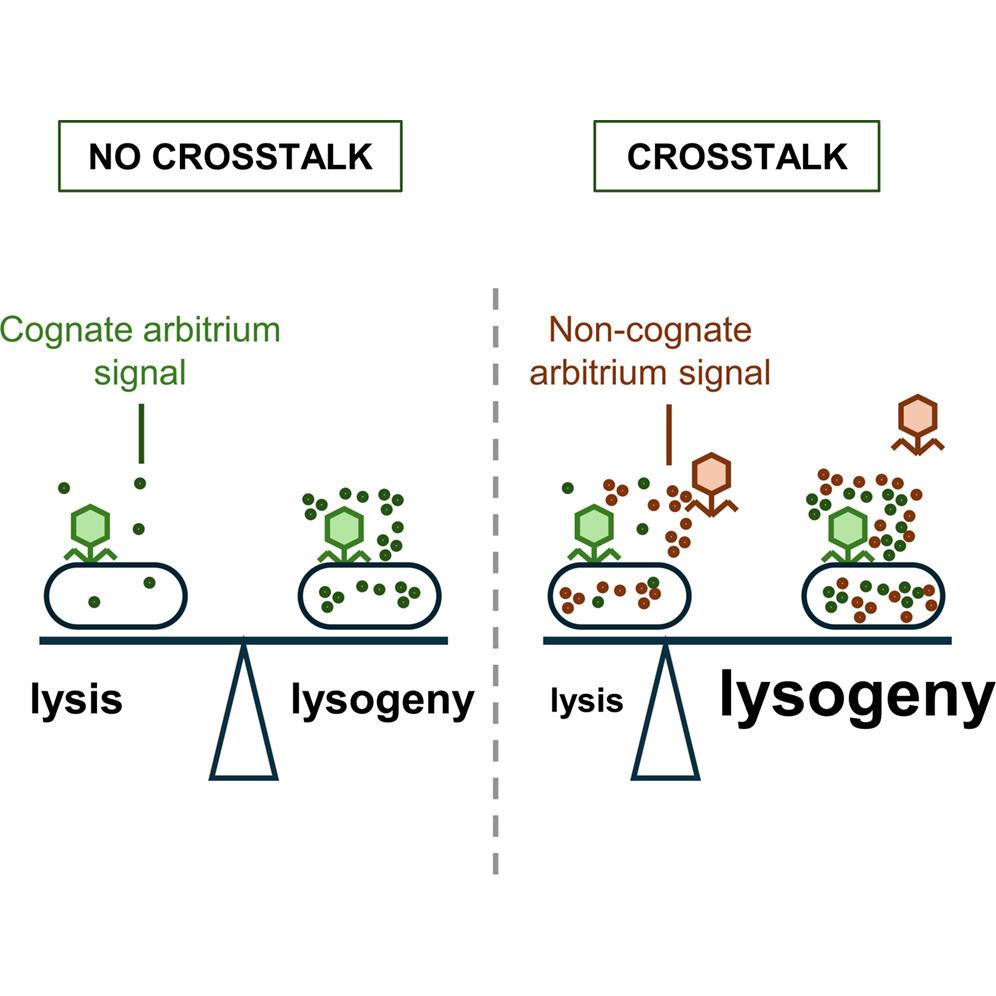
Another thing that surprised me was that viruses, organisms that are not supposed to be alive, still “talk” with each other.
Magnus (@magnus@mastodon.world)
Attached: 1 image Viruses are not alive, but they talk with each other. https://www.cell.com/cell/fulltext/S0092-8674(26)00227-8
Mastodon (mastodon.world)
-
What's the most surprising fact you've learned in the last couple of weeks? I don't mind if it's quite technical. I just want to hear what you folks are being surprised by!
@johncarlosbaez pigs can breathe through their butt!?
-
@pozorvlak A container is a strictly positive functor, generalising the notion of "algebraic signature". For any such F, its free monad F* gives you the F-terms, seen as containers over sets of variables, where Kleisli arrows X -> F* Y are simultaneous substitutions from variables in X to F-terms over Y. Klesli extension then gives you the action of such a thing on terms in F* X.
Now, indeed, morphisms F -> G in the category of containers correspond exactly to natural transformations from F to G, i.e. parametrically polymorphic functions in forall X. F X -> G X. (There is a representation theorem which gives a more concrete definition of container morphism.) Anyhow, joyously, -* is a monad on containers. A Kleisli arrow is some F -> G*, "compiling" F-operations to G-terms. Kleisli extension then gives you a compositonal F* -> G* compiler for whole F-terms. Instead of "variables and substitution", you get "operations and compilation".
So you can take some F -> G*, Kleisli extend to get an F* -> G*, then instantiate at 0 to get a recursive function in F* 0 -> G* 0 operating only on closed F-terms. If you let me test this function, I can reverse-engineer the Kleisli arrow you got it from.
If, e.g., you take F = G = (X -> 1 + X2), making F* 0 and G* 0 the type of unlabelled binary trees, I will need at most 4 tests to recover your F -> G* (or in degenerate cases, another which gives the same function), and they are the simplest 4 trees you can think of!
@pigworker @johncarlosbaez oh, clever! Describing it as "compilation" makes a lot of sense.
-
@bornach @johncarlosbaez two literary ones:
- there's a Spanish equivalent of Shakespeare and I've never heard of him before today: https://mathstodon.xyz/@mjd/116532678297823850
- Ann Radcliffe's "The Mysteries of Udolpho", the book parodied by Jane Austen's "Northanger Abbey", has been continuously in print since 1794 and made Radcliffe £500. That's almost as much as Austen's total lifetime earnings of £684.Here's my two:
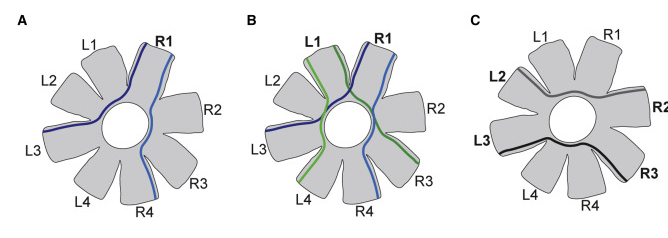
1. Octopus arms can coordinate among themselves because are connected by special nerves that do not visit the brain, and (the surprising part) each arm is not connected to the adjacent ones but to the arms _three_ away.
2. Japanese has unvoiced vowels. Until yesterday I would have told you confidently that unvoiced vowels are definitionally impossible.
-
Here's my two:
1. Octopus arms can coordinate among themselves because are connected by special nerves that do not visit the brain, and (the surprising part) each arm is not connected to the adjacent ones but to the arms _three_ away.
2. Japanese has unvoiced vowels. Until yesterday I would have told you confidently that unvoiced vowels are definitionally impossible.
@johncarlosbaez Oooh, here's another one I learned just yesterday: There was a well-known abstract expressionist painter, Charles Florian Cajori, who as you no doubt guessed, was the grandson of famous historian of mathematics Florian Cajori.
-
What's the most surprising fact you've learned in the last couple of weeks? I don't mind if it's quite technical. I just want to hear what you folks are being surprised by!
The last couple of weeks? Learning is what drives me, a week is quite a long time!
There are two things I learned from your posts: Donella Meadows' nine leverage points were quite engaging. Didn't talk about it much on-line, because there's so much to say! I found it to be a hopeful perspective, well worth any dread caused by talking about big problems. People I told about it mostly liked it!
The other is that I now have a picture of the 600-cell! I always felt, nah, that's too complicated, let's stick to the smaller ones. And then your explanation of @jasonhise's happened, and @henryseg showed off his models. That's so cool, now what do I do with it?
It's sort of on-topic for me, because I have been eyeing little facts about rendering hyperbolic spaces for a while. Since @Number_Cruncher reignited my interest in Coxeter-Dynkin diagrams, and all that comes with it. I think I owe them a shader for hyperbolic Coxeter groups. Sorry, been busy...
For one, I have now practical experience optimizing compressed data size by rewriting the uncompressed source. That's quite an odd thing to do, but I learned a ton about what my code actually needs to do. Oh and if you ever want to submit a shader you wrote to a demo competition, I might have something for you.
The other obsession that got lots of time was to write an ocaml module for conformal geometric algebra. That alone is a very beautiful subject! I want it to output math kernels for shaders. In the end I learned that typed-tagless-final is the name for the concise style to represent syntax trees I didn't dare to use, thanks @JacquesC2 for writing about it years ago!
You see, @johncarlosbaez, you're still important to me, and I miss our conversations!