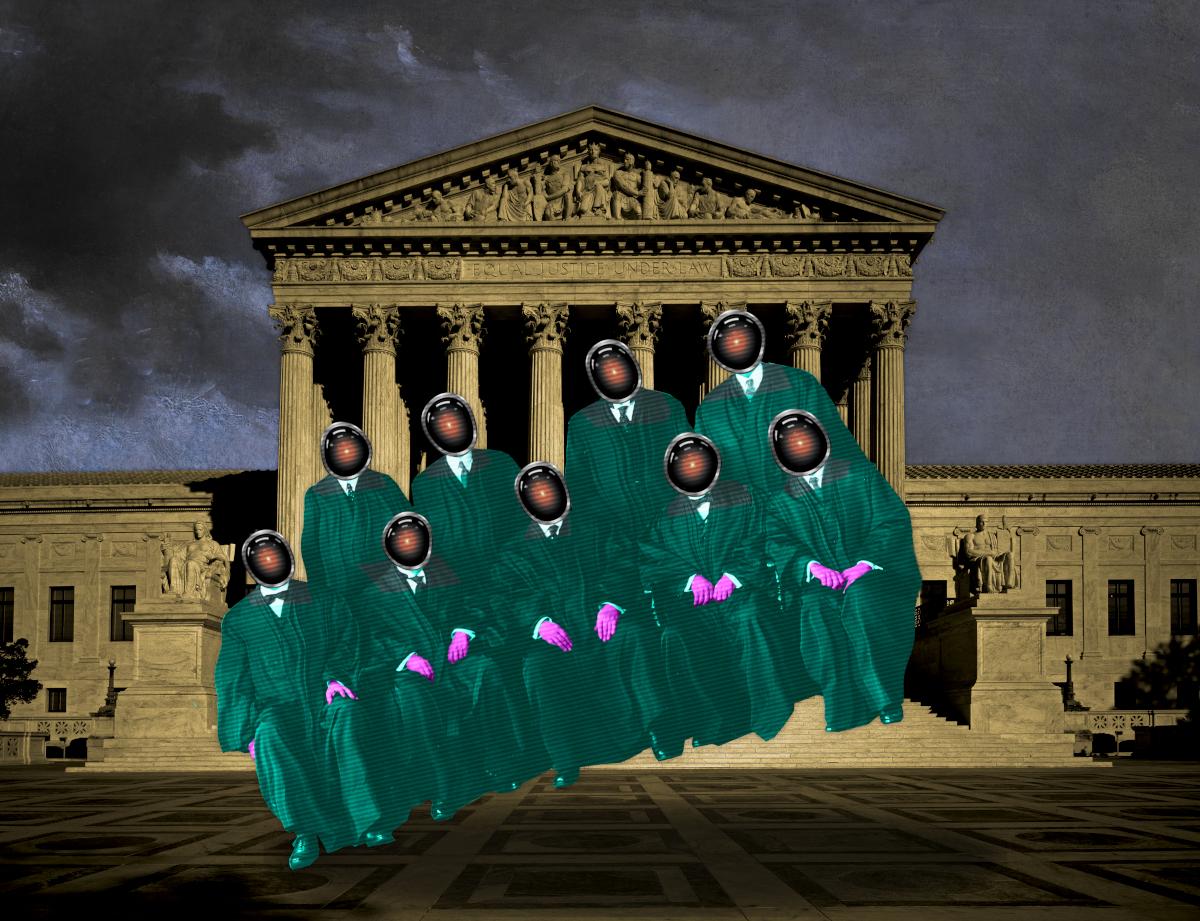
The Supreme Court has just turned down a petition to hear an appeal in a case that held that AI works can't be copyrighted.
-
The RIAA represents record labels, not film studios, but thanks to vertical integration, the big film studios are *also* the big record labels. That's why the RIAA alerted the press to its position on this suit.
There's two important things to note about the RIAA press release: how it opened, and how it closed. It opens by stating that the companies involved want "partnerships" with AI companies.
19/
In other words, if they establish that they have the right to control training on their archives, they *won't* use that right to prevent the creation of AI models that compete with creative workers. Rather, they will use that right to *get paid* when those models are created.
Expanding copyright to cover models isn't about *preventing* generative AI technologies - it's about ensuring that these technologies are licensed by incumbent media companies.
20/
-
In other words, if they establish that they have the right to control training on their archives, they *won't* use that right to prevent the creation of AI models that compete with creative workers. Rather, they will use that right to *get paid* when those models are created.
Expanding copyright to cover models isn't about *preventing* generative AI technologies - it's about ensuring that these technologies are licensed by incumbent media companies.
20/
This licensure would ensure that media companies would get paid for training, but it would also let them set the terms on which the resulting models were used. The studios could demand that AI companies put "guardrails" on the resulting models to stop them from being used to output things that might compete with the studios' own products.
21/
-
This licensure would ensure that media companies would get paid for training, but it would also let them set the terms on which the resulting models were used. The studios could demand that AI companies put "guardrails" on the resulting models to stop them from being used to output things that might compete with the studios' own products.
21/
That's what the opening of this press-release signifies, but to really understand its true meaning, you have to look at the *closing* of the release: the signature at the bottom of it, "Mitch Glazier, CEO, RIAA."
Who is Mitch Glazier? Well, he *used* to be a Congressional staffer. He was the guy responsible for sneaking a clause into an unrelated bill that repealed "termination of transfer" for musicians.
22/
-
That's what the opening of this press-release signifies, but to really understand its true meaning, you have to look at the *closing* of the release: the signature at the bottom of it, "Mitch Glazier, CEO, RIAA."
Who is Mitch Glazier? Well, he *used* to be a Congressional staffer. He was the guy responsible for sneaking a clause into an unrelated bill that repealed "termination of transfer" for musicians.
22/
"Termination" is a part of copyright law that lets creators take back their rights after 35 years, even if they originally signed a contract for a "perpetual license."
Under termination, all kinds of creative workers who got royally screwed at the start of their careers were able to get their copyrights back and re-sell them. The primary beneficiaries of termination are musicians, who signed notoriously shitty contracts in the 1950s-1980s:
23/
-
"Termination" is a part of copyright law that lets creators take back their rights after 35 years, even if they originally signed a contract for a "perpetual license."
Under termination, all kinds of creative workers who got royally screwed at the start of their careers were able to get their copyrights back and re-sell them. The primary beneficiaries of termination are musicians, who signed notoriously shitty contracts in the 1950s-1980s:
23/
When Mitch Glazier snuck a termination-destroying clause into legislation, he set the stage for the poorest, most abused, most admired musicians in recording history to lose access to money that let them buy a couple bags of groceries and make the rent. He condemned these beloved musicians to poverty.
What happened next is something of a Smurfs Family Christmas miracle.
24/
-
When Mitch Glazier snuck a termination-destroying clause into legislation, he set the stage for the poorest, most abused, most admired musicians in recording history to lose access to money that let them buy a couple bags of groceries and make the rent. He condemned these beloved musicians to poverty.
What happened next is something of a Smurfs Family Christmas miracle.
24/
Musicians were so outraged by this ripoff, and their fans were so outraged on their behalf, that Congress convened a special session solely to repeal the clause that Mitch Glazier tricked them into voting for. Shortly thereafter, Glazier was out of Congress:
25/
-
Musicians were so outraged by this ripoff, and their fans were so outraged on their behalf, that Congress convened a special session solely to repeal the clause that Mitch Glazier tricked them into voting for. Shortly thereafter, Glazier was out of Congress:
25/
But this story has a happy ending for Glazier, too - he might have been out of his government job, but he had a new gig, as CEO of the Recording Industry Association of America, where he earns more than $1.3 million/year to carry on the work he did in Congress - serving the interests of the record labels:

Record Industry Association Of America Inc - Nonprofit Explorer - ProPublica
Since 2013, the IRS has released data culled from millions of nonprofit tax filings. Use this database to find organizations and see details like their executive compensation, revenue and expenses, as well as download tax filings going back as far as 2001.
ProPublica (projects.propublica.org)
26/
-
But this story has a happy ending for Glazier, too - he might have been out of his government job, but he had a new gig, as CEO of the Recording Industry Association of America, where he earns more than $1.3 million/year to carry on the work he did in Congress - serving the interests of the record labels:
Record Industry Association Of America Inc - Nonprofit Explorer - ProPublica
Since 2013, the IRS has released data culled from millions of nonprofit tax filings. Use this database to find organizations and see details like their executive compensation, revenue and expenses, as well as download tax filings going back as far as 2001.
ProPublica (projects.propublica.org)
26/
Mitch Glazier serves the interests of the *labels*, not musicians. He *can't* serve both interests, because every dime a musician takes home is a dime that the labels don't get to realize as profits. Labels and musicians are class enemies. The fact that many musicians are on the labels' side when they sue AI companies *does not* mean that the labels are on the musicians' side.
27/
-
Mitch Glazier serves the interests of the *labels*, not musicians. He *can't* serve both interests, because every dime a musician takes home is a dime that the labels don't get to realize as profits. Labels and musicians are class enemies. The fact that many musicians are on the labels' side when they sue AI companies *does not* mean that the labels are on the musicians' side.
27/
What will the media companies do if they win their suits? Glazier gives us the answer in the opening of his release: they will create "partnerships" with AI companies to train models on the work we produce.
This is the lesson of the past 40 years of copyright expansion. For 40 years, we have expanded copyright in every way: copyright lasts longer, covers more works, prohibits more uses without licenses, establishes higher penalties, and makes it easier to win those penalties.
28/
-
What will the media companies do if they win their suits? Glazier gives us the answer in the opening of his release: they will create "partnerships" with AI companies to train models on the work we produce.
This is the lesson of the past 40 years of copyright expansion. For 40 years, we have expanded copyright in every way: copyright lasts longer, covers more works, prohibits more uses without licenses, establishes higher penalties, and makes it easier to win those penalties.
28/
Today, the media industry is larger and more profitable than at any time, *and* the share of those profits that artists take home is smaller than ever.
How has the expansion of copyright led to media companies getting richer and artists getting poorer? That's the question that Rebecca Giblin and I answer in our 2022 book *Chokepoint Capitalism*.
29/
-
Today, the media industry is larger and more profitable than at any time, *and* the share of those profits that artists take home is smaller than ever.
How has the expansion of copyright led to media companies getting richer and artists getting poorer? That's the question that Rebecca Giblin and I answer in our 2022 book *Chokepoint Capitalism*.
29/
In a nutshell: in a world of five publishers, four studios, three labels, two app companies and one company that controls all ebooks and audiobooks, giving a creative worker more copyright is like giving your bullied kid extra lunch money. It doesn't matter how much lunch money you give that kid - the bullies will take it all, and the kid will go hungry:
30/
-
In a nutshell: in a world of five publishers, four studios, three labels, two app companies and one company that controls all ebooks and audiobooks, giving a creative worker more copyright is like giving your bullied kid extra lunch money. It doesn't matter how much lunch money you give that kid - the bullies will take it all, and the kid will go hungry:
30/
Indeed, if you keep giving that kid more lunch money, the bullies will eventually have enough dough that they'll hire a fancy ad-agency to blitz the world with a campaign insisting that our schoolkids are all going hungry and need *even more* lunch money (they'll take that money, too).
31/
-
Indeed, if you keep giving that kid more lunch money, the bullies will eventually have enough dough that they'll hire a fancy ad-agency to blitz the world with a campaign insisting that our schoolkids are all going hungry and need *even more* lunch money (they'll take that money, too).
31/
When Mitch Glazier - who got a $1m+/year job for the labels after attempting to pauperize musicans - writes on behalf of Disney in support of a copyright suit to establish that copyright prevents training a model without a license, he's not defending creative workers.
32/
-
When Mitch Glazier - who got a $1m+/year job for the labels after attempting to pauperize musicans - writes on behalf of Disney in support of a copyright suit to establish that copyright prevents training a model without a license, he's not defending creative workers.
32/
Disney is the company that takes the position that if it buys a company like Lucasfilm or Fox, it only acquires the *right* to use the works we made for those companies, but not the *obligation* to pay us when they do:
If a new, unambiguous copyright over model training comes into existence - whether through a court precedent or a new law - then all our contracts will be amended to non-negotiably require us to assign that right to our bosses.
33/
-
Disney is the company that takes the position that if it buys a company like Lucasfilm or Fox, it only acquires the *right* to use the works we made for those companies, but not the *obligation* to pay us when they do:
If a new, unambiguous copyright over model training comes into existence - whether through a court precedent or a new law - then all our contracts will be amended to non-negotiably require us to assign that right to our bosses.
33/
And our bosses will enter into "partnerships" to train models on our works. And those models will exist for one purpose: to let them create works without paying us.
The market concentration that lets our bosses dictate terms to us is getting *much* worse, and it's only speeding up. Getty Images - who sued Stability AI over image generation - is merging with Shutterstock:
Photographers alarmed by Getty/Shutterstock merger
Several photographers have warned that the merger of Getty Images and Shutterstock will result in even smaller commissions for artists, in a deal that could test the Trump Administration's desire to protect labour competition.

(globalcompetitionreview.com)
And Paramount is merging with Warners:
34/
-
And our bosses will enter into "partnerships" to train models on our works. And those models will exist for one purpose: to let them create works without paying us.
The market concentration that lets our bosses dictate terms to us is getting *much* worse, and it's only speeding up. Getty Images - who sued Stability AI over image generation - is merging with Shutterstock:
Photographers alarmed by Getty/Shutterstock merger
Several photographers have warned that the merger of Getty Images and Shutterstock will result in even smaller commissions for artists, in a deal that could test the Trump Administration's desire to protect labour competition.
(globalcompetitionreview.com)
And Paramount is merging with Warners:
34/
This is where this new SCOTUS action comes in. A new copyright that covers training is just one more thing these increasingly powerful members of this increasingly incestuous cartel can force us to sign away. That new copyright isn't something for us to bargain *with*, it's something we'll bargain *away*.
But the fact that the works that a model produces are automatically in the public domain is something we *can't* bargain away. It's a legal *fact*, not a legal *right*.
35/
-
This is where this new SCOTUS action comes in. A new copyright that covers training is just one more thing these increasingly powerful members of this increasingly incestuous cartel can force us to sign away. That new copyright isn't something for us to bargain *with*, it's something we'll bargain *away*.
But the fact that the works that a model produces are automatically in the public domain is something we *can't* bargain away. It's a legal *fact*, not a legal *right*.
35/
It means the more humans there are involved in the creation of a work, the more copyrightable the work is.
Media bosses love AI because it dangles a tantalizing possibility of running a firm without ego-shattering confrontations with creative workers who know how to do things. It's the solipsistic fantasy of a world without workers, in which a media boss conceives of a "product," prompts a sycophantic AI, and receives an item that's ready for sale:
36/
-
It means the more humans there are involved in the creation of a work, the more copyrightable the work is.
Media bosses love AI because it dangles a tantalizing possibility of running a firm without ego-shattering confrontations with creative workers who know how to do things. It's the solipsistic fantasy of a world without workers, in which a media boss conceives of a "product," prompts a sycophantic AI, and receives an item that's ready for sale:
36/
Many bosses know this isn't within reach. They imagine that they'll get the AI to shit out a script and then pay a writer on the cheap to "polish" it. They think they'll get an AI to shit out a motion sequence, a still, or a 3D model and then pay a human artist pennies to put the "final touches" on it.
37/
-
Many bosses know this isn't within reach. They imagine that they'll get the AI to shit out a script and then pay a writer on the cheap to "polish" it. They think they'll get an AI to shit out a motion sequence, a still, or a 3D model and then pay a human artist pennies to put the "final touches" on it.
37/
But the Copyright Office's position is that *only* those human contributions are eligible for a copyright: a few editorial changes, a few pixels or vectors rearranged. Everything else is in the public domain.
Here's the cool part: the only thing our bosses hate more than paying us is when other people take their stuff without paying for it. To achieve the kind of control they demand, they will have to pay *us* to make creative works.
38/
-
But the Copyright Office's position is that *only* those human contributions are eligible for a copyright: a few editorial changes, a few pixels or vectors rearranged. Everything else is in the public domain.
Here's the cool part: the only thing our bosses hate more than paying us is when other people take their stuff without paying for it. To achieve the kind of control they demand, they will have to pay *us* to make creative works.
38/
What's more, the fact that AI-generated works are in the public domain leaves a lot of uses that *don't* harm creative workers intact. You can amuse yourself and your friends with all the AI slop you can generate; the fact that it's not copyrightable doesn't matter to that use. I happen to think AI "art" is shit, but you do you:
39/