I'm a brit living in America.
-
@oliver_schafeld And how do you intend to measure "gustatory quality"?
-
-
Yes, it appears to be something of a myth or perhaps advances in electric kettle design ie heating element has made this no longer relevant.
The cultural fact that tea is not consumed in US as it is in much of the world also plays a role in the absence of electric kettles in most US households.
I remember being in the US in the early 90s and noticing the lack of electric jugs everywhere I stayed and the difficulty of finding somewhere to buy a cuppa.
One cafe in downtown NYC did offer to make me a cup of tea when I enquired then after a long wait presented me with a tepid cup of weak milky tea complete with tea bag still in the mug which tasted like it was at least 10 years old.
Americans do occasionally brew tea, but they prefer to make it with seawater.
-
@jeremy_pm
Belgian living in US. We have an electrical kettle and it works just fine. Don't see a noticeable difference in heating time to 220V.
@fessholeRight. Our kettle draws 10A at 230V. You could get just as much power at 120V if your wiring were rated at at least 20A, and I gather that American kitchen sockets usually are.
-
I'm a brit living in America. At my office there's no kettle, but we have a hot water dispenser. Today it's broken. When I lamented I can't make a cup of tea, a colleague suggested I microwave the water. Trump is not the only thing that makes this place a hellscape.
@fesshole those hot water dispensers are just as bad, so you might as well use the microwave if you've already regressed to such a low standard.
-
US doesn’t have electric kettles to boil water because they have lower voltage 110-120V compared to 220-240V in Europe and most of the world, making kettles slow or unable to boil water sufficiently.
@jeremy_pm @fesshole Simple. Use TWO kettles. (taps head)
-
@proedie are you sure about that? https://insideenergy.org/2016/02/23/boiling-water-ieq/ seems to suggest otherwise.
Even though the 500ml used in above test is about double of a cup, I find it difficult to imagine that that volume difference would be enough to overcome the energy efficiency difference of 50% for the microwave vs the 80% efficiency of an electric teakettle.Though being able to wait for the water to boil may be more efficient in the long term since I don't risk forgetting I have put the kettle on

But perhaps switching to an induction stove with a 'traditional' kettle with a whistle may solve that by needing to turn off the source of the noise
@virbonus @kc @fesshole -
@spacehobo @virbonus @fesshole we also enjoy boiling the colour out of vegetables, we’ve all got our quirks.
In more seriousness it’s more of a whole affair, generally you can diffuse a dispute between people by angrily and silently watching the kettle boil then being more chilled out by the time the tea is at a drinkable temperature before recommencing. Generally the monster sugar thing is what we call a builders tea
-
Yes, it appears to be something of a myth or perhaps advances in electric kettle design ie heating element has made this no longer relevant.
The cultural fact that tea is not consumed in US as it is in much of the world also plays a role in the absence of electric kettles in most US households.
I remember being in the US in the early 90s and noticing the lack of electric jugs everywhere I stayed and the difficulty of finding somewhere to buy a cuppa.
One cafe in downtown NYC did offer to make me a cup of tea when I enquired then after a long wait presented me with a tepid cup of weak milky tea complete with tea bag still in the mug which tasted like it was at least 10 years old.
@jeremy_pm @jeroen @fesshole in the South, we actually drink a ton of tea, but it's brewed very strong in large batches and served over ice.
People usually get this out at restaurants or from a fast food drive through. When we do make it at home, typically it makes more sense to just heat water in a pot and drop the bags in there to steep.
Another tradition is sun tea, which again requires a large vessel for a batch brew.
-
I'm a brit living in America. At my office there's no kettle, but we have a hot water dispenser. Today it's broken. When I lamented I can't make a cup of tea, a colleague suggested I microwave the water. Trump is not the only thing that makes this place a hellscape.
@fesshole
Come on, this actually works! -
@jeremy_pm @jeroen @fesshole in the South, we actually drink a ton of tea, but it's brewed very strong in large batches and served over ice.
People usually get this out at restaurants or from a fast food drive through. When we do make it at home, typically it makes more sense to just heat water in a pot and drop the bags in there to steep.
Another tradition is sun tea, which again requires a large vessel for a batch brew.
Yes, in my childhood it was always traditional to make a pot of tea in an aptly named tea pot which was then poured into cups with or without milk.
Loose tea leaves were used in the teapot and tea would usually be poured through a tea strainer but not necessarily hence the history of reading the tea leaves that remain at the bottom of a cup once drunk.
The advent of tea bags destroyed a lot of tea traditions although loose tea and teapots are still used particularly by tea aficionados.
The best cup of tea I have ever enjoyed was in the Sri Lankan tea lands where the tea served was extremely fresh and served with fresh milk from cows that were farmed locally. Dairying was possible due to the high altitude of the tea lands providing a warm but not tropical year round temperature of approximately 25°C.
-
-
-
I wondered the same. It can’t affect the taste. Is it a principle thing? I boil a kettle on a stovetop every morning for coffee I make in a French press because that’s how I like to do it, but I’d microwave a cup of water for tea in a pinch.
Also don’t really trust the hot water from the tap. Idk why.




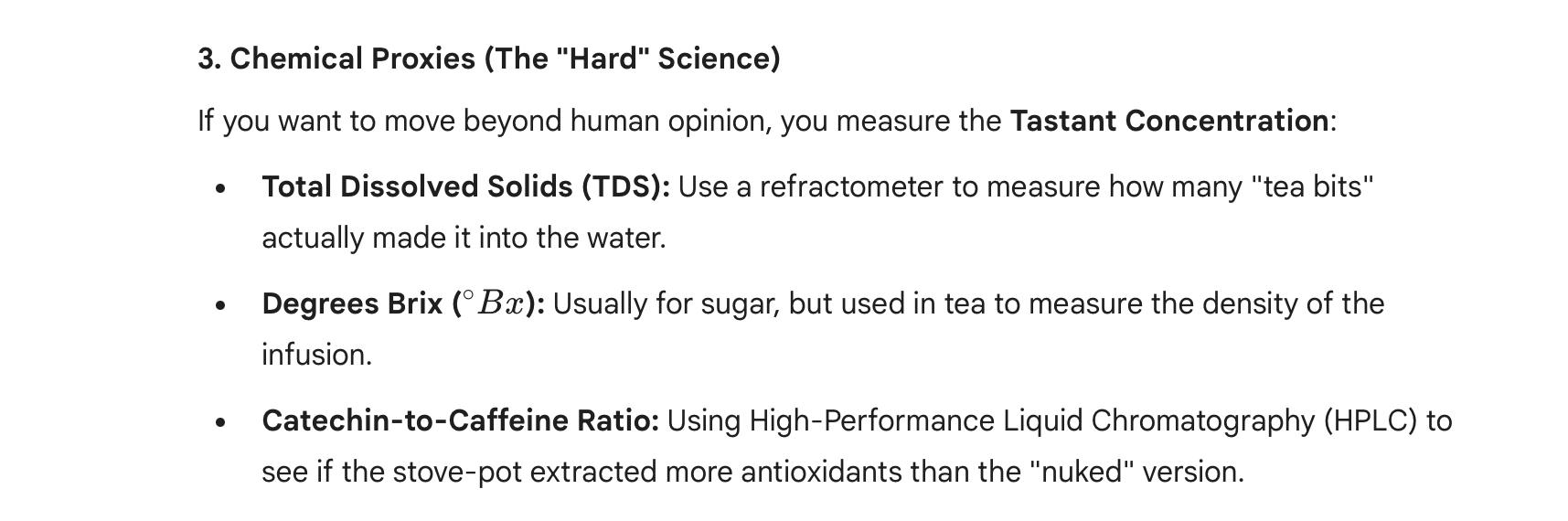
 Damned internet. Now I need to conduct an experiment on the gustatory quality of
 ️🧑
️🧑