@larozeppeli thank you!! This is what I was aiming for!
 M
M
michelleful@scicomm.xyz
@michelleful@scicomm.xyz
Posts
-
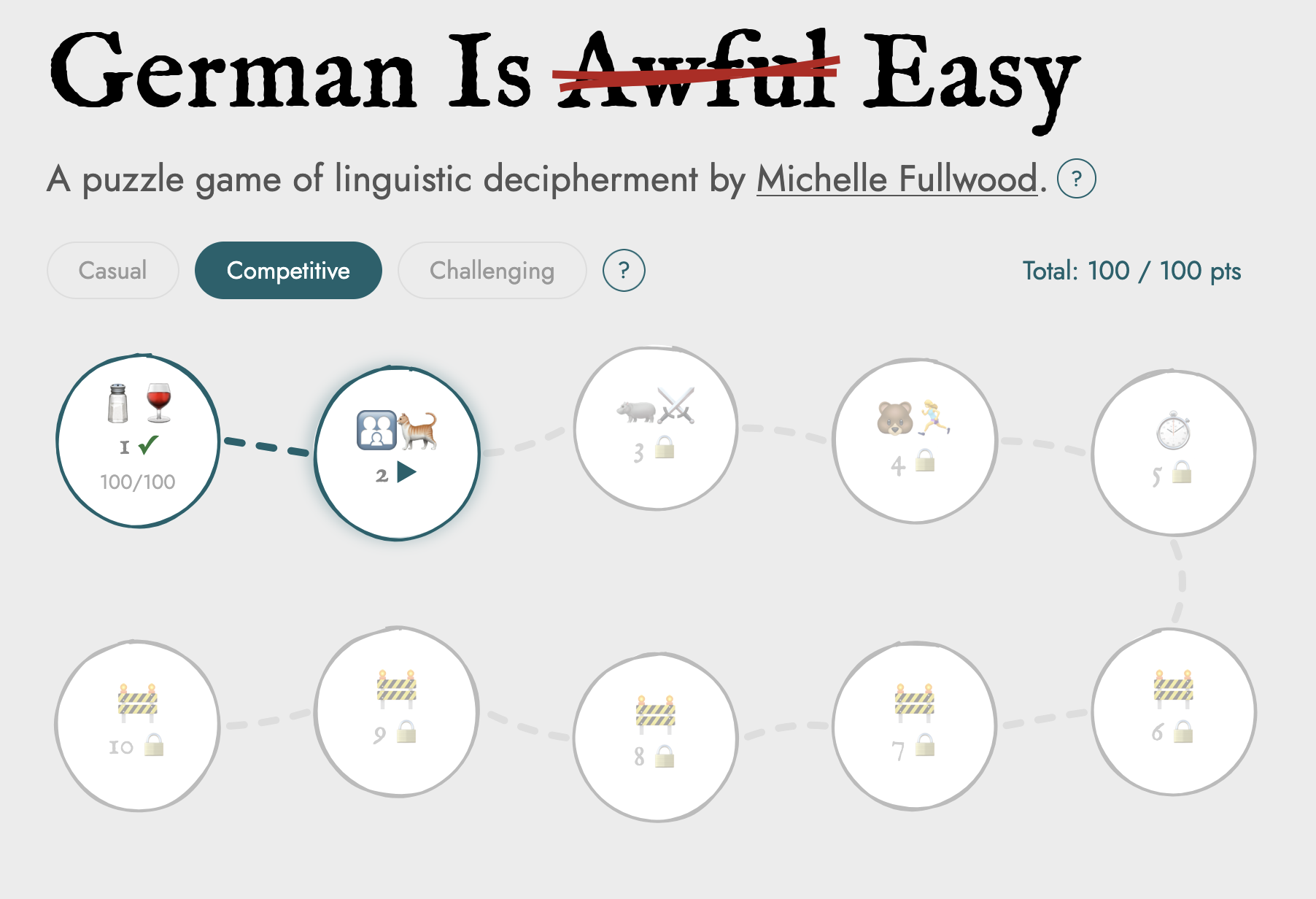
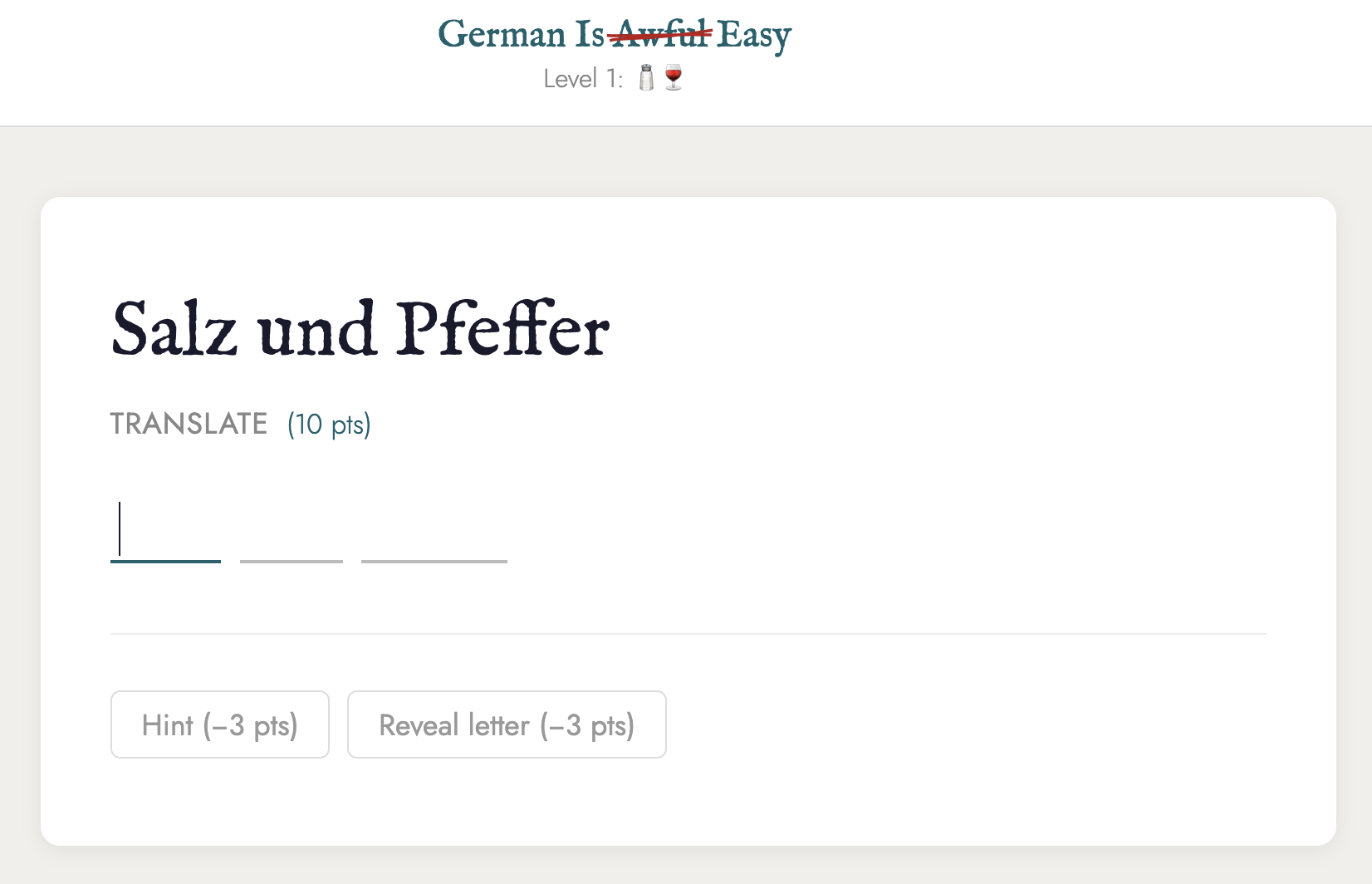
I've been making a linguistics puzzle game where you decipher a language (which happens to be German) using shared etymology, shared cultural knowledge and pattern matching. -
I've been making a linguistics puzzle game where you decipher a language (which happens to be German) using shared etymology, shared cultural knowledge and pattern matching.@conniptions please do and let me know the results!!
I am definitely going to continue accepting the British spelling, if only because I am someone who both uses it (coming from Singapore) and uses the word "workweek" (for whatever reason, I don't feel like it's ever not been in my vocabulary).

-
I've been making a linguistics puzzle game where you decipher a language (which happens to be German) using shared etymology, shared cultural knowledge and pattern matching.@Ruhrnalist @pentup Excellent!! The 3rd mode, which has zero hints, even free ones (except for "next letter please") is currently the "challenging" mode

-
I've been making a linguistics puzzle game where you decipher a language (which happens to be German) using shared etymology, shared cultural knowledge and pattern matching.@conniptions Interesting! Do you use the term "working week" instead? If it's any consolation I accept British and American spelling! If they have a different number of blanks that's a bit harder to support though...
-
I've been making a linguistics puzzle game where you decipher a language (which happens to be German) using shared etymology, shared cultural knowledge and pattern matching.@pentup Ah yeah, I was looking for a more direct translation of the German I had there, and I think that's how most English speakers quote it! I might say "Translate word by word" or something like that and be less snarky about how no one says "nor any", because clearly someone does!
-
I've been making a linguistics puzzle game where you decipher a language (which happens to be German) using shared etymology, shared cultural knowledge and pattern matching.@divVerent Thank you! I'm not sure about the "how well it works" either, but teaching German isn't the main goal, it's to have fun exploring a new language without needing to memorise a lot of words and having a bunch of little epiphanies along the way
Thanks for the -ieren examples, I should definitely include some of those cognates in a future level! -
I've been making a linguistics puzzle game where you decipher a language (which happens to be German) using shared etymology, shared cultural knowledge and pattern matching.@pentup You're probably right there that people might think that there'll be a leaderboard for competitive. I was just looking for a C word that fit in between haha. Maybe "classic"? I will wait for more feedback before changing it but thank you for flagging it!
-
I've been making a linguistics puzzle game where you decipher a language (which happens to be German) using shared etymology, shared cultural knowledge and pattern matching.@pentup Thanks for your feedback! I'm using a simplified version of what I believe to be the standard syntactic analysis. Where it may seem not to be explanatory is the fact that "beer" is currently stipulated to be before "drunk". We can tell that that's the case when we start looking at the subordinate clauses where the verb doesn't move at all, though. We haven't gotten there yet! I'm not sure if this entirely addresses your question, but I think I get where you're coming from
-
I've been making a linguistics puzzle game where you decipher a language (which happens to be German) using shared etymology, shared cultural knowledge and pattern matching.@Sharonybaloney if you tap on a word (e.g. ich) and then the first blank, does it move?
-
I've been making a linguistics puzzle game where you decipher a language (which happens to be German) using shared etymology, shared cultural knowledge and pattern matching.@Oelnbod you need to put another noun in the first positions! Click on the current noun to return and try a different one! Same for both clauses.
-
I've been making a linguistics puzzle game where you decipher a language (which happens to be German) using shared etymology, shared cultural knowledge and pattern matching.@rubyjones you need to put another noun in the first positions! Click on the current noun to return and try a different one! Same for both clauses
-
I've been making a linguistics puzzle game where you decipher a language (which happens to be German) using shared etymology, shared cultural knowledge and pattern matching.I've been making a linguistics puzzle game where you decipher a language (which happens to be German) using shared etymology, shared cultural knowledge and pattern matching.
It's called German Is A̶w̶f̶u̶l̶ Easy and the first five levels are up! No German knowledge necessary, and feedback is very welcome.
German Is A̶w̶f̶u̶l̶ Easy
Personal website for Michelle Fullwood, NLP scientist and linguistic tinkerer. Language tools, maps, miscellany.

(michellefullwood.com)
#etymology #linguistics #puzzles #LearnGerman