Skip to content
  • Categories
  • Recent
  • Tags
  • Popular
  • World
  • Users
  • Groups
Skins
  • Light
  • Brite
  • Cerulean
  • Cosmo
  • Flatly
  • Journal
  • Litera
  • Lumen
  • Lux
  • Materia
  • Minty
  • Morph
  • Pulse
  • Sandstone
  • Simplex
  • Sketchy
  • Spacelab
  • United
  • Yeti
  • Zephyr
  • Dark
  • Cyborg
  • Darkly
  • Quartz
  • Slate
  • Solar
  • Superhero
  • Vapor

  • Default (Cyborg)
  • No Skin
Collapse
Brand Logo

CIRCLE WITH A DOT

  1. Home
  2. Uncategorized
  3. "Maria and Peter are students and meet up for a late dinner.

"Maria and Peter are students and meet up for a late dinner.

Scheduled Pinned Locked Moved Uncategorized
cognitionphilosophytruth
83 Posts 60 Posters 0 Views
  • Oldest to Newest
  • Newest to Oldest
  • Most Votes
Reply
  • Reply as topic
Log in to reply
This topic has been deleted. Only users with topic management privileges can see it.
  • vrandecic@mas.toV vrandecic@mas.to

    A new study shows that there is much, much less agreement on the answer to this question than I would have expected. Even after reading about the study, I still expect people in my bubble to have the same answer as I do. Let's see. But this probably means that the meaning of truth, in the general population, is simply different from what I would have assumed. And explains a number of public discourses.

    2/2

    Link Preview Image
    The surprising divide over what counts as true

    A new study finds that what people think about facts, authenticity, or coherent beliefs explains why they disagree about what is true.

    favicon

    Reason.com (reason.com)

    bradr@infosec.exchangeB This user is from outside of this forum
    bradr@infosec.exchangeB This user is from outside of this forum
    bradr@infosec.exchange
    wrote last edited by
    #39

    @vrandecic

    When a religious Christian understands “I am the way, the truth, and the life. No one comes to the Father except through me.” they are not thinking about boolean logic.

    It does not escape me that the percentage of U.S. and British respondents in the survey reviewed by Reason, who report coherence and authenticity as determinants of truth (rather than correspondence), roughly matches the percentage of U.S. and British who consider themselves religious.

    It also probably is not neutral to such a respondent that the interlocutors in the example are named Mary and Peter.

    1 Reply Last reply
    1
    0
    • R relay@relay.infosec.exchange shared this topic
    • kimsj@mastodon.socialK kimsj@mastodon.social

      @vrandecic
      I voted false, because Maria was claiming knowledge she did not have. The truth would be ‘he told me he’d be there’.

      punishmenthurts@autistics.lifeP This user is from outside of this forum
      punishmenthurts@autistics.lifeP This user is from outside of this forum
      punishmenthurts@autistics.life
      wrote last edited by
      #40

      @KimSJ @vrandecic
      .
      agreed.

      1 Reply Last reply
      0
      • vrandecic@mas.toV vrandecic@mas.to

        "Maria and Peter are students and meet up for a late dinner. Peter asks Maria whether Tom is at the party that they intend to go to after dinner. Maria answers that Tom is at the party. After all, Tom had told her that he would be at the party. When they arrive at the party, it turns out that Tom had changed his plans, and is not at the party. Was Maria's answer true or false?"

        #truth #philosophy #cognition

        (please spread for visibility, I would like this to be as wide as possible)

        1/2

        twipped@twipped.socialT This user is from outside of this forum
        twipped@twipped.socialT This user is from outside of this forum
        twipped@twipped.social
        wrote last edited by
        #41

        @vrandecic @brooke Schrödinger's Tom. The answer was simultaneously true and false

        1 Reply Last reply
        0
        • vrandecic@mas.toV vrandecic@mas.to

          "Maria and Peter are students and meet up for a late dinner. Peter asks Maria whether Tom is at the party that they intend to go to after dinner. Maria answers that Tom is at the party. After all, Tom had told her that he would be at the party. When they arrive at the party, it turns out that Tom had changed his plans, and is not at the party. Was Maria's answer true or false?"

          #truth #philosophy #cognition

          (please spread for visibility, I would like this to be as wide as possible)

          1/2

          J This user is from outside of this forum
          J This user is from outside of this forum
          jane_aid@mastodon.social
          wrote last edited by
          #42

          @vrandecic This is really two colliding questions: truth-conditions vs. assertion-appropriateness.

          Maria satisfied justification (reasonable grounds). But the Gettier intuition: her justified true belief wasn't knowledge because the contingency broke.

          The key: can future contingents even have truth values yet? If not, she made a grounded assertion about something uncertain—not lying, not bullshitting.

          Does your survey distinguish between what she *should* have said vs. what was actually said?

          1 Reply Last reply
          0
          • vrandecic@mas.toV vrandecic@mas.to

            "Maria and Peter are students and meet up for a late dinner. Peter asks Maria whether Tom is at the party that they intend to go to after dinner. Maria answers that Tom is at the party. After all, Tom had told her that he would be at the party. When they arrive at the party, it turns out that Tom had changed his plans, and is not at the party. Was Maria's answer true or false?"

            #truth #philosophy #cognition

            (please spread for visibility, I would like this to be as wide as possible)

            1/2

            quantillion@mstdn.ioQ This user is from outside of this forum
            quantillion@mstdn.ioQ This user is from outside of this forum
            quantillion@mstdn.io
            wrote last edited by
            #43

            @vrandecic
            It's the person telling the story that is most likely "paraphrasing" Maria's answer for effect.

            1 Reply Last reply
            0
            • vrandecic@mas.toV vrandecic@mas.to

              "Maria and Peter are students and meet up for a late dinner. Peter asks Maria whether Tom is at the party that they intend to go to after dinner. Maria answers that Tom is at the party. After all, Tom had told her that he would be at the party. When they arrive at the party, it turns out that Tom had changed his plans, and is not at the party. Was Maria's answer true or false?"

              #truth #philosophy #cognition

              (please spread for visibility, I would like this to be as wide as possible)

              1/2

              robincafolla@mastodon.ieR This user is from outside of this forum
              robincafolla@mastodon.ieR This user is from outside of this forum
              robincafolla@mastodon.ie
              wrote last edited by
              #44

              @vrandecic it comes down to whether you believe there is an absolute truth, or whether "truth" is simply not telling a lie.

              Truth and lie are opposites for one meaning of truth. Truth and falsehood are opposites for another meaning of truth. The issue is that English does not distinguish between these concepts.

              1 Reply Last reply
              0
              • vrandecic@mas.toV vrandecic@mas.to

                "Maria and Peter are students and meet up for a late dinner. Peter asks Maria whether Tom is at the party that they intend to go to after dinner. Maria answers that Tom is at the party. After all, Tom had told her that he would be at the party. When they arrive at the party, it turns out that Tom had changed his plans, and is not at the party. Was Maria's answer true or false?"

                #truth #philosophy #cognition

                (please spread for visibility, I would like this to be as wide as possible)

                1/2

                infrapink@mastodon.ieI This user is from outside of this forum
                infrapink@mastodon.ieI This user is from outside of this forum
                infrapink@mastodon.ie
                wrote last edited by
                #45

                @vrandecic Maria's statement is false, but she isn't lying. Her answer is completely in agreement with the information available to her, but the information available to her is incomplete.

                1 Reply Last reply
                0
                • vrandecic@mas.toV vrandecic@mas.to

                  @janjko yeah, I have the same problem. I would say Maria never lied. But for me, that doesn't mean what she said is true.

                  raphaelmorgan@disabled.socialR This user is from outside of this forum
                  raphaelmorgan@disabled.socialR This user is from outside of this forum
                  raphaelmorgan@disabled.social
                  wrote last edited by
                  #46

                  @vrandecic @janjko this. What she said was not true, and I don't understand* how that can be controversial because it was factually incorrect. That doesn't mean she was lying, it just means she was wrong

                  *I understand better after reading the article but it still boggles my mind

                  1 Reply Last reply
                  0
                  • vrandecic@mas.toV vrandecic@mas.to

                    "Maria and Peter are students and meet up for a late dinner. Peter asks Maria whether Tom is at the party that they intend to go to after dinner. Maria answers that Tom is at the party. After all, Tom had told her that he would be at the party. When they arrive at the party, it turns out that Tom had changed his plans, and is not at the party. Was Maria's answer true or false?"

                    #truth #philosophy #cognition

                    (please spread for visibility, I would like this to be as wide as possible)

                    1/2

                    weekendspy@mastodon.nzW This user is from outside of this forum
                    weekendspy@mastodon.nzW This user is from outside of this forum
                    weekendspy@mastodon.nz
                    wrote last edited by
                    #47

                    @vrandecic if we can't answer this question, you think an AI can?

                    1 Reply Last reply
                    0
                    • rjblaskiewicz@mstdn.socialR rjblaskiewicz@mstdn.social

                      @vrandecic Seems like a false (true?) dichotomy: true, false, uninformed/incomplete

                      raphaelmorgan@disabled.socialR This user is from outside of this forum
                      raphaelmorgan@disabled.socialR This user is from outside of this forum
                      raphaelmorgan@disabled.social
                      wrote last edited by
                      #48

                      @rjblaskiewicz @vrandecic it is uninformed, but it's still false. He was objectively not there.

                      rjblaskiewicz@mstdn.socialR 2 Replies Last reply
                      0
                      • vrandecic@mas.toV vrandecic@mas.to

                        "Maria and Peter are students and meet up for a late dinner. Peter asks Maria whether Tom is at the party that they intend to go to after dinner. Maria answers that Tom is at the party. After all, Tom had told her that he would be at the party. When they arrive at the party, it turns out that Tom had changed his plans, and is not at the party. Was Maria's answer true or false?"

                        #truth #philosophy #cognition

                        (please spread for visibility, I would like this to be as wide as possible)

                        1/2

                        fishidwardrobe@mastodon.me.ukF This user is from outside of this forum
                        fishidwardrobe@mastodon.me.ukF This user is from outside of this forum
                        fishidwardrobe@mastodon.me.uk
                        wrote last edited by
                        #49

                        @vrandecic presumably no-one was at the party at that point; it hadn't started yet.

                        1 Reply Last reply
                        0
                        • stk@chaos.socialS stk@chaos.social

                          @msbellows @vrandecic @poupou and then they went through a double slit and ended up scattered all over the place

                          fishidwardrobe@mastodon.me.ukF This user is from outside of this forum
                          fishidwardrobe@mastodon.me.ukF This user is from outside of this forum
                          fishidwardrobe@mastodon.me.uk
                          wrote last edited by
                          #50

                          @stk @msbellows @vrandecic @poupou at a party we just call that "mingling".

                          1 Reply Last reply
                          0
                          • vrandecic@mas.toV vrandecic@mas.to

                            "Maria and Peter are students and meet up for a late dinner. Peter asks Maria whether Tom is at the party that they intend to go to after dinner. Maria answers that Tom is at the party. After all, Tom had told her that he would be at the party. When they arrive at the party, it turns out that Tom had changed his plans, and is not at the party. Was Maria's answer true or false?"

                            #truth #philosophy #cognition

                            (please spread for visibility, I would like this to be as wide as possible)

                            1/2

                            benjamineskola@hachyderm.ioB This user is from outside of this forum
                            benjamineskola@hachyderm.ioB This user is from outside of this forum
                            benjamineskola@hachyderm.io
                            wrote last edited by
                            #51

                            @vrandecic it’s a false statement which she believes to be true.

                            1 Reply Last reply
                            0
                            • vrandecic@mas.toV vrandecic@mas.to

                              "Maria and Peter are students and meet up for a late dinner. Peter asks Maria whether Tom is at the party that they intend to go to after dinner. Maria answers that Tom is at the party. After all, Tom had told her that he would be at the party. When they arrive at the party, it turns out that Tom had changed his plans, and is not at the party. Was Maria's answer true or false?"

                              #truth #philosophy #cognition

                              (please spread for visibility, I would like this to be as wide as possible)

                              1/2

                              hamatti@mastodon.worldH This user is from outside of this forum
                              hamatti@mastodon.worldH This user is from outside of this forum
                              hamatti@mastodon.world
                              wrote last edited by
                              #52

                              @vrandecic Maria's answer was false but even if Tom would have been at the party and Maria's answer would have been true, it would have only been accidentally true.

                              Not true in the sense that she knew he was there. Just true in the sense that he happened to be there.

                              hamatti@mastodon.worldH 1 Reply Last reply
                              0
                              • hamatti@mastodon.worldH hamatti@mastodon.world

                                @vrandecic Maria's answer was false but even if Tom would have been at the party and Maria's answer would have been true, it would have only been accidentally true.

                                Not true in the sense that she knew he was there. Just true in the sense that he happened to be there.

                                hamatti@mastodon.worldH This user is from outside of this forum
                                hamatti@mastodon.worldH This user is from outside of this forum
                                hamatti@mastodon.world
                                wrote last edited by
                                #53

                                @vrandecic Was it a reasonable assumption for Maria to make in a casual conversion? 100% yes.

                                1 Reply Last reply
                                0
                                • vrandecic@mas.toV vrandecic@mas.to

                                  "Maria and Peter are students and meet up for a late dinner. Peter asks Maria whether Tom is at the party that they intend to go to after dinner. Maria answers that Tom is at the party. After all, Tom had told her that he would be at the party. When they arrive at the party, it turns out that Tom had changed his plans, and is not at the party. Was Maria's answer true or false?"

                                  #truth #philosophy #cognition

                                  (please spread for visibility, I would like this to be as wide as possible)

                                  1/2

                                  josephlord@union.placeJ This user is from outside of this forum
                                  josephlord@union.placeJ This user is from outside of this forum
                                  josephlord@union.place
                                  wrote last edited by
                                  #54

                                  @vrandecic False but not a lie because it was believed by Maria.

                                  1 Reply Last reply
                                  0
                                  • raphaelmorgan@disabled.socialR raphaelmorgan@disabled.social

                                    @rjblaskiewicz @vrandecic it is uninformed, but it's still false. He was objectively not there.

                                    rjblaskiewicz@mstdn.socialR This user is from outside of this forum
                                    rjblaskiewicz@mstdn.socialR This user is from outside of this forum
                                    rjblaskiewicz@mstdn.social
                                    wrote last edited by
                                    #55

                                    @raphaelmorgan @vrandecic True. 🙂

                                    1 Reply Last reply
                                    0
                                    • vrandecic@mas.toV vrandecic@mas.to

                                      "Maria and Peter are students and meet up for a late dinner. Peter asks Maria whether Tom is at the party that they intend to go to after dinner. Maria answers that Tom is at the party. After all, Tom had told her that he would be at the party. When they arrive at the party, it turns out that Tom had changed his plans, and is not at the party. Was Maria's answer true or false?"

                                      #truth #philosophy #cognition

                                      (please spread for visibility, I would like this to be as wide as possible)

                                      1/2

                                      rautavist@mastodon.socialR This user is from outside of this forum
                                      rautavist@mastodon.socialR This user is from outside of this forum
                                      rautavist@mastodon.social
                                      wrote last edited by
                                      #56

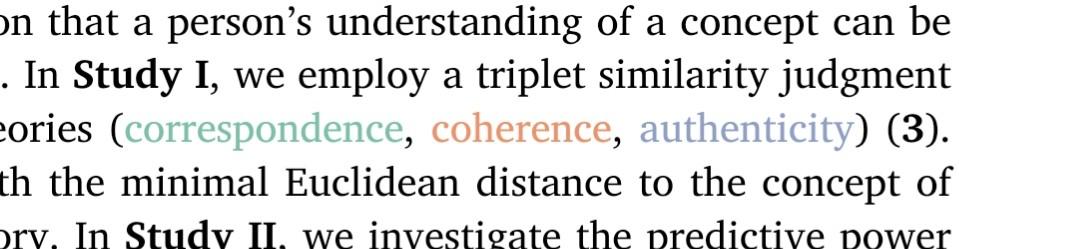
                                      @vrandecic I wonder how much, if at all, this (type of) study can tell us about how people think about factual reality, rather than just how they feel about particular words.

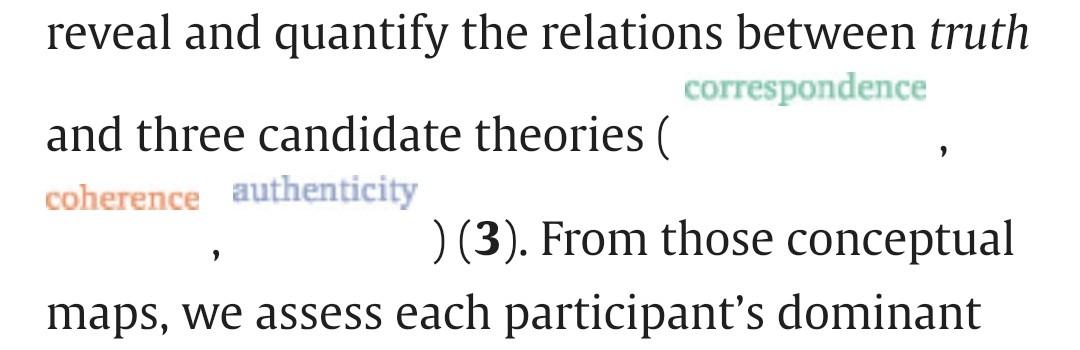
                                      Off topic: it never seizes to amaze me how lackluster web versions of scientific publications are made (see attached images of web version and PDF).
                                      Link Preview ImageLink Preview Image
                                      1 Reply Last reply
                                      0
                                      • raphaelmorgan@disabled.socialR raphaelmorgan@disabled.social

                                        @rjblaskiewicz @vrandecic it is uninformed, but it's still false. He was objectively not there.

                                        rjblaskiewicz@mstdn.socialR This user is from outside of this forum
                                        rjblaskiewicz@mstdn.socialR This user is from outside of this forum
                                        rjblaskiewicz@mstdn.social
                                        wrote last edited by
                                        #57

                                        @raphaelmorgan @vrandecic

                                        This last semester, my students and I were reading about the psychology behind "the dress" and one of the articles noted the dozens of processes that take place before you become aware of the color. The idea was that it's not even a decision. The brains of people who worked outside saw it one way and those whose brains compensated for artificial light saw it another way. Baseline understanding of concepts are similarly filtered, apparently....

                                        rjblaskiewicz@mstdn.socialR 1 Reply Last reply
                                        0
                                        • rjblaskiewicz@mstdn.socialR rjblaskiewicz@mstdn.social

                                          @raphaelmorgan @vrandecic

                                          This last semester, my students and I were reading about the psychology behind "the dress" and one of the articles noted the dozens of processes that take place before you become aware of the color. The idea was that it's not even a decision. The brains of people who worked outside saw it one way and those whose brains compensated for artificial light saw it another way. Baseline understanding of concepts are similarly filtered, apparently....

                                          rjblaskiewicz@mstdn.socialR This user is from outside of this forum
                                          rjblaskiewicz@mstdn.socialR This user is from outside of this forum
                                          rjblaskiewicz@mstdn.social
                                          wrote last edited by
                                          #58

                                          @raphaelmorgan @vrandecic

                                          So, following from that, there are a lot of notions, ideas, and predispositions that filter what gets assigned the feeling of "obviously and inarguably true." That said, I am inclined to agree with you. 🙂

                                          1 Reply Last reply
                                          0
                                          Reply
                                          • Reply as topic
                                          Log in to reply
                                          • Oldest to Newest
                                          • Newest to Oldest
                                          • Most Votes


                                          • Login

                                          • Login or register to search.
                                          • First post
                                            Last post
                                          0
                                          • Categories
                                          • Recent
                                          • Tags
                                          • Popular
                                          • World
                                          • Users
                                          • Groups