Do you have an example of stealth solar?
-
I recently added an ecoflow stream battery to my house (properly with a fused spur and isolator as plug in isn't yet allowed) and it gives me 4x MPPT so I can position 4 panels in different positions even if they aren't optimum and generate some solar.
I suspect I'll end up putting 2 on my garage in a traditional setup and then 2 directly on an east facing wall of my house which can't be seen by anyone. I'll probably mount the wall ones myself, still debating the garage ones as it's a slate roof which is a bit tricky to work with.
@smallsolar fused spur isn't fully compliant either but I think the UK is voting with it's feet on plug in solar anyway
 . Just a shame only Ecoflow and none of the good stuff is available easily here.
Walls in the UK are generally permitted development even though councils often hate it. Usual exceptions for conservation zones etc
-
@sheddi I found that the meter was key to avoid just losing lots of power to the grid. I've got it installed in the fusebox (had to have a bigger box to fit it in) but I saw online someone who just added a cable and plugged it into a nearby socket and put the clamp over the input line.
Doubt I'll be recouping my costs when I factor in the electrician installation but I'm enjoying having it setup.
@smallsolar @sheddi if you are paying a sparky price a proper install instead. A non fancy brand 3.6 or 5kW inverter that'll take standard 48v batteries is a grand, 16kWh of battery is about 1500 and some cables and stuff. Once you go over a tiny size wired in wins if you can do it, especially as the sparky can claim the vat off and you can't.
-
@smallsolar it's just plugged in, it's not in its final location yet and I wanted to check it wasn't DOA.
It does what it does well enough. The Ecoflow app has a few quirks and doesn't always report what you think it's reporting, but I'm getting used to them.
I don't have an Ecoflow-compatible energy monitor or smart plugs (my existing ZigBee kit isn't on their compatibility list AFAICT) but I've set up a manual demand profile and the Ultra follows it well enough.
@sheddi @smallsolar you can download code to provide the shelly API and also esp32 code for doing CT clamp to WiFi, so there are other ways to bridge the two. Nice thing about faking a shelly is you can then lie to the closed ecoflow system to get more control
-
Do you have an example of stealth solar?
I've been thinking a lot about 'stealth solar' where people attach #solarpanels to places in a subtle way to capture the sun's energy. It might be stealth as there are strict rules or just want to keep it low key. #balconysolar is sort of stealth gone mainstream.
With cheaper MPPT devices you can now accept slightly poorer efficiency due to placement and with microinverters don't need to make long strings. I particularly think that there is no point having a solar panel in storage, best get it out there and generating even if it's in a temporary place!
So I thought I'd start a small website that documents different stealth setups, so if you have cheeky solar panels and would be willing to share a little info (but not too much if it would get you in trouble) get in touch.
@smallsolar my solar panels are impossible to see unless you're on the roof or flying. I've only ever seen them in photos.
We didn't hide them on purpose, it was just an accident of the shape of our roof. We live in a terrace, without space between houses to step back and see the south-ish facing slope. This is pretty common for terraced houses, so there's a fair amount of potential stealth solar there. -
@sheddi @smallsolar you can download code to provide the shelly API and also esp32 code for doing CT clamp to WiFi, so there are other ways to bridge the two. Nice thing about faking a shelly is you can then lie to the closed ecoflow system to get more control
@etchedpixels @sheddi I did wonder about that, it's interesting they allowed for the Shelly device, in these closed loop days most try and keep you in ecosystem. It's a good thing as my experience of Shelly stuff is fairly positive
-
Do you have an example of stealth solar?
I've been thinking a lot about 'stealth solar' where people attach #solarpanels to places in a subtle way to capture the sun's energy. It might be stealth as there are strict rules or just want to keep it low key. #balconysolar is sort of stealth gone mainstream.
With cheaper MPPT devices you can now accept slightly poorer efficiency due to placement and with microinverters don't need to make long strings. I particularly think that there is no point having a solar panel in storage, best get it out there and generating even if it's in a temporary place!
So I thought I'd start a small website that documents different stealth setups, so if you have cheeky solar panels and would be willing to share a little info (but not too much if it would get you in trouble) get in touch.
@smallsolar The shed roof which needs patching.
I've been thinking about a porch, or just canopy over the front door, to stay dry while manipulating the keys. -
Do you have an example of stealth solar?
I've been thinking a lot about 'stealth solar' where people attach #solarpanels to places in a subtle way to capture the sun's energy. It might be stealth as there are strict rules or just want to keep it low key. #balconysolar is sort of stealth gone mainstream.
With cheaper MPPT devices you can now accept slightly poorer efficiency due to placement and with microinverters don't need to make long strings. I particularly think that there is no point having a solar panel in storage, best get it out there and generating even if it's in a temporary place!
So I thought I'd start a small website that documents different stealth setups, so if you have cheeky solar panels and would be willing to share a little info (but not too much if it would get you in trouble) get in touch.
@smallsolar we have 8x 100W solar panels that used to be on the roof of our RV. I’d love to be able to use them for the house, just not yet figured out how to best leverage the energy they generate without some complex tie-in / battery setup.
-
@smallsolar we have 8x 100W solar panels that used to be on the roof of our RV. I’d love to be able to use them for the house, just not yet figured out how to best leverage the energy they generate without some complex tie-in / battery setup.
@matt that's exactly the challenge, panels are the easy part (and increasingly the cheapest part), it's the orientation, installation and integration that requires the thought.
Is there a particular thing where you live that needs electricity that could be powered by the panels rather than trying to integrate with the grid?
-
@matt that's exactly the challenge, panels are the easy part (and increasingly the cheapest part), it's the orientation, installation and integration that requires the thought.
Is there a particular thing where you live that needs electricity that could be powered by the panels rather than trying to integrate with the grid?
@smallsolar mounting is relatively easy. Half of them are already mounted to a pair of 2x4s that we can use as a stand - we have plenty of space to lay them out.
The obvious place to put the energy is our EV but that’s out during the day when it’s sunny. I think the solution (for us) would be to use the RV as a buffer (it has 5kWh of lithium batteries) during the day, then “empty” that into the EV each evening.
My math says that’s about $0.80 worth per day on average in summer.
-
@smallsolar The shed roof which needs patching.
I've been thinking about a porch, or just canopy over the front door, to stay dry while manipulating the keys.@Photo55 panels are cheap enough to now potentially be construction materials, I've seen lots of reference to fences now being panels.
-
@smallsolar I've a little 10W panel on the shed roof. It used to keep a Pi running, now it powers a humidity sensor to control a dehumidifier.
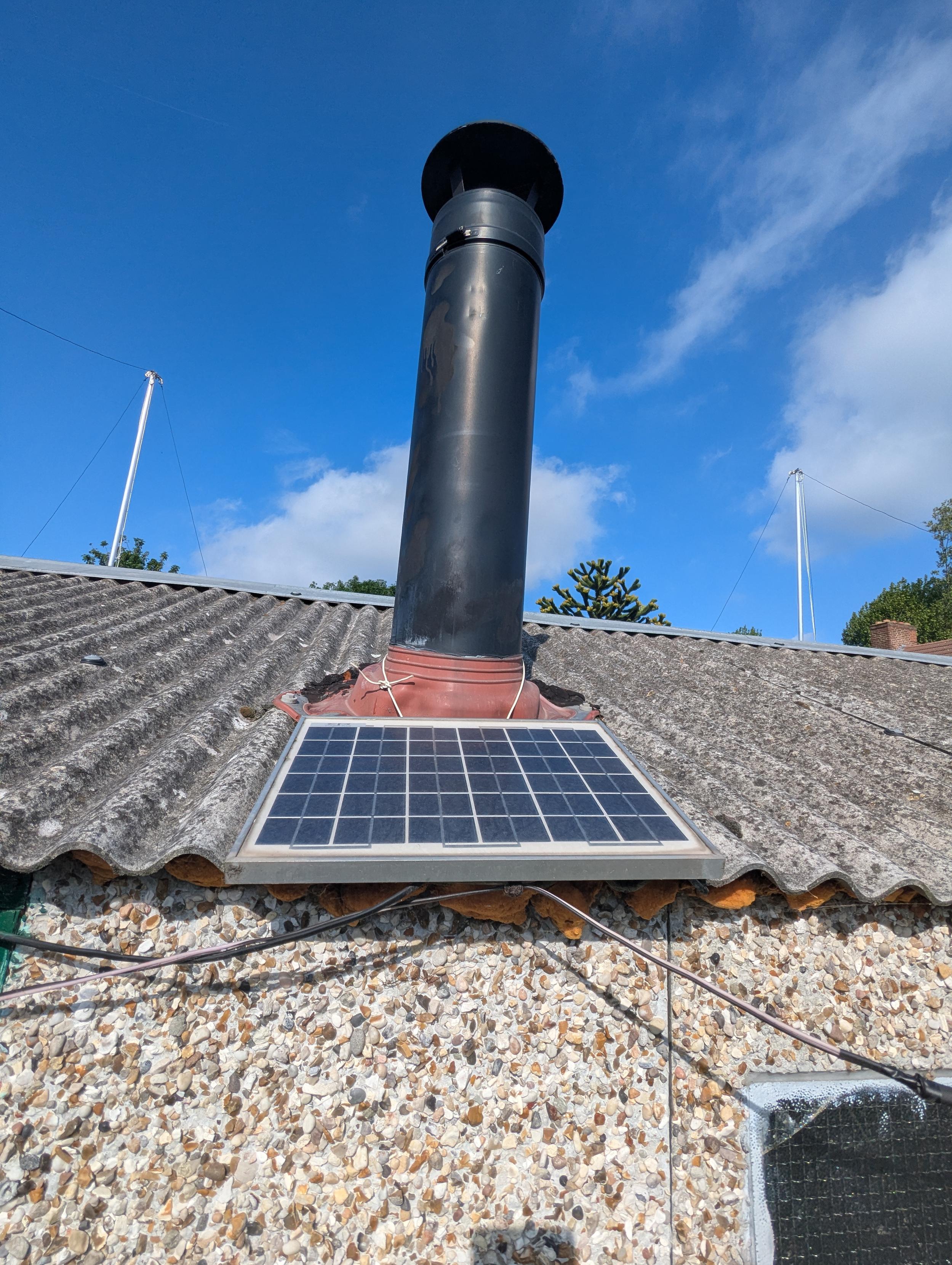
@dtl How incredibly cute and also useful! @smallsolar
-
@smallsolar mounting is relatively easy. Half of them are already mounted to a pair of 2x4s that we can use as a stand - we have plenty of space to lay them out.
The obvious place to put the energy is our EV but that’s out during the day when it’s sunny. I think the solution (for us) would be to use the RV as a buffer (it has 5kWh of lithium batteries) during the day, then “empty” that into the EV each evening.
My math says that’s about $0.80 worth per day on average in summer.
@matt I regularly have to remind myself that an EV uses up so much power to move! Sadly even with a few kW of panels it takes a while to charge a car up.
$0.80/day will slowly add up!
-
@matt I regularly have to remind myself that an EV uses up so much power to move! Sadly even with a few kW of panels it takes a while to charge a car up.
$0.80/day will slowly add up!
@smallsolar right, but it doesn’t need to fully charge the EV, just absorb what the solar panels have produced that day so it doesn’t go to waste.
The challenge is that $0.80/day over the course of the summer is only going to be around $150 so I need to avoid spending too much to make this happen else I lose my savings.
For context, we’re mid-build on a custom all-electric Passive House in Vermont and plan to add solar / batteries to it in future so this would only be short term
-
@matt I regularly have to remind myself that an EV uses up so much power to move! Sadly even with a few kW of panels it takes a while to charge a car up.
$0.80/day will slowly add up!
@matt thinking about it perhaps plug in solar (if allowed in your area) would work best, just need to invest in a inverter and the it would just contribute to your energy when there is sun, almost leave it and let it work.
-
@matt thinking about it perhaps plug in solar (if allowed in your area) would work best, just need to invest in a inverter and the it would just contribute to your energy when there is sun, almost leave it and let it work.
@smallsolar I’m not sure about plug in solar around here. If I were prepared to invest the time (and probably some money on interconnects), moving the 5kWh of LiFePO4 batteries, 3kVA inverter and charge controller out of our RV would be the best route. Just don’t know if the savings would justify the cost / hassle.
-
I recently added an ecoflow stream battery to my house (properly with a fused spur and isolator as plug in isn't yet allowed) and it gives me 4x MPPT so I can position 4 panels in different positions even if they aren't optimum and generate some solar.
I suspect I'll end up putting 2 on my garage in a traditional setup and then 2 directly on an east facing wall of my house which can't be seen by anyone. I'll probably mount the wall ones myself, still debating the garage ones as it's a slate roof which is a bit tricky to work with.
@smallsolar I have something similar and from that very brand, and I’ve written about it here
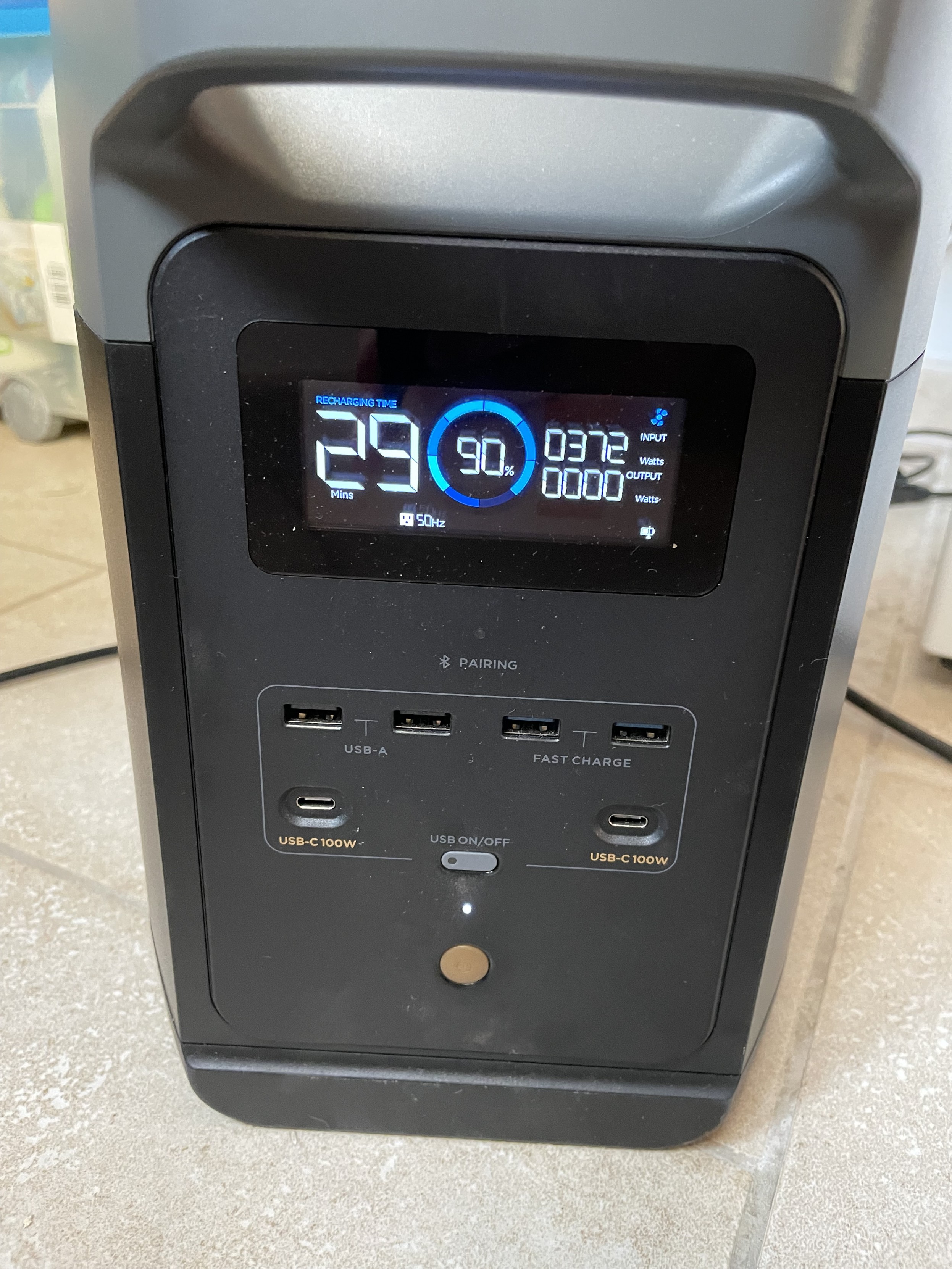
Guillaume Rossolini (@GuillaumeRossolini@infosec.exchange)
Attached: 1 image I’ve been experimenting with my newish solar battery Represented here is the end of the charge cycle yesterday at about the same time the sun started to set I’ve been powering the freezer with this 2 kWh battery, and every morning there is ~50% charge left, and so far every day I get it up to 90% (by choice) from solar alone I can also do a load of laundry or two, and some vacuuming, without being even connected to the grid (if I get the timing right) Of course this is clear summer weather, so this won’t be the same all year (This is far from sufficient to power the entire house, it’s just an experiment) Essentially, 1-2 kWh that aren’t drawn from the grid on a daily basis #solar

Infosec Exchange (infosec.exchange)
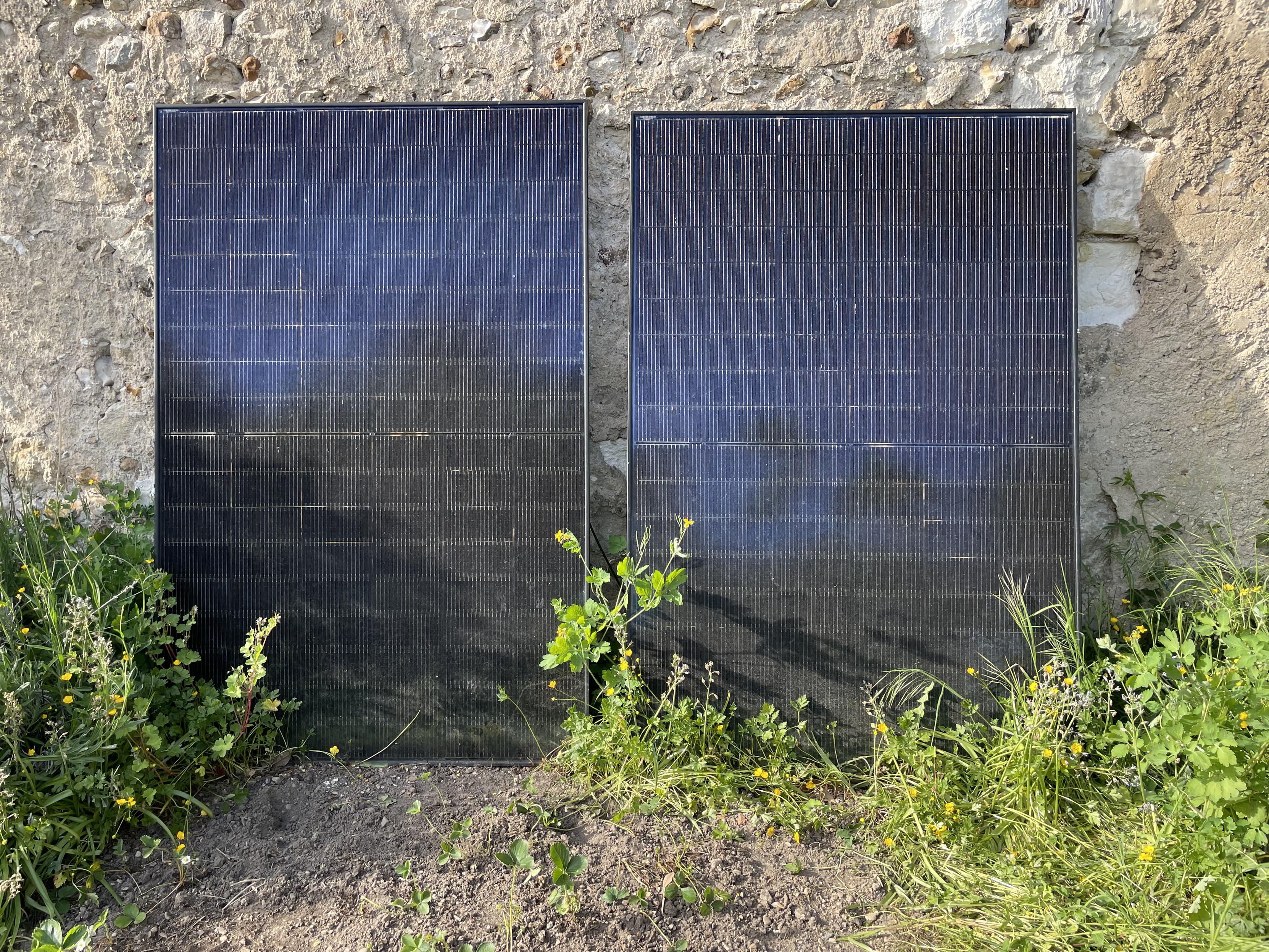
I’m not plugging the panels in a wall outlet and I’m not connecting them to the grid. This is just a temporary setup in an isolated circuit.
The panels are in the garden, connected to the battery which is located inside the house; the inverter is in storage, I don’t need it since there is no connection to the grid and it’d be draining the battery faster
The washing machine is usually plugged into the battery
I have one cable leading from the battery to my office to power stuffs when there is enough sunlight that day, and I’ll often switch everything back to the wall outlet or to the battery depending on weather conditions
Another cable is extended on demand when I need vacuuming done
As soon as the sun starts typically shining enough of the day, which is right about now, I extend another cable to the living room for the TV and whatnot, but that’s a tough one for my tiny setup to absorb, so there’s a lot of plugging and unplugging daily for that one

I stopped trying to power the freezer with the same panels, I tried that last year but it was stressful
Every night, I tell the battery to stop powering everything; every morning, I tell it to enable the output again
Still, I’m getting a lot from just two panels and a small battery
-
@smallsolar I have something similar and from that very brand, and I’ve written about it here
Guillaume Rossolini (@GuillaumeRossolini@infosec.exchange)
Attached: 1 image I’ve been experimenting with my newish solar battery Represented here is the end of the charge cycle yesterday at about the same time the sun started to set I’ve been powering the freezer with this 2 kWh battery, and every morning there is ~50% charge left, and so far every day I get it up to 90% (by choice) from solar alone I can also do a load of laundry or two, and some vacuuming, without being even connected to the grid (if I get the timing right) Of course this is clear summer weather, so this won’t be the same all year (This is far from sufficient to power the entire house, it’s just an experiment) Essentially, 1-2 kWh that aren’t drawn from the grid on a daily basis #solar
Infosec Exchange (infosec.exchange)
I’m not plugging the panels in a wall outlet and I’m not connecting them to the grid. This is just a temporary setup in an isolated circuit.
The panels are in the garden, connected to the battery which is located inside the house; the inverter is in storage, I don’t need it since there is no connection to the grid and it’d be draining the battery faster
The washing machine is usually plugged into the battery
I have one cable leading from the battery to my office to power stuffs when there is enough sunlight that day, and I’ll often switch everything back to the wall outlet or to the battery depending on weather conditions
Another cable is extended on demand when I need vacuuming done
As soon as the sun starts typically shining enough of the day, which is right about now, I extend another cable to the living room for the TV and whatnot, but that’s a tough one for my tiny setup to absorb, so there’s a lot of plugging and unplugging daily for that one
I stopped trying to power the freezer with the same panels, I tried that last year but it was stressful
Every night, I tell the battery to stop powering everything; every morning, I tell it to enable the output again
Still, I’m getting a lot from just two panels and a small battery
@smallsolar this isn’t a good financial move btw
The setup cost a little over a thousand € and I’m saving 1, maybe 2 kWh per day
That’s €0.14 per day
 so I guess I’m saving about €50 per year?
 -
@smallsolar In some flats where balcony solar isn't allowed because the landlord is a bastard, people have been building solar tables, which is just a panel with four legs. There is no rule against having a table on your balcony and no rule what a table has to be made of. You'll probably find many pictures if you search for "solartisch".
They can be used as table as well (best use a table cloth to avoid scratching the glass, although it is pretty tough).
@yngmar @smallsolar built one of those a few years ago. The hardest part was to find a suitable panel in terms of "small but extra thick frame for maximum sturdyness". 200W panel, 300W inverter limited (to stay below the legal limit for overall power fed into the grid). I opted for cheap surplus/scratched steel legs mounted with excess 19" rack mounting screws. I used rubbery plastic spacers to help with the bending force applied to the panel frame. The panel has protective plastic covers on the corners. If drilling holes into the frame, put a cloth and a piece of wood anside to not hit the plastic surface with the tip of the drill. I used two aluminum rails to mount the inverter. As those inverters are potted I just removed four screws that hold on the cover and replaced them with slightly longer ones that go though holes on the aluminum profiles.


-
Do you have an example of stealth solar?
I've been thinking a lot about 'stealth solar' where people attach #solarpanels to places in a subtle way to capture the sun's energy. It might be stealth as there are strict rules or just want to keep it low key. #balconysolar is sort of stealth gone mainstream.
With cheaper MPPT devices you can now accept slightly poorer efficiency due to placement and with microinverters don't need to make long strings. I particularly think that there is no point having a solar panel in storage, best get it out there and generating even if it's in a temporary place!
So I thought I'd start a small website that documents different stealth setups, so if you have cheeky solar panels and would be willing to share a little info (but not too much if it would get you in trouble) get in touch.
@smallsolar
Yesterday Robinson Meyer of Heatmap posted a video of him being interviewed by Chris Hayes that had a clip of a dude who installed PV in his backyard which connects to his EV charger, so no permits needed at all. -
@smallsolar In some flats where balcony solar isn't allowed because the landlord is a bastard, people have been building solar tables, which is just a panel with four legs. There is no rule against having a table on your balcony and no rule what a table has to be made of. You'll probably find many pictures if you search for "solartisch".
They can be used as table as well (best use a table cloth to avoid scratching the glass, although it is pretty tough).
@yngmar @smallsolar If you're renting, how do you get the power into the system? Or do you just power batteries/specific items off the panel?