Skip to content
  • Categories
  • Recent
  • Tags
  • Popular
  • World
  • Users
  • Groups
Skins
  • Light
  • Brite
  • Cerulean
  • Cosmo
  • Flatly
  • Journal
  • Litera
  • Lumen
  • Lux
  • Materia
  • Minty
  • Morph
  • Pulse
  • Sandstone
  • Simplex
  • Sketchy
  • Spacelab
  • United
  • Yeti
  • Zephyr
  • Dark
  • Cyborg
  • Darkly
  • Quartz
  • Slate
  • Solar
  • Superhero
  • Vapor

  • Default (Cyborg)
  • No Skin
Collapse
Brand Logo

CIRCLE WITH A DOT

  1. Home
  2. Uncategorized
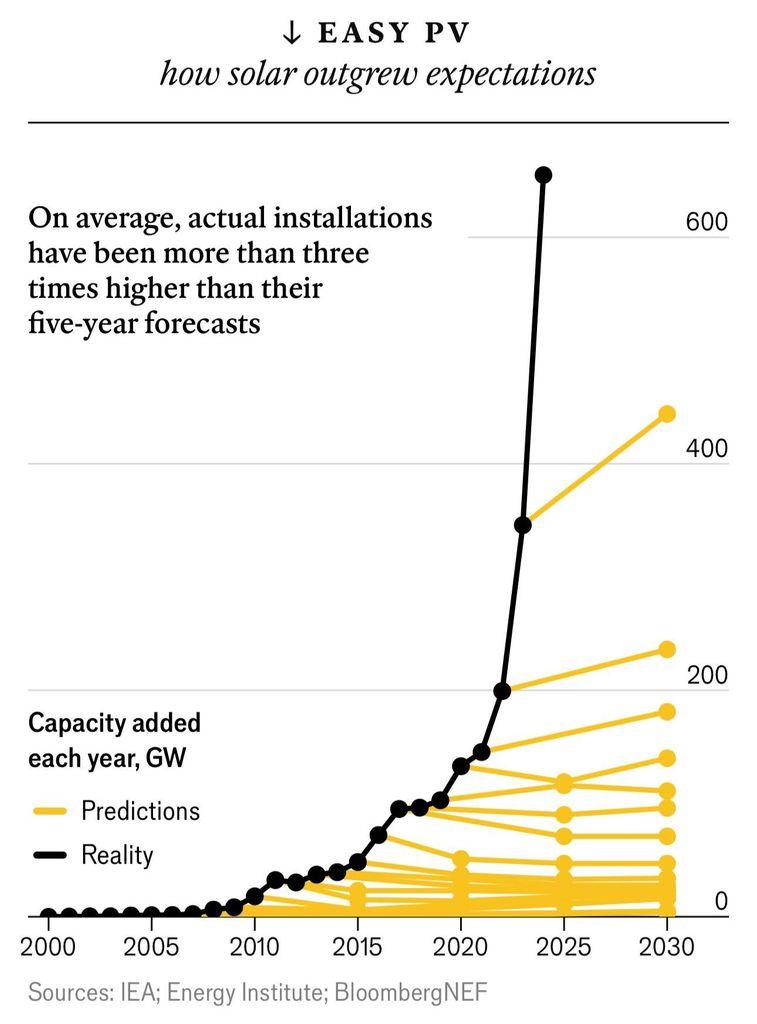
  3. The world’s solar capacity reached 1,419 gigawatts in 2023, way beyond any predictions.

The world’s solar capacity reached 1,419 gigawatts in 2023, way beyond any predictions.
Scheduled Pinned Locked Moved Uncategorized
35 Posts 21 Posters 68 Views
  • Oldest to Newest
  • Newest to Oldest
  • Most Votes
Reply
  • Reply as topic
Log in to reply
This topic has been deleted. Only users with topic management privileges can see it.
  • dzwiedziu@mastodon.socialD dzwiedziu@mastodon.social

    @ohir
    [citation needed]

    @infobeautiful

    ohir@social.vivaldi.netO This user is from outside of this forum
    ohir@social.vivaldi.netO This user is from outside of this forum
    ohir@social.vivaldi.net
    wrote last edited by
    #21

    @dzwiedziu @infobeautiful are you asking about "lobbying" efforts (this would be R 2023/1542 and Digital Battery Passport kicking in next year). The whole regulations only skim non-patentable technologies, like lead-acid batteries. These can be operational for millenia, due to their simple chemistry. The only maintenance that must be done is on-site processing of sulfated battery plates. Something that once upon a time (1950-1990) was being done on the massive scale in Central/East Europe countries. Then lobbied country's legislative can bar mid-sized installations as unable to met the EU demands (tried recently in Poland afair).

    dzwiedziu@mastodon.socialD 1 Reply Last reply
    0
    • infobeautiful@vis.socialI infobeautiful@vis.social

      The world’s solar capacity reached 1,419 gigawatts in 2023, way beyond any predictions. 1 gigawatt = power for a medium sized city

      jernej__s@infosec.exchangeJ This user is from outside of this forum
      jernej__s@infosec.exchangeJ This user is from outside of this forum
      jernej__s@infosec.exchange
      wrote last edited by
      #22

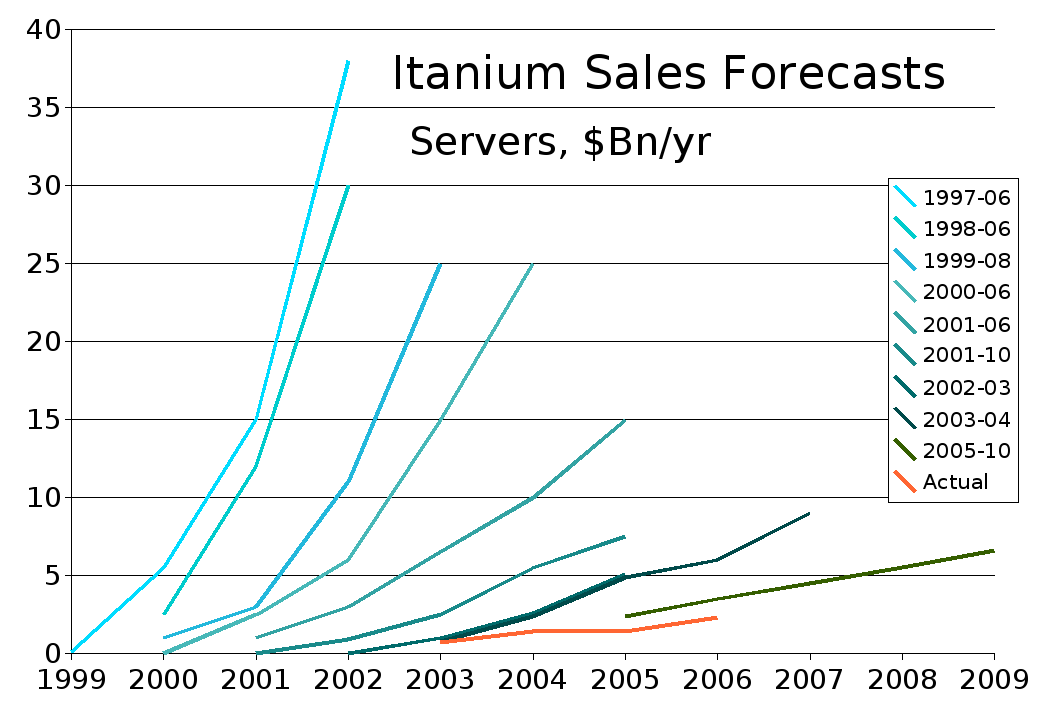
      @infobeautiful The opposite of

      Link Preview Image
      1 Reply Last reply
      0
      • infobeautiful@vis.socialI infobeautiful@vis.social

        The world’s solar capacity reached 1,419 gigawatts in 2023, way beyond any predictions. 1 gigawatt = power for a medium sized city

        amici@fribygda.noA This user is from outside of this forum
        amici@fribygda.noA This user is from outside of this forum
        amici@fribygda.no
        wrote last edited by
        #23

        @infobeautiful

        war and conflict is unfortunately a likely major contributor to this, though I'm glad the shift is happening

        just look at what happened to Cuba lately, without fuel the society goes to a standstill, they desperately need more green tech and everyone will know that unless they also make the shift, the unpredictability of fossil fuel politics may hit them hard at some point, adding to all the other existing arguments to shift

        1 Reply Last reply
        0
        • tartley@fosstodon.orgT tartley@fosstodon.org

          @aanee @infobeautiful while I'm 100% on board with you directionally, I suppose the counter argument would be that exponential growth has to tap out eventually, is just a question of when it turns into an S-curve.

          bigheadmode@social.linux.pizzaB This user is from outside of this forum
          bigheadmode@social.linux.pizzaB This user is from outside of this forum
          bigheadmode@social.linux.pizza
          wrote last edited by
          #24

          @tartley The Total Addressable Market of solar panels is anywhere that can have a reasonable ROI on a solar panel given local electricity demand. As panels get cheaper they become economical in cloudier places.

          1 Reply Last reply
          0
          • tartley@fosstodon.orgT This user is from outside of this forum
            tartley@fosstodon.orgT This user is from outside of this forum
            tartley@fosstodon.org
            wrote last edited by
            #25

            @dryak @aanee @infobeautiful I totally agree. I suppose the black-pilled establishment energy industry might expect another limiting factor would be running out of loony environmentalists to sell them too, if they could only sway public opinion sufficiently. But I agree with you, they were holding back the tide.

            1 Reply Last reply
            0
            • martin@libera.siteM martin@libera.site
              @Jonathan Hartley Nope. You need 100% backup(from about 50% of Ren share). Fossil backup.
              That's why it's not cheap. and will not be. Never.

              #^https://en.wikipedia.org/wiki/Dunkelflaute
              tartley@fosstodon.orgT This user is from outside of this forum
              tartley@fosstodon.orgT This user is from outside of this forum
              tartley@fosstodon.org
              wrote last edited by
              #26

              @martin you might need access to 100% backup while still being able to reduce your need for fossil generated energy by a majority amount - those aren't incompatible.

              martin@libera.siteM 1 Reply Last reply
              0
              • ohir@social.vivaldi.netO ohir@social.vivaldi.net

                @dzwiedziu @infobeautiful are you asking about "lobbying" efforts (this would be R 2023/1542 and Digital Battery Passport kicking in next year). The whole regulations only skim non-patentable technologies, like lead-acid batteries. These can be operational for millenia, due to their simple chemistry. The only maintenance that must be done is on-site processing of sulfated battery plates. Something that once upon a time (1950-1990) was being done on the massive scale in Central/East Europe countries. Then lobbied country's legislative can bar mid-sized installations as unable to met the EU demands (tried recently in Poland afair).

                dzwiedziu@mastodon.socialD This user is from outside of this forum
                dzwiedziu@mastodon.socialD This user is from outside of this forum
                dzwiedziu@mastodon.social
                wrote last edited by
                #27

                @ohir
                So you're saying that to solve energy and heat storage we need sites that will have large amounts of a poisonous, bio-accumulative heavy metal working in an highly hazardous acid, and all that working within daily deep-cycling, on an industrial scale, plus constant industrial-scale recycling, and that it will be cheap and safe?

                Yeah, no citations (not counting regulation existing alone) means I'll pass.

                @infobeautiful

                ohir@social.vivaldi.netO 2 Replies Last reply
                0
                • wonka@chaos.socialW This user is from outside of this forum
                  wonka@chaos.socialW This user is from outside of this forum
                  wonka@chaos.social
                  wrote last edited by
                  #28

                  @TechConnectify has a take on that: https://youtu.be/KtQ9nt2ZeGM

                  @dryak @tartley @aanee @infobeautiful

                  1 Reply Last reply
                  0
                  • infobeautiful@vis.socialI infobeautiful@vis.social

                    The world’s solar capacity reached 1,419 gigawatts in 2023, way beyond any predictions. 1 gigawatt = power for a medium sized city

                    simplicator@federate.socialS This user is from outside of this forum
                    simplicator@federate.socialS This user is from outside of this forum
                    simplicator@federate.social
                    wrote last edited by
                    #29

                    @infobeautiful More than enough to power a DeLorean back to the future 🙂

                    1 Reply Last reply
                    0
                    • nicolai@babka.socialN nicolai@babka.social

                      @infobeautiful the IEA is famous for denying what cannot be denied until the very last minute.

                      nicolai@babka.socialN This user is from outside of this forum
                      nicolai@babka.socialN This user is from outside of this forum
                      nicolai@babka.social
                      wrote last edited by
                      #30

                      @infobeautiful the IEA is traditionally very nuclear friendly and of course aware that solar and wind are pushing nuclear from „expensive but with enough subsidies and imperialism it might work“ into „are you ducking nuts?!?“ territory

                      1 Reply Last reply
                      0
                      • tartley@fosstodon.orgT tartley@fosstodon.org

                        @martin you might need access to 100% backup while still being able to reduce your need for fossil generated energy by a majority amount - those aren't incompatible.

                        martin@libera.siteM This user is from outside of this forum
                        martin@libera.siteM This user is from outside of this forum
                        martin@libera.site
                        wrote last edited by
                        #31
                        @Jonathan Hartley
                        That's true. But it will be expensive. Even with zero price for FV panels.

                        Or we could have a stable ☢️ and not have installations with 200% of the required performance, right...
                        1 Reply Last reply
                        0
                        • dzwiedziu@mastodon.socialD dzwiedziu@mastodon.social

                          @ohir
                          So you're saying that to solve energy and heat storage we need sites that will have large amounts of a poisonous, bio-accumulative heavy metal working in an highly hazardous acid, and all that working within daily deep-cycling, on an industrial scale, plus constant industrial-scale recycling, and that it will be cheap and safe?

                          Yeah, no citations (not counting regulation existing alone) means I'll pass.

                          @infobeautiful

                          ohir@social.vivaldi.netO This user is from outside of this forum
                          ohir@social.vivaldi.netO This user is from outside of this forum
                          ohir@social.vivaldi.net
                          wrote last edited by
                          #32

                          @dzwiedziu @infobeautiful [...] Yes! Almost every point of anti-storage propaganda repeated (the one omitted is about hydrogen being flammable).

                          Debunking:
                          1. All components of lead-acid batteries are curently _byproducts_ of other indispensable industries. Lead itself accompanies copper ores. Sulfur is a byproduct of natural gas/oil. Whether either "waste" byproduct ends up in landfills or in batteries matters.
                          2. Battery plates can be renovated on-site using very simple machines. 50yrs ago operated by humans, now can be entirely autonomous. Very small storages (house) can be renovated by mobile semi-van mounted machine.
                          3. "Highly hazardous" acid somehow is not that hazardous if used in the car battery. Nor it was when used in warehouse lifters since 1890.

                          1 Reply Last reply
                          0
                          • dzwiedziu@mastodon.socialD dzwiedziu@mastodon.social

                            @ohir
                            So you're saying that to solve energy and heat storage we need sites that will have large amounts of a poisonous, bio-accumulative heavy metal working in an highly hazardous acid, and all that working within daily deep-cycling, on an industrial scale, plus constant industrial-scale recycling, and that it will be cheap and safe?

                            Yeah, no citations (not counting regulation existing alone) means I'll pass.

                            @infobeautiful

                            ohir@social.vivaldi.netO This user is from outside of this forum
                            ohir@social.vivaldi.netO This user is from outside of this forum
                            ohir@social.vivaldi.net
                            wrote last edited by
                            #33

                            @dzwiedziu @infobeautiful

                            As for the heat storage: mid-temperature heat accumulator can store around 1MWh per 1 cubic meter of gravel. Insulated by the very same gravel turned into the mineral wool. My house heat accu (I can not build on my own land) is designed to the tune of 7MWh, co it could store heat from 30kW solar installation operating from March to September. This fits into the 6m diameter rotunde. In 2020 was expected to cost around €15000. 4/5 of that the insulation. In non-lobbied regulatory environment this insulation could be made on-site from the gravel (and some amount of aluminium) by simple machine known for two centuries now.

                            1 Reply Last reply
                            0
                            • bitprophet@social.coopB bitprophet@social.coop

                              @infobeautiful why were people predicting a /downslope/ for so long, seems like a bizarre forecast. “Oh, solar rates have been climbing modestly for the last few years but I’m sure it’s just a passing fad…”

                              gkrnours@mastodon.gamedev.placeG This user is from outside of this forum
                              gkrnours@mastodon.gamedev.placeG This user is from outside of this forum
                              gkrnours@mastodon.gamedev.place
                              wrote last edited by
                              #34

                              @bitprophet @infobeautiful there is a whole book by @solar_chase from bloombergNEF on the subject.

                              1 Reply Last reply
                              0
                              • infobeautiful@vis.socialI infobeautiful@vis.social

                                The world’s solar capacity reached 1,419 gigawatts in 2023, way beyond any predictions. 1 gigawatt = power for a medium sized city

                                davidm_yeg@mstdn.caD This user is from outside of this forum
                                davidm_yeg@mstdn.caD This user is from outside of this forum
                                davidm_yeg@mstdn.ca
                                wrote last edited by
                                #35

                                @infobeautiful

                                It’s almost like there’s an entrenched, wealthy, and powerful special interest group with a vested interest in discouraging investments in solar … 🤷‍♂️

                                1 Reply Last reply
                                1
                                0
                                • R relay@relay.infosec.exchange shared this topic

                                Reply
                                • Reply as topic
                                Log in to reply
                                • Oldest to Newest
                                • Newest to Oldest
                                • Most Votes


                                • Login

                                • Login or register to search.
                                • First post
                                  Last post
                                0
                                • Categories
                                • Recent
                                • Tags
                                • Popular
                                • World
                                • Users
                                • Groups