The Space Shuttle could hold a flying laboratory called Spacelab in its cargo bay.

-
The Space Shuttle could hold a flying laboratory called Spacelab in its cargo bay. Three French-made computers ran Spacelab. I opened up a Spacelab computer and found that instead of a microprocessor, it is built from a multitude of simple chips. Let's take a closer look at the computer...
The Arithmetic/Logic Unit (ALU) is the heart of a computer, performing arithmetic. The ALU is a tiny part of a modern processor, but it occupied three circuit boards in the Spacelab computer. The larger chips are '181 ALU chips, each adding four bits; 8 chips let you add 32 bits.

-
The Arithmetic/Logic Unit (ALU) is the heart of a computer, performing arithmetic. The ALU is a tiny part of a modern processor, but it occupied three circuit boards in the Spacelab computer. The larger chips are '181 ALU chips, each adding four bits; 8 chips let you add 32 bits.
The boards need a lot of chips because a chip didn't do much back then. Even the ALU chips had just 170 transistors. Multiplexers (mux) select which inputs to add, registers hold temporary values, and logic gates (NAND, inverters) tie things together.
-
The boards need a lot of chips because a chip didn't do much back then. Even the ALU chips had just 170 transistors. Multiplexers (mux) select which inputs to add, registers hold temporary values, and logic gates (NAND, inverters) tie things together.
This circuit board had a few bugs, which were fixed on the back with yellow "bodge" wires.
-
This circuit board had a few bugs, which were fixed on the back with yellow "bodge" wires.
Around 1991, the Spacelabe computers were upgraded, replacing the French Mitra 125 MS computers with more powerful IBM-made AP-101SL computers. The new computers still used simple ICs, but the "flat-pack" ICs were packed more densely. They also used semiconductor memory instead of magnetic core.
-
Around 1991, the Spacelabe computers were upgraded, replacing the French Mitra 125 MS computers with more powerful IBM-made AP-101SL computers. The new computers still used simple ICs, but the "flat-pack" ICs were packed more densely. They also used semiconductor memory instead of magnetic core.
For more on the Spacelab computer, see my latest article: https://www.righto.com/2026/05/reverse-engineering-spacelab-computer.html
-
For more on the Spacelab computer, see my latest article: https://www.righto.com/2026/05/reverse-engineering-spacelab-computer.html
Credits: thanks to Steve Jurvetson for providing the Spacelab computer. Thanks to Kyle Owen for the photo of the IBM AP-101SL computer.
-
Credits: thanks to Steve Jurvetson for providing the Spacelab computer. Thanks to Kyle Owen for the photo of the IBM AP-101SL computer.
@kenshirriff this is awesome!
-
The boards need a lot of chips because a chip didn't do much back then. Even the ALU chips had just 170 transistors. Multiplexers (mux) select which inputs to add, registers hold temporary values, and logic gates (NAND, inverters) tie things together.
@kenshirriff I recall an electrical engineering professor back in the late 1970s who said the way to invent the better mousetrap was to figure out how to put one megabit of memory on a single chip.
His version of the Holy Grail. -
The Space Shuttle could hold a flying laboratory called Spacelab in its cargo bay. Three French-made computers ran Spacelab. I opened up a Spacelab computer and found that instead of a microprocessor, it is built from a multitude of simple chips. Let's take a closer look at the computer...
@kenshirriff very interesting, thanks for sharing !
-
For more on the Spacelab computer, see my latest article: https://www.righto.com/2026/05/reverse-engineering-spacelab-computer.html
Interesting coincidence: On Thursday in datamuseum.dk I started scanning documents relating to programming for SpaceLab computers.
I hope to have them online next weekend.
-
The Space Shuttle could hold a flying laboratory called Spacelab in its cargo bay. Three French-made computers ran Spacelab. I opened up a Spacelab computer and found that instead of a microprocessor, it is built from a multitude of simple chips. Let's take a closer look at the computer...
@kenshirriff Awesome article, thanks!
I saw 2 #Spacelab units in person (one in EADS museum, one in Dornier museum).
They were the European contribution to the Shuttle program, and esp. German "payment" for sending Astronaut Ulf Merbold to the STS-9 "Spacelab 1" mission as well as getting their own missions, STS-61a "Spacelab D1" and STS-55 "Spacelab D2". (But it flew many more times than just these.)
-
Interesting coincidence: On Thursday in datamuseum.dk I started scanning documents relating to programming for SpaceLab computers.
I hope to have them online next weekend.
@bsdphk Those documents should be very interesting. Do the documents describe programming the Spacelab computers in assembly, HAL/S, or something else?
-
The Space Shuttle could hold a flying laboratory called Spacelab in its cargo bay. Three French-made computers ran Spacelab. I opened up a Spacelab computer and found that instead of a microprocessor, it is built from a multitude of simple chips. Let's take a closer look at the computer...
@kenshirriff Honestly, even with the bodge wires, this looks really clean for what it was and what it was meant to do.
-
The Space Shuttle could hold a flying laboratory called Spacelab in its cargo bay. Three French-made computers ran Spacelab. I opened up a Spacelab computer and found that instead of a microprocessor, it is built from a multitude of simple chips. Let's take a closer look at the computer...
@kenshirriff Thank You for sharing!
-
The boards need a lot of chips because a chip didn't do much back then. Even the ALU chips had just 170 transistors. Multiplexers (mux) select which inputs to add, registers hold temporary values, and logic gates (NAND, inverters) tie things together.
@kenshirriff NAND-GATE not -flash-memory. Younger people might only know the last one.
-
The Space Shuttle could hold a flying laboratory called Spacelab in its cargo bay. Three French-made computers ran Spacelab. I opened up a Spacelab computer and found that instead of a microprocessor, it is built from a multitude of simple chips. Let's take a closer look at the computer...
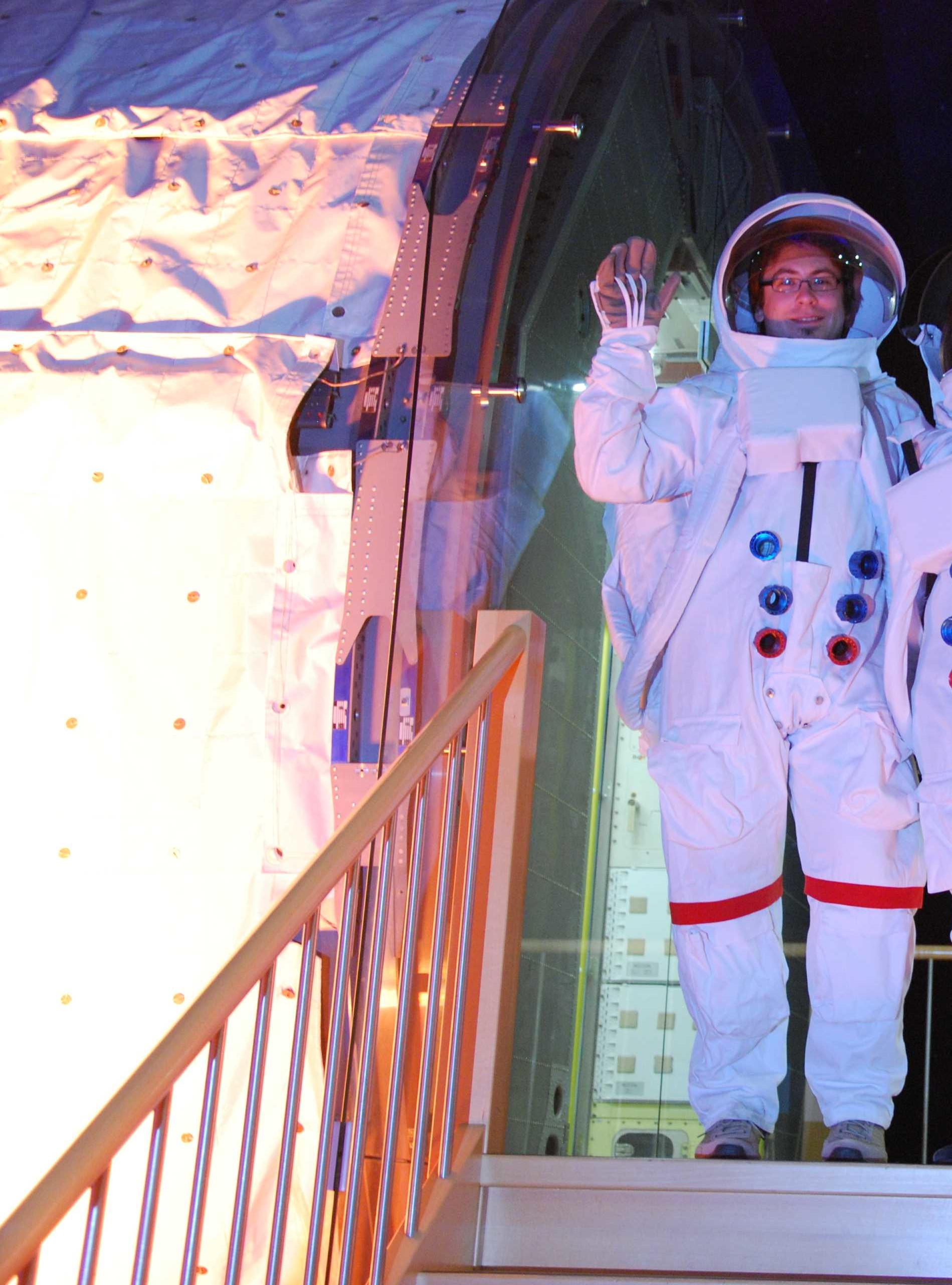
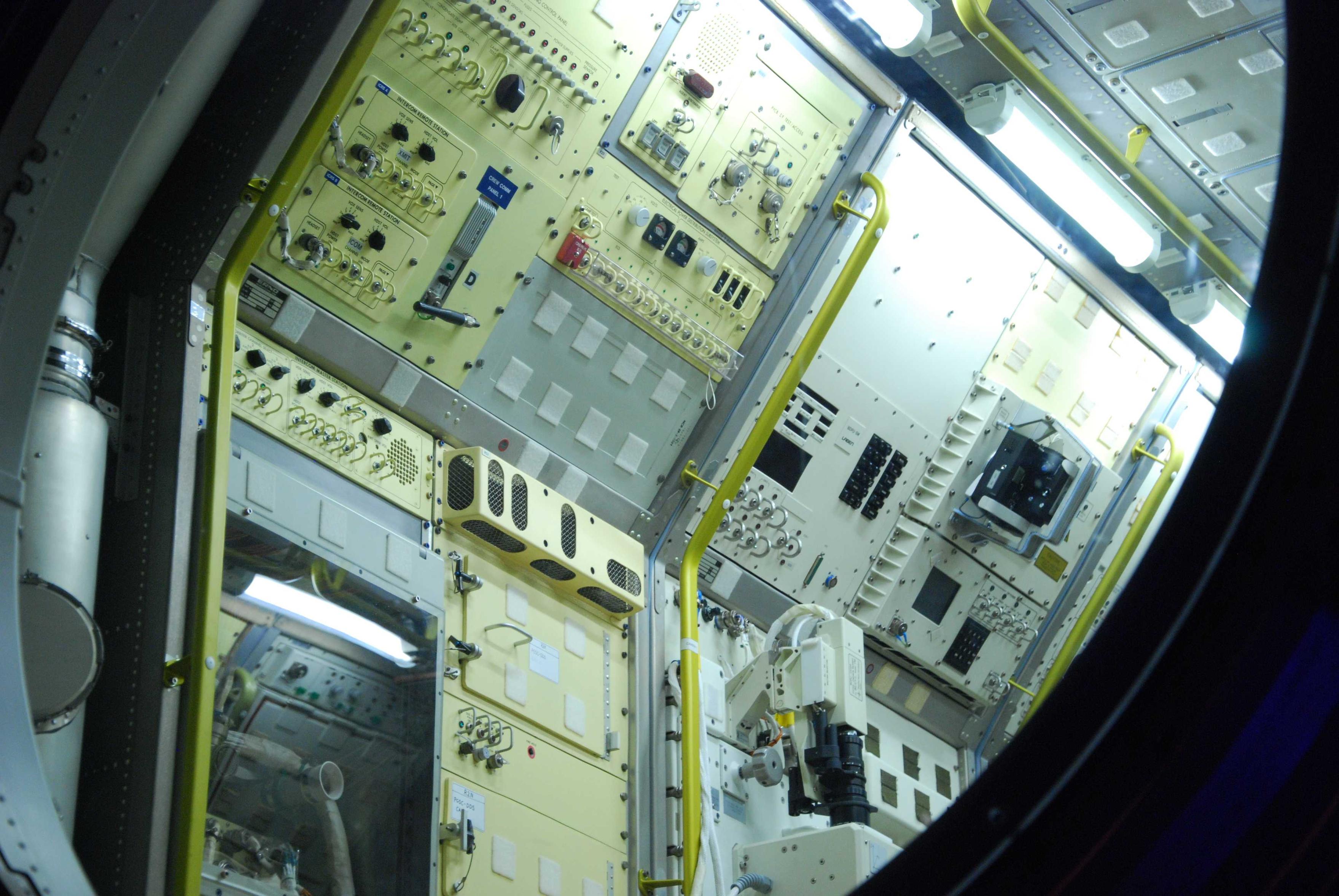
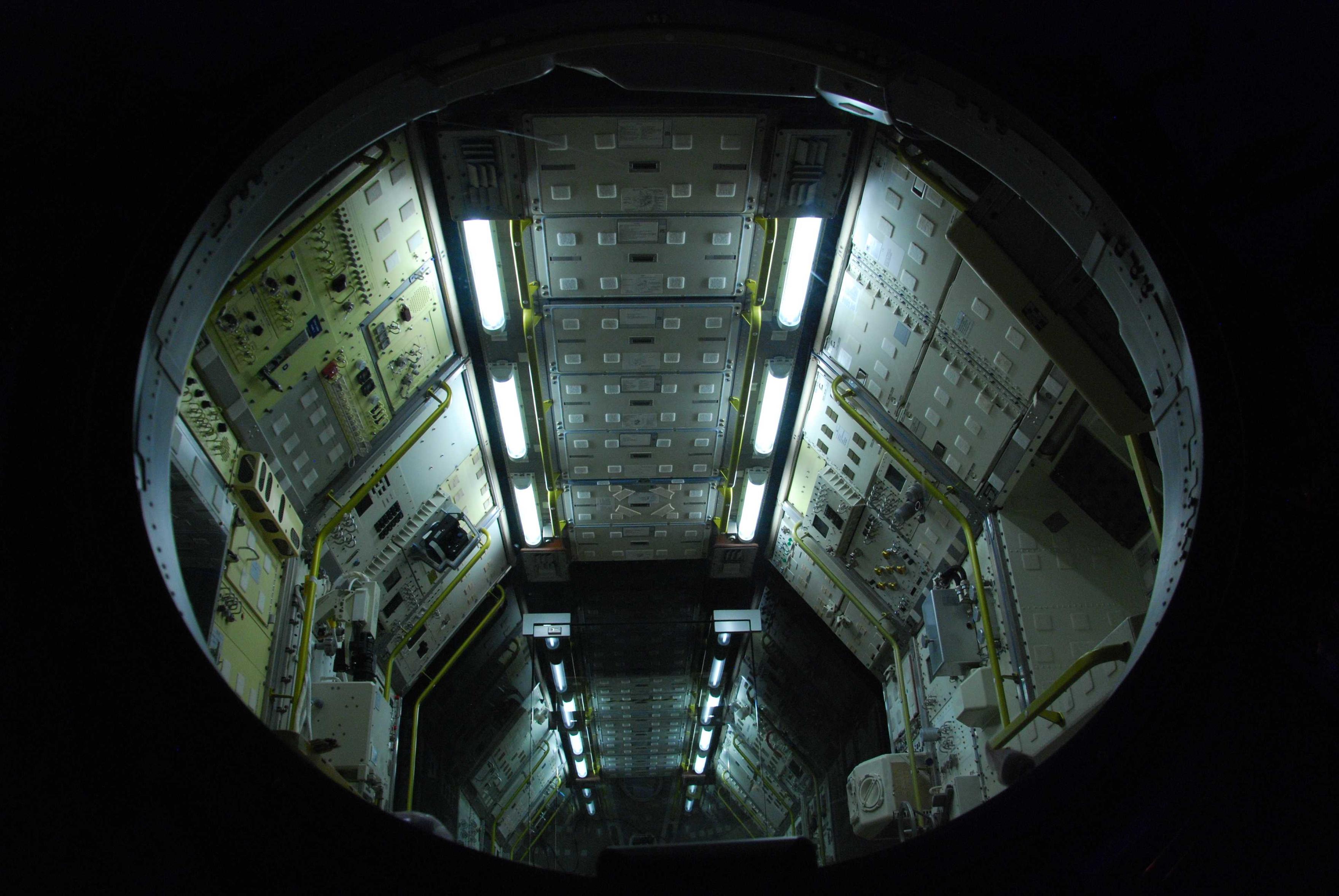
@kenshirriff Fun fact: That's me in front of the Spacelab exhibit on Airbus' Bremen site back in 2012. We won an exclusive guided tour by a German Astronaut instructor (whose name I forgot)
-
@kenshirriff Fun fact: That's me in front of the Spacelab exhibit on Airbus' Bremen site back in 2012. We won an exclusive guided tour by a German Astronaut instructor (whose name I forgot)
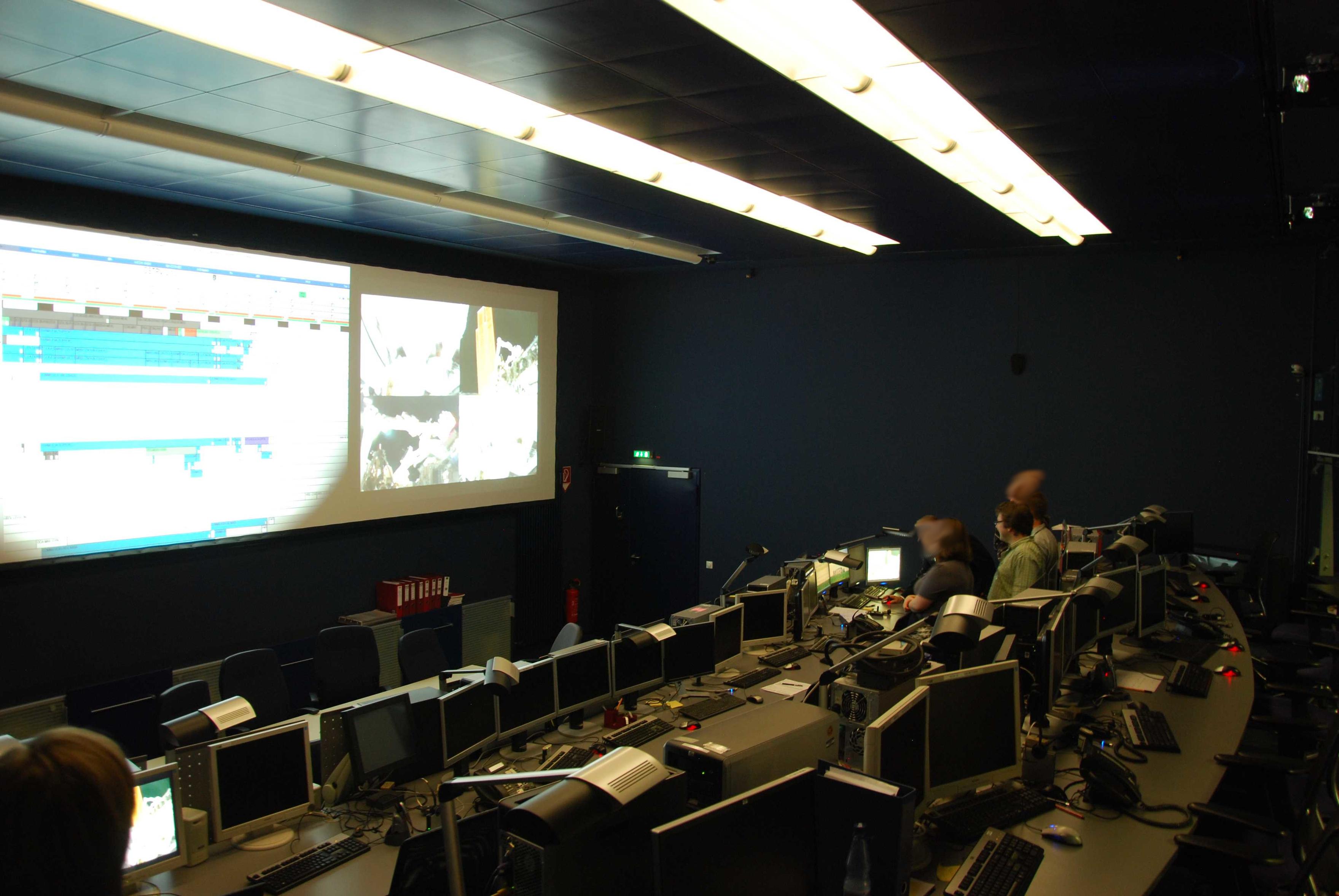
@kenshirriff here we are in ESA's backup operation center watching live video and audio from an ISS spacewalk
-
R relay@relay.publicsquare.global shared this topic
-
For more on the Spacelab computer, see my latest article: https://www.righto.com/2026/05/reverse-engineering-spacelab-computer.html
@kenshirriff amazing article, thanks. I found in particular very interesting your views about the failure of the Plan calcul.
-
@LukefromDC @kenshirriff You’d expect space tech to be fancy, but I think it takes ages to certify tech for such applications, so it is actually quite old?
-
The boards need a lot of chips because a chip didn't do much back then. Even the ALU chips had just 170 transistors. Multiplexers (mux) select which inputs to add, registers hold temporary values, and logic gates (NAND, inverters) tie things together.
@kenshirriff TTL? Or...?
I tried blowing up and sharpening that image but I still can't make out the numbers on those chips, alas. I still suspect TTL.
Edited to add that I blew up a different set of your pics with better results, and what threw me is that these are 77 series chips rather than 74 series, but I'm guessing that's because it's special MILspec for those; the 7714 is clearly equivalent to 7414, and none of those are post-LS technology.
Yep--TTL.