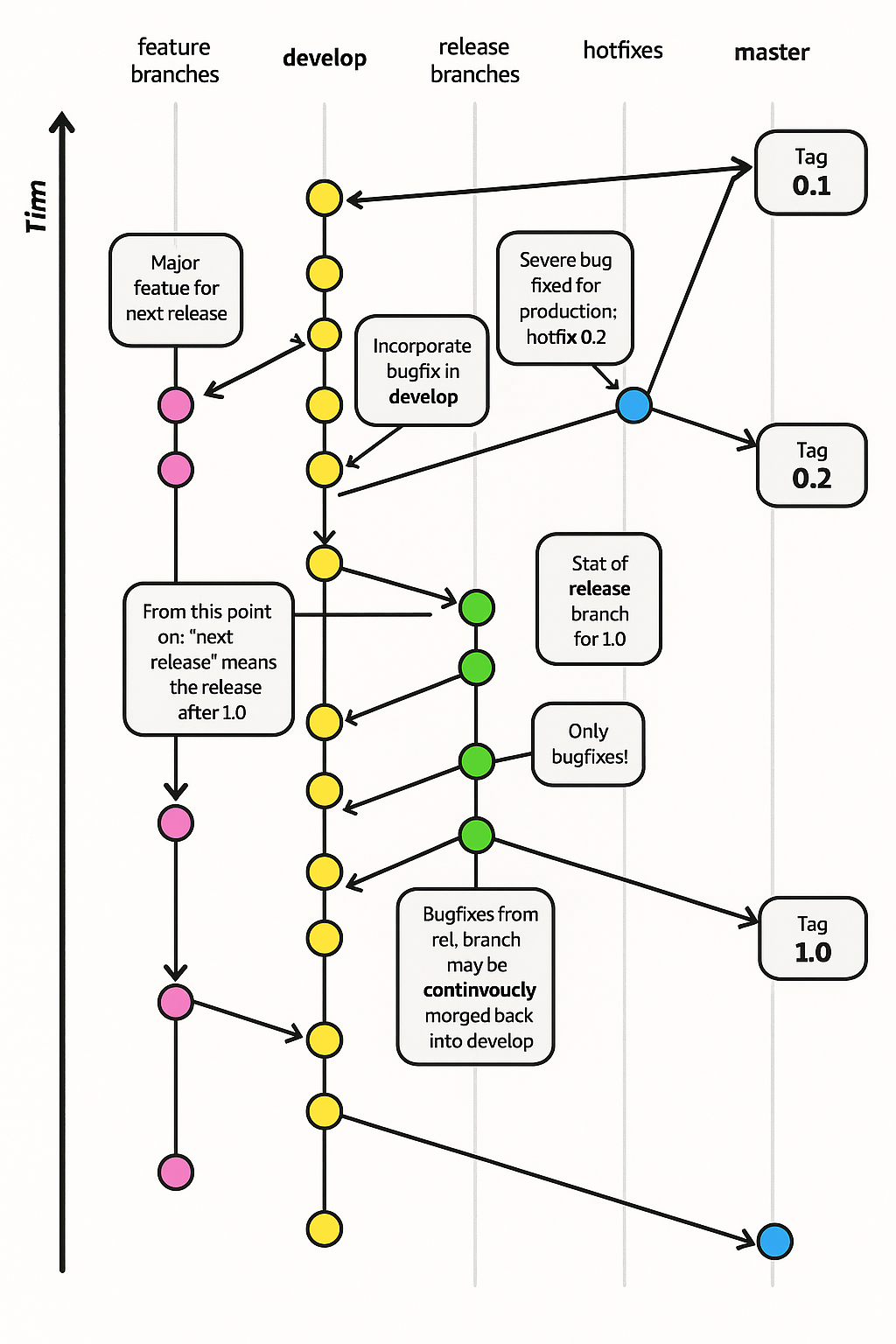
This is truly glorious #AISlop from #Microslop in their "Introduction to Github" course.
-
This is truly glorious #AISlop from #Microslop in their "Introduction to Github" course.
I don't know why Tim is working in the opposite direction, but I can see that he never once "morges" his code back into develop, let alone doing it "continvoucly"

Components of the GitHub flow - Training
Learn to use the components of the GitHub flow
(learn.microsoft.com)
@dazfuller no wonder they are barely able to make working software anymore.
-
This is truly glorious #AISlop from #Microslop in their "Introduction to Github" course.
I don't know why Tim is working in the opposite direction, but I can see that he never once "morges" his code back into develop, let alone doing it "continvoucly"
Components of the GitHub flow - Training
Learn to use the components of the GitHub flow
(learn.microsoft.com)
@dazfuller There is a theory that all merges and commits are just a single Tim moving backwards and forward in the git history...
-
@dazfuller WHAT IS THAT VERTICAL ARROW? WHO IS TINM? NM ISN'T EVEN A DEFINED LIGATURE
(as far as I can tell)
(but it does exist maybe? maybe as a phonetic marker:
)
I am so confused
@moira Maybe Tinm is real, they’re going back to save us
-
@dazfuller this is embarrassing, I will bitch internally
@mapache just please don’t throw Tinm under the bus, it’ll disrupt the space time continuum
-
This is truly glorious #AISlop from #Microslop in their "Introduction to Github" course.
I don't know why Tim is working in the opposite direction, but I can see that he never once "morges" his code back into develop, let alone doing it "continvoucly"
Components of the GitHub flow - Training
Learn to use the components of the GitHub flow
(learn.microsoft.com)
Its rendering of ‘m’ in ‘Tim’ reminded me of Terry Pratchett’s line
“Nanny Ogg knew how to start spelling 'banana’ but didn’t know how you stopped “
-
@jackeric @dazfuller so they also stole this essentially then?
@thibaultmol @jackeric stole "and improved with AI"
-
This is truly glorious #AISlop from #Microslop in their "Introduction to Github" course.
I don't know why Tim is working in the opposite direction, but I can see that he never once "morges" his code back into develop, let alone doing it "continvoucly"
Components of the GitHub flow - Training
Learn to use the components of the GitHub flow
(learn.microsoft.com)
@dazfuller
That chart has been a "featue" of the page since at least September 2025
https://web.archive.org/web/20250908220945/https://learn.microsoft.com/en-us/training/modules/introduction-to-github/3-components-of-github-flow -
@dazfuller
That chart has been a "featue" of the page since at least September 2025
https://web.archive.org/web/20250908220945/https://learn.microsoft.com/en-us/training/modules/introduction-to-github/3-components-of-github-flow@spodlife so either they've not listened to any feedback yet, or they're doubling down?
I guess we wait and see if any fixes get morged in
-
This is truly glorious #AISlop from #Microslop in their "Introduction to Github" course.
I don't know why Tim is working in the opposite direction, but I can see that he never once "morges" his code back into develop, let alone doing it "continvoucly"
Components of the GitHub flow - Training
Learn to use the components of the GitHub flow
(learn.microsoft.com)
Damn! Posted this yesterday as I found it funny, but nothing prepared me for the howling laughter I would get from the comments

-
This is truly glorious #AISlop from #Microslop in their "Introduction to Github" course.
I don't know why Tim is working in the opposite direction, but I can see that he never once "morges" his code back into develop, let alone doing it "continvoucly"
Components of the GitHub flow - Training
Learn to use the components of the GitHub flow
(learn.microsoft.com)
@dazfuller Tim with and extra ∩
-
@dazfuller
And this is the figure from the 2010 blog post that their machine plagiarized (badly).
https://nvie.com/posts/a-successful-git-branching-model/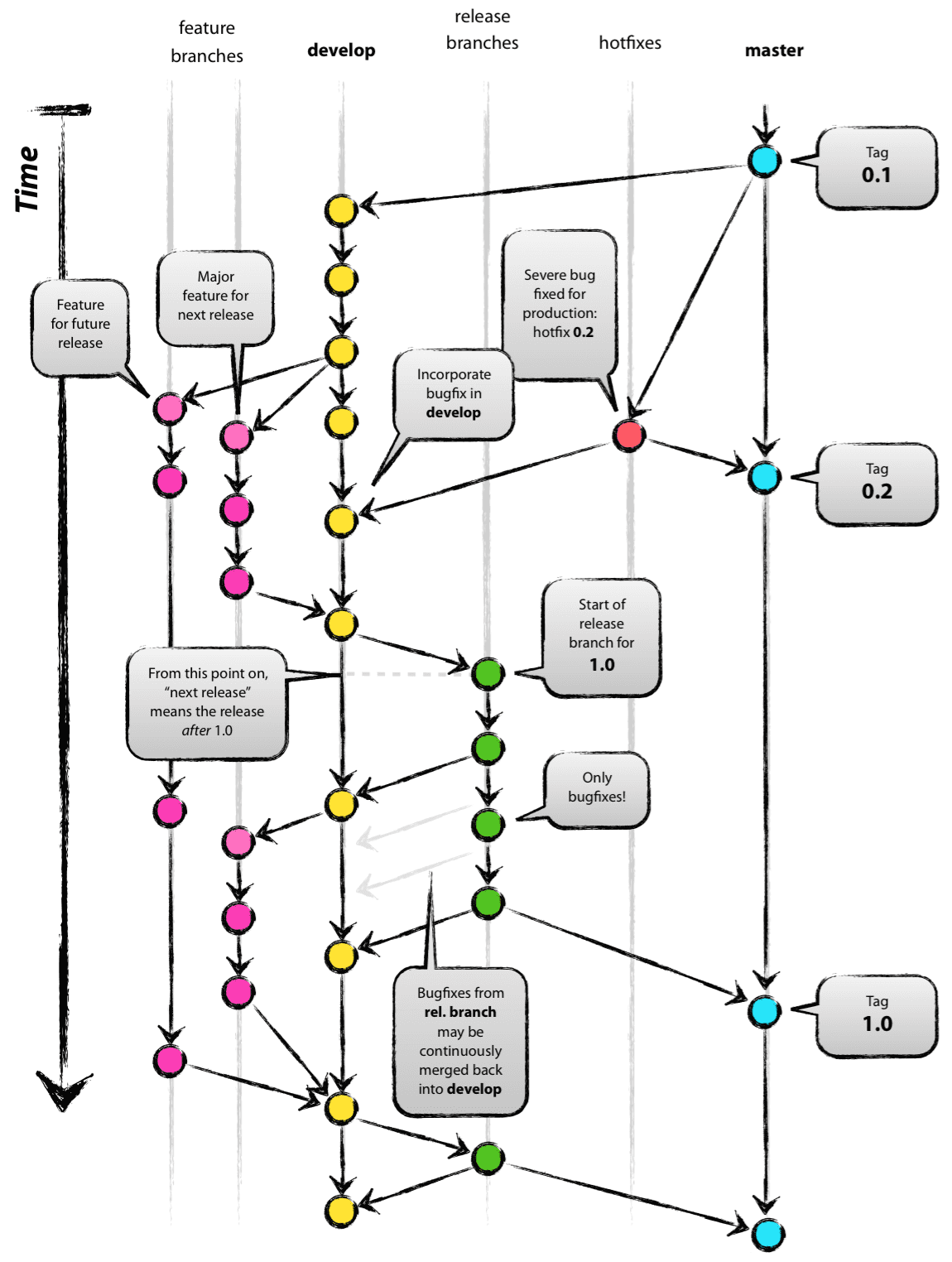
@jedbrown @dazfuller and it is not even good nowadays. Was by 2010 standard.
-
@dazfuller
And this is the figure from the 2010 blog post that their machine plagiarized (badly).
https://nvie.com/posts/a-successful-git-branching-model/@jedbrown @dazfuller Indeed the slop machine can only make what already exists but worse.
-
@dazfuller it gets better the more you try to understand the graph
@dazfuller @JennyFluff the funniest thing to me is how simple the original is to understand
-
This is truly glorious #AISlop from #Microslop in their "Introduction to Github" course.
I don't know why Tim is working in the opposite direction, but I can see that he never once "morges" his code back into develop, let alone doing it "continvoucly"
Components of the GitHub flow - Training
Learn to use the components of the GitHub flow
(learn.microsoft.com)
@dazfuller People: "GIt is too complicated", Microsoft: "Not anywhere near enough!"
-
This is truly glorious #AISlop from #Microslop in their "Introduction to Github" course.
I don't know why Tim is working in the opposite direction, but I can see that he never once "morges" his code back into develop, let alone doing it "continvoucly"
Components of the GitHub flow - Training
Learn to use the components of the GitHub flow
(learn.microsoft.com)
@dazfuller doesn’t the existence of Tim n suggests a range of integer Tims working on this?
-
@jedbrown @dazfuller and it is not even good nowadays. Was by 2010 standard.
@dallo
It was a nice diagram, but poor workflow even in 2010. The gitworkflows(7) man page was first written in 2008 and had clear rationale. I made this figure in that era to show the parallelism exposed by the workflow. As CI has become more robust, many projects moved away from having a 'next' as a throw-away integration branch, but it is a useful strategy especially if you want user feedback on experimental features before you commit to including them by merging to 'main' (formerly 'master').
https://git-scm.com/docs/gitworkflows
@dazfuller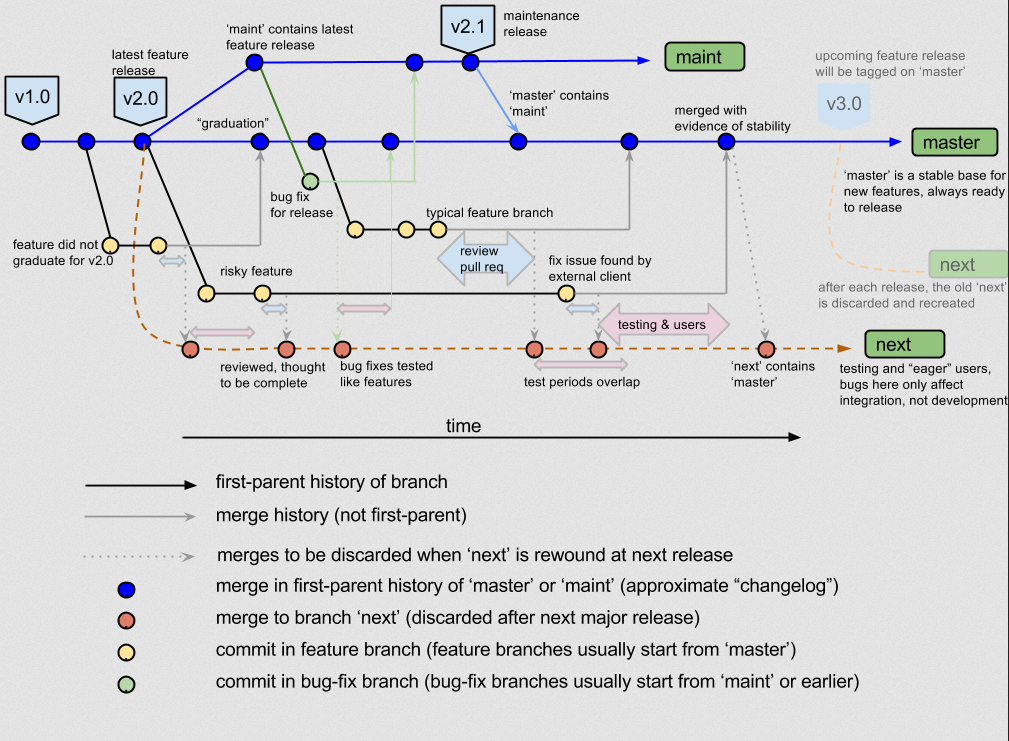
-
@dallo
It was a nice diagram, but poor workflow even in 2010. The gitworkflows(7) man page was first written in 2008 and had clear rationale. I made this figure in that era to show the parallelism exposed by the workflow. As CI has become more robust, many projects moved away from having a 'next' as a throw-away integration branch, but it is a useful strategy especially if you want user feedback on experimental features before you commit to including them by merging to 'main' (formerly 'master').
https://git-scm.com/docs/gitworkflows
@dazfuller@jedbrown @dazfuller In 2010, we were on svn, mercurial and, in my circle, TFS. Git with the nvie workflow was another level.
-
This is truly glorious #AISlop from #Microslop in their "Introduction to Github" course.
I don't know why Tim is working in the opposite direction, but I can see that he never once "morges" his code back into develop, let alone doing it "continvoucly"
Components of the GitHub flow - Training
Learn to use the components of the GitHub flow
(learn.microsoft.com)
@dazfuller Looks like Microsoft changed the image in the last 15 min or so.
 It was still there when I opened the link earlier.
 -
@dazfuller Looks like Microsoft changed the image in the last 15 min or so.
It was still there when I opened the link earlier.@volpeon in both happy and disappointed. But at least it will always be in the Internet Archive
-
@jedbrown @dazfuller In 2010, we were on svn, mercurial and, in my circle, TFS. Git with the nvie workflow was another level.
@dallo @jedbrown @dazfuller I was using nvie in 2007-08 in a startup. Later, CVS (!!!) in 2012-15 in a big company