One of my bedrock beliefs is that capitalists *really* hate capitalism.
-
Don't invest in the company, but *options* on the company's shares. Each layer of indirection takes you further from the delivery of a useful service - and insulates you further from risk:
Monopoly is to capitalism as gerrymandering is to democracy, a way to strip out any meaningful choice. Think of the two giant packaged goods companies that fill your grocery aisles: Procter & Gamble and Unilever.
9/
Practically everything on your grocer's shelves is made by a division of one of these two massive conglomerates. If you try to "vote with your wallet" by buying a low-packaging version of a product, it's going to be sold to you by the same company that sells the high-packaging version.
10/
-
Practically everything on your grocer's shelves is made by a division of one of these two massive conglomerates. If you try to "vote with your wallet" by buying a low-packaging version of a product, it's going to be sold to you by the same company that sells the high-packaging version.
10/
If you switch to an artisanal brand of cookies made by a local family business, Unilever or P&G will buy that company and issue a press release declaring that they made the acquisition because they know "their customers value choice":
Gerrymandering strips your vote of any impact on political outcomes. Monopoly strips your purchases of any ability to influence economic outcomes.
11/
-
If you switch to an artisanal brand of cookies made by a local family business, Unilever or P&G will buy that company and issue a press release declaring that they made the acquisition because they know "their customers value choice":
Gerrymandering strips your vote of any impact on political outcomes. Monopoly strips your purchases of any ability to influence economic outcomes.
11/
Wrap both of them in "revealed preferences" and you get a system that endlessly narrates its ability to deliver choice, and then blames your misery on your having chosen badly.
This is the method of the entire conservative project. As Dan Savage says: the thing that unites conservative assaults on voting, birth control, abortion and no-fault divorce is *the stripping away of choice*.
12/
-
Wrap both of them in "revealed preferences" and you get a system that endlessly narrates its ability to deliver choice, and then blames your misery on your having chosen badly.
This is the method of the entire conservative project. As Dan Savage says: the thing that unites conservative assaults on voting, birth control, abortion and no-fault divorce is *the stripping away of choice*.
12/
Conservatives are trying to create a world populated by husbands you can't divorce, pregnancies you can't prevent or terminate, and politicians you can't vote out of office. Add to that Trump's assault on the National Labor Relations Board, his reversal of the FTC's ban on noncompetes, and his protection of "TRAP" agreements that force employees to pay thousands of dollars if they quit their jobs, and you get "jobs you can't quit":
13/
-
Conservatives are trying to create a world populated by husbands you can't divorce, pregnancies you can't prevent or terminate, and politicians you can't vote out of office. Add to that Trump's assault on the National Labor Relations Board, his reversal of the FTC's ban on noncompetes, and his protection of "TRAP" agreements that force employees to pay thousands of dollars if they quit their jobs, and you get "jobs you can't quit":
13/
Conservative strongmen like Trump and Musk exalt the value of self-determination - for themselves, at everyone else's expense. Trump's ability to stiff the contractors that built his hotels and Musk's ability to rain flaming rocket debris down on the people who live near his company town require that everyone else be stripped of protections. They get to determine their own course in life by taking away your ability to determine your own.
14/
-
Conservative strongmen like Trump and Musk exalt the value of self-determination - for themselves, at everyone else's expense. Trump's ability to stiff the contractors that built his hotels and Musk's ability to rain flaming rocket debris down on the people who live near his company town require that everyone else be stripped of protections. They get to determine their own course in life by taking away your ability to determine your own.
14/
Their right to swing their fists ends two inches past your nose:
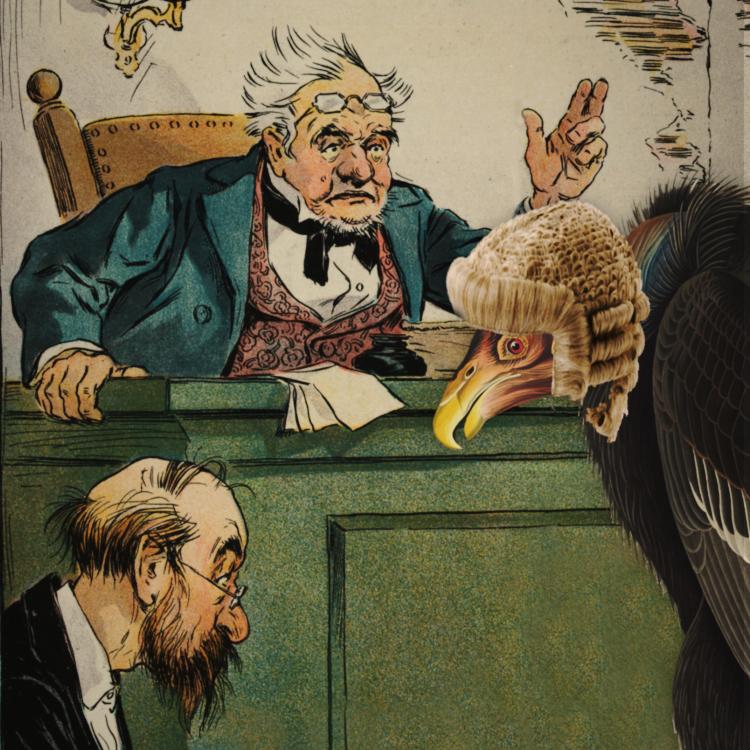
Cheaters and bullies hate the rule of law, hence Trump's endless repetition of Nixon's: "When the president does it, that means it is not illegal." But not everyone can be president, and the world is full of would-be Trumps in positions of power who would like to be able to commit crimes without fear of legal repercussions. For these people, we have something called "binding arbitration."
15
-
But if you own the building and your coffee shop tenant goes under, well, you've still got the building, and hey, now it's on the same hot block as the amazing new cafe that's driving its competitors out of business:
Douglas Rushkoff calls this "going meta": don't drive a taxi, rent a medallion to a taxi driver. Don't rent a medallion, start a ride-hailing app company. Don't start a ride-hailing company, *invest* in the company.
8/
Don't open a store, sell a franchise, and externalize all your capital costs
-
Their right to swing their fists ends two inches past your nose:
Cheaters and bullies hate the rule of law, hence Trump's endless repetition of Nixon's: "When the president does it, that means it is not illegal." But not everyone can be president, and the world is full of would-be Trumps in positions of power who would like to be able to commit crimes without fear of legal repercussions. For these people, we have something called "binding arbitration."
15
"Binding arbitration" is a widely used contractual term that forces you to surrender your right to sue a company that wrongs you. Instead of suing, binding arbitration forces you to take your case to an "arbitrator"; that is, a lawyer who is paid by the company that cheated you or maimed you or killed your loved one. The arbitrator decides whether their client is guilty, and, if so, how much that client owes you.
16/
-
"Binding arbitration" is a widely used contractual term that forces you to surrender your right to sue a company that wrongs you. Instead of suing, binding arbitration forces you to take your case to an "arbitrator"; that is, a lawyer who is paid by the company that cheated you or maimed you or killed your loved one. The arbitrator decides whether their client is guilty, and, if so, how much that client owes you.
16/
The entire process is confidential and it is non-precedential, meaning that if a company rips off millions of people in the same way, each of them has to arbitrate their claims separately, and people who are successful can't share their tactical notes with the people who are next in line to plead for justice.
17/
-
The entire process is confidential and it is non-precedential, meaning that if a company rips off millions of people in the same way, each of them has to arbitrate their claims separately, and people who are successful can't share their tactical notes with the people who are next in line to plead for justice.
17/
That makes binding arbitration another key weapon in the conservative movement's war on choice: not just jobs you can't quit and politicians you can't vote out of office, but also companies you can't sue. Binding arbitration is a creation of the Federalist Society and their champion Antonin Scalia, who authored a series of Supreme Court dissents and (ultimately) decisions that opened the door for binding arbitration everywhere:
18/
-
That makes binding arbitration another key weapon in the conservative movement's war on choice: not just jobs you can't quit and politicians you can't vote out of office, but also companies you can't sue. Binding arbitration is a creation of the Federalist Society and their champion Antonin Scalia, who authored a series of Supreme Court dissents and (ultimately) decisions that opened the door for binding arbitration everywhere:
18/
Given the Fedsoc's role in shoving binding arbitration down every worker and shopper's throat, it's decidedly odd that they invited Ashley Keller to be their keynote debater in 2021, where he argued that "concentrated corporate power is a greater threat than government power":
- YouTube
Auf YouTube findest du die angesagtesten Videos und Tracks. Außerdem kannst du eigene Inhalte hochladen und mit Freunden oder gleich der ganzen Welt teilen.

(www.youtube.com)
Keller is a powerhouse lawyer, and an avowed conservative, who has pioneered many tactics for overcoming binding arbitration clauses.
19/
-
Given the Fedsoc's role in shoving binding arbitration down every worker and shopper's throat, it's decidedly odd that they invited Ashley Keller to be their keynote debater in 2021, where he argued that "concentrated corporate power is a greater threat than government power":
- YouTube
Auf YouTube findest du die angesagtesten Videos und Tracks. Außerdem kannst du eigene Inhalte hochladen und mit Freunden oder gleich der ganzen Welt teilen.
(www.youtube.com)
Keller is a powerhouse lawyer, and an avowed conservative, who has pioneered many tactics for overcoming binding arbitration clauses.
19/
He helped create "mass arbitration," bringing thousands of arbitration cases on behalf of Uber drivers who'd had their wages stolen by the company. Since Uber has to pay the arbitrators in each of those cases, they faced a much larger bill than they would face in any possible class action suit:
20/
-
He helped create "mass arbitration," bringing thousands of arbitration cases on behalf of Uber drivers who'd had their wages stolen by the company. Since Uber has to pay the arbitrators in each of those cases, they faced a much larger bill than they would face in any possible class action suit:
20/
Mass arbitration cases spread to all kinds of large firms that used petty grifts to steal from thousands or even millions of people, like Intuit, who deceive - and rip off - millions of Americans every year with their fake Turbotax "free file" system:
21/
-
Mass arbitration cases spread to all kinds of large firms that used petty grifts to steal from thousands or even millions of people, like Intuit, who deceive - and rip off - millions of Americans every year with their fake Turbotax "free file" system:
21/
Mass arbitration worked so well that Amazon actually revised its terms of service to *remove* binding arbitration from their terms of service, because they realized that they'd be better off facing class action suits:
Of course, the point of binding arbitration was never to create a streamlined system of justice - it was to bring about a world of *no* justice, where you have no right to sue.
22/
-
Mass arbitration worked so well that Amazon actually revised its terms of service to *remove* binding arbitration from their terms of service, because they realized that they'd be better off facing class action suits:
Of course, the point of binding arbitration was never to create a streamlined system of justice - it was to bring about a world of *no* justice, where you have no right to sue.
22/
It's part of the decades-old "tort reform" movement that the business lobby has used to take away your right to sue altogether. Any time you hear about a seemingly crazy lawsuit (like the urban legends about the McDonald's "hot coffee" case), you're being propagandized for a world without legal consequences for companies that defraud you, steal from you, injure you, or kill you:
23/
-
It's part of the decades-old "tort reform" movement that the business lobby has used to take away your right to sue altogether. Any time you hear about a seemingly crazy lawsuit (like the urban legends about the McDonald's "hot coffee" case), you're being propagandized for a world without legal consequences for companies that defraud you, steal from you, injure you, or kill you:
23/
That's why companies (like Bluesky) are now trying terms of service that also ban you from mass arbitration, while retaining the right to consolidate claims into a mass arbitration case if that's advantageous to *them*:
24/
-
That's why companies (like Bluesky) are now trying terms of service that also ban you from mass arbitration, while retaining the right to consolidate claims into a mass arbitration case if that's advantageous to *them*:
24/
But Keller keeps finding creative ways around binding arbitration. He's currently bringing thousands of arbitration claims against Google, on behalf of advertisers whom Google stole from (Google is a thrice-convicted monopolist, and they lost a case last year over their monopolization of ad-tech, where they were found to have defrauded advertisers).
25/
-
But Keller keeps finding creative ways around binding arbitration. He's currently bringing thousands of arbitration claims against Google, on behalf of advertisers whom Google stole from (Google is a thrice-convicted monopolist, and they lost a case last year over their monopolization of ad-tech, where they were found to have defrauded advertisers).
25/
He also just argued before the Supreme Court in a case against Monsanto over the company's attempt to escape liability for causing cancer in farmworkers with their Roundup pesticide:

Supreme Court heard case on how to label risks of popular weed killer
How the Supreme Court rules could have implications for tens of thousands of lawsuits against Roundup maker Monsanto, which is now owned by Bayer.

NPR (www.npr.org)
Keller appears in the latest episode of the Organized Money podcast, for a fascinating interview about his work and outlook, and how he reconciles his work fighting corporate power with his identity as a movement conservative:
The Conservative Who Torments Big Business
We are faced with corporate power so vast it spawned a conservative antitrust movement.

(www.organizedmoney.fm)
26/
-
He also just argued before the Supreme Court in a case against Monsanto over the company's attempt to escape liability for causing cancer in farmworkers with their Roundup pesticide:
Supreme Court heard case on how to label risks of popular weed killer
How the Supreme Court rules could have implications for tens of thousands of lawsuits against Roundup maker Monsanto, which is now owned by Bayer.
NPR (www.npr.org)
Keller appears in the latest episode of the Organized Money podcast, for a fascinating interview about his work and outlook, and how he reconciles his work fighting corporate power with his identity as a movement conservative:
The Conservative Who Torments Big Business
We are faced with corporate power so vast it spawned a conservative antitrust movement.
(www.organizedmoney.fm)
26/
Keller's first big, important point is that (basically), capitalists hate capitalism (see above). He cites Milton Friedman, who "always said that the tort system is the best way to ensure that companies behave and follow the rules." For Keller (and Friedman) the alternative to private litigation against bad businesses is "government regulation and the alphabet soup of Washington, DC agencies [that] try and police these companies."
27/
-
Keller's first big, important point is that (basically), capitalists hate capitalism (see above). He cites Milton Friedman, who "always said that the tort system is the best way to ensure that companies behave and follow the rules." For Keller (and Friedman) the alternative to private litigation against bad businesses is "government regulation and the alphabet soup of Washington, DC agencies [that] try and police these companies."
27/
But, of course, the businesses that want binding arbitration and tort reform (so they can't be sued) *also* want to "dismantle the administrative state" (so they can't be regulated). They're the impunity movement, the "when the president does it, that means it is not illegal" movement, the "heads I win, tails you lose" movement. They're the caveat emptor movement, the "that makes me smart" movement:
28/