In her magnificent 2023 book *Doppelganger*, Naomi Klein describes the "mirror world" of right wing causes that are weird, conspiratorial versions of the actual things that leftists care about:

-
(There's a centaur/reverse centaur comparison lurking in there, too. If you're a centaur radiologist, who gets an AI tool that flags some diagnoses you may have missed, then you're improving the rate of tumor identification.)
11/
(If you're a reverse centaur radiologist who sees 90% of your colleagues fired and replaced with a chatbot whose work you are expected to sign off on at a rate that precludes even cursory inspection, you're increasing X-ray throughput at the expense of accuracy):
(In other words: the reverse centaur is the mirror world version of a centaur.)
12/
-
(If you're a reverse centaur radiologist who sees 90% of your colleagues fired and replaced with a chatbot whose work you are expected to sign off on at a rate that precludes even cursory inspection, you're increasing X-ray throughput at the expense of accuracy):
(In other words: the reverse centaur is the mirror world version of a centaur.)
12/
After the election, Mamdani doubled down on his pursuit of high-quality services. In his inaugural speech, Mamdani promised a government "where excellence is no longer the exception":
Robin was also developing his appreciation for Mamadani's vision of public excellence. In the *New York Review of Books*, Robin made the case that it was a mistake for Democrats to have ceded the language of efficiency and quality to Republicans:

Democratic Excellence | Corey Robin
Among Zohran Mamdani’s rhetorical innovations has been his declaration of war on mediocrity.
The New York Review of Books (www.nybooks.com)
13/
-
After the election, Mamdani doubled down on his pursuit of high-quality services. In his inaugural speech, Mamdani promised a government "where excellence is no longer the exception":
Robin was also developing his appreciation for Mamadani's vision of public excellence. In the *New York Review of Books*, Robin made the case that it was a mistake for Democrats to have ceded the language of efficiency and quality to Republicans:
Democratic Excellence | Corey Robin
Among Zohran Mamdani’s rhetorical innovations has been his declaration of war on mediocrity.
The New York Review of Books (www.nybooks.com)
13/
Where Democrats do talk about efficiency, they talk about it in Republican terms: "We'll run the government like a business." Mamdani, by contrast, talks about running the government like a *government* - a *good* government, a government committed to excellence.
Writing in *Jacobin*, Conor Lynch takes a trip into the good side of the mirror world, unpacking the idea of socialist excellence in Mamdani's governance promises:
Zohran Mamdani Wants to Reclaim Efficiency From the Right
New York City mayor Zohran Mamdani is trying to demonstrate that the public sector can match or even surpass the private sector in excellence. It’s high time the Left reclaimed the value of “efficiency” from right-wing forces of privatization and austerity.

(jacobin.com)
14/
-
Where Democrats do talk about efficiency, they talk about it in Republican terms: "We'll run the government like a business." Mamdani, by contrast, talks about running the government like a *government* - a *good* government, a government committed to excellence.
Writing in *Jacobin*, Conor Lynch takes a trip into the good side of the mirror world, unpacking the idea of socialist excellence in Mamdani's governance promises:
Zohran Mamdani Wants to Reclaim Efficiency From the Right
New York City mayor Zohran Mamdani is trying to demonstrate that the public sector can match or even surpass the private sector in excellence. It’s high time the Left reclaimed the value of “efficiency” from right-wing forces of privatization and austerity.
(jacobin.com)
14/
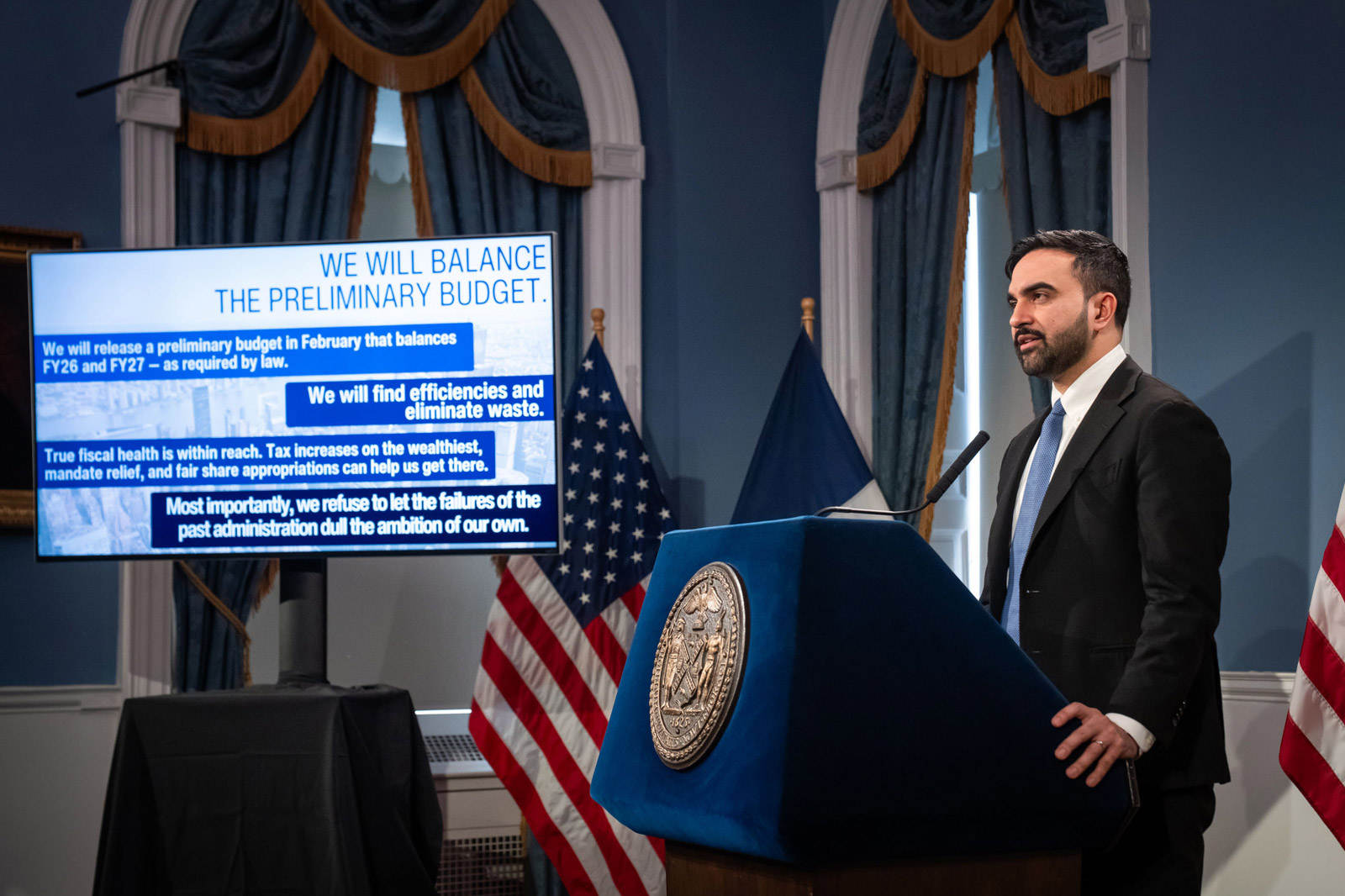
During the Mamdani campaign, "efficiency" was one plank of the platform. But once Mamdani took office, he learned his predecessor, the lavishly corrupt Eric Adams, lied about the city's finances, leaving a $12b hole in the budget:
Mamdani came to power in New York on an ambitious platform of public service delivery, and not just because this is the right thing to do, but because investment in a city's people and built environment pays off handsomely.
15/
-
During the Mamdani campaign, "efficiency" was one plank of the platform. But once Mamdani took office, he learned his predecessor, the lavishly corrupt Eric Adams, lied about the city's finances, leaving a $12b hole in the budget:
Mamdani came to power in New York on an ambitious platform of public service delivery, and not just because this is the right thing to do, but because investment in a city's people and built environment pays off handsomely.
15/
Maintenance is always cheaper than repair. A main differences between a business and a government is that a business's shareholders can starve maintenance budgets, cash out, and leave the collapsing firm behind them, while governments must think about the long term consequences of short-term thinking (the fact that so many Democratic governments have failed to do this is a consequence of Democrats adopting Republicans' framing that a good government is "run like a business").
16/
-
Maintenance is always cheaper than repair. A main differences between a business and a government is that a business's shareholders can starve maintenance budgets, cash out, and leave the collapsing firm behind them, while governments must think about the long term consequences of short-term thinking (the fact that so many Democratic governments have failed to do this is a consequence of Democrats adopting Republicans' framing that a good government is "run like a business").
16/
The best time to invest in New York City was 20 years ago. The second best time in now. For Mamdani to make those investments and correct the failures of his predecessors, he needs to find some money.
Mamdani's proposal for finding this money sounds pretty conservative: he's going to cut waste in government. He's ordered each city agency to appoint a "Chief Savings Officer" who will "review performance, eliminate waste and streamline service delivery."
17/
-
The best time to invest in New York City was 20 years ago. The second best time in now. For Mamdani to make those investments and correct the failures of his predecessors, he needs to find some money.
Mamdani's proposal for finding this money sounds pretty conservative: he's going to cut waste in government. He's ordered each city agency to appoint a "Chief Savings Officer" who will "review performance, eliminate waste and streamline service delivery."
17/
These CSOs are supposed to find a 1.5% across-the-board savings this year and 2.5% next year:
Does this sound like DOGE to you? It kind of does to me, but - crucially - this is *mirror-world* DOGE. DOGE's project was making government cuts in order to make government "run like a business." Specifically, DOGE wanted to transform the government into the kind of business that makes cuts to juice the quarterly numbers at the expense of long-term health:
18/
-
These CSOs are supposed to find a 1.5% across-the-board savings this year and 2.5% next year:
Does this sound like DOGE to you? It kind of does to me, but - crucially - this is *mirror-world* DOGE. DOGE's project was making government cuts in order to make government "run like a business." Specifically, DOGE wanted to transform the government into the kind of business that makes cuts to juice the quarterly numbers at the expense of long-term health:
18/
But Mamdani's mirror-world DOGE is looking to find efficiencies by cutting things like sweetheart deals with private contractors and consultants, who cost the city billions. It's these private sector delegates of the state that are the source of government waste and bloat.
19/
-
But Mamdani's mirror-world DOGE is looking to find efficiencies by cutting things like sweetheart deals with private contractors and consultants, who cost the city billions. It's these private sector delegates of the state that are the source of government waste and bloat.
19/
The literature is clear on this: when governments eliminate their own capacity to serve the people and hire corporations to do it on their behalf, the corporations charge more and deliver less:

My turn: Public-private partnerships are an industry gimmick that don’t serve public well
Don't waste public tax money. Caltrans public employees can do road projects more efficiently than private contractors without as many cost overruns.

CalMatters (calmatters.org)
As Lynch writes, DOGE's purpose was to dismantle as much of the government as possible and shift its duties to Beltway Bandits who could milk Uncle Sucker for every dime.
20/
-
The literature is clear on this: when governments eliminate their own capacity to serve the people and hire corporations to do it on their behalf, the corporations charge more and deliver less:
My turn: Public-private partnerships are an industry gimmick that don’t serve public well
Don't waste public tax money. Caltrans public employees can do road projects more efficiently than private contractors without as many cost overruns.
CalMatters (calmatters.org)
As Lynch writes, DOGE's purpose was to dismantle as much of the government as possible and shift its duties to Beltway Bandits who could milk Uncle Sucker for every dime.
20/
Mamdani's ambition, meanwhile, is to "restore faith in government [and] demonstrate that the public sector can match or even surpass the private sector in excellence."
As Mamdani said in his inauguration speech, "For too long, we have turned to the private sector for greatness, while accepting mediocrity from those who serve the public."
Turning governments into businesses has been an unmitigated failure.
21/
-
Mamdani's ambition, meanwhile, is to "restore faith in government [and] demonstrate that the public sector can match or even surpass the private sector in excellence."
As Mamdani said in his inauguration speech, "For too long, we have turned to the private sector for greatness, while accepting mediocrity from those who serve the public."
Turning governments into businesses has been an unmitigated failure.
21/
After decades of outsourcing, the government hasn't managed to shrink its payroll, but government workers are today primarily employed in wheedling private contractors to fulfill their promises, even as public spending has quintupled:
Is government too big? Reflections on the size and composition of today’s federal government | Brookings
Elaine Kamarck analyzes government failures and propose reforms to boost federal performance, accountability, and trust.

Brookings (www.brookings.edu)
Instead of having a government employee do a government job, that govvie oversees a private contractor who costs twice as much...and sucks at their job:
22/
-
After decades of outsourcing, the government hasn't managed to shrink its payroll, but government workers are today primarily employed in wheedling private contractors to fulfill their promises, even as public spending has quintupled:
Is government too big? Reflections on the size and composition of today’s federal government | Brookings
Elaine Kamarck analyzes government failures and propose reforms to boost federal performance, accountability, and trust.
Brookings (www.brookings.edu)
Instead of having a government employee do a government job, that govvie oversees a private contractor who costs twice as much...and sucks at their job:
22/
There's a wonderful illustration of this principle at work in Snowden's memoir *Permanent Record*:
After Snowden broke his legs during special forces training and washed out, he went the NSA. After a couple years, his boss told him Congress capped the spy agencies' headcount but not their budgets, so he was going to have to quit his job and go to work for one of the NSA's many contractors, because the NSA could hire as many contractors as it wanted.
23/
-
There's a wonderful illustration of this principle at work in Snowden's memoir *Permanent Record*:
After Snowden broke his legs during special forces training and washed out, he went the NSA. After a couple years, his boss told him Congress capped the spy agencies' headcount but not their budgets, so he was going to have to quit his job and go to work for one of the NSA's many contractors, because the NSA could hire as many contractors as it wanted.
23/
So Snowden is sent to a recruiter who asks him how much he's making as a government spy. Snowden quotes a modest 5-figure sum. The recruiter is aghast and tells Snowden that he gets paid a percentage of whatever Snowden ends up making as a government contractor, and promptly triples Snowden's government salary. Why not? The spy agencies have unlimited budgets, and will pay whatever the private company that Snowden nominally works for bills them at. Everybody wins!
24/
-
So Snowden is sent to a recruiter who asks him how much he's making as a government spy. Snowden quotes a modest 5-figure sum. The recruiter is aghast and tells Snowden that he gets paid a percentage of whatever Snowden ends up making as a government contractor, and promptly triples Snowden's government salary. Why not? The spy agencies have unlimited budgets, and will pay whatever the private company that Snowden nominally works for bills them at. Everybody wins!
24/
Ladies and gentlemen, the efficiency of government outsourcing. Run the government like a business!
As bad as this is when the government hires outside contractors to *do things*, it's even worse when they hire outside contractors to *consult on things*. Under Prime Minister Justin Trudeau, the Canadian government spent a fortune on consultants, especially at the start of the pandemic:
25/
-
Ladies and gentlemen, the efficiency of government outsourcing. Run the government like a business!
As bad as this is when the government hires outside contractors to *do things*, it's even worse when they hire outside contractors to *consult on things*. Under Prime Minister Justin Trudeau, the Canadian government spent a fortune on consultants, especially at the start of the pandemic:
25/
The main beneficiary of these contracts was McKinsey, who were given a blank cheque and no oversight - they were even exempted from rules requiring them to disclose conflicts of interest.
Trudeau raised Canadian government spending by 40%, to $11.8 billion, creating a "shadow civil service" that cost vastly more than the actual civil service - the government spent $1.85b on internal IT expertise, and $2.3b on outside contractors.
26/
-
The main beneficiary of these contracts was McKinsey, who were given a blank cheque and no oversight - they were even exempted from rules requiring them to disclose conflicts of interest.
Trudeau raised Canadian government spending by 40%, to $11.8 billion, creating a "shadow civil service" that cost vastly more than the actual civil service - the government spent $1.85b on internal IT expertise, and $2.3b on outside contractors.
26/
Contractors produced some of the worst IT boondoggles in government history, including the bungled "ArriveCAN" contact tracing program. The two-person shop that won the contract outsourced it to KPMG and raked off a 15-30% commission.
Before Trudeau, Harper paid IBM for Phoenix - a failed payroll system that was, amazingly, *far worse* than ArriveCAN. IBM got $309m to build Phoenix, and then Canada spent another $506m to fix it and compensate the people whose lives it ruined.
27/
-
Contractors produced some of the worst IT boondoggles in government history, including the bungled "ArriveCAN" contact tracing program. The two-person shop that won the contract outsourced it to KPMG and raked off a 15-30% commission.
Before Trudeau, Harper paid IBM for Phoenix - a failed payroll system that was, amazingly, *far worse* than ArriveCAN. IBM got $309m to build Phoenix, and then Canada spent another $506m to fix it and compensate the people whose lives it ruined.
27/
Wherever you find these contractors, you find stupendous waste and fraud. I remember in the early 2000s, when Dan "City of Sound" Hill was working at the BBC and wanted to try an experiment to distribute MP3s of a radio programme.
The BBC - an organization with a long history of technical excellence - had given the exclusive contract for web delivery to Siemens, who wanted £10,000 to set up a web-server for the experiment.
28/
-
Wherever you find these contractors, you find stupendous waste and fraud. I remember in the early 2000s, when Dan "City of Sound" Hill was working at the BBC and wanted to try an experiment to distribute MP3s of a radio programme.
The BBC - an organization with a long history of technical excellence - had given the exclusive contract for web delivery to Siemens, who wanted £10,000 to set up a web-server for the experiment.
28/
Dan bought rented a server from an online provider and put it all on his personal card, serving tens of thousands of MP3s for less than £10. It turns out that letting your technical personnel do your technology development costs 1/1000th of what it costs to have contractors do it.
Running your public institution "like a business" is incredibly *inefficient*.
29/
-
Dan bought rented a server from an online provider and put it all on his personal card, serving tens of thousands of MP3s for less than £10. It turns out that letting your technical personnel do your technology development costs 1/1000th of what it costs to have contractors do it.
Running your public institution "like a business" is incredibly *inefficient*.
29/
Back when Musk and Ramaswamy announced their plan to cut $2t from the US federal budget, David Dayen published a plan to realize nearly that much savings just by attacking waste arising from running the government "like a business":
The US government's own estimate of the losses due to contractor *fraud* comes out to $274b/year - roughly the size of the *entire civil service payroll*.
30/
-
Back when Musk and Ramaswamy announced their plan to cut $2t from the US federal budget, David Dayen published a plan to realize nearly that much savings just by attacking waste arising from running the government "like a business":
The US government's own estimate of the losses due to contractor *fraud* comes out to $274b/year - roughly the size of the *entire civil service payroll*.
30/
(The Corporation for Public Broadcasting, which Musk sadistically destroyed, accounts for 0.012% of federal spending.)
Medicare "upcoding" - a form of fraud committed by companies like United Healthcare, the largest Medicare Advantage provider in the country - costs the public $83b/year:
31/