Question for people who know science.
-
@davidnjoku In the States, the big concern is heart disease and infant mortality. There's been a great deal of research done concluding that, in those cases, it very specifically is racism-related. Specifically, systemically induced stress.
@alltherum Yes, that happens here too, but to a lesser extent, I believe.
-
@davidnjoku @davep maybe that's the moment to bring someone like @mekkaokereke into the discussion

-
@davidnjoku @davep maybe that's the moment to bring someone like @mekkaokereke into the discussion
Great questions!
The short answer is that things like having babies a week earlier doesn't affect Black people more. It doesn't. It affects *Black people from a tiny part of West Africa* more.
Medical textbooks tested Black American people who are almost all West African (Nigeria, Ivory Coast, Ghana) or southwestern African (Angola).
They just say that Black people have this, ignoring the fact that most of the human genetic diversity on earth is in Africa.


 ️
️ -
Question for people who know science.
I know that race is a social construct. The fact that I'm 'Black' has no meaning beyond my melanin levels. It doesn't, for instance, make me a better rapper than you. Culture might, but melanin doesn't.
So why are there medical differences between races? Black women have more fibroids, & have their babies a week earlier than white women. And Black men are more prone to type 2 diabetes.
Why's that? Culture? Racism? Something else?
I think diet is a lot of it. Trad foods of every culture carry various benefits - and detriments. Animal fats, bread & corn meal...
Diabetes is a tricky one. The corporate controlled medical establishments tells diabetics they can keep on eating carbs when they should avoid all carbs like the plague.
And men avoid doctors.
Yes, there is absolutely a big problem with racists who go into medical care to get rich or have stable jobs, and not because they want to help people.
YMMV
-
@davidnjoku pretty much. Sickle cell even reduces malaria effects, so there's an advantage to having it that happens to come with a lot of negatives.
The challenge with ethnicity-associated disease is that it's correlated with other things. People who all migrated from the same village & brought with them an otherwise rare condition. Or a regional genetic survival trait that becomes harmful as conditions change. Just because it is common within an ethnicity doesn't mean •everyone• is effected.
@davidnjoku also, imagine a founder effect... An initial group of Nigerians arrive in the UK & - this is where racism comes in - Britain is its normal, welcoming self, so the Nigerians form their own community. New Africans arrive from elsewhere on the continent & look for somewhere welcoming. The Nigerian community becomes a pan-African community. A few generations later & a Nigerian-Malian has sickle cell. Apply that to any other relatively distinct group of migrants & off you go.
-
Question for people who know science.
I know that race is a social construct. The fact that I'm 'Black' has no meaning beyond my melanin levels. It doesn't, for instance, make me a better rapper than you. Culture might, but melanin doesn't.
So why are there medical differences between races? Black women have more fibroids, & have their babies a week earlier than white women. And Black men are more prone to type 2 diabetes.
Why's that? Culture? Racism? Something else?
@davidnjoku I honestly don't know if this counts as "knowing science", so please feel free to disregard this reply if it does not. But for what it's worth I inhabit a culture that actively rejects the term "Rasse", when applied to people, as unscientific. If you read German (or have access to a good translator, human or machine), perhaps you find this Wikipedia article insightful.
-
@topher1kenobe I didn't know that about African Americans. That's just crazy.
@davidnjoku @PurpleJillybeans yeah, I’m trying to remember something I read on the internet 20 years ago, so do NOT quote me, but I think African American men have a higher incidence of heart disease. So that’s a pretty specific group. I’m really curious why.
-
Great questions!
The short answer is that things like having babies a week earlier doesn't affect Black people more. It doesn't. It affects *Black people from a tiny part of West Africa* more.
Medical textbooks tested Black American people who are almost all West African (Nigeria, Ivory Coast, Ghana) or southwestern African (Angola).
They just say that Black people have this, ignoring the fact that most of the human genetic diversity on earth is in Africa.
️Do "Black" people have higher BMI? Due to higher bone density and higher skeletal muscle mass? Or do Asian people? Is that why Black people are over represented in the NFL?
The answer of course depends on which Black people and which Asian people we are talking about.
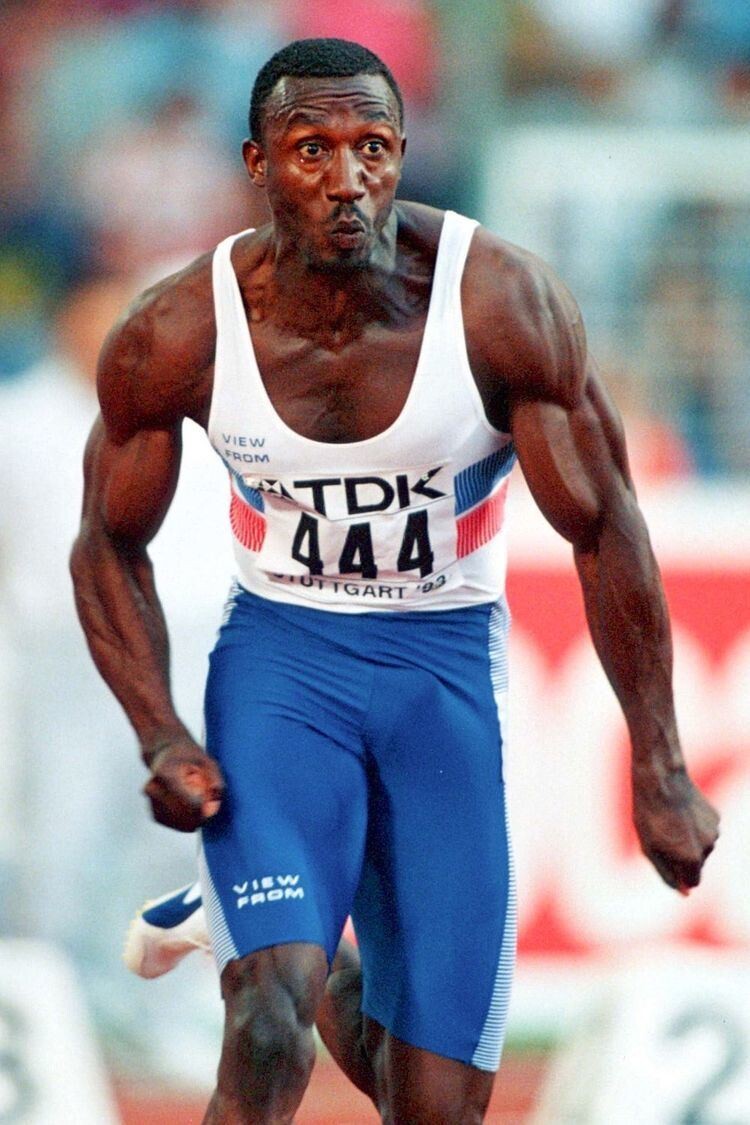
Asian people are *the most* overrepresented in the NFL, and it's not remotely close. The strongest *officially measured* NFL player is Asian. Stephen Paea. The strongest *unofficially measured* NFL player is West African. Larry Allen.
Think of how silly it would be to use Stephen Paea, Haloti Ngata, and Troy Polumalu as samples, and infer population characteristics for every Chinese citizen. That's what US medical textbooks making predictions about "Black" people do to all Africans.
mekka okereke :verified: (@mekkaokereke@hachyderm.io)
Attached: 3 images Now I need you to understand something before we go further: Race isn't real. Racism is. "Black" people have naturally higher BMI. I put Black in scare quotes, because the 1.5 billion Black people don't have higher BMI. Black people *from a tiny part of West Africa* have higher BMI.🙋🏿♂️ Just like white people from a tiny part (Iceland) have higher BMI. Just like Asian people from a tiny part (Samoa). Every "race" has a tiny population with slightly more height, denser bones, and more muscle.

Hachyderm.io (hachyderm.io)
-
Do "Black" people have higher BMI? Due to higher bone density and higher skeletal muscle mass? Or do Asian people? Is that why Black people are over represented in the NFL?
The answer of course depends on which Black people and which Asian people we are talking about.
Asian people are *the most* overrepresented in the NFL, and it's not remotely close. The strongest *officially measured* NFL player is Asian. Stephen Paea. The strongest *unofficially measured* NFL player is West African. Larry Allen.
Think of how silly it would be to use Stephen Paea, Haloti Ngata, and Troy Polumalu as samples, and infer population characteristics for every Chinese citizen. That's what US medical textbooks making predictions about "Black" people do to all Africans.
mekka okereke :verified: (@mekkaokereke@hachyderm.io)
Attached: 3 images Now I need you to understand something before we go further: Race isn't real. Racism is. "Black" people have naturally higher BMI. I put Black in scare quotes, because the 1.5 billion Black people don't have higher BMI. Black people *from a tiny part of West Africa* have higher BMI.🙋🏿♂️ Just like white people from a tiny part (Iceland) have higher BMI. Just like Asian people from a tiny part (Samoa). Every "race" has a tiny population with slightly more height, denser bones, and more muscle.
Hachyderm.io (hachyderm.io)
Stephen Paea for those unaware.
There are ~8 billion people on earth. All of us have different bone circumferences, bone densities, muscle masses, muscle densities, internal organ sizes, propensity to build and retain muscle, percentage of fast-twitch muscle vs slow twitch, etc.
Of all 8 billion humans, Stephen Paea is an *extreme outlier* on the combination of all of these. To put numbers on it, in the top millionth of a percent. Not a typo.
He is 100% Asian, descended from indigenous Taiwanese people. Picture an incredibly skinny but wirey, strong, and fast Taiwanese man. Then increase the size of that man's wirey muscle and internal organs, until the person weighs 300 lbs. Yes he looks strong, but he is even stronger than he looks.
https://m.youtube.com/watch?v=FwfhmuEr10Q&t=15s
He's the strongest NFL player in history according to the NFL strength test. Even stronger than people who cheated and tested positive for steroids.
-
Stephen Paea for those unaware.
There are ~8 billion people on earth. All of us have different bone circumferences, bone densities, muscle masses, muscle densities, internal organ sizes, propensity to build and retain muscle, percentage of fast-twitch muscle vs slow twitch, etc.
Of all 8 billion humans, Stephen Paea is an *extreme outlier* on the combination of all of these. To put numbers on it, in the top millionth of a percent. Not a typo.
He is 100% Asian, descended from indigenous Taiwanese people. Picture an incredibly skinny but wirey, strong, and fast Taiwanese man. Then increase the size of that man's wirey muscle and internal organs, until the person weighs 300 lbs. Yes he looks strong, but he is even stronger than he looks.
https://m.youtube.com/watch?v=FwfhmuEr10Q&t=15s
He's the strongest NFL player in history according to the NFL strength test. Even stronger than people who cheated and tested positive for steroids.
If the only Asians in America were from Tonga, Samoa and Hawaii? Then US medical textbooks would make all kinds of horrifically wrong conclusions about Asian people and health risks.
️They'd apply outlier observations to billions of people.
That's what happens to Black people. Not quite as extreme, but same principle.
-
Question for people who know science.
I know that race is a social construct. The fact that I'm 'Black' has no meaning beyond my melanin levels. It doesn't, for instance, make me a better rapper than you. Culture might, but melanin doesn't.
So why are there medical differences between races? Black women have more fibroids, & have their babies a week earlier than white women. And Black men are more prone to type 2 diabetes.
Why's that? Culture? Racism? Something else?
@davidnjoku I found this to be a very interesting paper that basically found that Black babies born to immigrants had normal birthweight, but the next generation had lower birthweight. They posit this is due to the cumulative effects of discrimination over the lifetimes of Black mothers in the US.
-
Question for people who know science.
I know that race is a social construct. The fact that I'm 'Black' has no meaning beyond my melanin levels. It doesn't, for instance, make me a better rapper than you. Culture might, but melanin doesn't.
So why are there medical differences between races? Black women have more fibroids, & have their babies a week earlier than white women. And Black men are more prone to type 2 diabetes.
Why's that? Culture? Racism? Something else?
Genetic characteristics of ethnicities. The significant comment here is that overall the genetic diversity of any ethnic group. It’s about the same.
As far as medical differences, though, you have to factor in socioeconomic elements, diet proximity to healthy or unhealthy environment the kinds of jobs available.
I will know that your choice of things to look at, can also be contrasted with other things that people of color are better off on and don’t suffer as much disease from
-
Great questions!
The short answer is that things like having babies a week earlier doesn't affect Black people more. It doesn't. It affects *Black people from a tiny part of West Africa* more.
Medical textbooks tested Black American people who are almost all West African (Nigeria, Ivory Coast, Ghana) or southwestern African (Angola).
They just say that Black people have this, ignoring the fact that most of the human genetic diversity on earth is in Africa.
️@mekkaokereke That's scary. I remember, for instance, when my wife was pregnant that the doctors regularly made certain adjustments based on the fact that she's Black. 'Luckily' she's of Nigerian heritage, but I think you're saying that if she was of, say, Namibian origin they might be applying incorrect metrics to her.
(I know there's a lot more than just that to being a doctor, but you get what I'm saying.)
-
@davidnjoku I found this to be a very interesting paper that basically found that Black babies born to immigrants had normal birthweight, but the next generation had lower birthweight. They posit this is due to the cumulative effects of discrimination over the lifetimes of Black mothers in the US.
@minmi Thank you. That's really interesting.
-
@davidnjoku And e.g. both northern European and Saudi people independently developed lactose tolerance into adulthood.
@davep lactose tolerante into adulthood appeared in a couple of African peoples first. @davidnjoku
-
@davep That's a good point. But there are a billion Black people, and we're genetically more diverse than all of the rest of the world put together, so it's a bit strange (to my non-scientific mind) that there'll be traits that affect all of us.
@davidnjoku Imbeg to differ. More Protection against carcinogenic UV rays from the sun, on average. But do not confuse African-Americans with all Black people. @davep
-
@davidnjoku UK or the US whites need to talk about races. Their identity is build on not being Black. They need Black people for their whiteness. Of course forgetting that they themselves are human, too, even without Black people. @weddige @davep
-
@davidnjoku @PurpleJillybeans yeah, I’m trying to remember something I read on the internet 20 years ago, so do NOT quote me, but I think African American men have a higher incidence of heart disease. So that’s a pretty specific group. I’m really curious why.
@topher1kenobe the risk factor for heart disease is racism, not race. There have been papers on that. @davidnjoku @PurpleJillybeans
-
@mekkaokereke That's scary. I remember, for instance, when my wife was pregnant that the doctors regularly made certain adjustments based on the fact that she's Black. 'Luckily' she's of Nigerian heritage, but I think you're saying that if she was of, say, Namibian origin they might be applying incorrect metrics to her.
(I know there's a lot more than just that to being a doctor, but you get what I'm saying.)
Yeah, and even with the knowledge that she is Nigerian, US medical stuff causes us to get worse care and be mistreated to death.
My dad keeps a lot of his Black patients alive, because he was trained in Nigeria, London, and the US, and knows all the ways that US healthcare provides worse care to Black people.
PulseOx readings are wrong for us. Skin diseases present differently. Bodyweight and birth weight readings are different. BMI charts, which are bad for everyone, are especially wrong for us. Pain is often ignored, or considered to be faking. Expensive treatments and tests are under-prescribed. Etc.
If you're going to have a baby in the US and you are Black? Even if you are wealthy? Get a doctor that understands how US medicine can fail Black patients. The doctor doesn't have to be Black. They just have to care enough to have looked into these differences.
-
@topher1kenobe the risk factor for heart disease is racism, not race. There have been papers on that. @davidnjoku @PurpleJillybeans
@carl @davidnjoku @PurpleJillybeans ah, that’s great to know! Thanks a bunch.