Skip to content
  • Categories
  • Recent
  • Tags
  • Popular
  • World
  • Users
  • Groups
Skins
  • Light
  • Brite
  • Cerulean
  • Cosmo
  • Flatly
  • Journal
  • Litera
  • Lumen
  • Lux
  • Materia
  • Minty
  • Morph
  • Pulse
  • Sandstone
  • Simplex
  • Sketchy
  • Spacelab
  • United
  • Yeti
  • Zephyr
  • Dark
  • Cyborg
  • Darkly
  • Quartz
  • Slate
  • Solar
  • Superhero
  • Vapor

  • Default (Cyborg)
  • No Skin
Collapse
Brand Logo

CIRCLE WITH A DOT

  1. Home
  2. Uncategorized
  3. I'm incredibly pleased to announce that the microcode for the Intel 80386 has been decoded.

I'm incredibly pleased to announce that the microcode for the Intel 80386 has been decoded.

Scheduled Pinned Locked Moved Uncategorized
retrocomputingvintagecomputinmicrocodereverseengineer
82 Posts 22 Posters 0 Views
  • Oldest to Newest
  • Newest to Oldest
  • Most Votes
Reply
  • Reply as topic
Log in to reply
This topic has been deleted. Only users with topic management privileges can see it.
  • linear@nya.socialL linear@nya.social
    @gloriouscow@oldbytes.space how long until the 486? that's the one i am most interested in 🙂

    (only half joking...)
    magnetic_tape@infosec.exchangeM This user is from outside of this forum
    magnetic_tape@infosec.exchangeM This user is from outside of this forum
    magnetic_tape@infosec.exchange
    wrote last edited by
    #52

    @linear
    A 486DX2 in FPGA form would be awesome. I cannot start to fathom the amount of work needed to bring that to life
    @gloriouscow

    1 Reply Last reply
    0
    • gloriouscow@oldbytes.spaceG gloriouscow@oldbytes.space

      There is a way to extract the contents of an implant ROM. The doping that creates the gates means that you can etch the silicon in a way that the doped areas will stand out.

      The acids involved in this process are some of the nastiest chemicals on the planet. Stuff like hydrofluoric acid.

      Link Preview Image
      Hydrofluoric acid - Wikipedia

      favicon

      (en.wikipedia.org)

      Oh, you spilled it on yourself? no big deal. It's just going to dissolve your bones.

      azonenberg@ioc.exchangeA This user is from outside of this forum
      azonenberg@ioc.exchangeA This user is from outside of this forum
      azonenberg@ioc.exchange
      wrote last edited by
      #53

      @gloriouscow I have wanted to develop a Dash etch process in my lab for a while and might be willing to make an attempt at some point, but am way too busy to try it in the near term.

      I have a proper wet bench with (dilute) HF and nitric acid already, I don't think I have acetic in stock but that's easy for me to procure.

      But I have little to no experience working on chips that ancient so it may take me a while to even get decap etc working with good clean results. 350nm is about as old as I go these days.

      1 Reply Last reply
      0
      • gloriouscow@oldbytes.spaceG gloriouscow@oldbytes.space

        There is a way to extract the contents of an implant ROM. The doping that creates the gates means that you can etch the silicon in a way that the doped areas will stand out.

        The acids involved in this process are some of the nastiest chemicals on the planet. Stuff like hydrofluoric acid.

        Link Preview Image
        Hydrofluoric acid - Wikipedia

        favicon

        (en.wikipedia.org)

        Oh, you spilled it on yourself? no big deal. It's just going to dissolve your bones.

        ldcd@social.treehouse.systemsL This user is from outside of this forum
        ldcd@social.treehouse.systemsL This user is from outside of this forum
        ldcd@social.treehouse.systems
        wrote last edited by
        #54

        @gloriouscow if you have a rough traveler I can do it for you

        ldcd@social.treehouse.systemsL 1 Reply Last reply
        0
        • gloriouscow@oldbytes.spaceG gloriouscow@oldbytes.space

          I'm incredibly pleased to announce that the microcode for the Intel 80386 has been decoded.

          It was an group effort by a bunch of talented people to extract and correct the physical bits, but the major work of decoding them was done by reenigne - you may know him from such incredible PC demos as 8088 MPH and Area 5150, as well as being the person who decoded the 8088 microcode previously.

          Please, check out his writeup.

          Link Preview Image
          80386 microcode disassembled « Reenigne blog

          favicon

          (www.reenigne.org)

          #retrocomputing #vintagecomputing #microcode #reverseengineering

          dushman@hollow.raccoon.questD This user is from outside of this forum
          dushman@hollow.raccoon.questD This user is from outside of this forum
          dushman@hollow.raccoon.quest
          wrote last edited by
          #55
          @gloriouscow@oldbytes.space That's really impressive
          1 Reply Last reply
          0
          • ldcd@social.treehouse.systemsL ldcd@social.treehouse.systems

            @gloriouscow if you have a rough traveler I can do it for you

            ldcd@social.treehouse.systemsL This user is from outside of this forum
            ldcd@social.treehouse.systemsL This user is from outside of this forum
            ldcd@social.treehouse.systems
            wrote last edited by
            #56

            @gloriouscow if you have a clean die that would be preferable to having to decap one though

            ldcd@social.treehouse.systemsL 1 Reply Last reply
            0
            • infosecdj@infosec.exchangeI infosecdj@infosec.exchange

              @gloriouscow @datenwolf The pitch between vertical lines on that image is about 5.7 micron.

              datenwolf@chaos.socialD This user is from outside of this forum
              datenwolf@chaos.socialD This user is from outside of this forum
              datenwolf@chaos.social
              wrote last edited by
              #57

              @infosecdj @gloriouscow

              This places this straight into OCM (optical coherence microscopy) territory. I'm a little bit concerned that speckle could cause issues. But just this Thursday I was in a seminar, in which a couple of ideas for speckle reduction were presented. Worth a shot.

              infosecdj@infosec.exchangeI 1 Reply Last reply
              0
              • datenwolf@chaos.socialD datenwolf@chaos.social

                @infosecdj @gloriouscow

                This places this straight into OCM (optical coherence microscopy) territory. I'm a little bit concerned that speckle could cause issues. But just this Thursday I was in a seminar, in which a couple of ideas for speckle reduction were presented. Worth a shot.

                infosecdj@infosec.exchangeI This user is from outside of this forum
                infosecdj@infosec.exchangeI This user is from outside of this forum
                infosecdj@infosec.exchange
                wrote last edited by
                #58

                @datenwolf @gloriouscow I'd be very interested to hear about any results you get!

                datenwolf@chaos.socialD 1 Reply Last reply
                0
                • infosecdj@infosec.exchangeI infosecdj@infosec.exchange

                  @datenwolf @gloriouscow I'd be very interested to hear about any results you get!

                  datenwolf@chaos.socialD This user is from outside of this forum
                  datenwolf@chaos.socialD This user is from outside of this forum
                  datenwolf@chaos.social
                  wrote last edited by
                  #59

                  @infosecdj @gloriouscow

                  I'll need a decapped 80286 first. I think I might have a few AMD made 286 somewhere in the basement, but I have zero experience in decapping.

                  infosecdj@infosec.exchangeI 1 Reply Last reply
                  0
                  • gloriouscow@oldbytes.spaceG gloriouscow@oldbytes.space

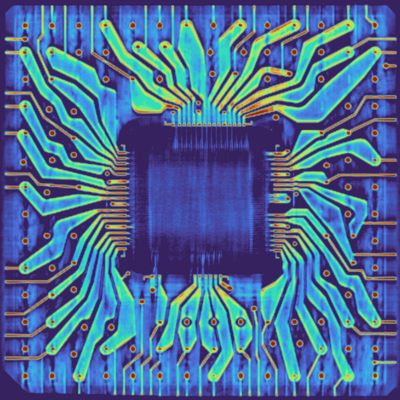
                    One of my early experiments in OpenCV produced an unintentional piece of Microcode Art I'm still fond of.

                    This was a result of attempting auto-segmentation using incrementing hue on the various segments. Needless to say, a lovely disaster.

                    ireneista@adhd.irenes.spaceI This user is from outside of this forum
                    ireneista@adhd.irenes.spaceI This user is from outside of this forum
                    ireneista@adhd.irenes.space
                    wrote last edited by
                    #60

                    @gloriouscow oh really neat

                    1 Reply Last reply
                    0
                    • datenwolf@chaos.socialD datenwolf@chaos.social

                      @infosecdj @gloriouscow

                      I'll need a decapped 80286 first. I think I might have a few AMD made 286 somewhere in the basement, but I have zero experience in decapping.

                      infosecdj@infosec.exchangeI This user is from outside of this forum
                      infosecdj@infosec.exchangeI This user is from outside of this forum
                      infosecdj@infosec.exchange
                      wrote last edited by
                      #61

                      @datenwolf @gloriouscow I think I can provide a few. At least I have the one that was imaged, and I could also try to get you one more with the die stripped down to substrate.

                      gloriouscow@oldbytes.spaceG datenwolf@chaos.socialD 2 Replies Last reply
                      0
                      • infosecdj@infosec.exchangeI infosecdj@infosec.exchange

                        @datenwolf @gloriouscow I think I can provide a few. At least I have the one that was imaged, and I could also try to get you one more with the die stripped down to substrate.

                        gloriouscow@oldbytes.spaceG This user is from outside of this forum
                        gloriouscow@oldbytes.spaceG This user is from outside of this forum
                        gloriouscow@oldbytes.space
                        wrote last edited by
                        #62

                        @infosecdj @datenwolf

                        If I can help coordinate this in any way left me know. I'd be happy to reimburse you for shipping things - although through some other means besides Ted Pella 😄

                        1 Reply Last reply
                        0
                        • infosecdj@infosec.exchangeI infosecdj@infosec.exchange

                          @datenwolf @gloriouscow I think I can provide a few. At least I have the one that was imaged, and I could also try to get you one more with the die stripped down to substrate.

                          datenwolf@chaos.socialD This user is from outside of this forum
                          datenwolf@chaos.socialD This user is from outside of this forum
                          datenwolf@chaos.social
                          wrote last edited by
                          #63

                          @infosecdj @gloriouscow

                          You can find my OrcID in my profile bio. And this is our research institute's webpage

                          Link Preview Image
                          Institut: Institut für Biomedizinische Optik

                          favicon

                          (www.bmo.uni-luebeck.de)

                          1 Reply Last reply
                          0
                          • gloriouscow@oldbytes.spaceG gloriouscow@oldbytes.space

                            It doesn't stop there. The incredibly talented nand2mario has taken reenigne's work and created a microcode-level Verilog implementation of the 80386. And yes, it runs DOOM. There's even a MiSTer core in the works.

                            https://nand2mario.github.io/posts/2026/z386/
                            https://github.com/nand2mario/z386
                            https://github.com/nand2mario/z386_MiSTer

                            nizmow@bitbang.socialN This user is from outside of this forum
                            nizmow@bitbang.socialN This user is from outside of this forum
                            nizmow@bitbang.social
                            wrote last edited by
                            #64

                            @gloriouscow I’m so excited about a real 386 MiSTer core!

                            1 Reply Last reply
                            0
                            • azonenberg@ioc.exchangeA azonenberg@ioc.exchange

                              @gloriouscow @ask Not true if there is a remotely decent passivation layer over the top insulating it.

                              Of course, I have no idea if these older parts actually have exposed metal anywhere... but on anything like 350nm and newer there's gonna be a micron or two of nitride/oxide on top insulating the die surface and protecting it from physical damage. The top metal traces aren't directly exposed.

                              gloriouscow@oldbytes.spaceG This user is from outside of this forum
                              gloriouscow@oldbytes.spaceG This user is from outside of this forum
                              gloriouscow@oldbytes.space
                              wrote last edited by
                              #65

                              @azonenberg @ask

                              true, the amount of delayering you need to get images of things isn't necessarily required if you were just going to try to probe things.

                              i still think that fact that everything is incredibly tiny is the real problem.

                              azonenberg@ioc.exchangeA 1 Reply Last reply
                              0
                              • gloriouscow@oldbytes.spaceG gloriouscow@oldbytes.space

                                @azonenberg @ask

                                true, the amount of delayering you need to get images of things isn't necessarily required if you were just going to try to probe things.

                                i still think that fact that everything is incredibly tiny is the real problem.

                                azonenberg@ioc.exchangeA This user is from outside of this forum
                                azonenberg@ioc.exchangeA This user is from outside of this forum
                                azonenberg@ioc.exchange
                                wrote last edited by
                                #66

                                @gloriouscow @ask well what i meant is more, dust on the top of a decapped chip with intact bond wires and passivation isn't really going to hurt it. I've had chips sitting on a shelf in a cabinet for years open cavity that still run fine.

                                gloriouscow@oldbytes.spaceG 1 Reply Last reply
                                0
                                • azonenberg@ioc.exchangeA azonenberg@ioc.exchange

                                  @gloriouscow @ask well what i meant is more, dust on the top of a decapped chip with intact bond wires and passivation isn't really going to hurt it. I've had chips sitting on a shelf in a cabinet for years open cavity that still run fine.

                                  gloriouscow@oldbytes.spaceG This user is from outside of this forum
                                  gloriouscow@oldbytes.spaceG This user is from outside of this forum
                                  gloriouscow@oldbytes.space
                                  wrote last edited by
                                  #67

                                  @azonenberg @ask

                                  how does heat dissipation work when a chip is decapped? I would have assumed a CPU would immediately overheat

                                  azonenberg@ioc.exchangeA 1 Reply Last reply
                                  0
                                  • gloriouscow@oldbytes.spaceG gloriouscow@oldbytes.space

                                    @azonenberg @ask

                                    how does heat dissipation work when a chip is decapped? I would have assumed a CPU would immediately overheat

                                    azonenberg@ioc.exchangeA This user is from outside of this forum
                                    azonenberg@ioc.exchangeA This user is from outside of this forum
                                    azonenberg@ioc.exchange
                                    wrote last edited by
                                    #68

                                    @gloriouscow @ask Normally I'm working on embedded parts that don't generate enough heat for this to be a problem

                                    1 Reply Last reply
                                    0
                                    • ldcd@social.treehouse.systemsL ldcd@social.treehouse.systems

                                      @gloriouscow if you have a clean die that would be preferable to having to decap one though

                                      ldcd@social.treehouse.systemsL This user is from outside of this forum
                                      ldcd@social.treehouse.systemsL This user is from outside of this forum
                                      ldcd@social.treehouse.systems
                                      wrote last edited by
                                      #69

                                      @gloriouscow https://siliconpr0n.org/wiki/doku.php?id=delayer:dash

                                      Ok yeah if it doesn't require any heating I can run this on a delayered die next time I'm working at the acid bench in the cleaneoom

                                      ldcd@social.treehouse.systemsL gloriouscow@oldbytes.spaceG 2 Replies Last reply
                                      0
                                      • ldcd@social.treehouse.systemsL ldcd@social.treehouse.systems

                                        @gloriouscow https://siliconpr0n.org/wiki/doku.php?id=delayer:dash

                                        Ok yeah if it doesn't require any heating I can run this on a delayered die next time I'm working at the acid bench in the cleaneoom

                                        ldcd@social.treehouse.systemsL This user is from outside of this forum
                                        ldcd@social.treehouse.systemsL This user is from outside of this forum
                                        ldcd@social.treehouse.systems
                                        wrote last edited by
                                        #70

                                        @gloriouscow do you know what M1 is on the 286 so I can etch any of the metal there away

                                        gloriouscow@oldbytes.spaceG 1 Reply Last reply
                                        0
                                        • ldcd@social.treehouse.systemsL ldcd@social.treehouse.systems

                                          @gloriouscow https://siliconpr0n.org/wiki/doku.php?id=delayer:dash

                                          Ok yeah if it doesn't require any heating I can run this on a delayered die next time I'm working at the acid bench in the cleaneoom

                                          gloriouscow@oldbytes.spaceG This user is from outside of this forum
                                          gloriouscow@oldbytes.spaceG This user is from outside of this forum
                                          gloriouscow@oldbytes.space
                                          wrote last edited by
                                          #71

                                          @ldcd sorry what's a rough traveller?

                                          I can get 286 chips to you but I have no real experience with or equipment for decapping here.

                                          ldcd@social.treehouse.systemsL 1 Reply Last reply
                                          0
                                          Reply
                                          • Reply as topic
                                          Log in to reply
                                          • Oldest to Newest
                                          • Newest to Oldest
                                          • Most Votes


                                          • Login

                                          • Login or register to search.
                                          • First post
                                            Last post
                                          0
                                          • Categories
                                          • Recent
                                          • Tags
                                          • Popular
                                          • World
                                          • Users
                                          • Groups