Skip to content
  • Categories
  • Recent
  • Tags
  • Popular
  • World
  • Users
  • Groups
Skins
  • Light
  • Brite
  • Cerulean
  • Cosmo
  • Flatly
  • Journal
  • Litera
  • Lumen
  • Lux
  • Materia
  • Minty
  • Morph
  • Pulse
  • Sandstone
  • Simplex
  • Sketchy
  • Spacelab
  • United
  • Yeti
  • Zephyr
  • Dark
  • Cyborg
  • Darkly
  • Quartz
  • Slate
  • Solar
  • Superhero
  • Vapor

  • Default (Cyborg)
  • No Skin
Collapse
Brand Logo

CIRCLE WITH A DOT

  1. Home
  2. Uncategorized
  3. I'm incredibly pleased to announce that the microcode for the Intel 80386 has been decoded.

I'm incredibly pleased to announce that the microcode for the Intel 80386 has been decoded.

Scheduled Pinned Locked Moved Uncategorized
retrocomputingvintagecomputinmicrocodereverseengineer
82 Posts 22 Posters 0 Views
  • Oldest to Newest
  • Newest to Oldest
  • Most Votes
Reply
  • Reply as topic
Log in to reply
This topic has been deleted. Only users with topic management privileges can see it.
  • gloriouscow@oldbytes.spaceG gloriouscow@oldbytes.space

    I'm incredibly pleased to announce that the microcode for the Intel 80386 has been decoded.

    It was an group effort by a bunch of talented people to extract and correct the physical bits, but the major work of decoding them was done by reenigne - you may know him from such incredible PC demos as 8088 MPH and Area 5150, as well as being the person who decoded the 8088 microcode previously.

    Please, check out his writeup.

    Link Preview Image
    80386 microcode disassembled « Reenigne blog

    favicon

    (www.reenigne.org)

    #retrocomputing #vintagecomputing #microcode #reverseengineering

    rk@mastodon.well.comR This user is from outside of this forum
    rk@mastodon.well.comR This user is from outside of this forum
    rk@mastodon.well.com
    wrote last edited by
    #40

    @gloriouscow

    Goddamn incredible

    1 Reply Last reply
    0
    • gloriouscow@oldbytes.spaceG gloriouscow@oldbytes.space

      Here's a little bit of banana for scale to appreciate how tiny the features we're working with are.

      I have this acrylic keychain that has an actual 386 die in it.

      It's Today's Choice, you see. (The rear side has a 486 die, with "Tomorrows Vision" labelled above it, something that I will never get tired of reading. Oh my god, I'm so old.)

      Link Preview Image
      whimsy@chitter.xyzW This user is from outside of this forum
      whimsy@chitter.xyzW This user is from outside of this forum
      whimsy@chitter.xyz
      wrote last edited by
      #41

      @gloriouscow I have to assume those dies must have failed QA because otherwise those must have been really expensive keychains.

      gloriouscow@oldbytes.spaceG 1 Reply Last reply
      0
      • whimsy@chitter.xyzW whimsy@chitter.xyz

        @gloriouscow I have to assume those dies must have failed QA because otherwise those must have been really expensive keychains.

        gloriouscow@oldbytes.spaceG This user is from outside of this forum
        gloriouscow@oldbytes.spaceG This user is from outside of this forum
        gloriouscow@oldbytes.space
        wrote last edited by
        #42

        @whimsy I would assume so.

        1 Reply Last reply
        0
        • gloriouscow@oldbytes.spaceG gloriouscow@oldbytes.space

          I'm incredibly pleased to announce that the microcode for the Intel 80386 has been decoded.

          It was an group effort by a bunch of talented people to extract and correct the physical bits, but the major work of decoding them was done by reenigne - you may know him from such incredible PC demos as 8088 MPH and Area 5150, as well as being the person who decoded the 8088 microcode previously.

          Please, check out his writeup.

          Link Preview Image
          80386 microcode disassembled « Reenigne blog

          favicon

          (www.reenigne.org)

          #retrocomputing #vintagecomputing #microcode #reverseengineering

          paulehoffman@infosec.exchangeP This user is from outside of this forum
          paulehoffman@infosec.exchangeP This user is from outside of this forum
          paulehoffman@infosec.exchange
          wrote last edited by
          #43

          @gloriouscow I just wanna say as an Old Skool nerd, this is absolutely amazing. As John and Hank Green would say, this is definitely committing to the bit. Bravo!

          1 Reply Last reply
          0
          • gloriouscow@oldbytes.spaceG gloriouscow@oldbytes.space

            @bitcrush_io That is true. I think a version without the black might look better.

            I think the complete lack of intention behind it is something magical though.

            gloriouscow@oldbytes.spaceG This user is from outside of this forum
            gloriouscow@oldbytes.spaceG This user is from outside of this forum
            gloriouscow@oldbytes.space
            wrote last edited by
            #44

            @bitcrush_io so, good news! I've been able to recover this particular disaster workflow.

            I'm not sure the exact parameters so an exact recreation may not be possible, but I was able to produce these. Which one do you like best? (the upper-left one is the original, for comparison).

            Link Preview Image
            1 Reply Last reply
            0
            • gloriouscow@oldbytes.spaceG gloriouscow@oldbytes.space

              Here's a little bit of banana for scale to appreciate how tiny the features we're working with are.

              I have this acrylic keychain that has an actual 386 die in it.

              It's Today's Choice, you see. (The rear side has a 486 die, with "Tomorrows Vision" labelled above it, something that I will never get tired of reading. Oh my god, I'm so old.)

              Link Preview Image
              lunarloony@dosgame.clubL This user is from outside of this forum
              lunarloony@dosgame.clubL This user is from outside of this forum
              lunarloony@dosgame.club
              wrote last edited by
              #45

              @gloriouscow This weirdly reminds me of those plastic trinkets you used to get that contained """real""" moon dust

              gloriouscow@oldbytes.spaceG 1 Reply Last reply
              0
              • lunarloony@dosgame.clubL lunarloony@dosgame.club

                @gloriouscow This weirdly reminds me of those plastic trinkets you used to get that contained """real""" moon dust

                gloriouscow@oldbytes.spaceG This user is from outside of this forum
                gloriouscow@oldbytes.spaceG This user is from outside of this forum
                gloriouscow@oldbytes.space
                wrote last edited by
                #46

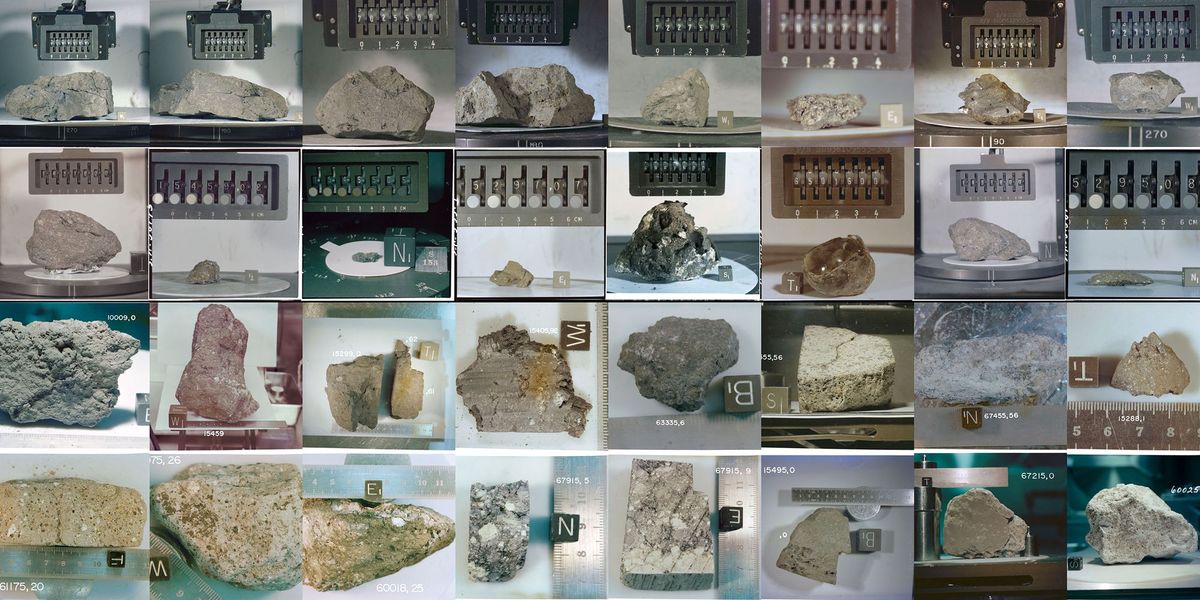
                @lunarloony there's actually a shit ton of moon dust out there, they brought back 842 pounds rock and soil over all the Apollo missions

                I'm not sure I'd be confident about any random keychain, but its not infeasible. It's fun reading about how many moon rocks were stolen or lost, too.
                Link Preview Image
                Here’s All the Rocks We Hauled Back From the Moon

                The 12 human beings who walked on the Moon collected, catalogued and returned 842 pounds of lunar rock and soil. Each sample has been meticulously documented in NASA's Lunar Sample Catalog.

                favicon

                Beautiful Public Data (www.beautifulpublicdata.com)

                1 Reply Last reply
                0
                • gloriouscow@oldbytes.spaceG gloriouscow@oldbytes.space

                  I'm incredibly pleased to announce that the microcode for the Intel 80386 has been decoded.

                  It was an group effort by a bunch of talented people to extract and correct the physical bits, but the major work of decoding them was done by reenigne - you may know him from such incredible PC demos as 8088 MPH and Area 5150, as well as being the person who decoded the 8088 microcode previously.

                  Please, check out his writeup.

                  Link Preview Image
                  80386 microcode disassembled « Reenigne blog

                  favicon

                  (www.reenigne.org)

                  #retrocomputing #vintagecomputing #microcode #reverseengineering

                  cgervasi@fosstodon.orgC This user is from outside of this forum
                  cgervasi@fosstodon.orgC This user is from outside of this forum
                  cgervasi@fosstodon.org
                  wrote last edited by
                  #47

                  @gloriouscow I was so excited to get a machine with a 386 + math coprocessor when I was 16 y/o. I didn't yet know there was microcode fetching, decoding, and executing the instructions.

                  1 Reply Last reply
                  0
                  • gloriouscow@oldbytes.spaceG gloriouscow@oldbytes.space

                    It's fairly easy to visually decode them. But now just do that 94,000 times.

                    colinstu@birdbutt.comC This user is from outside of this forum
                    colinstu@birdbutt.comC This user is from outside of this forum
                    colinstu@birdbutt.com
                    wrote last edited by
                    #48

                    @gloriouscow a couple OSM nerds and less than a week.. sounds doable.

                    1 Reply Last reply
                    0
                    • gloriouscow@oldbytes.spaceG gloriouscow@oldbytes.space

                      @datenwolf Oh hey, I get OCT done on my retinas yearly.

                      Structure size - that's a very good question, maybe @infosecdj could answer more confidently.

                      The original 286 was a 1.5µm process, but this is a later 80C286.

                      infosecdj@infosec.exchangeI This user is from outside of this forum
                      infosecdj@infosec.exchangeI This user is from outside of this forum
                      infosecdj@infosec.exchange
                      wrote last edited by
                      #49

                      @gloriouscow @datenwolf The pitch between vertical lines on that image is about 5.7 micron.

                      datenwolf@chaos.socialD 1 Reply Last reply
                      1
                      0
                      • R relay@relay.infosec.exchange shared this topic
                      • gloriouscow@oldbytes.spaceG gloriouscow@oldbytes.space

                        Here's a little bit of banana for scale to appreciate how tiny the features we're working with are.

                        I have this acrylic keychain that has an actual 386 die in it.

                        It's Today's Choice, you see. (The rear side has a 486 die, with "Tomorrows Vision" labelled above it, something that I will never get tired of reading. Oh my god, I'm so old.)

                        Link Preview Image
                        magnetic_tape@infosec.exchangeM This user is from outside of this forum
                        magnetic_tape@infosec.exchangeM This user is from outside of this forum
                        magnetic_tape@infosec.exchange
                        wrote last edited by
                        #50

                        @gloriouscow
                        Hot damn I love that thing, I own lapel pins of Intel and IBM dies but wasn't aware of that one. Totally jealous!

                        1 Reply Last reply
                        0
                        • gloriouscow@oldbytes.spaceG gloriouscow@oldbytes.space

                          @ask Further complicating matters is that once you've decapped a chip like this unless you have some sort of professional-grade clean-room filtration setup you've pretty much destroyed it because of all the microscopic schmutz floating in your average air that will get in and start bridging microscopic traces everywhere.

                          azonenberg@ioc.exchangeA This user is from outside of this forum
                          azonenberg@ioc.exchangeA This user is from outside of this forum
                          azonenberg@ioc.exchange
                          wrote last edited by
                          #51

                          @gloriouscow @ask Not true if there is a remotely decent passivation layer over the top insulating it.

                          Of course, I have no idea if these older parts actually have exposed metal anywhere... but on anything like 350nm and newer there's gonna be a micron or two of nitride/oxide on top insulating the die surface and protecting it from physical damage. The top metal traces aren't directly exposed.

                          gloriouscow@oldbytes.spaceG 1 Reply Last reply
                          1
                          0
                          • linear@nya.socialL linear@nya.social
                            @gloriouscow@oldbytes.space how long until the 486? that's the one i am most interested in 🙂

                            (only half joking...)
                            magnetic_tape@infosec.exchangeM This user is from outside of this forum
                            magnetic_tape@infosec.exchangeM This user is from outside of this forum
                            magnetic_tape@infosec.exchange
                            wrote last edited by
                            #52

                            @linear
                            A 486DX2 in FPGA form would be awesome. I cannot start to fathom the amount of work needed to bring that to life
                            @gloriouscow

                            1 Reply Last reply
                            0
                            • gloriouscow@oldbytes.spaceG gloriouscow@oldbytes.space

                              There is a way to extract the contents of an implant ROM. The doping that creates the gates means that you can etch the silicon in a way that the doped areas will stand out.

                              The acids involved in this process are some of the nastiest chemicals on the planet. Stuff like hydrofluoric acid.

                              Link Preview Image
                              Hydrofluoric acid - Wikipedia

                              favicon

                              (en.wikipedia.org)

                              Oh, you spilled it on yourself? no big deal. It's just going to dissolve your bones.

                              azonenberg@ioc.exchangeA This user is from outside of this forum
                              azonenberg@ioc.exchangeA This user is from outside of this forum
                              azonenberg@ioc.exchange
                              wrote last edited by
                              #53

                              @gloriouscow I have wanted to develop a Dash etch process in my lab for a while and might be willing to make an attempt at some point, but am way too busy to try it in the near term.

                              I have a proper wet bench with (dilute) HF and nitric acid already, I don't think I have acetic in stock but that's easy for me to procure.

                              But I have little to no experience working on chips that ancient so it may take me a while to even get decap etc working with good clean results. 350nm is about as old as I go these days.

                              1 Reply Last reply
                              0
                              • gloriouscow@oldbytes.spaceG gloriouscow@oldbytes.space

                                There is a way to extract the contents of an implant ROM. The doping that creates the gates means that you can etch the silicon in a way that the doped areas will stand out.

                                The acids involved in this process are some of the nastiest chemicals on the planet. Stuff like hydrofluoric acid.

                                Link Preview Image
                                Hydrofluoric acid - Wikipedia

                                favicon

                                (en.wikipedia.org)

                                Oh, you spilled it on yourself? no big deal. It's just going to dissolve your bones.

                                ldcd@social.treehouse.systemsL This user is from outside of this forum
                                ldcd@social.treehouse.systemsL This user is from outside of this forum
                                ldcd@social.treehouse.systems
                                wrote last edited by
                                #54

                                @gloriouscow if you have a rough traveler I can do it for you

                                ldcd@social.treehouse.systemsL 1 Reply Last reply
                                0
                                • gloriouscow@oldbytes.spaceG gloriouscow@oldbytes.space

                                  I'm incredibly pleased to announce that the microcode for the Intel 80386 has been decoded.

                                  It was an group effort by a bunch of talented people to extract and correct the physical bits, but the major work of decoding them was done by reenigne - you may know him from such incredible PC demos as 8088 MPH and Area 5150, as well as being the person who decoded the 8088 microcode previously.

                                  Please, check out his writeup.

                                  Link Preview Image
                                  80386 microcode disassembled « Reenigne blog

                                  favicon

                                  (www.reenigne.org)

                                  #retrocomputing #vintagecomputing #microcode #reverseengineering

                                  dushman@hollow.raccoon.questD This user is from outside of this forum
                                  dushman@hollow.raccoon.questD This user is from outside of this forum
                                  dushman@hollow.raccoon.quest
                                  wrote last edited by
                                  #55
                                  @gloriouscow@oldbytes.space That's really impressive
                                  1 Reply Last reply
                                  0
                                  • ldcd@social.treehouse.systemsL ldcd@social.treehouse.systems

                                    @gloriouscow if you have a rough traveler I can do it for you

                                    ldcd@social.treehouse.systemsL This user is from outside of this forum
                                    ldcd@social.treehouse.systemsL This user is from outside of this forum
                                    ldcd@social.treehouse.systems
                                    wrote last edited by
                                    #56

                                    @gloriouscow if you have a clean die that would be preferable to having to decap one though

                                    ldcd@social.treehouse.systemsL 1 Reply Last reply
                                    0
                                    • infosecdj@infosec.exchangeI infosecdj@infosec.exchange

                                      @gloriouscow @datenwolf The pitch between vertical lines on that image is about 5.7 micron.

                                      datenwolf@chaos.socialD This user is from outside of this forum
                                      datenwolf@chaos.socialD This user is from outside of this forum
                                      datenwolf@chaos.social
                                      wrote last edited by
                                      #57

                                      @infosecdj @gloriouscow

                                      This places this straight into OCM (optical coherence microscopy) territory. I'm a little bit concerned that speckle could cause issues. But just this Thursday I was in a seminar, in which a couple of ideas for speckle reduction were presented. Worth a shot.

                                      infosecdj@infosec.exchangeI 1 Reply Last reply
                                      0
                                      • datenwolf@chaos.socialD datenwolf@chaos.social

                                        @infosecdj @gloriouscow

                                        This places this straight into OCM (optical coherence microscopy) territory. I'm a little bit concerned that speckle could cause issues. But just this Thursday I was in a seminar, in which a couple of ideas for speckle reduction were presented. Worth a shot.

                                        infosecdj@infosec.exchangeI This user is from outside of this forum
                                        infosecdj@infosec.exchangeI This user is from outside of this forum
                                        infosecdj@infosec.exchange
                                        wrote last edited by
                                        #58

                                        @datenwolf @gloriouscow I'd be very interested to hear about any results you get!

                                        datenwolf@chaos.socialD 1 Reply Last reply
                                        0
                                        • infosecdj@infosec.exchangeI infosecdj@infosec.exchange

                                          @datenwolf @gloriouscow I'd be very interested to hear about any results you get!

                                          datenwolf@chaos.socialD This user is from outside of this forum
                                          datenwolf@chaos.socialD This user is from outside of this forum
                                          datenwolf@chaos.social
                                          wrote last edited by
                                          #59

                                          @infosecdj @gloriouscow

                                          I'll need a decapped 80286 first. I think I might have a few AMD made 286 somewhere in the basement, but I have zero experience in decapping.

                                          infosecdj@infosec.exchangeI 1 Reply Last reply
                                          0
                                          Reply
                                          • Reply as topic
                                          Log in to reply
                                          • Oldest to Newest
                                          • Newest to Oldest
                                          • Most Votes


                                          • Login

                                          • Login or register to search.
                                          • First post
                                            Last post
                                          0
                                          • Categories
                                          • Recent
                                          • Tags
                                          • Popular
                                          • World
                                          • Users
                                          • Groups