Skip to content
  • Categories
  • Recent
  • Tags
  • Popular
  • World
  • Users
  • Groups
Skins
  • Light
  • Brite
  • Cerulean
  • Cosmo
  • Flatly
  • Journal
  • Litera
  • Lumen
  • Lux
  • Materia
  • Minty
  • Morph
  • Pulse
  • Sandstone
  • Simplex
  • Sketchy
  • Spacelab
  • United
  • Yeti
  • Zephyr
  • Dark
  • Cyborg
  • Darkly
  • Quartz
  • Slate
  • Solar
  • Superhero
  • Vapor

  • Default (Cyborg)
  • No Skin
Collapse
Brand Logo

CIRCLE WITH A DOT

  1. Home
  2. Uncategorized
  3. today I learned that we (as a civilization) now can put 16 silicon flash dice into a single 700µm microSD card on a commercial scale https://www.ose.com.tw/en/ic-services/memory-product-package/microsdsd

today I learned that we (as a civilization) now can put 16 silicon flash dice into a single 700µm microSD card on a commercial scale https://www.ose.com.tw/en/ic-services/memory-product-package/microsdsd

Scheduled Pinned Locked Moved Uncategorized
36 Posts 19 Posters 54 Views
  • Oldest to Newest
  • Newest to Oldest
  • Most Votes
Reply
  • Reply as topic
Log in to reply
This topic has been deleted. Only users with topic management privileges can see it.
  • whitequark@social.treehouse.systemsW whitequark@social.treehouse.systems

    if you think that the precariously balanced tower of flash above is an inaccurate representation of what's going on, i can reassure you that
    (a) this is exactly how it looks like, and
    (b) SK Hynix is up to 24 layers already (not sure in what application)

    Link Preview Image
    Semiconductor Back-end Process 4: Packages, Part 2

    This article will explore packaging technologies that combine multiple packages and components within a single product.

    favicon

    SK hynix Newsroom - (news.skhynix.com)

    azonenberg@ioc.exchangeA This user is from outside of this forum
    azonenberg@ioc.exchangeA This user is from outside of this forum
    azonenberg@ioc.exchange
    wrote last edited by
    #26

    @whitequark also each flash die has several hundred layers of stacked bit cells

    whitequark@social.treehouse.systemsW 1 Reply Last reply
    0
    • azonenberg@ioc.exchangeA azonenberg@ioc.exchange

      @whitequark also each flash die has several hundred layers of stacked bit cells

      whitequark@social.treehouse.systemsW This user is from outside of this forum
      whitequark@social.treehouse.systemsW This user is from outside of this forum
      whitequark@social.treehouse.systems
      wrote last edited by
      #27

      @azonenberg yep! Samsung got up to 400 layers last year

      azonenberg@ioc.exchangeA 0xc01dc0ffee@bytearray.eu0 2 Replies Last reply
      0
      • attie@hachyderm.ioA attie@hachyderm.io

        @whitequark Is this "3D NAND" and similar? I always wondered how they achieved the stacking!

        whitequark@social.treehouse.systemsW This user is from outside of this forum
        whitequark@social.treehouse.systemsW This user is from outside of this forum
        whitequark@social.treehouse.systems
        wrote last edited by
        #28

        @attie no, 3D NAND is having (up to 400 in recent flash) layers of NAND cells in each die

        attie@hachyderm.ioA 1 Reply Last reply
        0
        • whitequark@social.treehouse.systemsW whitequark@social.treehouse.systems

          @azonenberg yep! Samsung got up to 400 layers last year

          azonenberg@ioc.exchangeA This user is from outside of this forum
          azonenberg@ioc.exchangeA This user is from outside of this forum
          azonenberg@ioc.exchange
          wrote last edited by
          #29

          @whitequark the last one i threw in the fib was "only" 176 iirc

          1 Reply Last reply
          0
          • whitequark@social.treehouse.systemsW whitequark@social.treehouse.systems

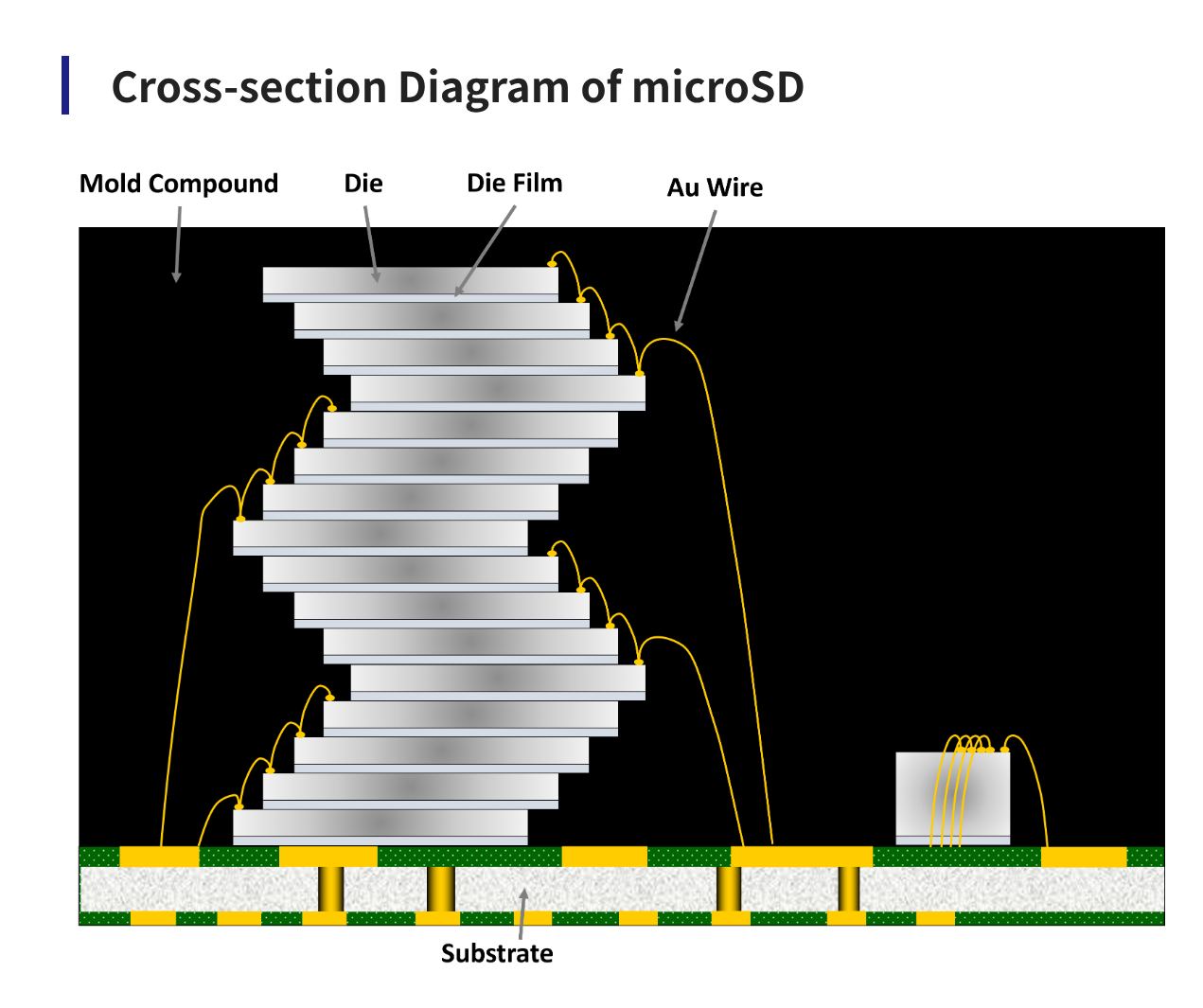
            today I learned that we (as a civilization) now can put 16 silicon flash dice into a single 700µm microSD card on a commercial scale https://www.ose.com.tw/en/ic-services/memory-product-package/microsdsd
            Link Preview Image
            azonenberg@ioc.exchangeA This user is from outside of this forum
            azonenberg@ioc.exchangeA This user is from outside of this forum
            azonenberg@ioc.exchange
            wrote last edited by
            #30

            @whitequark also looking at that diagram it seems like the 16 die stack is actually two 8 die onfi channels on top of each other mirrored with one coming out the left and one out the right

            1 Reply Last reply
            0
            • whitequark@social.treehouse.systemsW whitequark@social.treehouse.systems

              today I learned that we (as a civilization) now can put 16 silicon flash dice into a single 700µm microSD card on a commercial scale https://www.ose.com.tw/en/ic-services/memory-product-package/microsdsd

              Link Preview Image
              ricci@discuss.systemsR This user is from outside of this forum
              ricci@discuss.systemsR This user is from outside of this forum
              ricci@discuss.systems
              wrote last edited by
              #31

              @whitequark now if we'd only build flash for a purpose other than storing content that's been stolen by our AI overlords

              1 Reply Last reply
              0
              • whitequark@social.treehouse.systemsW whitequark@social.treehouse.systems

                @attie no, 3D NAND is having (up to 400 in recent flash) layers of NAND cells in each die

                attie@hachyderm.ioA This user is from outside of this forum
                attie@hachyderm.ioA This user is from outside of this forum
                attie@hachyderm.io
                wrote last edited by
                #32

                @whitequark Oh, intriguing - thanks!

                1 Reply Last reply
                0
                • whitequark@social.treehouse.systemsW whitequark@social.treehouse.systems

                  @azonenberg yep! Samsung got up to 400 layers last year

                  0xc01dc0ffee@bytearray.eu0 This user is from outside of this forum
                  0xc01dc0ffee@bytearray.eu0 This user is from outside of this forum
                  0xc01dc0ffee@bytearray.eu
                  wrote last edited by
                  #33

                  @whitequark @azonenberg No fucking way, how are those even economical to manufacture?

                  azonenberg@ioc.exchangeA 1 Reply Last reply
                  0
                  • 0xc01dc0ffee@bytearray.eu0 0xc01dc0ffee@bytearray.eu

                    @whitequark @azonenberg No fucking way, how are those even economical to manufacture?

                    azonenberg@ioc.exchangeA This user is from outside of this forum
                    azonenberg@ioc.exchangeA This user is from outside of this forum
                    azonenberg@ioc.exchange
                    wrote last edited by
                    #34

                    @0xC01DC0FFEE @whitequark V-NAND is crazy. Basically deposit alternating layers of a couple of materials then drill through the whole stack and you get a vertical abacus-shaped string of hundreds of flash bits

                    whitequark@social.treehouse.systemsW 1 Reply Last reply
                    0
                    • azonenberg@ioc.exchangeA azonenberg@ioc.exchange

                      @0xC01DC0FFEE @whitequark V-NAND is crazy. Basically deposit alternating layers of a couple of materials then drill through the whole stack and you get a vertical abacus-shaped string of hundreds of flash bits

                      whitequark@social.treehouse.systemsW This user is from outside of this forum
                      whitequark@social.treehouse.systemsW This user is from outside of this forum
                      whitequark@social.treehouse.systems
                      wrote last edited by
                      #35

                      @azonenberg @0xC01DC0FFEE ohhhhhh.

                      azonenberg@ioc.exchangeA 1 Reply Last reply
                      0
                      • whitequark@social.treehouse.systemsW whitequark@social.treehouse.systems

                        @azonenberg @0xC01DC0FFEE ohhhhhh.

                        azonenberg@ioc.exchangeA This user is from outside of this forum
                        azonenberg@ioc.exchangeA This user is from outside of this forum
                        azonenberg@ioc.exchange
                        wrote last edited by
                        #36

                        @whitequark @0xC01DC0FFEE the transistor channel is vertical polysilicon deposited into a hole that looks kinda like a dram capacitor, except it's ringed by ONO charge trap layers then more poly for the wordlines IIRC

                        1 Reply Last reply
                        1
                        0
                        • R relay@relay.infosec.exchange shared this topic

                        Reply
                        • Reply as topic
                        Log in to reply
                        • Oldest to Newest
                        • Newest to Oldest
                        • Most Votes


                        • Login

                        • Login or register to search.
                        • First post
                          Last post
                        0
                        • Categories
                        • Recent
                        • Tags
                        • Popular
                        • World
                        • Users
                        • Groups