Skip to content
  • Categories
  • Recent
  • Tags
  • Popular
  • World
  • Users
  • Groups
Skins
  • Light
  • Brite
  • Cerulean
  • Cosmo
  • Flatly
  • Journal
  • Litera
  • Lumen
  • Lux
  • Materia
  • Minty
  • Morph
  • Pulse
  • Sandstone
  • Simplex
  • Sketchy
  • Spacelab
  • United
  • Yeti
  • Zephyr
  • Dark
  • Cyborg
  • Darkly
  • Quartz
  • Slate
  • Solar
  • Superhero
  • Vapor

  • Default (Cyborg)
  • No Skin
Collapse
Brand Logo

CIRCLE WITH A DOT

  1. Home
  2. Uncategorized
  3. today I learned that we (as a civilization) now can put 16 silicon flash dice into a single 700µm microSD card on a commercial scale https://www.ose.com.tw/en/ic-services/memory-product-package/microsdsd
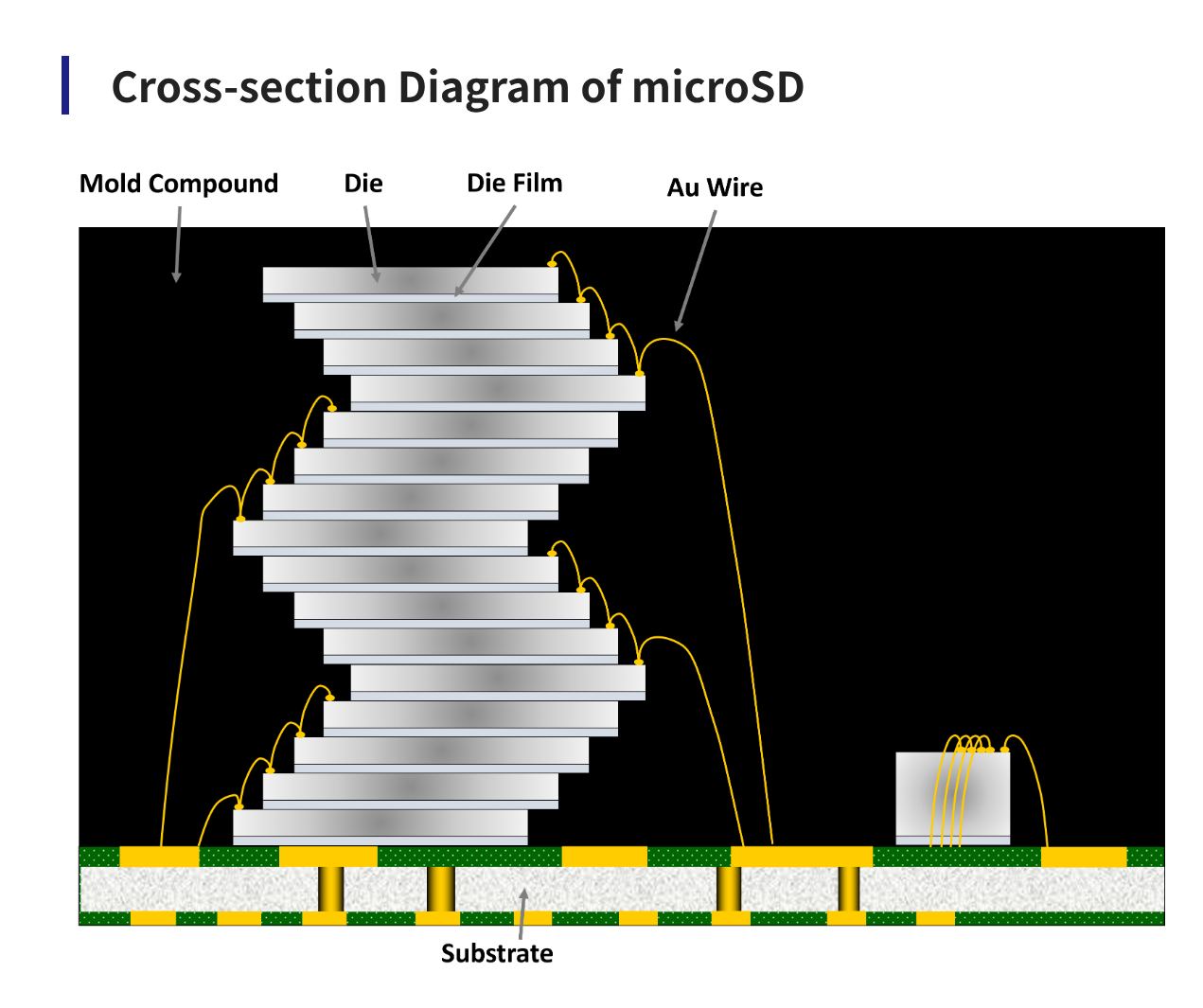
today I learned that we (as a civilization) now can put 16 silicon flash dice into a single 700µm microSD card on a commercial scale https://www.ose.com.tw/en/ic-services/memory-product-package/microsdsd

Scheduled Pinned Locked Moved Uncategorized
36 Posts 19 Posters 54 Views
  • Oldest to Newest
  • Newest to Oldest
  • Most Votes
Reply
  • Reply as topic
Log in to reply
This topic has been deleted. Only users with topic management privileges can see it.
  • azonenberg@ioc.exchangeA azonenberg@ioc.exchange

    @whitequark also each flash die has several hundred layers of stacked bit cells

    whitequark@social.treehouse.systemsW This user is from outside of this forum
    whitequark@social.treehouse.systemsW This user is from outside of this forum
    whitequark@social.treehouse.systems
    wrote last edited by
    #27

    @azonenberg yep! Samsung got up to 400 layers last year

    azonenberg@ioc.exchangeA 0xc01dc0ffee@bytearray.eu0 2 Replies Last reply
    0
    • attie@hachyderm.ioA attie@hachyderm.io

      @whitequark Is this "3D NAND" and similar? I always wondered how they achieved the stacking!

      whitequark@social.treehouse.systemsW This user is from outside of this forum
      whitequark@social.treehouse.systemsW This user is from outside of this forum
      whitequark@social.treehouse.systems
      wrote last edited by
      #28

      @attie no, 3D NAND is having (up to 400 in recent flash) layers of NAND cells in each die

      attie@hachyderm.ioA 1 Reply Last reply
      0
      • whitequark@social.treehouse.systemsW whitequark@social.treehouse.systems

        @azonenberg yep! Samsung got up to 400 layers last year

        azonenberg@ioc.exchangeA This user is from outside of this forum
        azonenberg@ioc.exchangeA This user is from outside of this forum
        azonenberg@ioc.exchange
        wrote last edited by
        #29

        @whitequark the last one i threw in the fib was "only" 176 iirc

        1 Reply Last reply
        0
        • whitequark@social.treehouse.systemsW whitequark@social.treehouse.systems

          today I learned that we (as a civilization) now can put 16 silicon flash dice into a single 700µm microSD card on a commercial scale https://www.ose.com.tw/en/ic-services/memory-product-package/microsdsd

          Link Preview Image
          azonenberg@ioc.exchangeA This user is from outside of this forum
          azonenberg@ioc.exchangeA This user is from outside of this forum
          azonenberg@ioc.exchange
          wrote last edited by
          #30

          @whitequark also looking at that diagram it seems like the 16 die stack is actually two 8 die onfi channels on top of each other mirrored with one coming out the left and one out the right

          1 Reply Last reply
          0
          • whitequark@social.treehouse.systemsW whitequark@social.treehouse.systems

            today I learned that we (as a civilization) now can put 16 silicon flash dice into a single 700µm microSD card on a commercial scale https://www.ose.com.tw/en/ic-services/memory-product-package/microsdsd

            Link Preview Image
            ricci@discuss.systemsR This user is from outside of this forum
            ricci@discuss.systemsR This user is from outside of this forum
            ricci@discuss.systems
            wrote last edited by
            #31

            @whitequark now if we'd only build flash for a purpose other than storing content that's been stolen by our AI overlords

            1 Reply Last reply
            0
            • whitequark@social.treehouse.systemsW whitequark@social.treehouse.systems

              @attie no, 3D NAND is having (up to 400 in recent flash) layers of NAND cells in each die

              attie@hachyderm.ioA This user is from outside of this forum
              attie@hachyderm.ioA This user is from outside of this forum
              attie@hachyderm.io
              wrote last edited by
              #32

              @whitequark Oh, intriguing - thanks!

              1 Reply Last reply
              0
              • whitequark@social.treehouse.systemsW whitequark@social.treehouse.systems

                @azonenberg yep! Samsung got up to 400 layers last year

                0xc01dc0ffee@bytearray.eu0 This user is from outside of this forum
                0xc01dc0ffee@bytearray.eu0 This user is from outside of this forum
                0xc01dc0ffee@bytearray.eu
                wrote last edited by
                #33

                @whitequark @azonenberg No fucking way, how are those even economical to manufacture?

                azonenberg@ioc.exchangeA 1 Reply Last reply
                0
                • 0xc01dc0ffee@bytearray.eu0 0xc01dc0ffee@bytearray.eu

                  @whitequark @azonenberg No fucking way, how are those even economical to manufacture?

                  azonenberg@ioc.exchangeA This user is from outside of this forum
                  azonenberg@ioc.exchangeA This user is from outside of this forum
                  azonenberg@ioc.exchange
                  wrote last edited by
                  #34

                  @0xC01DC0FFEE @whitequark V-NAND is crazy. Basically deposit alternating layers of a couple of materials then drill through the whole stack and you get a vertical abacus-shaped string of hundreds of flash bits

                  whitequark@social.treehouse.systemsW 1 Reply Last reply
                  0
                  • azonenberg@ioc.exchangeA azonenberg@ioc.exchange

                    @0xC01DC0FFEE @whitequark V-NAND is crazy. Basically deposit alternating layers of a couple of materials then drill through the whole stack and you get a vertical abacus-shaped string of hundreds of flash bits

                    whitequark@social.treehouse.systemsW This user is from outside of this forum
                    whitequark@social.treehouse.systemsW This user is from outside of this forum
                    whitequark@social.treehouse.systems
                    wrote last edited by
                    #35

                    @azonenberg @0xC01DC0FFEE ohhhhhh.

                    azonenberg@ioc.exchangeA 1 Reply Last reply
                    0
                    • whitequark@social.treehouse.systemsW whitequark@social.treehouse.systems

                      @azonenberg @0xC01DC0FFEE ohhhhhh.

                      azonenberg@ioc.exchangeA This user is from outside of this forum
                      azonenberg@ioc.exchangeA This user is from outside of this forum
                      azonenberg@ioc.exchange
                      wrote last edited by
                      #36

                      @whitequark @0xC01DC0FFEE the transistor channel is vertical polysilicon deposited into a hole that looks kinda like a dram capacitor, except it's ringed by ONO charge trap layers then more poly for the wordlines IIRC

                      1 Reply Last reply
                      1
                      0
                      • R relay@relay.infosec.exchange shared this topic

                      Reply
                      • Reply as topic
                      Log in to reply
                      • Oldest to Newest
                      • Newest to Oldest
                      • Most Votes


                      • Login

                      • Login or register to search.
                      • First post
                        Last post
                      0
                      • Categories
                      • Recent
                      • Tags
                      • Popular
                      • World
                      • Users
                      • Groups