Another train journey.
-
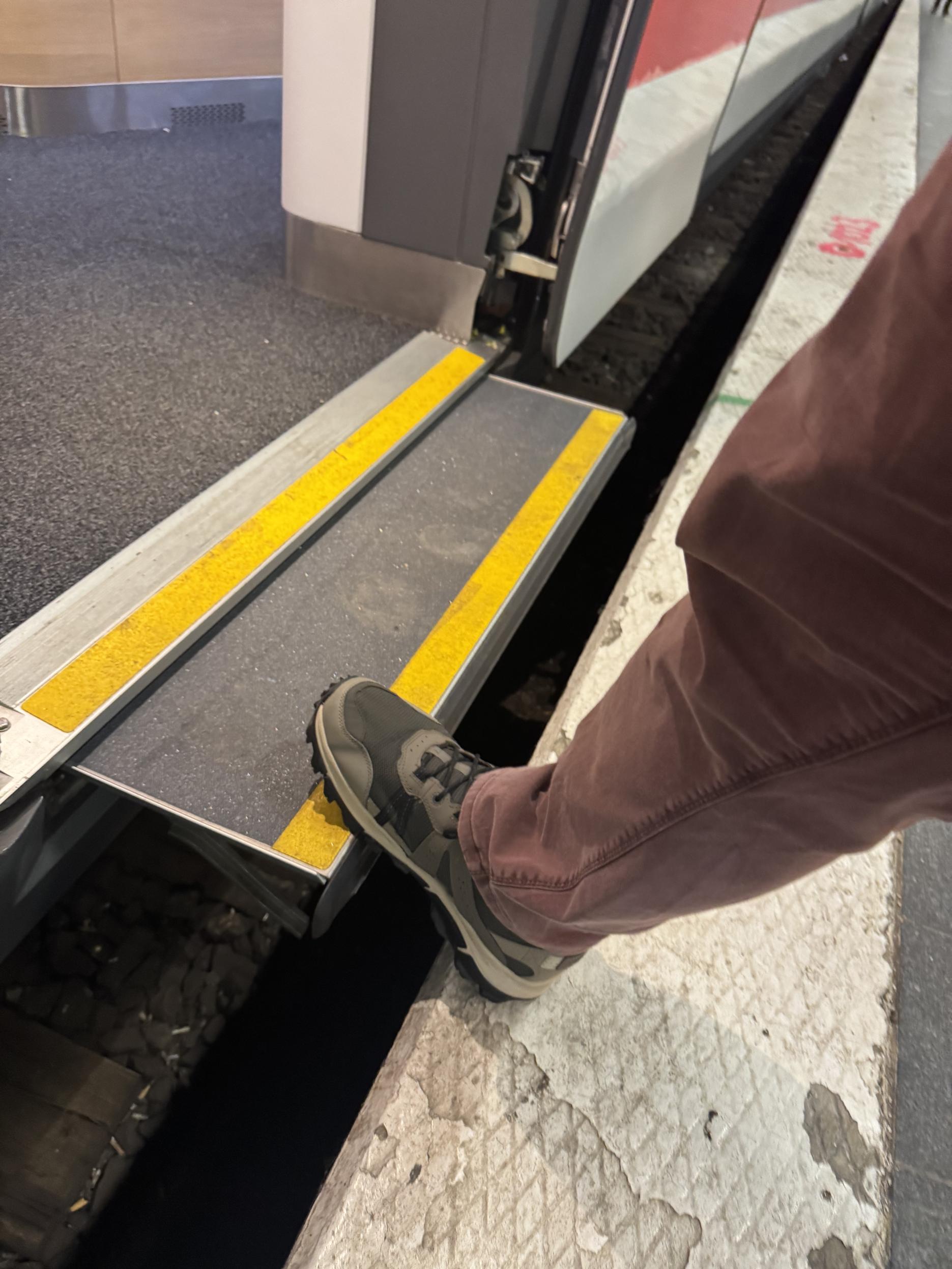
These are aptly called "gap fillers". They allow anything with wheels to roll relatively easily onto the train from the station platform (or visa versa). DB with the ICE L however, has failed to understand this fundamental design feature.
They have gap fillers on the ICE L, if you look at the fiat picture at the start of the thread you can see one. Except they only have them on one coach of the 17 coach train.
One.
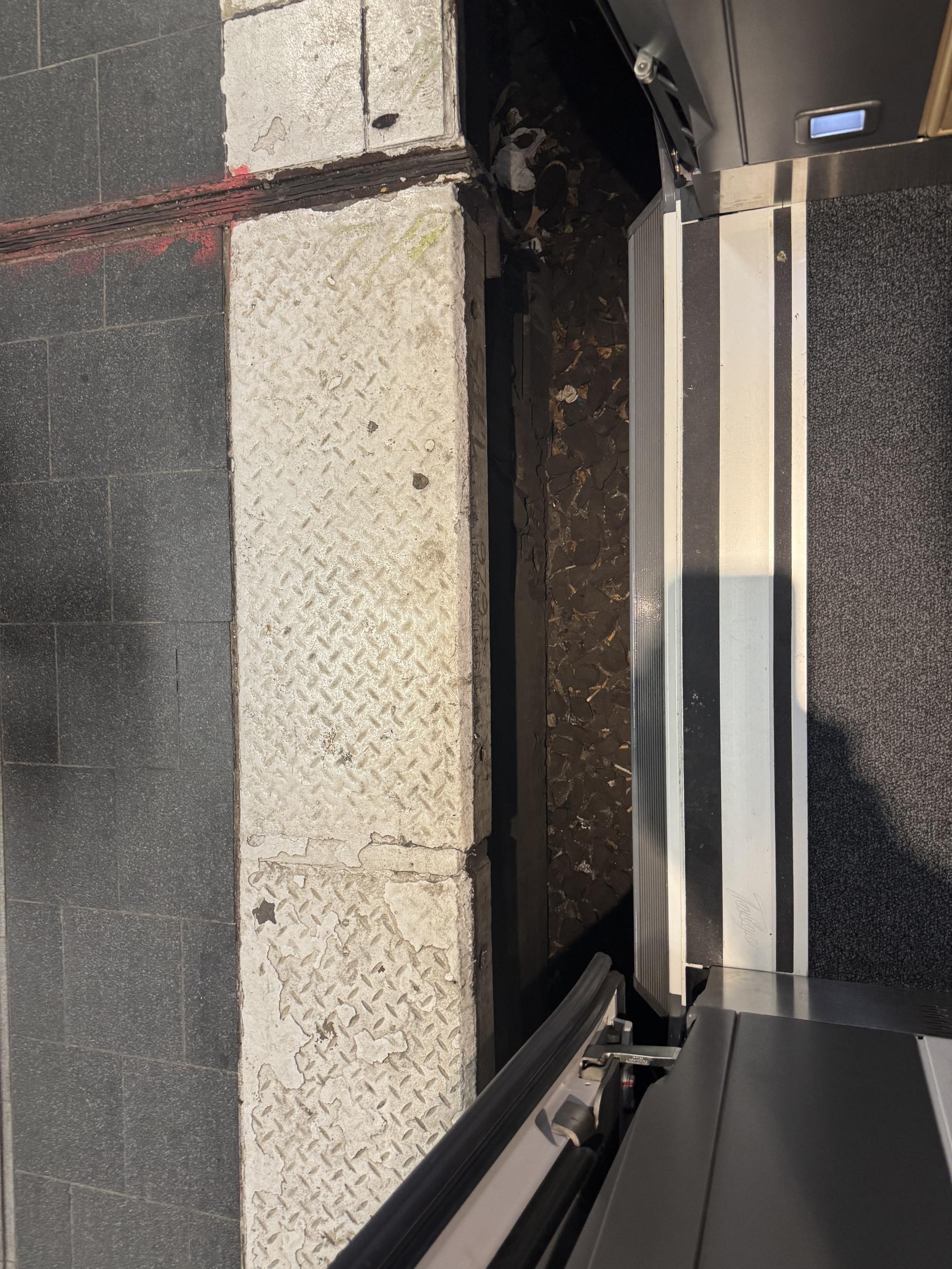
The other 16 coaches are like in the second picture.
3/nI simply cannot get my head round how DB can be this incompetent in their purchasing not to require gap fillers on their new train.
My mind boggles that Talgo don't have this as a default install.
But then I also don't understand why EU and German law doesn't require all new trains be accessible without assistance.
How no gap fillers made it into the final design makes no sense. It's such a basic part of good accessible design.
4/n -
I simply cannot get my head round how DB can be this incompetent in their purchasing not to require gap fillers on their new train.
My mind boggles that Talgo don't have this as a default install.
But then I also don't understand why EU and German law doesn't require all new trains be accessible without assistance.
How no gap fillers made it into the final design makes no sense. It's such a basic part of good accessible design.
4/n"But there are gap fillers in the only coach with wheelchair space". I can hear some apologists typing.
This is one of the biggest misconceptions of accessible design. That only wheelchair users need it.
What about parents with kids in a pushchair? Or people with heavy wheeled luggage? Or people who walk with a frame? Or crutches? Or people with balance issue? Or travelling with young children?
Just like how the curb cut effect makes the built environment better for everyone.
5/n -
"But there are gap fillers in the only coach with wheelchair space". I can hear some apologists typing.
This is one of the biggest misconceptions of accessible design. That only wheelchair users need it.
What about parents with kids in a pushchair? Or people with heavy wheeled luggage? Or people who walk with a frame? Or crutches? Or people with balance issue? Or travelling with young children?
Just like how the curb cut effect makes the built environment better for everyone.
5/nAccessible design makes the train easier to use for everyone. What Deutschebahn has said here is "fuck you all, we'll do the absolute bare minimum". The excellent writer @WeirdWriter has an article about door handle design with the line: "show me your doorknobs, and I’ll tell you who you are"
Show me the entrance to your nations trains and I'll tell you your country's attitude to anyone isn't perfectly able bodied. And the attitude from DB is somewhere between fuck you & the bare minimum.
6/n -
Accessible design makes the train easier to use for everyone. What Deutschebahn has said here is "fuck you all, we'll do the absolute bare minimum". The excellent writer @WeirdWriter has an article about door handle design with the line: "show me your doorknobs, and I’ll tell you who you are"
Show me the entrance to your nations trains and I'll tell you your country's attitude to anyone isn't perfectly able bodied. And the attitude from DB is somewhere between fuck you & the bare minimum.
6/nDisappointingly, from what I can tell DSB, who bought the same Talgo 230 rolling stock has the same accessibility choice in their purchase. I wonder if Flixtrain have made the same choice with their Talgo 230 purchase.
Special thanks to @moof for the photos of the ICE L.
And if you haven't read @WeirdWriter post about door knobs, you should. https://sightlessscribbles.com/posts/doorknob-hostility/
7/7 -
"But there are gap fillers in the only coach with wheelchair space". I can hear some apologists typing.
This is one of the biggest misconceptions of accessible design. That only wheelchair users need it.
What about parents with kids in a pushchair? Or people with heavy wheeled luggage? Or people who walk with a frame? Or crutches? Or people with balance issue? Or travelling with young children?
Just like how the curb cut effect makes the built environment better for everyone.
5/n@quixoticgeek I thought we wanted continuous sidewalks (pavements) not curb cuts that make walkers have to negotiate two ramps?
-
@quixoticgeek I thought we wanted continuous sidewalks (pavements) not curb cuts that make walkers have to negotiate two ramps?
@mjr yes. Since drop curbs/curb cuts were first introduced we have realised that continuous pavement is the better approach. But the name "the curb cut effect" still applies to the idea of an accessibility aid making things better for everyone.
-
"But there are gap fillers in the only coach with wheelchair space". I can hear some apologists typing.
This is one of the biggest misconceptions of accessible design. That only wheelchair users need it.
What about parents with kids in a pushchair? Or people with heavy wheeled luggage? Or people who walk with a frame? Or crutches? Or people with balance issue? Or travelling with young children?
Just like how the curb cut effect makes the built environment better for everyone.
5/nRe. small children: Went on a school trip with 7&8yo. We had to get off at a small station (just a stop without a building). When returning to Brussels I had to hoist several kids up the steps because they were too small to climb in!
-
Accessible design makes the train easier to use for everyone. What Deutschebahn has said here is "fuck you all, we'll do the absolute bare minimum". The excellent writer @WeirdWriter has an article about door handle design with the line: "show me your doorknobs, and I’ll tell you who you are"
Show me the entrance to your nations trains and I'll tell you your country's attitude to anyone isn't perfectly able bodied. And the attitude from DB is somewhere between fuck you & the bare minimum.
6/n@quixoticgeek @WeirdWriter The Deutsche Bahn's attitude to pretty much everything these days is "fuck you all", as evidenced by their timekeeping and the complete dogs breakfast of their treatment of the Stuttgart to Switzerland line.
-
"But there are gap fillers in the only coach with wheelchair space". I can hear some apologists typing.
This is one of the biggest misconceptions of accessible design. That only wheelchair users need it.
What about parents with kids in a pushchair? Or people with heavy wheeled luggage? Or people who walk with a frame? Or crutches? Or people with balance issue? Or travelling with young children?
Just like how the curb cut effect makes the built environment better for everyone.
5/n@quixoticgeek "the only coach with wheelchair space"
That sounds like a poor decision on its own. -
@quixoticgeek "the only coach with wheelchair space"
That sounds like a poor decision on its own.@jetlagjen @quixoticgeek California is going through that right now with its Stadler FLIRT H2 purchase -- the vehicle geometry basically prevents them from making space for wheelchairs (or any other nonpedal use) to traverse the train, so the restrooms, disabled seating, vending machines, etc. are all getting crammed into the floor space between the two bogies.
-
@jetlagjen @quixoticgeek California is going through that right now with its Stadler FLIRT H2 purchase -- the vehicle geometry basically prevents them from making space for wheelchairs (or any other nonpedal use) to traverse the train, so the restrooms, disabled seating, vending machines, etc. are all getting crammed into the floor space between the two bogies.
@Rgsharpe @jetlagjen that sounds like an ADA lawsuit waiting to happen.
-
@Rgsharpe @jetlagjen that sounds like an ADA lawsuit waiting to happen.
@quixoticgeek @jetlagjen ADA leaders were consulted and they were unenthusiastic but resigned. The tradeoff is that the FLIRTs will at least allow independent level boarding - the State's new Siemens Venture trains allow full traversal of the set but require much-delayed minihigh platforms and boarding ramps for anything that doesn't want to navigate 1m in steps.
-
These are aptly called "gap fillers". They allow anything with wheels to roll relatively easily onto the train from the station platform (or visa versa). DB with the ICE L however, has failed to understand this fundamental design feature.
They have gap fillers on the ICE L, if you look at the fiat picture at the start of the thread you can see one. Except they only have them on one coach of the 17 coach train.
One.
The other 16 coaches are like in the second picture.
3/n@quixoticgeek I initially thought the first photo was the "bad" example, because that's still a pretty significant gap. The second, I can't believe that's considered safe for anyone!
-
@quixoticgeek I initially thought the first photo was the "bad" example, because that's still a pretty significant gap. The second, I can't believe that's considered safe for anyone!
@earthtoneone @quixoticgeek Not only the gap, but I guess the height difference would make it hard(er) for people in wheelchairs to get in and out.
-
"But there are gap fillers in the only coach with wheelchair space". I can hear some apologists typing.
This is one of the biggest misconceptions of accessible design. That only wheelchair users need it.
What about parents with kids in a pushchair? Or people with heavy wheeled luggage? Or people who walk with a frame? Or crutches? Or people with balance issue? Or travelling with young children?
Just like how the curb cut effect makes the built environment better for everyone.
5/n@quixoticgeek person with a cane who really needs everything to be on the same level (me)!
-
@oheso @quixoticgeek Actually for walking people with a cane it's easier to have a step up than down!
-
I simply cannot get my head round how DB can be this incompetent in their purchasing not to require gap fillers on their new train.
My mind boggles that Talgo don't have this as a default install.
But then I also don't understand why EU and German law doesn't require all new trains be accessible without assistance.
How no gap fillers made it into the final design makes no sense. It's such a basic part of good accessible design.
4/n@quixoticgeek "How can they be so incompetent?" it's noot incompetence - it is dliberate ignorance.
Germany signed the "Convention on the Rights of Persons with Disabilities" into law back in... uh... 2009? Anyway. Trouble is that even though it is *legally binding*, the German law does not define *sanctions*.
That's why DB can drag&drag&drag their feet.That's that. I can give you a shitload of examples of *freshly retrofitted platforms* looking like a prop from a Clive Barker movie.
-
Disappointingly, from what I can tell DSB, who bought the same Talgo 230 rolling stock has the same accessibility choice in their purchase. I wonder if Flixtrain have made the same choice with their Talgo 230 purchase.
Special thanks to @moof for the photos of the ICE L.
And if you haven't read @WeirdWriter post about door knobs, you should. https://sightlessscribbles.com/posts/doorknob-hostility/
7/7@quixoticgeek @moof @WeirdWriter DSB very deliberately, for better or worse, selected something as close to what DB did as possible. This was mainly to avoid accusations of repeating the IC4 scandal by buying something bespoke.
-
"But there are gap fillers in the only coach with wheelchair space". I can hear some apologists typing.
This is one of the biggest misconceptions of accessible design. That only wheelchair users need it.
What about parents with kids in a pushchair? Or people with heavy wheeled luggage? Or people who walk with a frame? Or crutches? Or people with balance issue? Or travelling with young children?
Just like how the curb cut effect makes the built environment better for everyone.
5/n@quixoticgeek Sadly a lot of EU countries have even poorer disability access rights legislation than the UK on transport.
https://www.ksta.de/region/leverkusen/stadt-leverkusen/leverkusen-prozess-um-rausschmiss-aus-der-bahn-endet-im-tumult-1256025 is a recent German case. The German wheelchair user had the right to travel, but the train manager "didn't wanna" so got him evicted from the train by police who were violent (cos wheelchair user refused to move) and the courts backed the disablist train service not the disabled wheelchair user.
Labelled level access often Really Isn't!
-
@quixoticgeek I initially thought the first photo was the "bad" example, because that's still a pretty significant gap. The second, I can't believe that's considered safe for anyone!
@earthtoneone @quixoticgeek I thought the same at first!