Please excuse me while I'm having a little existential crisis, lol.
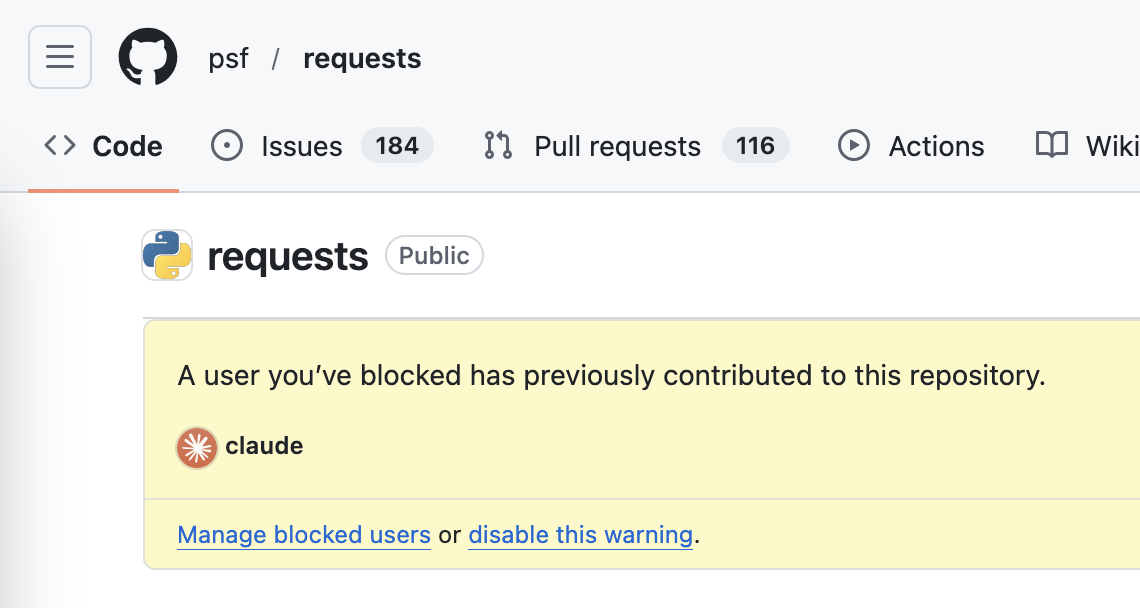
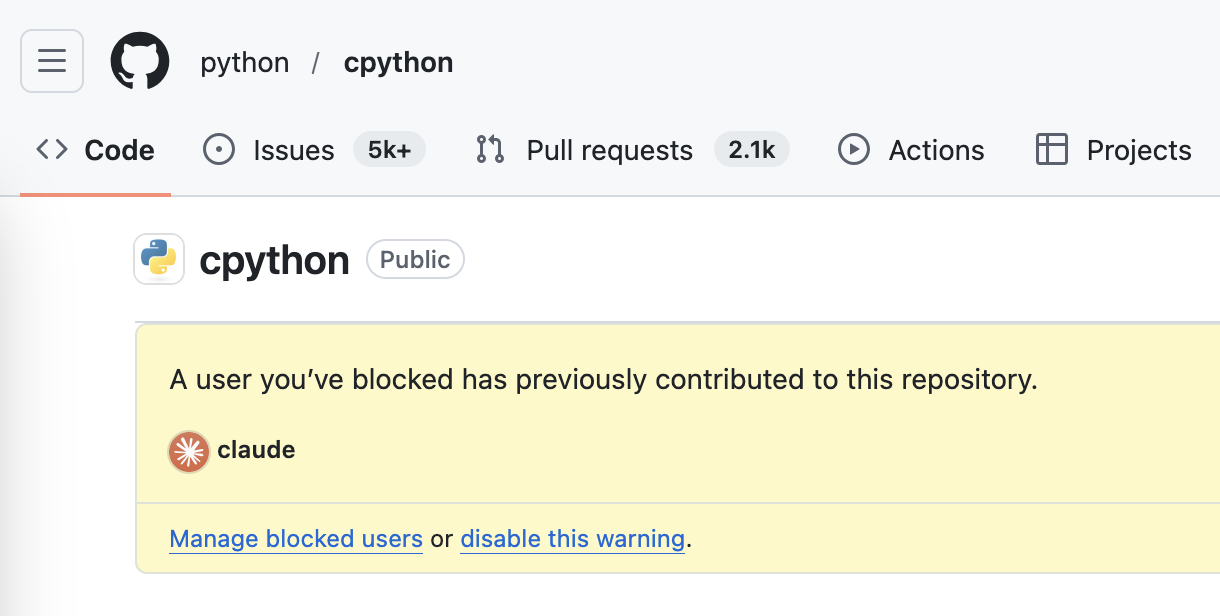
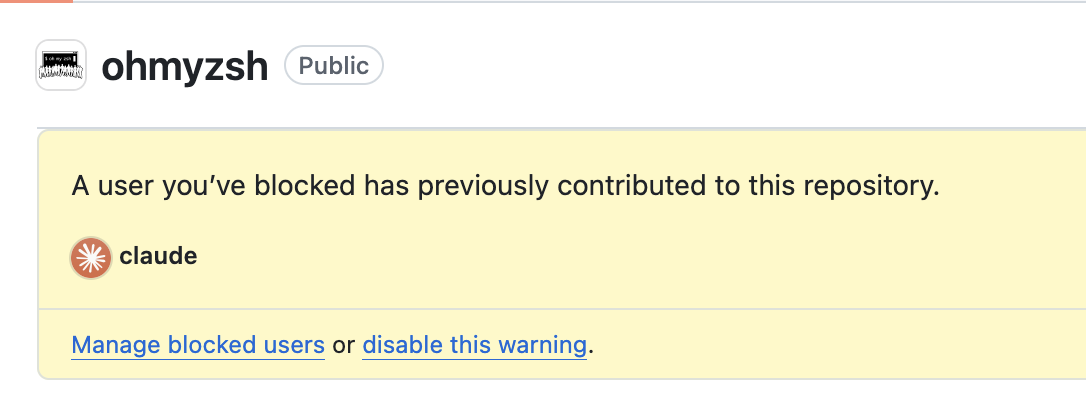
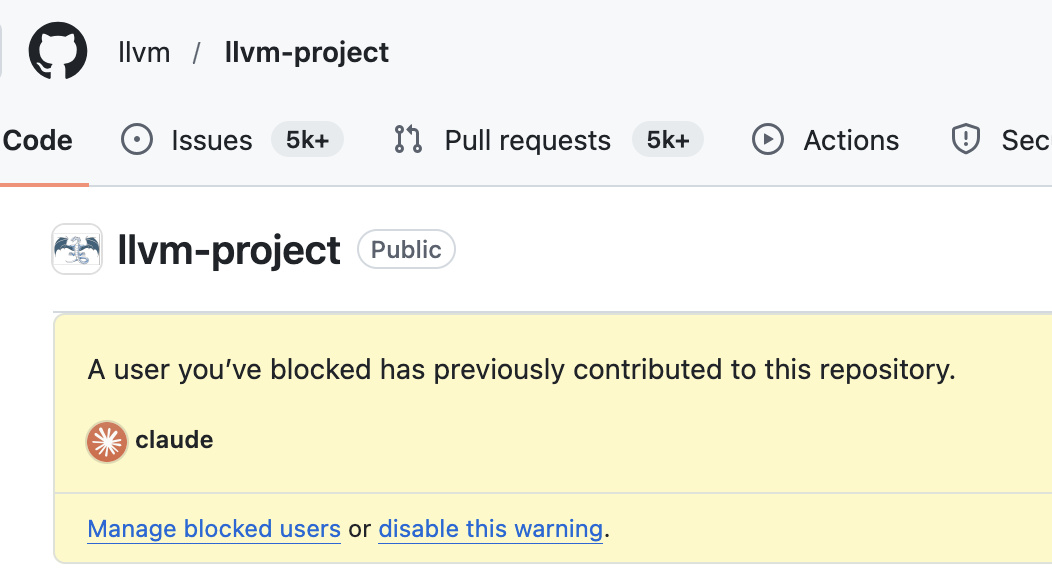
-
@reiddragon yes, that's correct.
I said I am not happy with it. I prefer a world where the open web can remain open, where public repos are not flooded with slop, and where social media are not scraped to feed the slop generators.
But I don't know that we can keep that world.
So I am trying to figure out how to deal with that. We've had loose "webs of human trust" throughout human history. Some fared better, some worse. No system is perfect.
@reiddragon as far as allowing outsiders is concerned, maybe the answer is: low threshold of initial trust and introduction, but effective response to any kind of abuse (including unleashing slop generators on the community)?
That's how a bunch of fedi instances work already. Registrations require mod approval, with a pretty low bar. But once approved, if an account is being abusive, it gets banned quickly and effectively.
-
@reiddragon yes, that's correct.
I said I am not happy with it. I prefer a world where the open web can remain open, where public repos are not flooded with slop, and where social media are not scraped to feed the slop generators.
But I don't know that we can keep that world.
So I am trying to figure out how to deal with that. We've had loose "webs of human trust" throughout human history. Some fared better, some worse. No system is perfect.
@rysiek @bstacey @nina_kali_nina We could have a few spaces like that for when the old timers just want to chill, but we really can't make them the default. We need the open spaces to stay for the outsiders to have a way in. "Proving grounds", if you may. -
@reiddragon as far as allowing outsiders is concerned, maybe the answer is: low threshold of initial trust and introduction, but effective response to any kind of abuse (including unleashing slop generators on the community)?
That's how a bunch of fedi instances work already. Registrations require mod approval, with a pretty low bar. But once approved, if an account is being abusive, it gets banned quickly and effectively.
@rysiek @bstacey @nina_kali_nina I guess, but that's basically just an open system with a human-powered captcha. I don't disagree with doing things like that (so far it's been working well enough on fedi instances that employ that), but I wouldn't qualify that as a "default-closed system" as you described in the initial post. -
@rysiek @bstacey @nina_kali_nina We could have a few spaces like that for when the old timers just want to chill, but we really can't make them the default. We need the open spaces to stay for the outsiders to have a way in. "Proving grounds", if you may.
@reiddragon @bstacey @nina_kali_nina probably? Or it's a question of degrees, of how difficult/consequential we make getting someone to vouch for a new person to be.
And we can have layers.
Again, think of fedi. There are some instances that have open registrations. There are some with pretty minimal mod approval. And then there are some that have very strict rules and vetting for new members.
These different approaches exist in the same space, those instances often federate.
-
@shia @SRAZKVT @nina_kali_nina ACPI was also supposed to help with that, but Microsoft was involved so of course it didn't achieve it.
-
Please excuse me while I'm having a little existential crisis, lol.
And if that wasn't bad enough, Mozilla has embraced AI (in its code, too), while Linux considers relaxing AI code policy and has some examples of patches co-authored by LLMs.
I am still yet to think hard about what I want to do about it. But the world I knew is no more.
@nina_kali_nina mhh my (paid) work mostly ends up on github. despite that i dont expect much from people and projects using github as publishing platform.
side note i am not sure myself when i find genai ok and and when i oppose it.
i know i certainly dislike it in some cases. but not all. -
@rysiek @bstacey @nina_kali_nina I guess, but that's basically just an open system with a human-powered captcha. I don't disagree with doing things like that (so far it's been working well enough on fedi instances that employ that), but I wouldn't qualify that as a "default-closed system" as you described in the initial post.
@reiddragon well, putting a "human captcha" and not accepting anyone in without passing it first is not a "default-open system".
And again, a question of degrees.
I also cannot stress enough how important in my view is trust across the nodes of the web, so to speak.
If my instance trusts your instance, and your instance trusts that third party instance, and that third party instance accepted a particular person, then my instance should trust that.
-
@reiddragon well, putting a "human captcha" and not accepting anyone in without passing it first is not a "default-open system".
And again, a question of degrees.
I also cannot stress enough how important in my view is trust across the nodes of the web, so to speak.
If my instance trusts your instance, and your instance trusts that third party instance, and that third party instance accepted a particular person, then my instance should trust that.
@reiddragon and if we want to get philosophical, that's how the Internet has always been, kinda!
One had to have Internet access to be on the Web in late 1990s / early 2000s, and that was a filter. Then Eternal September came, because people started getting access en masse. That changed assumptions and the experience of being online.
Same with code foundries. Initially the mere fact that someone has a code foundry account was enough of a filter.
-
@reiddragon and if we want to get philosophical, that's how the Internet has always been, kinda!
One had to have Internet access to be on the Web in late 1990s / early 2000s, and that was a filter. Then Eternal September came, because people started getting access en masse. That changed assumptions and the experience of being online.
Same with code foundries. Initially the mere fact that someone has a code foundry account was enough of a filter.
@reiddragon and same with fedi. Initially, the fact someone was on fedi was enough of a filter/verification.
This is changing now, faster with code foundries, slower with fedi (because fedi already did some of the cultural and technical homework to make it possible for admins/mods to keep people on their instances safe from abuse).
So in a way, we've always had these artificial, unofficial, inadvertent "verification filters".
-
@reiddragon and same with fedi. Initially, the fact someone was on fedi was enough of a filter/verification.
This is changing now, faster with code foundries, slower with fedi (because fedi already did some of the cultural and technical homework to make it possible for admins/mods to keep people on their instances safe from abuse).
So in a way, we've always had these artificial, unofficial, inadvertent "verification filters".
@reiddragon what I am saying is: maybe it is time to make them explicit and deliberate.
And that might not necessarily be a bad thing, either. Because the filters of old were, to some extent, elitist: having Internet access in the early 2000's; being able to code; etc.
If we're doing this more deliberately, we can choose to make the filter be less that and more egalitarian. Maybe.
-
> How'd you even find the money for that as a kid?
My school would take us to the regional competitions twice a year. It was possible to either join or ask someone to look for a book or two for you. It was an extremely isolating time, and the stable internet access has speed up things considerably, eventually. So I'm not arguing that this should be the way for things to be, I'm saying that it still leaves options, even if slim.
> Rather than retreating in obscurantism I would prefer asking the solarpunk initiatives for ideas (they're also having to deal with glowies being a problem, like many such social initiatives).
Solarpunk way, I think having a subscription magazine could help. A way to connect with like-minded people that is carefully curated
-
@loredema @nina_kali_nina This would be great, but I worry that this would invite AI companies to train on anything labeled as "AI free"..

-
@lispi314 @bstacey @rysiek our family's income level was "growing up potatoes on every bit of land we had to not starve" fwiw.
We were lucky, schools in our area had budgets for things like sending kids to sport and science events. That includes even schools with a dozen of students across all ages. There were DIY competitions, sports competitions (I went to a chess tournament), math/writing/science competitions (here I went to the math competitions, mostly), and such. It was an event that has happened once or twice a year, and the free roam time was extremely limited, but it wasn't uncommon for teachers to say "hey kids, let's go to a bookshop/CD shop"
-
@lanodan@queer.hacktivis.me @moses_izumi@fe.disroot.org @lumi@snug.moe @nina_kali_nina@tech.lgbt very interesting side-effect of this whole clusterfuck: writing my own software becomes much more enticing than it already was.
really tempted to go back to my osdev projects. i won't get a general-purpose OS out of them, but. who cares! maybe I can make a bunch of single-purpose things
and maybe i should actually try out plan9... their propaganda page already sold me
@domi @lanodan @lumi @nina_kali_nina
My dream is to at some point daily-drive BSD, 9front or a minimal Linux, paired with some kind of Wine jail to bridge the compatibility gaps.
- cheaper than a VM, while still having 3D acceleration (even in windowed mode)
- never used Cairo Shell, but it seems to incorporate most of the good things about Linux GUIs
basically what @hikari 's Loss32 project is striving toward -
R relay@relay.mycrowd.ca shared this topic