Skip to content
  • Categories
  • Recent
  • Tags
  • Popular
  • World
  • Users
  • Groups
Skins
  • Light
  • Brite
  • Cerulean
  • Cosmo
  • Flatly
  • Journal
  • Litera
  • Lumen
  • Lux
  • Materia
  • Minty
  • Morph
  • Pulse
  • Sandstone
  • Simplex
  • Sketchy
  • Spacelab
  • United
  • Yeti
  • Zephyr
  • Dark
  • Cyborg
  • Darkly
  • Quartz
  • Slate
  • Solar
  • Superhero
  • Vapor

  • Default (Cyborg)
  • No Skin
Collapse
Brand Logo

CIRCLE WITH A DOT

  1. Home
  2. Uncategorized
  3. What's the most surprising fact you've learned in the last couple of weeks?

What's the most surprising fact you've learned in the last couple of weeks?

Scheduled Pinned Locked Moved Uncategorized
93 Posts 44 Posters 58 Views
  • Oldest to Newest
  • Newest to Oldest
  • Most Votes
Reply
  • Reply as topic
Log in to reply
This topic has been deleted. Only users with topic management privileges can see it.
  • bartoszmilewski@mathstodon.xyzB bartoszmilewski@mathstodon.xyz

    @johncarlosbaez
    Our worm-like ancestors were cyclops. When they decided to start swimming, the central eye squeezed out two side eyes and was itself reduced to the pineal gland that to this day regulates our circadian cycle.

    Link Preview Image
    Our modern vision evolved from an ancient one-eyed worm creature

    The now extinct worm-like animal first lost paired eyes, then re-evolved them.

    favicon

    The Conversation (theconversation.com)

    johncarlosbaez@mathstodon.xyzJ This user is from outside of this forum
    johncarlosbaez@mathstodon.xyzJ This user is from outside of this forum
    johncarlosbaez@mathstodon.xyz
    wrote last edited by
    #49

    @BartoszMilewski - wow, yikes! I didn't know that.

    The eye, or should I say "a kind of eye", has evolved many times independently. You're making me want to understand not just the history of *our* eyes but *all* these eyes.

    I'll have to read this:

    • Bhattacharya, Stagg, Donlon and Hardy, Evolution and development of complex eyes: a celebration of diversity, https://pmc.ncbi.nlm.nih.gov/articles/PMC7578360/

    dougmerritt@mathstodon.xyzD 1 Reply Last reply
    0
    • rioda@mastodon.bida.imR rioda@mastodon.bida.im

      @johncarlosbaez a historical bit, for a change: I was very shocked to learn that the few italian places that have "Romano" in their name, derive that not from "Roma" and "romano" as one might expect, but from quite the opposite: during the long war between the (Roman) Empire and the Langobards, those places took name from the upper class of the Langobards, i.e. the arimanni; "Romano", in the names of these places, comes from arimanni, not from "Roma" and "Romano".

      johncarlosbaez@mathstodon.xyzJ This user is from outside of this forum
      johncarlosbaez@mathstodon.xyzJ This user is from outside of this forum
      johncarlosbaez@mathstodon.xyz
      wrote last edited by
      #50

      @rioDa - surprising indeed! I bet even the modern residents of some of these places would be surprised.

      1 Reply Last reply
      0
      • johncarlosbaez@mathstodon.xyzJ This user is from outside of this forum
        johncarlosbaez@mathstodon.xyzJ This user is from outside of this forum
        johncarlosbaez@mathstodon.xyz
        wrote last edited by
        #51

        @Heterokromia - wow, I didn't even know I had methanogenic archaea in my gut! I take statins. Is it bad to kill ones methanogenic archaea?

        1 Reply Last reply
        0
        • johncarlosbaez@mathstodon.xyzJ johncarlosbaez@mathstodon.xyz

          @BartoszMilewski - wow, yikes! I didn't know that.

          The eye, or should I say "a kind of eye", has evolved many times independently. You're making me want to understand not just the history of *our* eyes but *all* these eyes.

          I'll have to read this:

          • Bhattacharya, Stagg, Donlon and Hardy, Evolution and development of complex eyes: a celebration of diversity, https://pmc.ncbi.nlm.nih.gov/articles/PMC7578360/

          dougmerritt@mathstodon.xyzD This user is from outside of this forum
          dougmerritt@mathstodon.xyzD This user is from outside of this forum
          dougmerritt@mathstodon.xyz
          wrote last edited by
          #52

          @johncarlosbaez @BartoszMilewski
          A few years ago I read that eyes evolved independently 7 times, but the current factoid seems to be more like 40 times, which is quite a difference.

          I'm also puzzled: there are books from the 1950s that refer to the pineal glad as a mystical "third eye" -- obvious nonsense, but where did they get that from, if the origin of the pineal gland as a kind of eye is a much more modern discovery?

          johncarlosbaez@mathstodon.xyzJ 1 Reply Last reply
          0
          • johncarlosbaez@mathstodon.xyzJ johncarlosbaez@mathstodon.xyz

            What's the most surprising fact you've learned in the last couple of weeks? I don't mind if it's quite technical. I just want to hear what you folks are being surprised by!

            drdrowland@fediscience.orgD This user is from outside of this forum
            drdrowland@fediscience.orgD This user is from outside of this forum
            drdrowland@fediscience.org
            wrote last edited by
            #53

            @johncarlosbaez

            At 50km altitude on Venus the temperature and pressure is similar to Earth

            johncarlosbaez@mathstodon.xyzJ 1 Reply Last reply
            0
            • dougmerritt@mathstodon.xyzD dougmerritt@mathstodon.xyz

              @johncarlosbaez @BartoszMilewski
              A few years ago I read that eyes evolved independently 7 times, but the current factoid seems to be more like 40 times, which is quite a difference.

              I'm also puzzled: there are books from the 1950s that refer to the pineal glad as a mystical "third eye" -- obvious nonsense, but where did they get that from, if the origin of the pineal gland as a kind of eye is a much more modern discovery?

              johncarlosbaez@mathstodon.xyzJ This user is from outside of this forum
              johncarlosbaez@mathstodon.xyzJ This user is from outside of this forum
              johncarlosbaez@mathstodon.xyz
              wrote last edited by
              #54

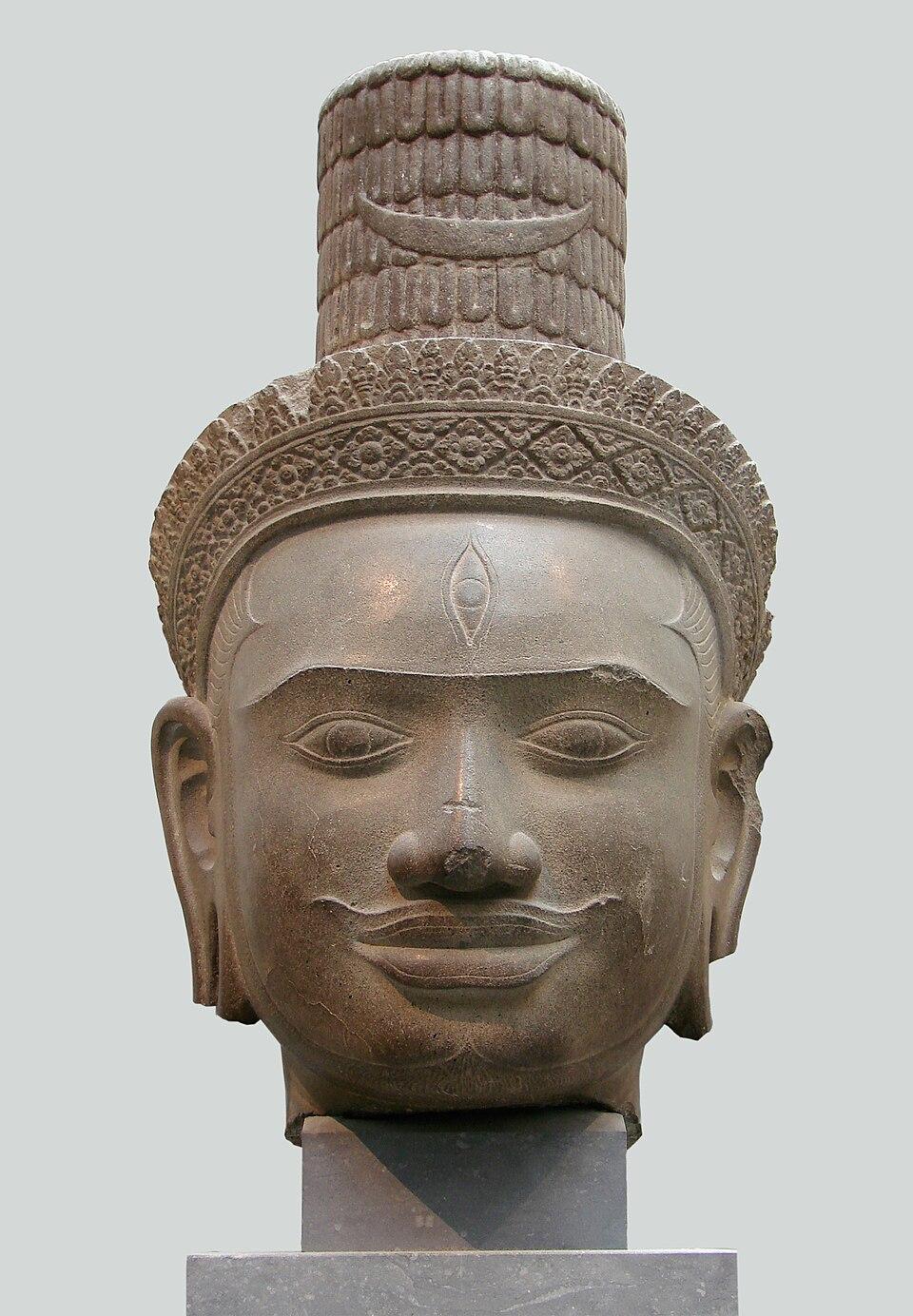
              @dougmerritt @BartoszMilewski - The Hindus have a tradition about a mystical "third eye", and Shiva is sometimes called the three-eyed lord. Later Descartes located the soul in the pineal gland. Maybe someone merged these ideas??? Worth checking out.
              Link Preview Image
              Third eye - Wikipedia

              favicon

              (en.wikipedia.org)

              Link Preview Image
              1 Reply Last reply
              0
              • drdrowland@fediscience.orgD drdrowland@fediscience.org

                @johncarlosbaez

                At 50km altitude on Venus the temperature and pressure is similar to Earth

                johncarlosbaez@mathstodon.xyzJ This user is from outside of this forum
                johncarlosbaez@mathstodon.xyzJ This user is from outside of this forum
                johncarlosbaez@mathstodon.xyz
                wrote last edited by
                #55

                @drdrowland - neat! But the air is... nitrogen, I guess? I don't see a good way for human life to take advantage of the nice pressure and temperature, but I never was good at inventions.

                isaackuo@spacey.spaceI 1 Reply Last reply
                0
                • johncarlosbaez@mathstodon.xyzJ johncarlosbaez@mathstodon.xyz

                  What's the most surprising fact you've learned in the last couple of weeks? I don't mind if it's quite technical. I just want to hear what you folks are being surprised by!

                  G This user is from outside of this forum
                  G This user is from outside of this forum
                  ghasshee@mathstodon.xyz
                  wrote last edited by
                  #56

                  @johncarlosbaez

                  "Inside a jet engine, turbine blades are not just identical parts. Each one is uniquely measured, weighed and assigned a specific position. At speeds up to 18000rpm, the rotor experiences extreme centrifugal forces that multiply even the smallest weight difference."

                  Link Preview Image

                  favicon

                  X (formerly Twitter) (x.com)

                  johncarlosbaez@mathstodon.xyzJ 1 Reply Last reply
                  0
                  • G ghasshee@mathstodon.xyz

                    @johncarlosbaez

                    "Inside a jet engine, turbine blades are not just identical parts. Each one is uniquely measured, weighed and assigned a specific position. At speeds up to 18000rpm, the rotor experiences extreme centrifugal forces that multiply even the smallest weight difference."

                    Link Preview Image

                    favicon

                    X (formerly Twitter) (x.com)

                    johncarlosbaez@mathstodon.xyzJ This user is from outside of this forum
                    johncarlosbaez@mathstodon.xyzJ This user is from outside of this forum
                    johncarlosbaez@mathstodon.xyz
                    wrote last edited by
                    #57

                    @ghasshee - wow, I didn't know the planes I ride rely on handcrafted (or more precisely, individually machine-crafted) parts!

                    1 Reply Last reply
                    0
                    • johncarlosbaez@mathstodon.xyzJ This user is from outside of this forum
                      johncarlosbaez@mathstodon.xyzJ This user is from outside of this forum
                      johncarlosbaez@mathstodon.xyz
                      wrote last edited by
                      #58

                      @buo - I should learn what this *means*. I once almost knew what a Kalman filter is, and I know it's extremely important. But I don't know what a phase-locked loop is.

                      I love ODE, so this is embarassing! There's always room for progress.

                      maxpool@mathstodon.xyzM 1 Reply Last reply
                      0
                      • johncarlosbaez@mathstodon.xyzJ johncarlosbaez@mathstodon.xyz

                        @drdrowland - neat! But the air is... nitrogen, I guess? I don't see a good way for human life to take advantage of the nice pressure and temperature, but I never was good at inventions.

                        isaackuo@spacey.spaceI This user is from outside of this forum
                        isaackuo@spacey.spaceI This user is from outside of this forum
                        isaackuo@spacey.space
                        wrote last edited by
                        #59

                        @johncarlosbaez @drdrowland Geoffrey Landis has used this observation to propose both manned missions to Venus and colonization in Venus's atmosphere.

                        Breathable air is a decent lifting gas, as the atmosphere is mostly CO2 (quite a bit heavier than both N2 and O2).

                        johncarlosbaez@mathstodon.xyzJ 1 Reply Last reply
                        0
                        • isaackuo@spacey.spaceI isaackuo@spacey.space

                          @johncarlosbaez @drdrowland Geoffrey Landis has used this observation to propose both manned missions to Venus and colonization in Venus's atmosphere.

                          Breathable air is a decent lifting gas, as the atmosphere is mostly CO2 (quite a bit heavier than both N2 and O2).

                          johncarlosbaez@mathstodon.xyzJ This user is from outside of this forum
                          johncarlosbaez@mathstodon.xyzJ This user is from outside of this forum
                          johncarlosbaez@mathstodon.xyz
                          wrote last edited by
                          #60

                          @isaackuo @drdrowland - I see, so colonizing it via air-filled balloon-like floating structures?

                          drdrowland@fediscience.orgD 1 Reply Last reply
                          0
                          • johncarlosbaez@mathstodon.xyzJ johncarlosbaez@mathstodon.xyz

                            @otacke - I don't know enough about these deer to be surprised! They sound like European or British deer to me. Do they have overlapping ranges?

                            otacke@chaos.socialO This user is from outside of this forum
                            otacke@chaos.socialO This user is from outside of this forum
                            otacke@chaos.social
                            wrote last edited by
                            #61

                            @johncarlosbaez I don't know any specifics. 😀 Until yesterday, I believed that a "Reh" (roe, https://en.wikipedia.org/wiki/Roe_deer) was a female "Hirsch" (stag, https://en.wikipedia.org/wiki/Red_deer). But apparently they are both deer, yet different species - and not to be confused with fallow deers. Took me only shy over 40 years to learn that. 🤷‍♂️

                            otacke@chaos.socialO 1 Reply Last reply
                            0
                            • otacke@chaos.socialO otacke@chaos.social

                              @johncarlosbaez I don't know any specifics. 😀 Until yesterday, I believed that a "Reh" (roe, https://en.wikipedia.org/wiki/Roe_deer) was a female "Hirsch" (stag, https://en.wikipedia.org/wiki/Red_deer). But apparently they are both deer, yet different species - and not to be confused with fallow deers. Took me only shy over 40 years to learn that. 🤷‍♂️

                              otacke@chaos.socialO This user is from outside of this forum
                              otacke@chaos.socialO This user is from outside of this forum
                              otacke@chaos.social
                              wrote last edited by
                              #62

                              @johncarlosbaez Now I wonder what type of deer Bambi is.

                              1 Reply Last reply
                              0
                              • johncarlosbaez@mathstodon.xyzJ johncarlosbaez@mathstodon.xyz

                                What's the most surprising fact you've learned in the last couple of weeks? I don't mind if it's quite technical. I just want to hear what you folks are being surprised by!

                                pschwahn@mathstodon.xyzP This user is from outside of this forum
                                pschwahn@mathstodon.xyzP This user is from outside of this forum
                                pschwahn@mathstodon.xyz
                                wrote last edited by
                                #63

                                @johncarlosbaez That distilled water is completely safe to drink (contrary to what I learned in school)!

                                johncarlosbaez@mathstodon.xyzJ tpfto@mathstodon.xyzT 2 Replies Last reply
                                0
                                • johncarlosbaez@mathstodon.xyzJ johncarlosbaez@mathstodon.xyz

                                  What's the most surprising fact you've learned in the last couple of weeks? I don't mind if it's quite technical. I just want to hear what you folks are being surprised by!

                                  aspiringluddite@medievalist.masto.hostA This user is from outside of this forum
                                  aspiringluddite@medievalist.masto.hostA This user is from outside of this forum
                                  aspiringluddite@medievalist.masto.host
                                  wrote last edited by
                                  #64

                                  @johncarlosbaez

                                  One of the stars of Hacks is Laraine Newman's daughter.

                                  1 Reply Last reply
                                  0
                                  • magnus@mastodon.worldM magnus@mastodon.world

                                    @johncarlosbaez

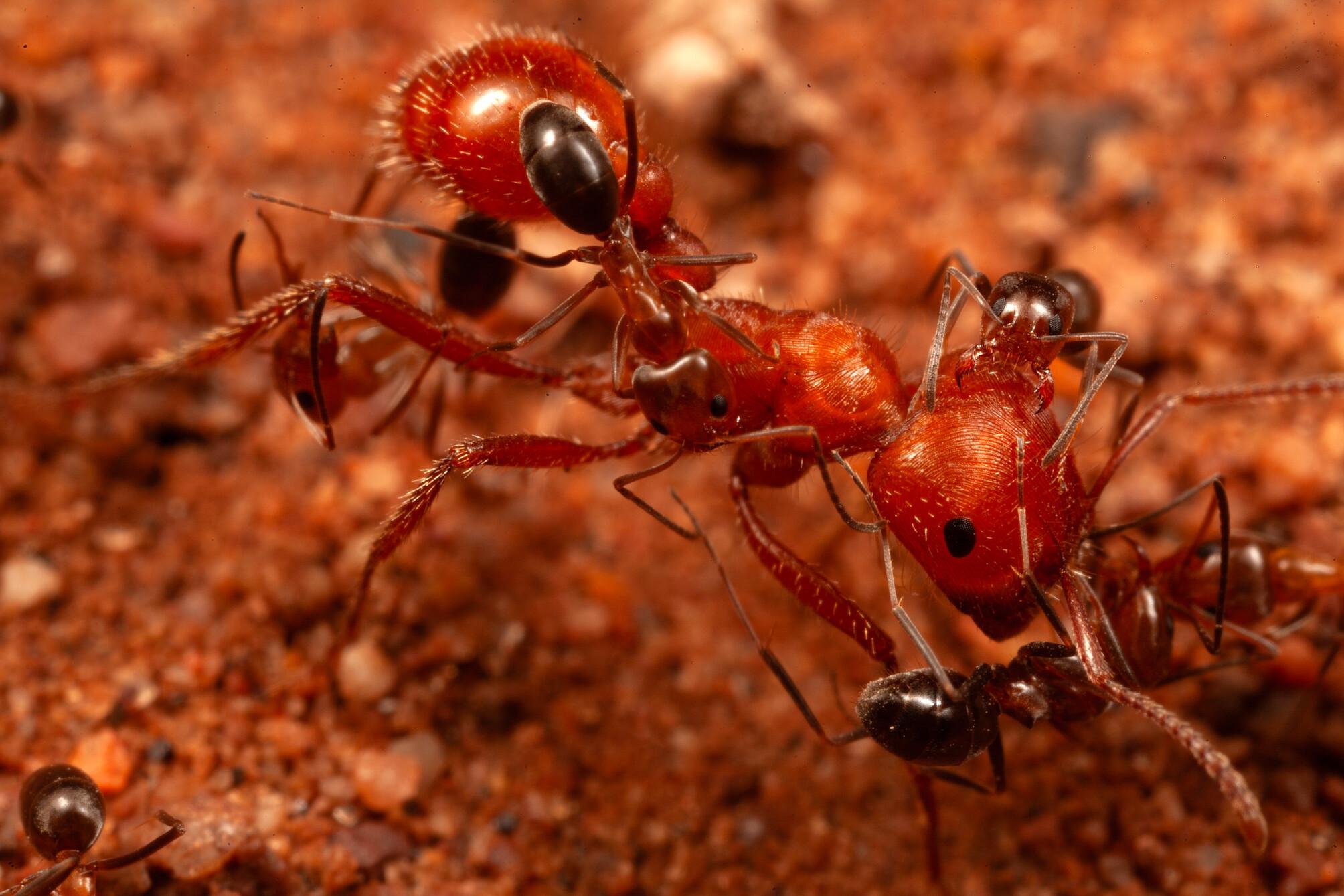
                                    I was surprised to learn that there are small cleaner ants that clean bigger ants of a different species.

                                    If one insect wants help with cleaning, why choose another smaller insect of the same family? One could imagine so many other willing arthropods.
                                    Link Preview Image
                                    Magnus (@magnus@mastodon.world)

                                    Attached: 1 image Did ants learn this from cleaner fish? There are small ants that clean big ants without meeting any agression, just like small cleaner fish can clean sharks. https://onlinelibrary.wiley.com/doi/10.1002/ece3.73308

                                    favicon

                                    Mastodon (mastodon.world)

                                    saltywizard@beige.partyS This user is from outside of this forum
                                    saltywizard@beige.partyS This user is from outside of this forum
                                    saltywizard@beige.party
                                    wrote last edited by
                                    #65

                                    @magnus @johncarlosbaez

                                    @futurebird

                                    1 Reply Last reply
                                    0
                                    • maxpool@mathstodon.xyzM maxpool@mathstodon.xyz

                                      @johncarlosbaez

                                      Ancient Rome consumed lots of oil and they didn't reuse the large Dressel 20 amphora barrels. Monte Testaccio in Rome is a 'trash mountain' made of 53 million broken olive oil amphorae.

                                      Link Preview Image
                                      Monte Testaccio - Wikipedia

                                      favicon

                                      (en.wikipedia.org)

                                      johncarlosbaez@mathstodon.xyzJ This user is from outside of this forum
                                      johncarlosbaez@mathstodon.xyzJ This user is from outside of this forum
                                      johncarlosbaez@mathstodon.xyz
                                      wrote last edited by
                                      #66

                                      @maxpool - "53 milllion" is where I got surprised.

                                      I wondered how long they dumped those amphorae there, so I looked it up on the Wikipedia article:

                                      "Deposits found by excavators have been dated to a period between approximately AD 140 to 250, but it is possible that dumping could have begun on the site as early as the 1st century BC."

                                      So, at least 110 years, but maybe over 250!

                                      1 Reply Last reply
                                      0
                                      • johncarlosbaez@mathstodon.xyzJ johncarlosbaez@mathstodon.xyz

                                        What's the most surprising fact you've learned in the last couple of weeks? I don't mind if it's quite technical. I just want to hear what you folks are being surprised by!

                                        saltywizard@beige.partyS This user is from outside of this forum
                                        saltywizard@beige.partyS This user is from outside of this forum
                                        saltywizard@beige.party
                                        wrote last edited by
                                        #67

                                        @johncarlosbaez

                                        @Lambo got here first with my top fact, so i'll go with this one:

                                        transit operators in the u.s. are not authorized to question the pedigree of your 'service animal.'

                                        as long as you identify the animal as such, you are permitted to bring it on the bus.

                                        *any* animal.

                                        johncarlosbaez@mathstodon.xyzJ irenetherogue@beige.partyI 2 Replies Last reply
                                        0
                                        • johncarlosbaez@mathstodon.xyzJ johncarlosbaez@mathstodon.xyz

                                          @buo - I should learn what this *means*. I once almost knew what a Kalman filter is, and I know it's extremely important. But I don't know what a phase-locked loop is.

                                          I love ODE, so this is embarassing! There's always room for progress.

                                          maxpool@mathstodon.xyzM This user is from outside of this forum
                                          maxpool@mathstodon.xyzM This user is from outside of this forum
                                          maxpool@mathstodon.xyz
                                          wrote last edited by
                                          #68

                                          @johncarlosbaez @buo

                                          In phase locked loop output signal phase tracks input signal's phase. It's like automatic tuning, Frequencies synchronize through feedback.

                                          Think tidal locking, or two pendelums in the same beam. I'm not sure 100% sure but I think Josephson effect is also like this.


                                          1 Reply Last reply
                                          0
                                          Reply
                                          • Reply as topic
                                          Log in to reply
                                          • Oldest to Newest
                                          • Newest to Oldest
                                          • Most Votes


                                          • Login

                                          • Login or register to search.
                                          • First post
                                            Last post
                                          0
                                          • Categories
                                          • Recent
                                          • Tags
                                          • Popular
                                          • World
                                          • Users
                                          • Groups