Skip to content
  • Categories
  • Recent
  • Tags
  • Popular
  • World
  • Users
  • Groups
Skins
  • Light
  • Brite
  • Cerulean
  • Cosmo
  • Flatly
  • Journal
  • Litera
  • Lumen
  • Lux
  • Materia
  • Minty
  • Morph
  • Pulse
  • Sandstone
  • Simplex
  • Sketchy
  • Spacelab
  • United
  • Yeti
  • Zephyr
  • Dark
  • Cyborg
  • Darkly
  • Quartz
  • Slate
  • Solar
  • Superhero
  • Vapor

  • Default (Cyborg)
  • No Skin
Collapse
Brand Logo

CIRCLE WITH A DOT

  1. Home
  2. Uncategorized
  3. #PPOD: On June 25, 2023, NASA’s JWST turned to the famed ringed world Saturn for its first near-infrared observations of the planet.

#PPOD: On June 25, 2023, NASA’s JWST turned to the famed ringed world Saturn for its first near-infrared observations of the planet.

Scheduled Pinned Locked Moved Uncategorized
ppodplanetarysciencspacescience
2 Posts 1 Posters 0 Views
  • Oldest to Newest
  • Newest to Oldest
  • Most Votes
Reply
  • Reply as topic
Log in to reply
This topic has been deleted. Only users with topic management privileges can see it.
  • setiinstitute@mastodon.socialS This user is from outside of this forum
    setiinstitute@mastodon.socialS This user is from outside of this forum
    setiinstitute@mastodon.social
    wrote last edited by
    #1

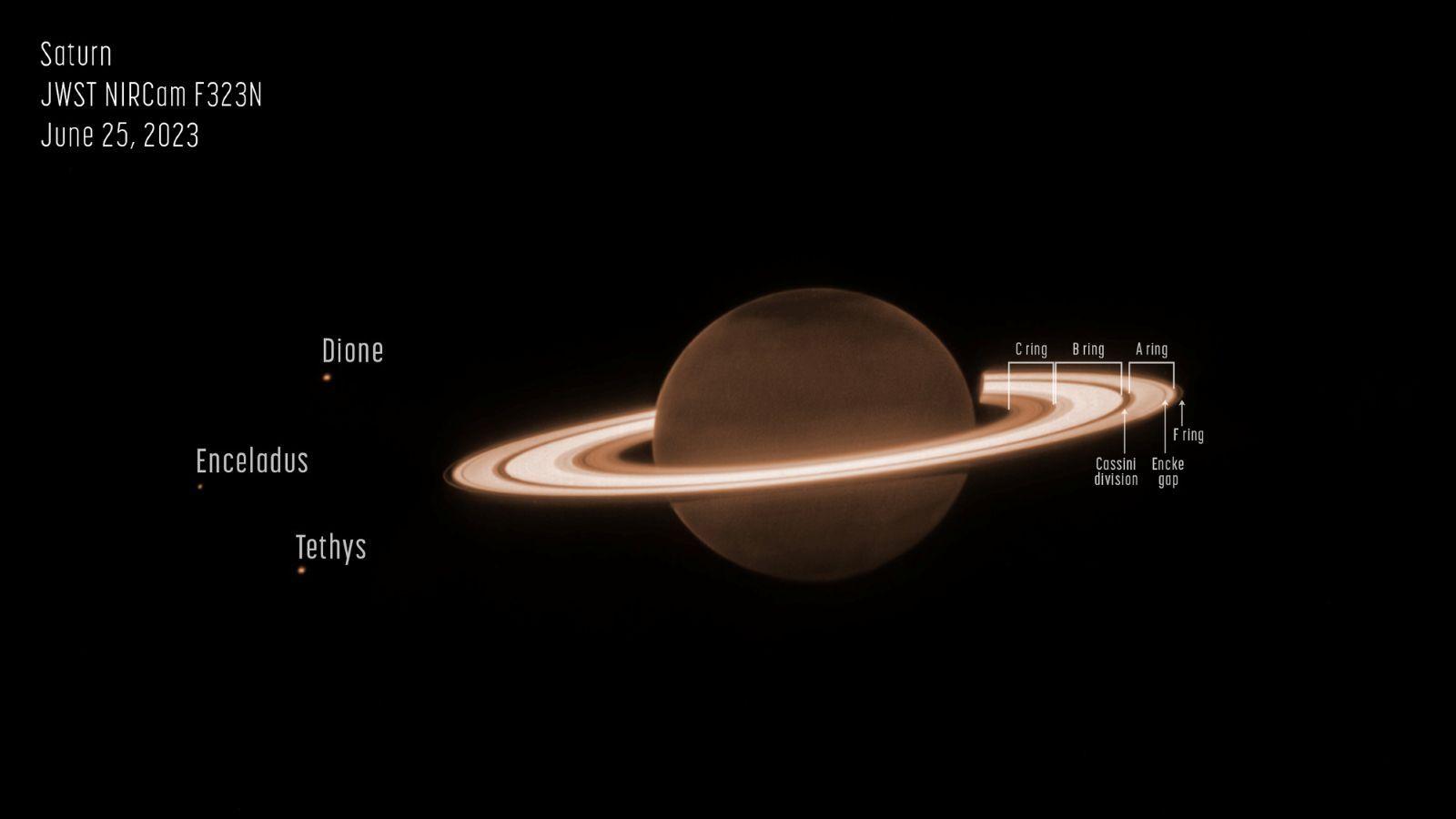
    #PPOD: On June 25, 2023, NASA’s JWST turned to the famed ringed world Saturn for its first near-infrared observations of the planet. Saturn itself appears extremely dark at this infrared wavelength observed by the telescope, as methane gas absorbs almost all of the sunlight falling on the atmosphere. However, the icy rings remain relatively bright, resulting in Saturn's unusual appearance in the JWST image.

    #planetaryscience #space #science
    Link Preview Image
    setiinstitute@mastodon.socialS 1 Reply Last reply
    1
    0
    • setiinstitute@mastodon.socialS setiinstitute@mastodon.social

      #PPOD: On June 25, 2023, NASA’s JWST turned to the famed ringed world Saturn for its first near-infrared observations of the planet. Saturn itself appears extremely dark at this infrared wavelength observed by the telescope, as methane gas absorbs almost all of the sunlight falling on the atmosphere. However, the icy rings remain relatively bright, resulting in Saturn's unusual appearance in the JWST image.

      #planetaryscience #space #science

      Link Preview Image
      setiinstitute@mastodon.socialS This user is from outside of this forum
      setiinstitute@mastodon.socialS This user is from outside of this forum
      setiinstitute@mastodon.social
      wrote last edited by
      #2

      Credit: NASA, ESA, CSA, Matthew Tiscareno (SETI Institute), Matthew Hedman (University of Idaho), Maryame El Moutamid (Cornell University), Mark Showalter (SETI Institute), Leigh Fletcher (University of Leicester), Heidi Hammel (AURA); Processing: Joseph DePasquale (STScI)

      Learn more: https://science.nasa.gov/blogs/webb/2023/06/30/saturns-rings-shine-in-webbs-observations-of-ringed-planet/

      1 Reply Last reply
      0
      • R relay@relay.infosec.exchange shared this topic

      Reply
      • Reply as topic
      Log in to reply
      • Oldest to Newest
      • Newest to Oldest
      • Most Votes


      • Login

      • Login or register to search.
      • First post
        Last post
      0
      • Categories
      • Recent
      • Tags
      • Popular
      • World
      • Users
      • Groups