How do flies stay cool on hot days if they can't sweat?
-
How do flies stay cool on hot days if they can't sweat? 🤨
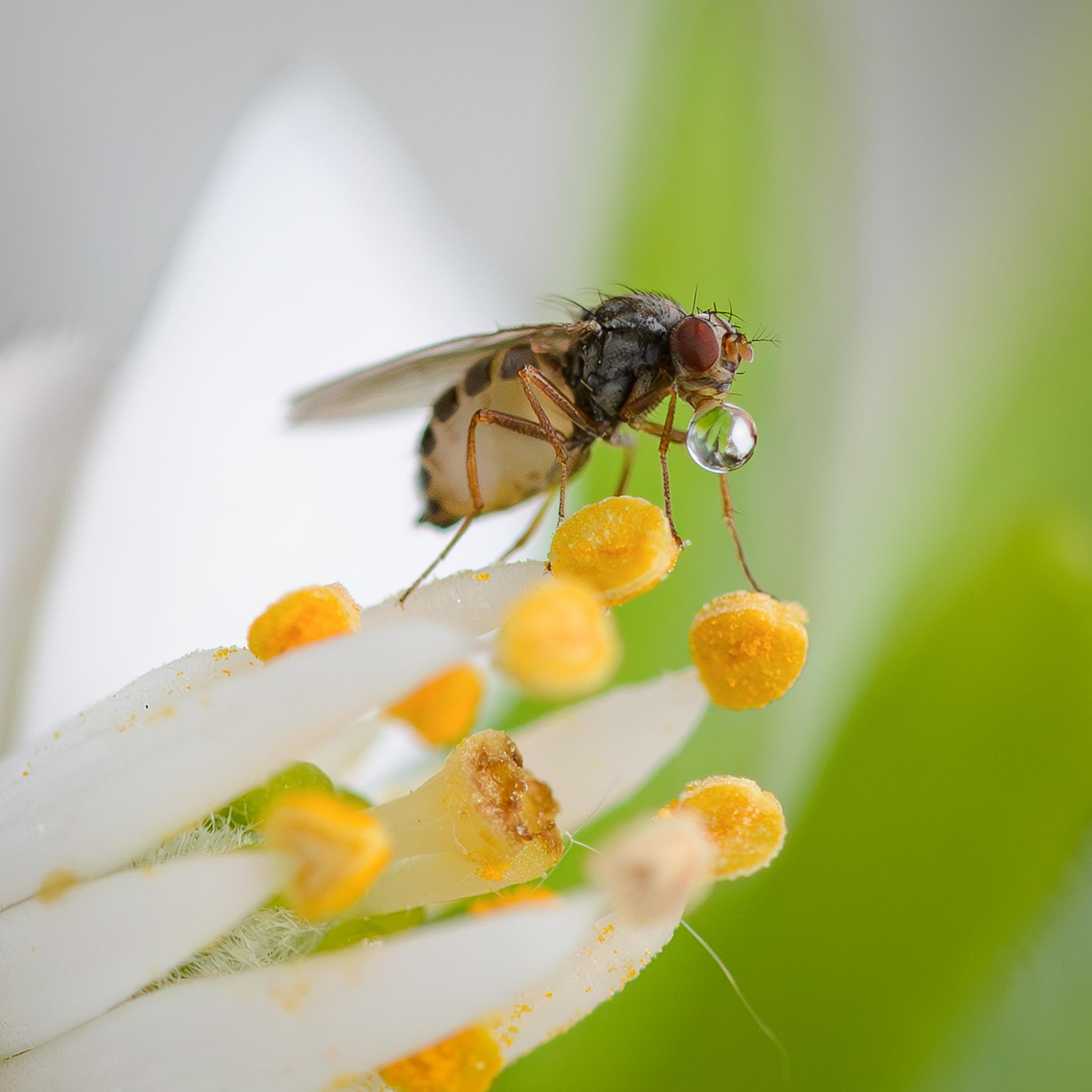
They blow bubbles of watery saliva; some of it evaporates & loses heat; they then re-ingest the cooler liquid.
Simple

 ️
️Two flies seen at it this evening: a lesser dung fly (Sepsis fulgens;
 Glänzende Schwingfliege) & a fruit fly (Scaptomyza pallida; Taufliege).
#Heidelberg

#Photography ️️️️️️️️️️️️️️️️️️️️️️️️️️️️️️️️️️️️️️️️️️️️️️️️️️️️️️️️️️️️️️️️️️️️️️️️️️️️️️️️️️️️️️️️️️️️️️️️️️️️️️️️️️️️️️️️️️️️️️️️️️️️
#BugOfTheDay
#MacroPhotography
#InsectsOfMastodon 🪰
#BackGardenEntomology 🪲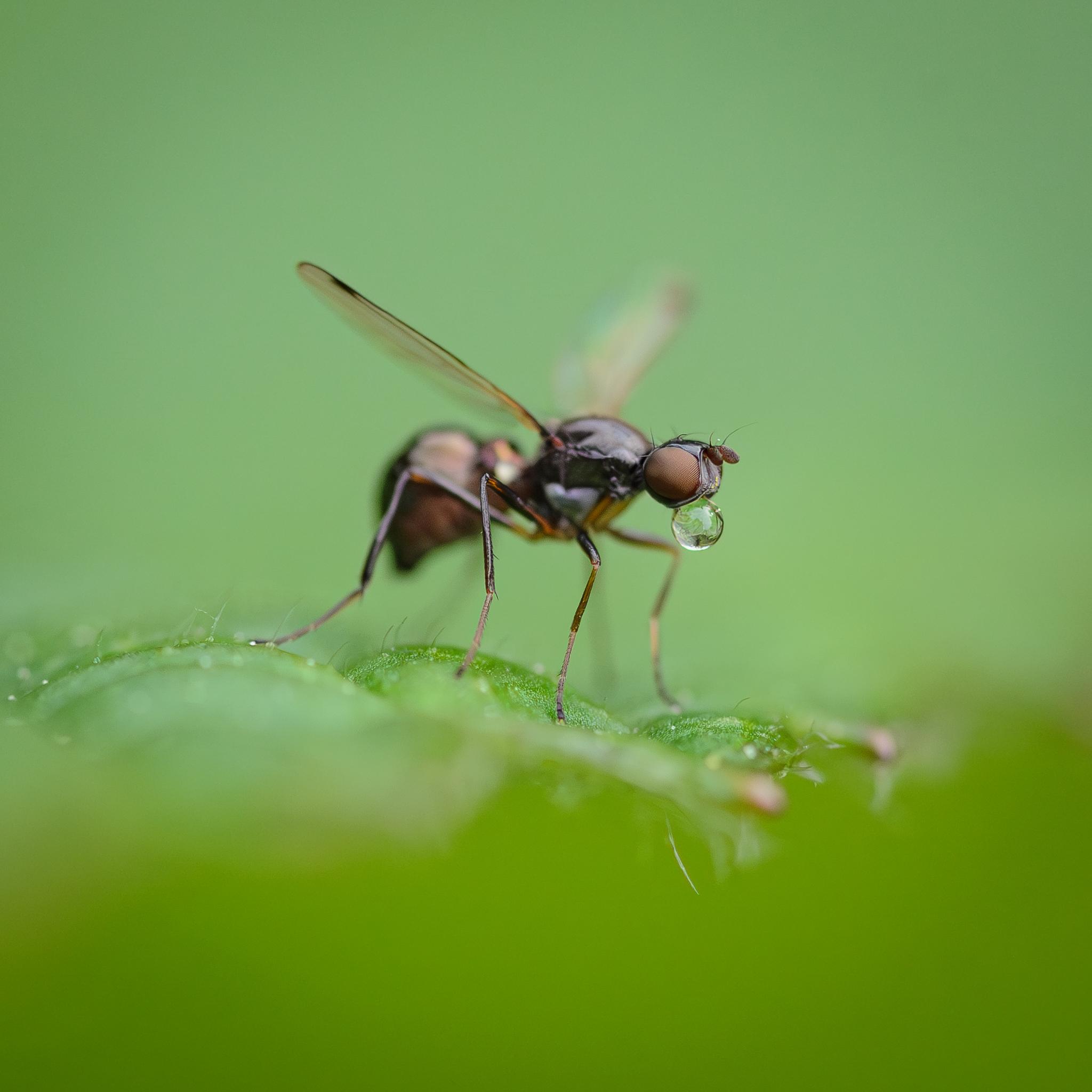
-
How do flies stay cool on hot days if they can't sweat? 🤨
They blow bubbles of watery saliva; some of it evaporates & loses heat; they then re-ingest the cooler liquid.
Simple
️Two flies seen at it this evening: a lesser dung fly (Sepsis fulgens;
Glänzende Schwingfliege) & a fruit fly (Scaptomyza pallida; Taufliege).#Heidelberg
#Photography️️️️️️️️️️️️️️️️️️️️️️️️️️️️️️️️️️️️️️️️️️️️️️️️️️️️️️️️️️️️️️️️️️️️️️️️️️️️️️️️️️️️️️️️️️️️️️️️️️️️️️️️️️️️️️️️️️️️️️️️️️️️
#BugOfTheDay
#MacroPhotography
#InsectsOfMastodon 🪰
#BackGardenEntomology 🪲That said, it wasn't particularly warm today, & less so this evening as the cloud rolled in. It was humid still though.
The Sepsis fulgens fly was going through a whole preening process at the same time as the droplet of water was hanging from its mouth, turning in circles, & cleaning its wings with its legs.
Then it sucked in the water droplet & flew off
️ -
How do flies stay cool on hot days if they can't sweat? 🤨
They blow bubbles of watery saliva; some of it evaporates & loses heat; they then re-ingest the cooler liquid.
Simple
️Two flies seen at it this evening: a lesser dung fly (Sepsis fulgens;
Glänzende Schwingfliege) & a fruit fly (Scaptomyza pallida; Taufliege).#Heidelberg
#Photography️️️️️️️️️️️️️️️️️️️️️️️️️️️️️️️️️️️️️️️️️️️️️️️️️️️️️️️️️️️️️️️️️️️️️️️️️️️️️️️️️️️️️️️️️️️️️️️️️️️️️️️️️️️️️️️️️️️️️️️️️️️️
#BugOfTheDay
#MacroPhotography
#InsectsOfMastodon 🪰
#BackGardenEntomology 🪲dipterans are so damn odd
They inflate their heads and eyes.
Just strange as can be.
-
That said, it wasn't particularly warm today, & less so this evening as the cloud rolled in. It was humid still though.
The Sepsis fulgens fly was going through a whole preening process at the same time as the droplet of water was hanging from its mouth, turning in circles, & cleaning its wings with its legs.
Then it sucked in the water droplet & flew off
️@markmccaughrean I got fascinated withspiracles recently, and it strikes me that this behavior re temperature and water takes advantage of some of the same geometry & math that make spiracles work for air/oxygen.
-
dipterans are so damn odd
They inflate their heads and eyes.
Just strange as can be.
@futurebird@sauropods.win @markmccaughrean@mastodon.social this is the mechanism of how bees manufacture honey
-
How do flies stay cool on hot days if they can't sweat? 🤨
They blow bubbles of watery saliva; some of it evaporates & loses heat; they then re-ingest the cooler liquid.
Simple
️Two flies seen at it this evening: a lesser dung fly (Sepsis fulgens;
Glänzende Schwingfliege) & a fruit fly (Scaptomyza pallida; Taufliege).#Heidelberg
#Photography️️️️️️️️️️️️️️️️️️️️️️️️️️️️️️️️️️️️️️️️️️️️️️️️️️️️️️️️️️️️️️️️️️️️️️️️️️️️️️️️️️️️️️️️️️️️️️️️️️️️️️️️️️️️️️️️️️️️️️️️️️️️
#BugOfTheDay
#MacroPhotography
#InsectsOfMastodon 🪰
#BackGardenEntomology 🪲Very cool (pun intended).
Would it be possible to measure the decrease in temperature?
-
Very cool (pun intended).
Would it be possible to measure the decrease in temperature?
@katzenberger I'm sure someone has done it – perhaps a thermal-IR camera with a good lens could give a result.
-
@futurebird@sauropods.win @markmccaughrean@mastodon.social this is the mechanism of how bees manufacture honey
@u0421793 @futurebird Indeed, although bees use active air conditioning (their wings) to get evaporation going, while the flies are passive

-
@katzenberger I'm sure someone has done it – perhaps a thermal-IR camera with a good lens could give a result.
@katzenberger Thought as much: this paper by Gomes+ from 2018 did exactly that with a blowfly making water bubbles.
The droplet cooled by up to 8°C below ambient in just 15 seconds under some conditions, & when re-ingested, lowered the temperature of the head, thorax, & abdomen by 1, 0.5, & 0.2°C, respectively.
And of course the fly can repeatedly blow the bubbles, only losing a little at a time.
Lots of other interesting details in the paper too

-
That said, it wasn't particularly warm today, & less so this evening as the cloud rolled in. It was humid still though.
The Sepsis fulgens fly was going through a whole preening process at the same time as the droplet of water was hanging from its mouth, turning in circles, & cleaning its wings with its legs.
Then it sucked in the water droplet & flew off
️For the discovery that bubble blowing helps with fly thermoregulation, see Gomes+18 who used thermal-IR imaging to observe blowflies doing it.
Droplets cool by up to 8°C below ambient in just 15 secs under some conditions, & when re-ingested, lowering the temperature of the head, thorax, & abdomen by 1, 0.5, & 0.2°C, respectively.
The fly repeatedly blow bubbles, to cool further, only losing a little at a time.
Lots of other interesting details in the paper too
-
R relay@relay.publicsquare.global shared this topic
-
@katzenberger Thought as much: this paper by Gomes+ from 2018 did exactly that with a blowfly making water bubbles.
The droplet cooled by up to 8°C below ambient in just 15 seconds under some conditions, & when re-ingested, lowered the temperature of the head, thorax, & abdomen by 1, 0.5, & 0.2°C, respectively.
And of course the fly can repeatedly blow the bubbles, only losing a little at a time.
Lots of other interesting details in the paper too
Whoa, it's really a pity that technique doesn't work for me, given the surface tension would be "slightly insufficient" to keep the required amount of liquid together… Imagine you were sitting in a café during summer time, pulling such a stunt…

-
How do flies stay cool on hot days if they can't sweat? 🤨
They blow bubbles of watery saliva; some of it evaporates & loses heat; they then re-ingest the cooler liquid.
Simple
️Two flies seen at it this evening: a lesser dung fly (Sepsis fulgens;
Glänzende Schwingfliege) & a fruit fly (Scaptomyza pallida; Taufliege).#Heidelberg
#Photography️️️️️️️️️️️️️️️️️️️️️️️️️️️️️️️️️️️️️️️️️️️️️️️️️️️️️️️️️️️️️️️️️️️️️️️️️️️️️️️️️️️️️️️️️️️️️️️️️️️️️️️️️️️️️️️️️️️️️️️️️️️️
#BugOfTheDay
#MacroPhotography
#InsectsOfMastodon 🪰
#BackGardenEntomology 🪲@markmccaughrean Cool science, but this is _gorgeous_ macro work!
-
@markmccaughrean Cool science, but this is _gorgeous_ macro work!
@jussi Thanks – you never know how these things are going to turn out when you spot a tiny beast & struggle to get your tripod & camera set up before they scarper. But I’m happy with the results & glad that you like them too
-
How do flies stay cool on hot days if they can't sweat? 🤨
They blow bubbles of watery saliva; some of it evaporates & loses heat; they then re-ingest the cooler liquid.
Simple
️Two flies seen at it this evening: a lesser dung fly (Sepsis fulgens;
Glänzende Schwingfliege) & a fruit fly (Scaptomyza pallida; Taufliege).#Heidelberg
#Photography️️️️️️️️️️️️️️️️️️️️️️️️️️️️️️️️️️️️️️️️️️️️️️️️️️️️️️️️️️️️️️️️️️️️️️️️️️️️️️️️️️️️️️️️️️️️️️️️️️️️️️️️️️️️️️️️️️️️️️️️️️️️
#BugOfTheDay
#MacroPhotography
#InsectsOfMastodon 🪰
#BackGardenEntomology 🪲@markmccaughrean
Fabulous pictures, and fascinating science. I had seen this behaviour before and wondered about it. -
Danke für diese einleuchtenden Interpretation. Ist das schon lange bekannt?
Vor einigen Jahren beobachtete ich solche Tropfen und hatte keine Idee wozu. -
For the discovery that bubble blowing helps with fly thermoregulation, see Gomes+18 who used thermal-IR imaging to observe blowflies doing it.
Droplets cool by up to 8°C below ambient in just 15 secs under some conditions, & when re-ingested, lowering the temperature of the head, thorax, & abdomen by 1, 0.5, & 0.2°C, respectively.
The fly repeatedly blow bubbles, to cool further, only losing a little at a time.
Lots of other interesting details in the paper too
@markmccaughrean Cool! Got one of those but didn't know for thermoregulation
https://images.gregr.fr/2017-05-06-yeched-mad.html -
How do flies stay cool on hot days if they can't sweat? 🤨
They blow bubbles of watery saliva; some of it evaporates & loses heat; they then re-ingest the cooler liquid.
Simple
️Two flies seen at it this evening: a lesser dung fly (Sepsis fulgens;
Glänzende Schwingfliege) & a fruit fly (Scaptomyza pallida; Taufliege).#Heidelberg
#Photography️️️️️️️️️️️️️️️️️️️️️️️️️️️️️️️️️️️️️️️️️️️️️️️️️️️️️️️️️️️️️️️️️️️️️️️️️️️️️️️️️️️️️️️️️️️️️️️️️️️️️️️️️️️️️️️️️️️️️️️️️️️️
#BugOfTheDay
#MacroPhotography
#InsectsOfMastodon 🪰
#BackGardenEntomology 🪲@markmccaughrean Astonishingly beautiful images and great science too.
-
@markmccaughrean Astonishingly beautiful images and great science too.
@etp Thanks – that’s very kind.
The first image is effectively straight from the camera – just exposure & contrast tweaks, plus noise reduction, nothing else.
The second one is the same, except I had a slightly sharper image of the inside of the water droplet, so comped that into the other one. I doubt anyone would be able spot it, but since I had it, I thought I might as well use it.
Have been thinking about the thermodynamics overnight too & may post some more info
-
@markmccaughrean Cool! Got one of those but didn't know for thermoregulation
https://images.gregr.fr/2017-05-06-yeched-mad.html@gregr Thanks
You took your lovely image a year before the Gomes+18 paper was published (see other posts in my thread), so it’s perfectly reasonable that you didn’t know 
-
Danke für diese einleuchtenden Interpretation. Ist das schon lange bekannt?
Vor einigen Jahren beobachtete ich solche Tropfen und hatte keine Idee wozu.@hans Thank you in return. I’m not sure how long this evaporative thermoregulation mechanism has been suspected, but the proof came via thermal-IR imaging as recently as 2018:
Mark McCaughrean (@markmccaughrean@mastodon.social)
For the discovery that bubble blowing helps with fly thermoregulation, see Gomes+18 who used thermal-IR imaging to observe blowflies doing it. Droplets cool by up to 8°C below ambient in just 15 secs under some conditions, & when re-ingested, it lowers the temperatures of the head, thorax, & abdomen by 1, 0.5, & 0.2°C, respectively. The fly repeatedly blow bubbles, to cool further, only losing a little at a time. Lots of other interesting details in the paper too 👍 https://www.nature.com/articles/s41598-018-23670-2

Mastodon (mastodon.social)
-
R relay@relay.mycrowd.ca shared this topic