Hey Dutch friends,
-
Electricity prices are spiking in the UK because they are determined by gas prices, and those are spiking.
"By far the cheapest component of our energy supply is the electricity produced by renewables, principally wind and solar.
The war on Iran has put fossil-fuel prices centre stage, but don’t believe those who tout ‘maximising the North Sea’ as our salvation."

UK energy prices are soaring – and propagandists want to sell you a false reason why | George Monbiot
The war on Iran has put fossil-fuel prices centre stage, but don’t believe those who tout ‘maximising the North Sea’ as our salvation, says Guardian columnist George Monbiot
the Guardian (www.theguardian.com)
"The effective closure of the strait [stops] 20 million barrels per day (mmb/d) from global oil supply, or about 20 % of global petroleum liquids consumption. To put that in perspective, the Arab Oil Embargo of the 1970s removed 4 mmb/d from the global oil market, or just 7 % of consumption at that time.
Member states of the International Energy Agency (IEA) agreed this week to release 400 mmb of oil reserves."
That's 20 days of Strait of Hormuz throughput.

Iran, the Strait of Hormuz, and an Unprecedented Energy Crunch | Council on Foreign Relations
CFR President Michael Froman discusses the unfolding global energy crisis with CFR’s Dan Poneman and the Center on Global Energy Policy’s Jason Bordoff, all of whom worked together on the U.S. Strategic Petroleum Reserve 2011 release.

(www.cfr.org)
-
"The effective closure of the strait [stops] 20 million barrels per day (mmb/d) from global oil supply, or about 20 % of global petroleum liquids consumption. To put that in perspective, the Arab Oil Embargo of the 1970s removed 4 mmb/d from the global oil market, or just 7 % of consumption at that time.
Member states of the International Energy Agency (IEA) agreed this week to release 400 mmb of oil reserves."
That's 20 days of Strait of Hormuz throughput.
Iran, the Strait of Hormuz, and an Unprecedented Energy Crunch | Council on Foreign Relations
CFR President Michael Froman discusses the unfolding global energy crisis with CFR’s Dan Poneman and the Center on Global Energy Policy’s Jason Bordoff, all of whom worked together on the U.S. Strategic Petroleum Reserve 2011 release.
(www.cfr.org)
@CelloMomOnCars It's nearer 15% once you factor in oil that can be diverted by pipelines but is cheaper to ship by tanker. It's then a bit less because Chinese ships are permitted to pass as are Russian ones (at least until they seriously mine it versus using missiles).
In the other direction though the Houthis are threatening the routes via Suez.
More of a problem is food into the middle east.
-
"The effective closure of the strait [stops] 20 million barrels per day (mmb/d) from global oil supply, or about 20 % of global petroleum liquids consumption. To put that in perspective, the Arab Oil Embargo of the 1970s removed 4 mmb/d from the global oil market, or just 7 % of consumption at that time.
Member states of the International Energy Agency (IEA) agreed this week to release 400 mmb of oil reserves."
That's 20 days of Strait of Hormuz throughput.
Iran, the Strait of Hormuz, and an Unprecedented Energy Crunch | Council on Foreign Relations
CFR President Michael Froman discusses the unfolding global energy crisis with CFR’s Dan Poneman and the Center on Global Energy Policy’s Jason Bordoff, all of whom worked together on the U.S. Strategic Petroleum Reserve 2011 release.
(www.cfr.org)
Paul Krugman says that American drivers will feel the pain most, as they drive the least efficient fossil fueled cars - mostly SUVs -and there are relatively few EVs in the country.
- YouTube
Auf YouTube findest du die angesagtesten Videos und Tracks. Außerdem kannst du eigene Inhalte hochladen und mit Freunden oder gleich der ganzen Welt teilen.

(www.youtube.com)
-
Paul Krugman says that American drivers will feel the pain most, as they drive the least efficient fossil fueled cars - mostly SUVs -and there are relatively few EVs in the country.
- YouTube
Auf YouTube findest du die angesagtesten Videos und Tracks. Außerdem kannst du eigene Inhalte hochladen und mit Freunden oder gleich der ganzen Welt teilen.
(www.youtube.com)
@CelloMomOnCars Good. Chickens coming home to shit all over their monstrous, resource-wasting, ecosystem-destroying penis substitutes.
-
@CelloMomOnCars It's nearer 15% once you factor in oil that can be diverted by pipelines but is cheaper to ship by tanker. It's then a bit less because Chinese ships are permitted to pass as are Russian ones (at least until they seriously mine it versus using missiles).
In the other direction though the Houthis are threatening the routes via Suez.
More of a problem is food into the middle east.
There is also the matter of agricultural fertiliser, a fossil fuel product.
Also helium, much used in semiconductor manufacturing.The price of food and electronic thingys about to rise.
-
Paul Krugman says that American drivers will feel the pain most, as they drive the least efficient fossil fueled cars - mostly SUVs -and there are relatively few EVs in the country.
- YouTube
Auf YouTube findest du die angesagtesten Videos und Tracks. Außerdem kannst du eigene Inhalte hochladen und mit Freunden oder gleich der ganzen Welt teilen.
(www.youtube.com)
HALF of the production of urea, the world's most used fertiliser, made from fossil gas, has been disrupted.
The global food shock could be larger than that brought on by the war in Ukraine.
Translation: Food prices will rise.
-
Electricity prices are spiking in the UK because they are determined by gas prices, and those are spiking.
"By far the cheapest component of our energy supply is the electricity produced by renewables, principally wind and solar.
The war on Iran has put fossil-fuel prices centre stage, but don’t believe those who tout ‘maximising the North Sea’ as our salvation."
UK energy prices are soaring – and propagandists want to sell you a false reason why | George Monbiot
The war on Iran has put fossil-fuel prices centre stage, but don’t believe those who tout ‘maximising the North Sea’ as our salvation, says Guardian columnist George Monbiot
the Guardian (www.theguardian.com)
@CelloMomOnCars Greenpeace have a plan to bring down electricity prices by decoupling them from gas prices: https://www.greenpeace.org.uk/resources/power-shift-report/
-
HALF of the production of urea, the world's most used fertiliser, made from fossil gas, has been disrupted.
The global food shock could be larger than that brought on by the war in Ukraine.
Translation: Food prices will rise.
I wonder if this could force a scramble for alternatives. (Trying to look for an upside.)
-
@CelloMomOnCars @TimWardCam The fact that the bid price from the gas generators sets the wholesale price is ridiculous but if you let the far cheaper renewables set the price the gas generators would go bust.
Sounds like the solution is more renewables, storage, grid capacity and lets price gas and oil out of existence. But what do I know.
While there still are fossil fuel plants on the grid, every wind, solar and especially battery installation has excellent return on investment. That's why it makes sense to set the price on margin - to incentivize clean build-out.
@rbphotographic @CelloMomOnCars @TimWardCam -
I wonder if this could force a scramble for alternatives. (Trying to look for an upside.)
A scramble is certainly happening in the energy space, everything from "let's build nuclear" to "let's go back to work from home".
Non-fossil-fueled agriculture is there waiting to be deployed, from traditional methods optimised to the local conditions to newer ideas like permaculture. In the short term, yields will still be down.
-
While there still are fossil fuel plants on the grid, every wind, solar and especially battery installation has excellent return on investment. That's why it makes sense to set the price on margin - to incentivize clean build-out.
@rbphotographic @CelloMomOnCars @TimWardCam@osma @rbphotographic @TimWardCam
There must be better ways to incentivise clean energy than by households getting smacked on the head every time the price of gas goes up.
We all know which households get hit hardest.
There is a plethora of ways the UK government subsidises fossil fuels: let them retool those for clean energy.
-
@osma @rbphotographic @TimWardCam
There must be better ways to incentivise clean energy than by households getting smacked on the head every time the price of gas goes up.
We all know which households get hit hardest.
There is a plethora of ways the UK government subsidises fossil fuels: let them retool those for clean energy.
Well, yes, removing all the subsidies on fossil fuel and slapping them with the full impact of carbon pricing would certainly incentivize shutting those down. But then you'd not be paying high price for electricity when demand is high - you'd not have enough electricity supply. It's not an easy problem. Building more renewables and storage will solve it, but it takes time.
@CelloMomOnCars @rbphotographic @TimWardCam -
Well, yes, removing all the subsidies on fossil fuel and slapping them with the full impact of carbon pricing would certainly incentivize shutting those down. But then you'd not be paying high price for electricity when demand is high - you'd not have enough electricity supply. It's not an easy problem. Building more renewables and storage will solve it, but it takes time.
@CelloMomOnCars @rbphotographic @TimWardCam@osma @rbphotographic @TimWardCam
Shivering in the dark? Be careful not to sound like fossil fuel scare talk.
There will be gas in the mix for some time to come, I have no illusions about that.
I'm just pleading for the consumer price to reflect the mixture of generation sources, not just the most expensive one.
-
HALF of the production of urea, the world's most used fertiliser, made from fossil gas, has been disrupted.
The global food shock could be larger than that brought on by the war in Ukraine.
Translation: Food prices will rise.
"When Americans pay $3.50 for a gallon of gas at the pump instead of the $2.80 they paid a month ago, it is akin to the government imposing a 70-cent-per-gallon tax. The same goes for higher prices for home heating oil and fossil gas. They’re the same as a major tax increase.
The big difference is that instead of the money going to the government, as it would with a tax, it’s going to the oil and gas industry—Trump’s campaign contributors."
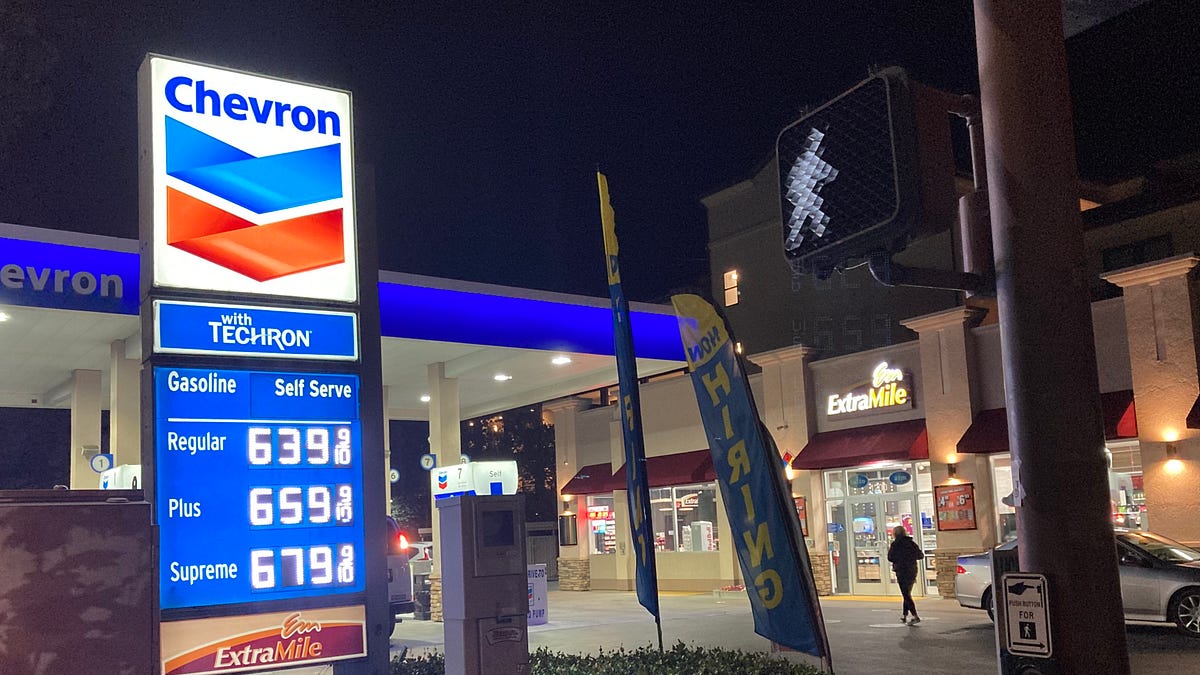
On the Money: Who Really Benefits from High Oil Prices?
Without a windfall profit tax on the oil and gas industry, U.S. consumers will get stuck with the bill

(themoneytrail.substack.com)
-
"When Americans pay $3.50 for a gallon of gas at the pump instead of the $2.80 they paid a month ago, it is akin to the government imposing a 70-cent-per-gallon tax. The same goes for higher prices for home heating oil and fossil gas. They’re the same as a major tax increase.
The big difference is that instead of the money going to the government, as it would with a tax, it’s going to the oil and gas industry—Trump’s campaign contributors."
On the Money: Who Really Benefits from High Oil Prices?
Without a windfall profit tax on the oil and gas industry, U.S. consumers will get stuck with the bill
(themoneytrail.substack.com)
Like this
-
"Oil is a leading cause of modern-day war -- with between one-quarter and one-half of interstate wars between 1973 and 2007 linked to oil, an analysis published in the journal International Security said.
[For example] The U.S., Britain and Dutch East Indies embargo on Japan's oil supply in July 1941 -- which impacted 88% of its imported oil --preceded the attack on Pearl Harbor on Dec. 7, 1941."
-
"Oil is a leading cause of modern-day war -- with between one-quarter and one-half of interstate wars between 1973 and 2007 linked to oil, an analysis published in the journal International Security said.
[For example] The U.S., Britain and Dutch East Indies embargo on Japan's oil supply in July 1941 -- which impacted 88% of its imported oil --preceded the attack on Pearl Harbor on Dec. 7, 1941."
"Energy experts say some countries are better positioned to weather this energy crisis than they would have been just a few years ago. That's because of the rapid growth of renewable energy, battery systems and electric vehicles."
"With a stroke," he says, "this war has dramatically increased the power and the influence of those who want to go down the solar route."
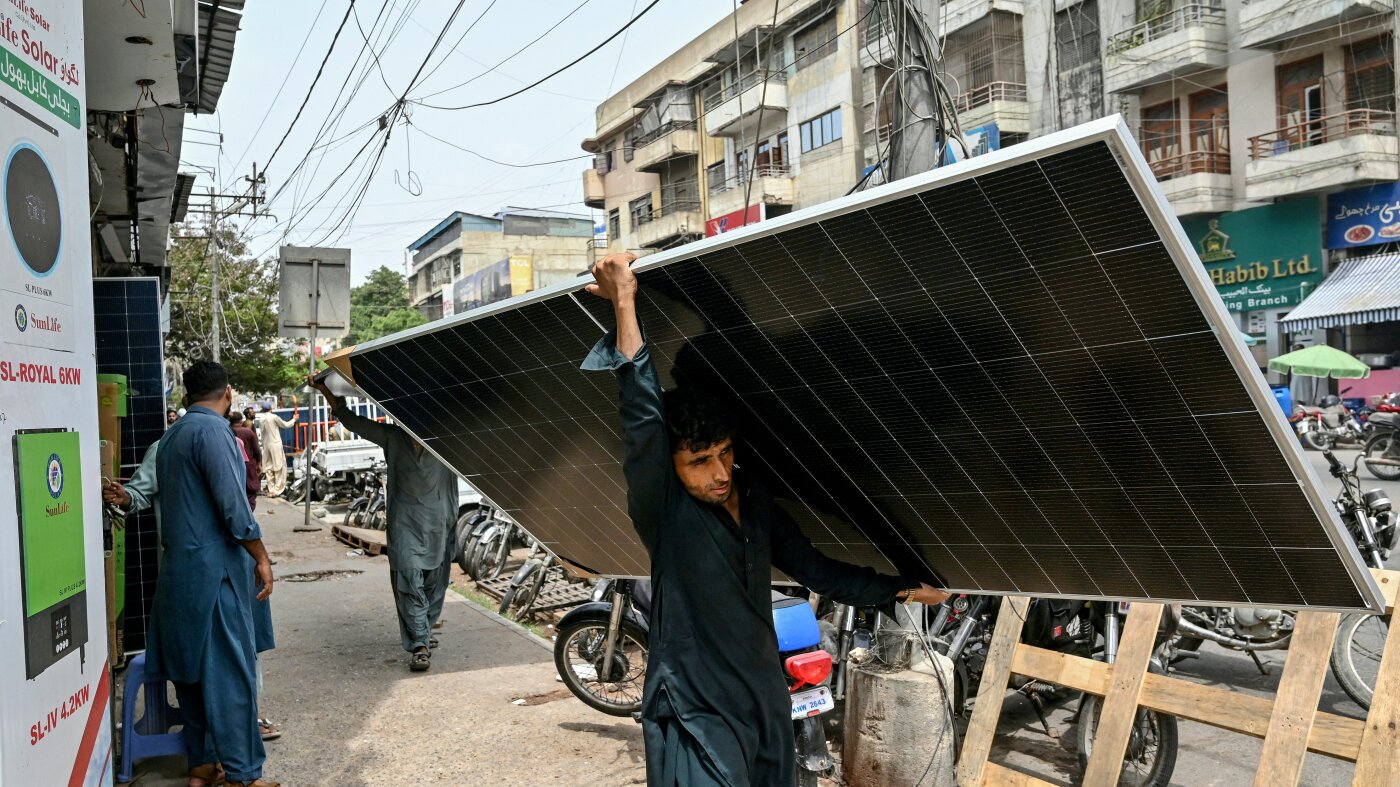
Oil and gas prices are soaring. Some countries are ready with solar panels and EVs
As an energy crisis grows, some countries are more prepared because of renewable energy and electric vehicles. Pakistan reduced its reliance on imported natural gas because of the growth of solar.

NPR (www.npr.org)
-
"Energy experts say some countries are better positioned to weather this energy crisis than they would have been just a few years ago. That's because of the rapid growth of renewable energy, battery systems and electric vehicles."
"With a stroke," he says, "this war has dramatically increased the power and the influence of those who want to go down the solar route."
Oil and gas prices are soaring. Some countries are ready with solar panels and EVs
As an energy crisis grows, some countries are more prepared because of renewable energy and electric vehicles. Pakistan reduced its reliance on imported natural gas because of the growth of solar.
NPR (www.npr.org)
"The escalating war with Iran is pushing parts of the world into energy triage, forcing governments to choose where to cut demand or absorb costs, while prioritizing dwindling supplies."

Iran war pushes countries into energy triage as they conserve power and curb soaring prices
The escalating Iran war is pushing parts of the world into energy triage. Governments are deciding where to cut demand or absorb higher costs, while prioritizing dwindling supplies.

AP News (apnews.com)
A four day work week
Taking the stairs
Raising temps on thermostats
Prioritise households
Release reserves
Price capsBut a prolonged war will make every policy more difficult. It's a strong argument for quitting fossil fuels.
-
"The escalating war with Iran is pushing parts of the world into energy triage, forcing governments to choose where to cut demand or absorb costs, while prioritizing dwindling supplies."
Iran war pushes countries into energy triage as they conserve power and curb soaring prices
The escalating Iran war is pushing parts of the world into energy triage. Governments are deciding where to cut demand or absorb higher costs, while prioritizing dwindling supplies.
AP News (apnews.com)
A four day work week
Taking the stairs
Raising temps on thermostats
Prioritise households
Release reserves
Price capsBut a prolonged war will make every policy more difficult. It's a strong argument for quitting fossil fuels.
Egypt:
"Since the new fuel prices took effect, the cost of meat has jumped 25% and fruit and vegetables rose 15-30%, according to merchants at three markets in Cairo."Many in Egypt struggle as the costs of a distant war drive up prices in local markets
Rising energy costs caused by the Iran war have forced Egypt to hike fuel and cooking gas prices, hitting the country's already struggling poor and middle classes hard.
AP News (apnews.com)
-
Egypt:
"Since the new fuel prices took effect, the cost of meat has jumped 25% and fruit and vegetables rose 15-30%, according to merchants at three markets in Cairo."Many in Egypt struggle as the costs of a distant war drive up prices in local markets
Rising energy costs caused by the Iran war have forced Egypt to hike fuel and cooking gas prices, hitting the country's already struggling poor and middle classes hard.
AP News (apnews.com)
"The war in Iran is exposing the world’s reliance on fragile fossil fuel routes, lending urgency to calls for hastening the shift to renewable energy.
Unlike during previous oil shocks, renewable power is now competitive with fossil fuels in many places. More than 90% of new renewable power projects worldwide in 2024 were cheaper than fossil-fuel alternatives."
Energy fallout from Iran war signals a global wake-up call for renewable energy
The Iran war is exposing how much the global economy still depends on fragile fossil fuel supplies. The conflict has virtually choked off the Strait of Hormuz, a vital shipping lane for a fifth of the world’s oil and liquefied natural gas.
AP News (apnews.com)