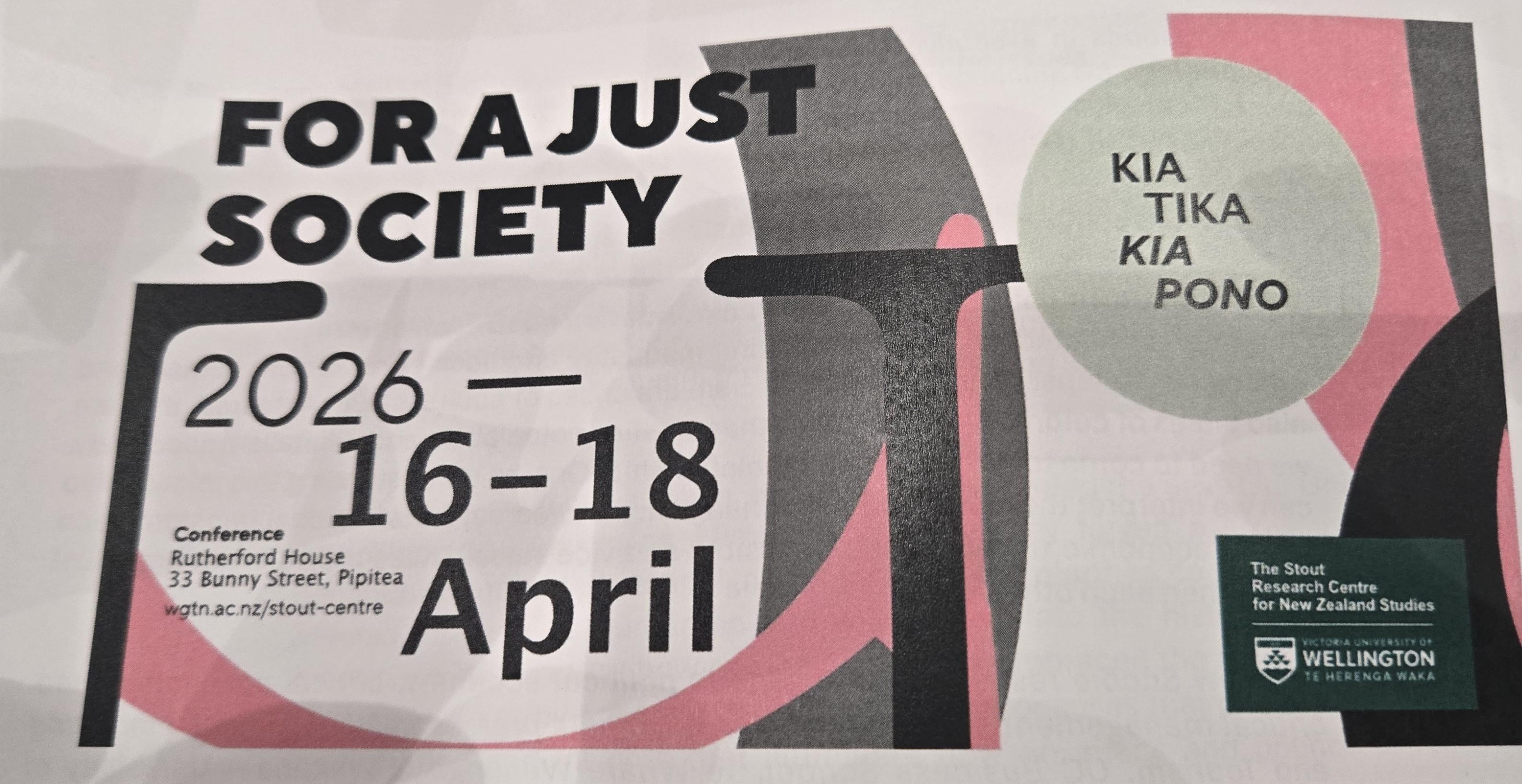
About to start a 2.5 day conference at Vic Uni.
-
"How many girls are riding their bikes to school?" is a better measure of a country's success than GDP.
It tells you about so much more; about access to education, gender equality, road safety, the environment...
We're massively over producing food, but 20% of Kiwi kids are going hungry. It's a symptom of a broken system.
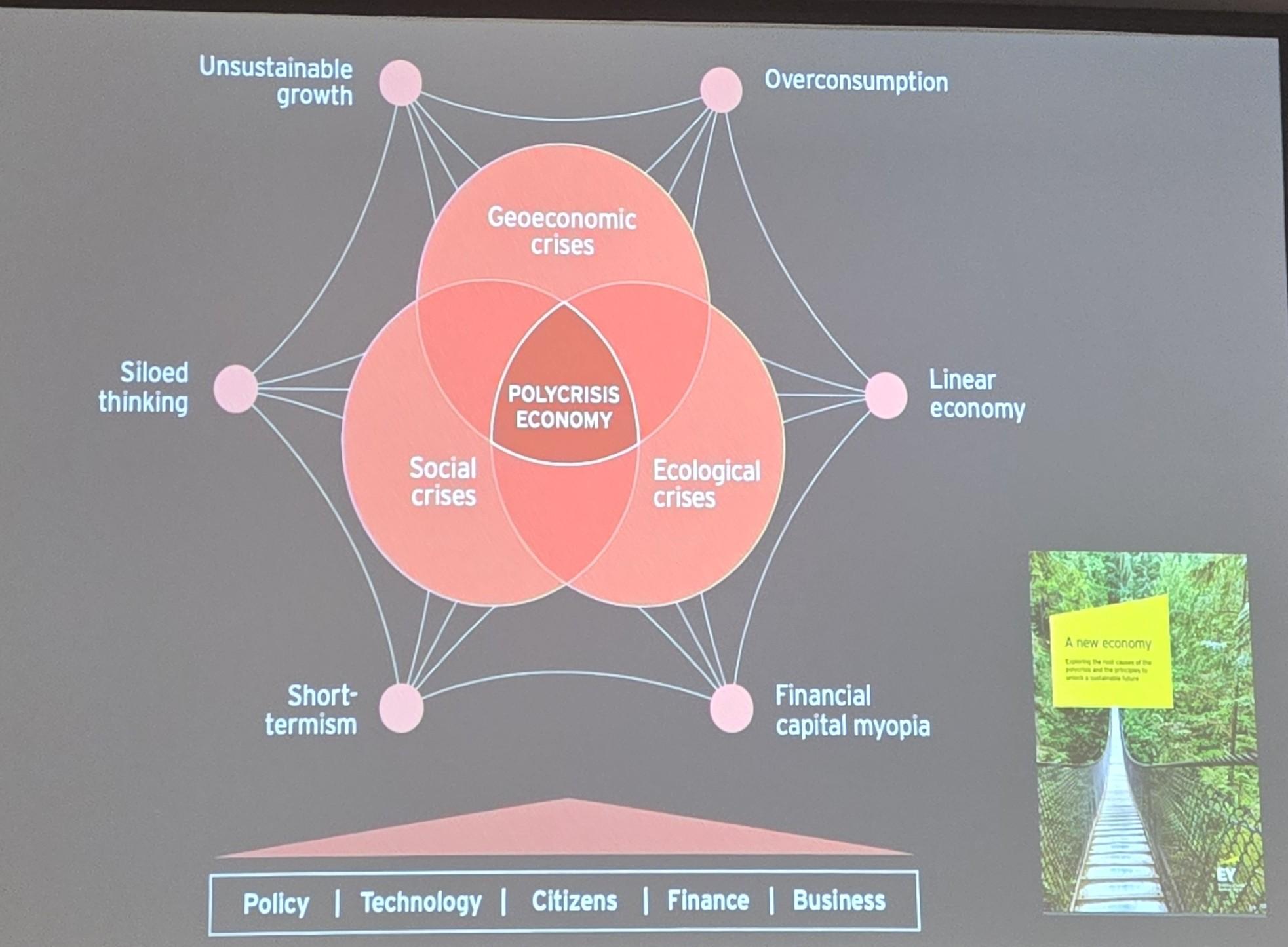
Today we're in a poly-crisis. Everything is breaking down, and affecting ever other crisis.
A study suggested two thirds of Kiwis are open to the idea of "violence may be needed to solve the problems we're facing".
-
We're massively over producing food, but 20% of Kiwi kids are going hungry. It's a symptom of a broken system.
Today we're in a poly-crisis. Everything is breaking down, and affecting ever other crisis.
A study suggested two thirds of Kiwis are open to the idea of "violence may be needed to solve the problems we're facing".
There is no point claiming the purpose of a system is to do what it consistently fails to do. A system is what it does.
The economy is not a law of nature, it is a system designed to keep power concentrated.
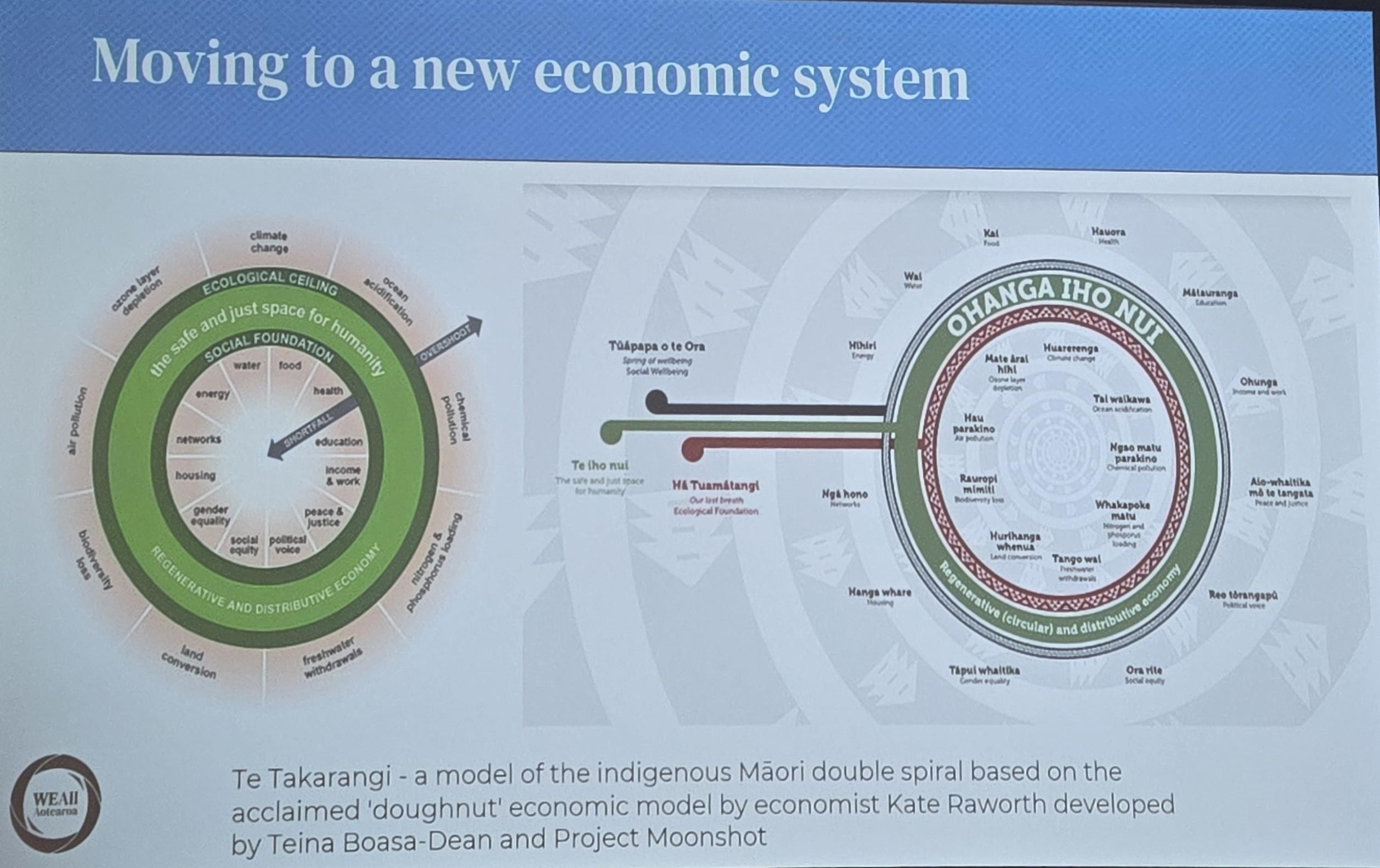
The economy is presented as an external force, we need to do X to appease it. It is us and our decisions we make. We designed it, we can redesign it. But the master's tools cannot dismantle the master's house.
-
There is no point claiming the purpose of a system is to do what it consistently fails to do. A system is what it does.
The economy is not a law of nature, it is a system designed to keep power concentrated.
The economy is presented as an external force, we need to do X to appease it. It is us and our decisions we make. We designed it, we can redesign it. But the master's tools cannot dismantle the master's house.
4 in 10 Kiwi kids in poverty have a parent in full time work.
History reminds us big changes can happen in short periods, the 1840s, the 1930s (welfare state), the 1980s (neoliberalism).
Even our once in a generation MMP parliament was constrained in what it could achieve in the benefits space by the rules imposed by the legislation imposed in the 1984 neoliberal era.
-
4 in 10 Kiwi kids in poverty have a parent in full time work.
History reminds us big changes can happen in short periods, the 1840s, the 1930s (welfare state), the 1980s (neoliberalism).
Even our once in a generation MMP parliament was constrained in what it could achieve in the benefits space by the rules imposed by the legislation imposed in the 1984 neoliberal era.
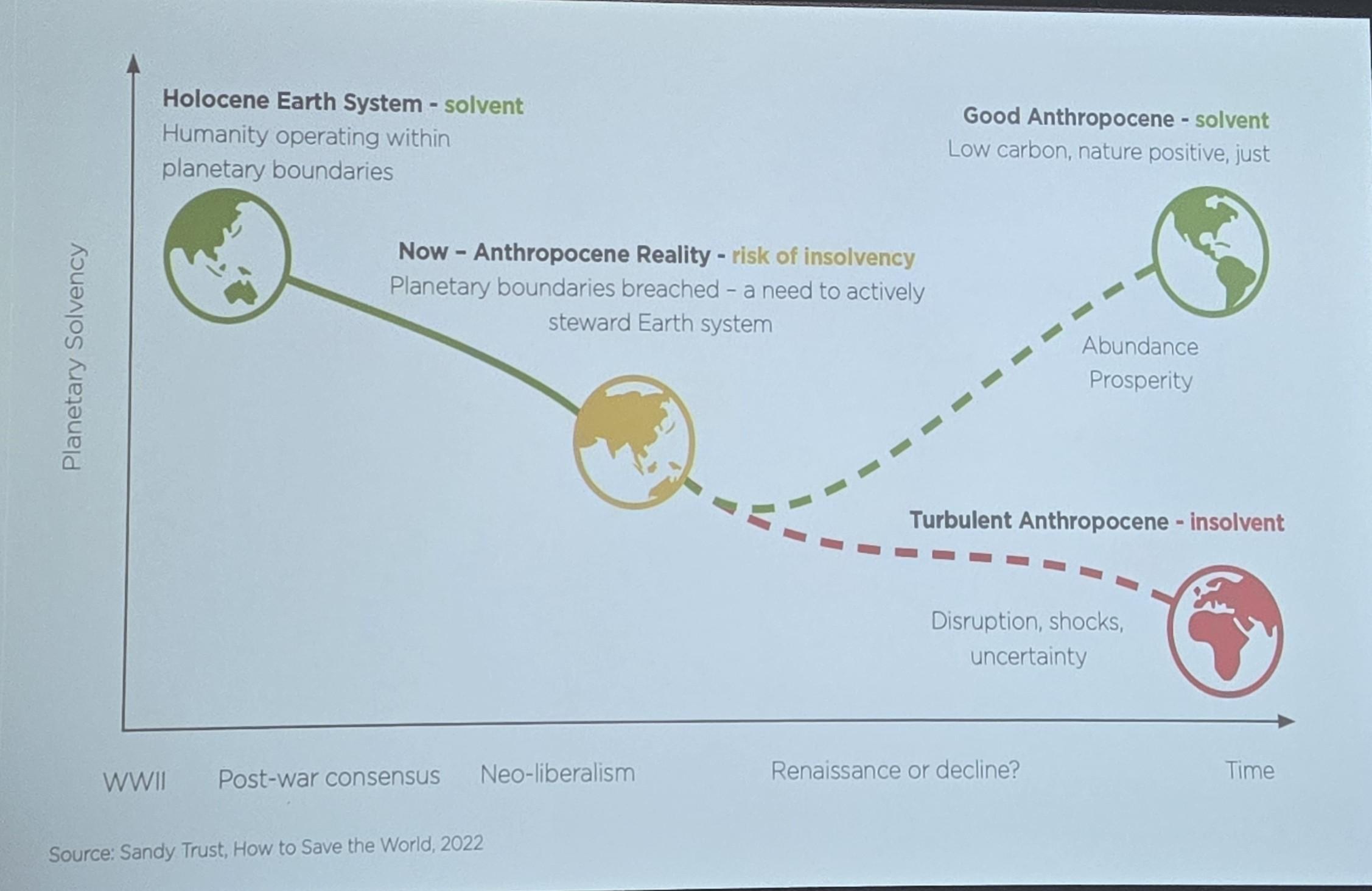
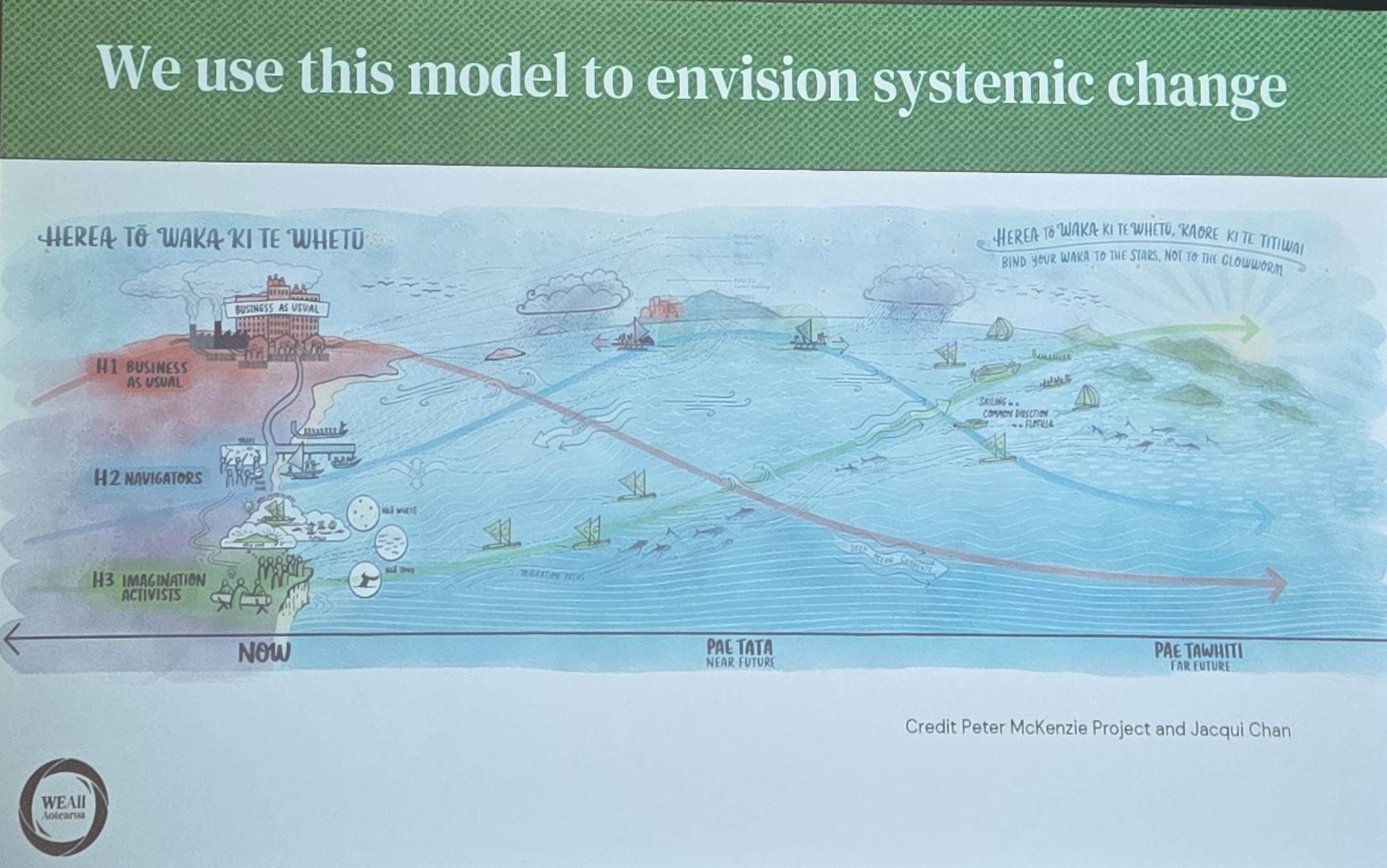
We are literally at a fork in the road. We can't keep kicking the can down the road.
The Left needs a clear and powerful message. The Right blame the immigrants, a clear boogeyman. The Left need to point to the rich and wealthy to show why you can't afford your house.
[Second image] is a good metaphor for voyaging- we cant see where we're trying to get to [the islands of the future] but we're needed to make decisions now to guide us towards it regardless.
-
We are literally at a fork in the road. We can't keep kicking the can down the road.
The Left needs a clear and powerful message. The Right blame the immigrants, a clear boogeyman. The Left need to point to the rich and wealthy to show why you can't afford your house.
[Second image] is a good metaphor for voyaging- we cant see where we're trying to get to [the islands of the future] but we're needed to make decisions now to guide us towards it regardless.
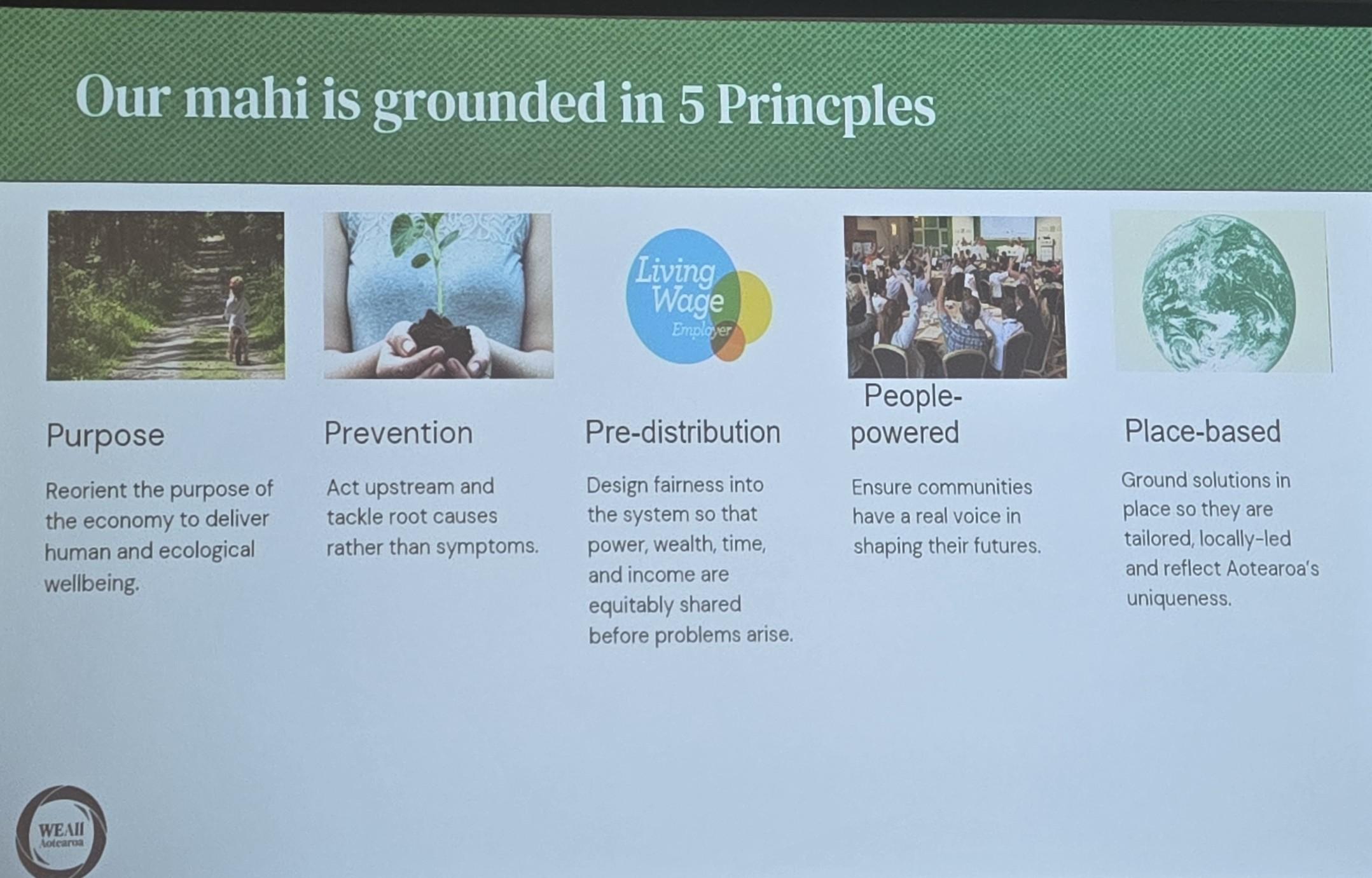
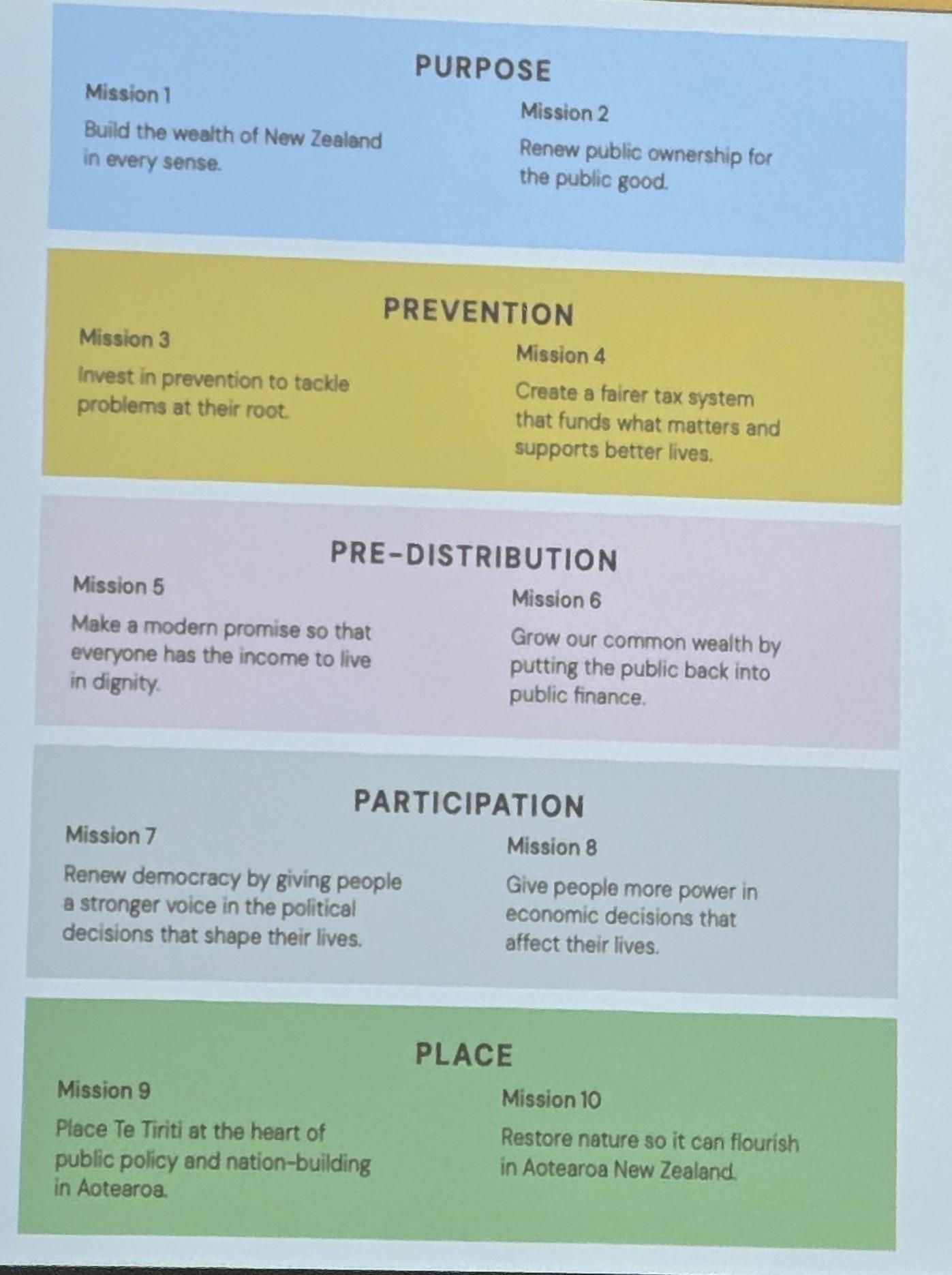
These should be our way faring compass points (see previous toot) to guide us.
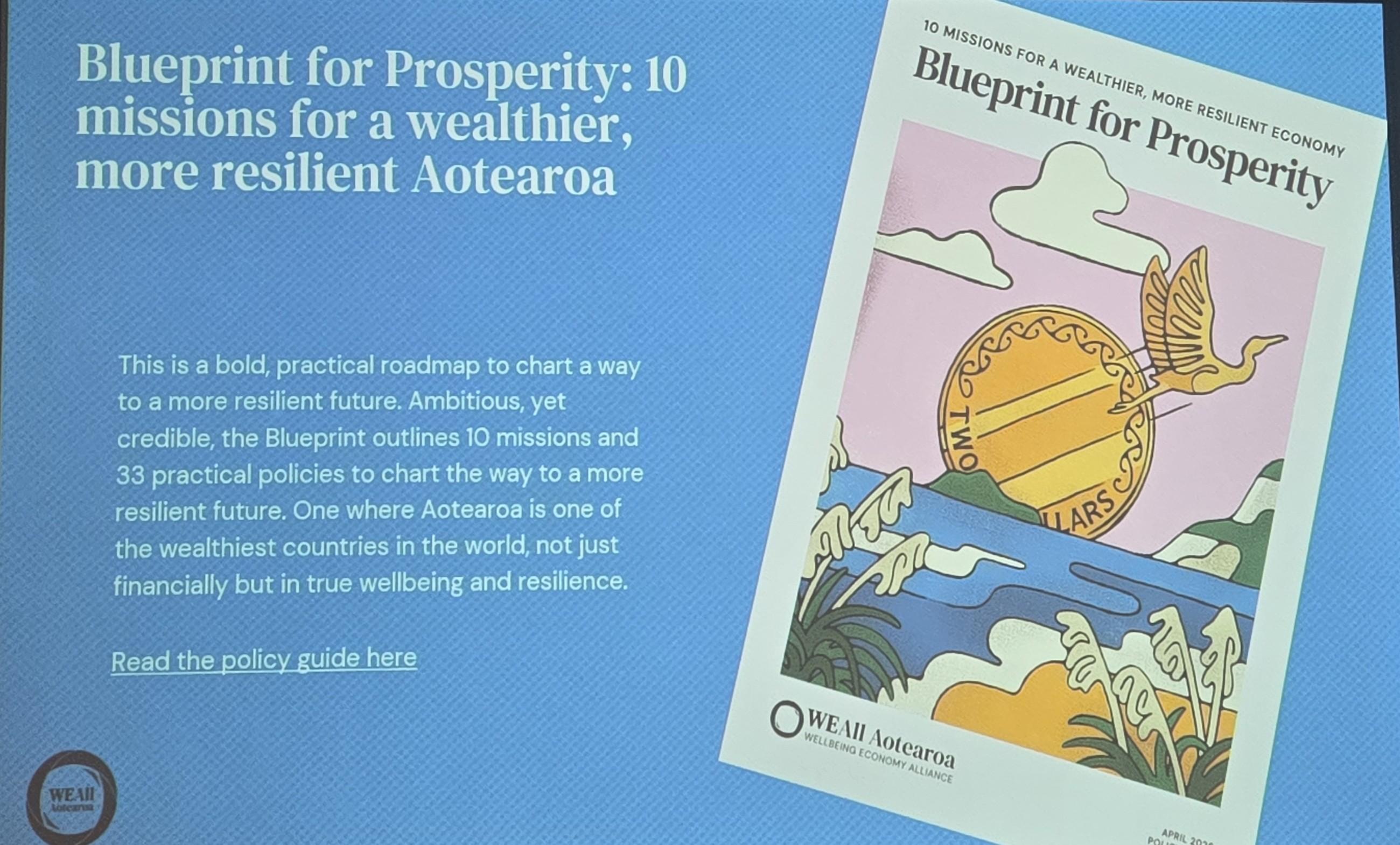
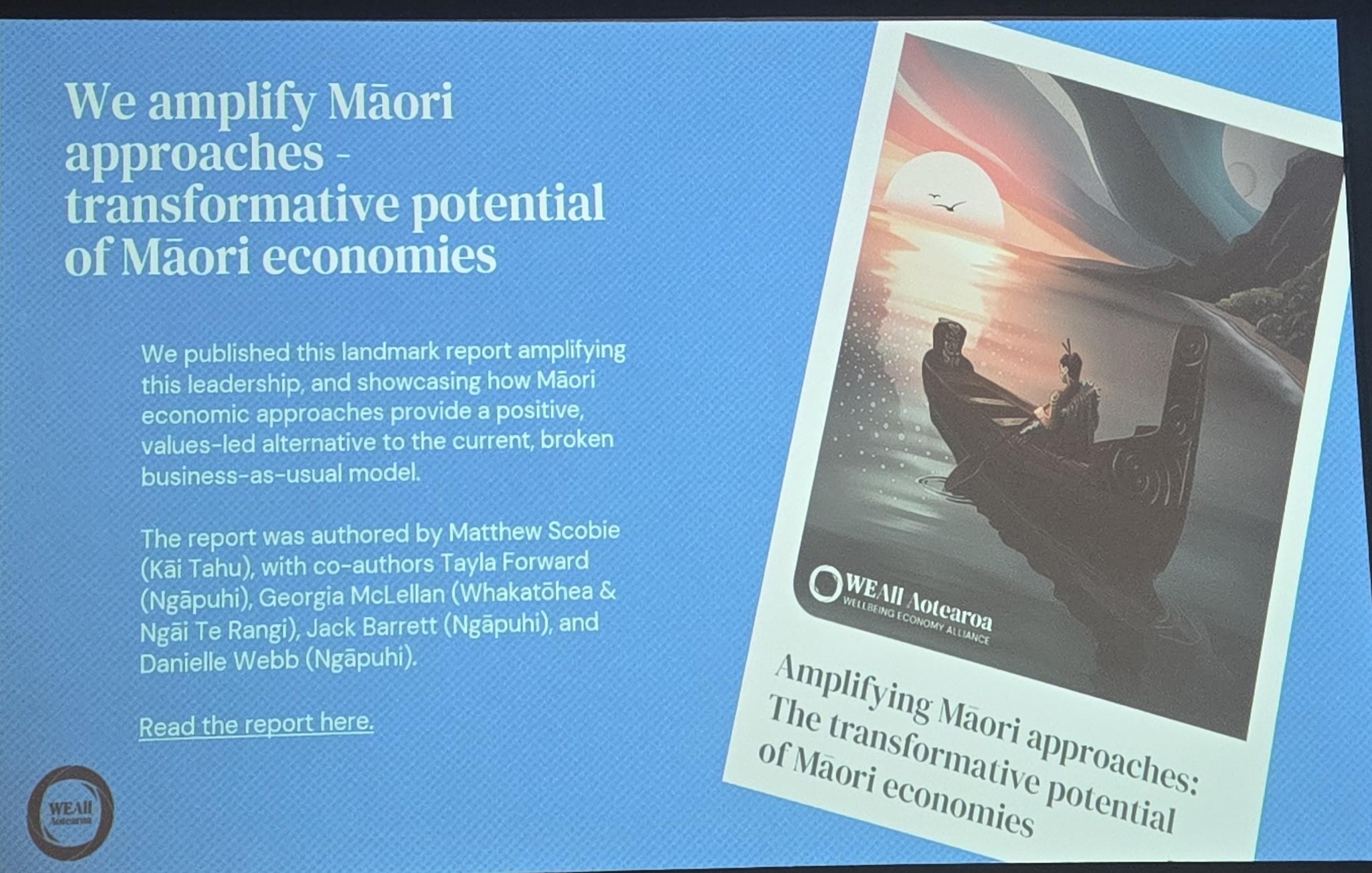
WEAll Aotearoa have released a blueprint for how to get there. Principles under each compass point.
-
These should be our way faring compass points (see previous toot) to guide us.
WEAll Aotearoa have released a blueprint for how to get there. Principles under each compass point.
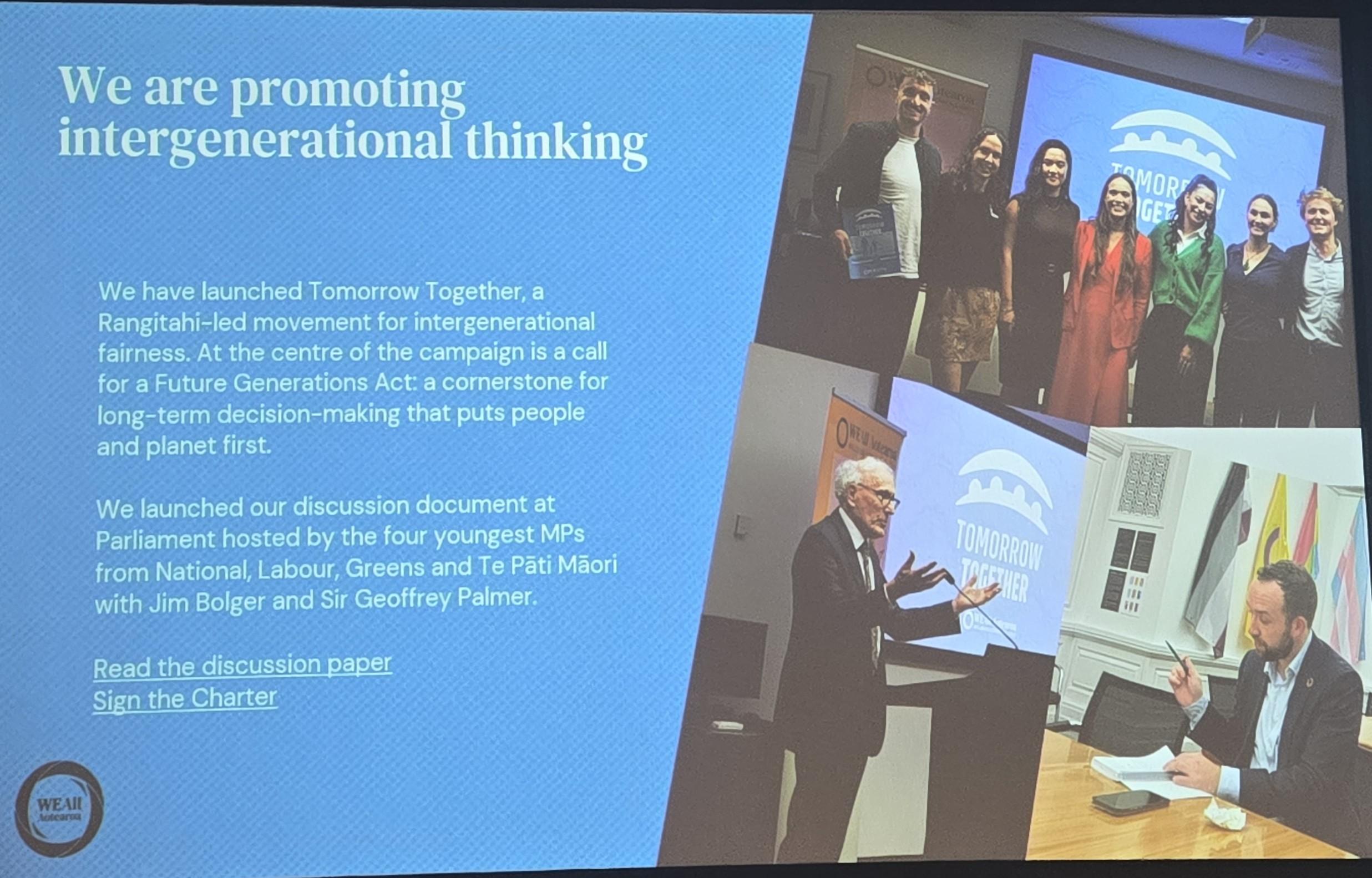
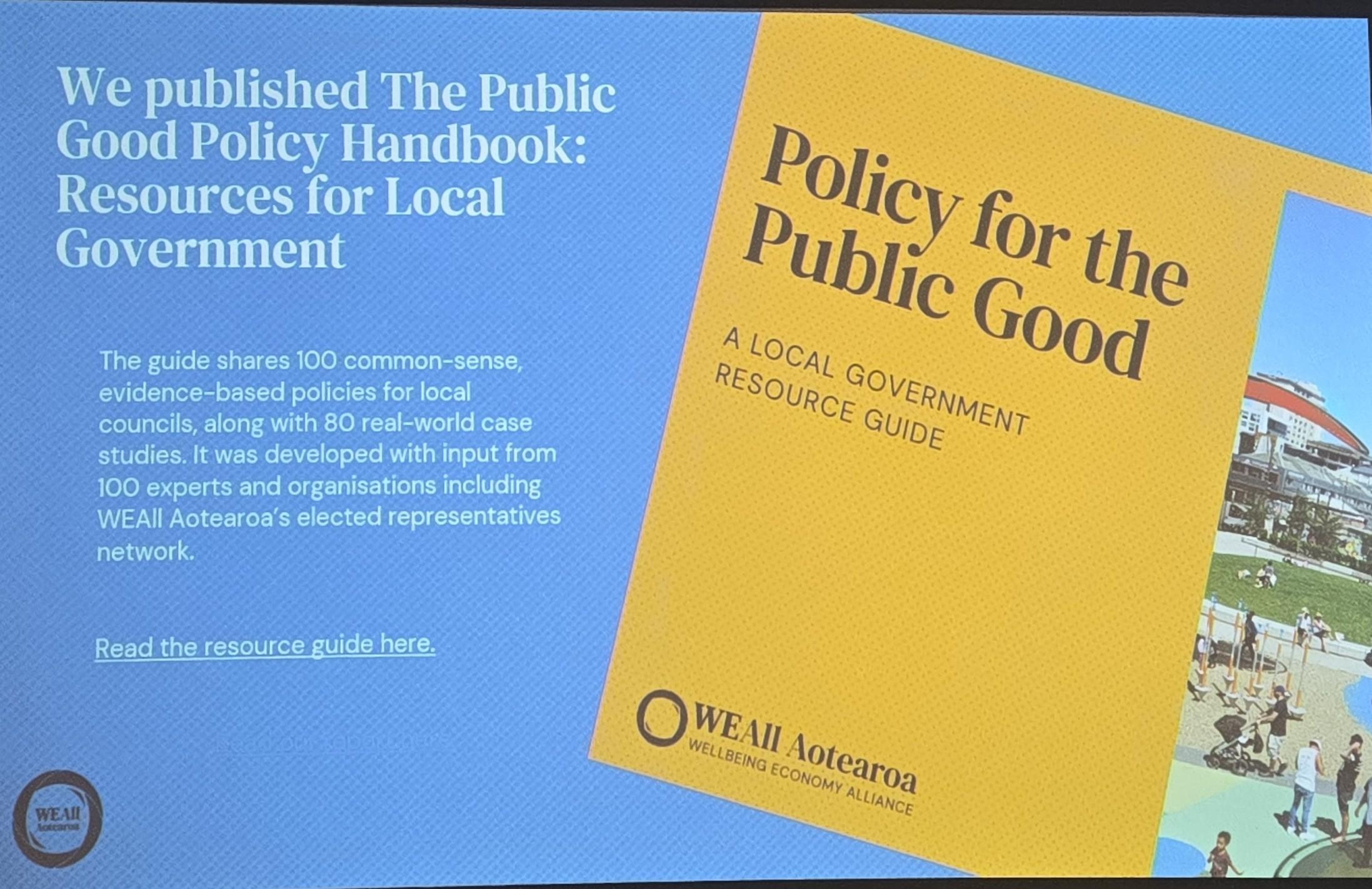
Gosh he speaks fast, with so many good points, I really can't keep up.
Such a loss to our parliament.
-
Gosh he speaks fast, with so many good points, I really can't keep up.
Such a loss to our parliament.
Final speaker, Carwyn Jones; 'Ko te kai a rangatira, he kōrero' - Listening for democracy in Aotearoa.
Starting with a beautifully fluent mihi in flawless and unhesitant Te Reo Māori.
-
Final speaker, Carwyn Jones; 'Ko te kai a rangatira, he kōrero' - Listening for democracy in Aotearoa.
Starting with a beautifully fluent mihi in flawless and unhesitant Te Reo Māori.
This whakataukī is often translated as 'speech is the food of chiefs', but I think it's better to say 'discussion is the food of chiefs'. Discussion needs to hear the other side, not just to talk your own view over others.
The lack of listening is a part of our constitutional structure. We should reorganise that to be more a part of dialogue - as shown by Te Tiriti.
-
This whakataukī is often translated as 'speech is the food of chiefs', but I think it's better to say 'discussion is the food of chiefs'. Discussion needs to hear the other side, not just to talk your own view over others.
The lack of listening is a part of our constitutional structure. We should reorganise that to be more a part of dialogue - as shown by Te Tiriti.
(He's just used "Tāngata Whenua, Tāngata Moana, and Tāngata Tiriti"... - it's the first time I've encountered this grouping, and the first time I've heard the middle group. Have to say, I'm a big fan)
-
(He's just used "Tāngata Whenua, Tāngata Moana, and Tāngata Tiriti"... - it's the first time I've encountered this grouping, and the first time I've heard the middle group. Have to say, I'm a big fan)
(Side note, this talk is honestly fascinating and engaging, but the concepts are big and chunky, and I'm really struggling to distill down to Toot-bites, arohamai e te whānau ipurangi. ..)
-
(Side note, this talk is honestly fascinating and engaging, but the concepts are big and chunky, and I'm really struggling to distill down to Toot-bites, arohamai e te whānau ipurangi. ..)
The line the govt likes to take is that 'the people have spoken, we have a remit'. That view of democracy is very thin... anaemic.
What are the mechanisms that enable us to shift and refocus to listening and dialogue?
We've seen _many_ examples of unjust law making and undermine democracy. Skipping the select committee process removing the opportunity for public discussion intended to be part of that dialogue.
-
The line the govt likes to take is that 'the people have spoken, we have a remit'. That view of democracy is very thin... anaemic.
What are the mechanisms that enable us to shift and refocus to listening and dialogue?
We've seen _many_ examples of unjust law making and undermine democracy. Skipping the select committee process removing the opportunity for public discussion intended to be part of that dialogue.
The standing up of the people select committees had been stood up to fill that gap. Demonstrating the power of listening, parliament have failed to listen.
No consultation at all on the pay parity decision. No one campaigned on it, so no one voted for this, and there was no discussion. There is no discussion here, no listening.
Numerous examples of official advice being ignored, recently the 'move on orders'. But many policies have been about removing community input ...
-
The standing up of the people select committees had been stood up to fill that gap. Demonstrating the power of listening, parliament have failed to listen.
No consultation at all on the pay parity decision. No one campaigned on it, so no one voted for this, and there was no discussion. There is no discussion here, no listening.
Numerous examples of official advice being ignored, recently the 'move on orders'. But many policies have been about removing community input ...
... into issues that directly impact them. There was no consultation, just a belief that the government knows best.
98.7% of contributions to the Regulatory Standards Bill were against it. And yet the minister responsible for it showed contempt by refusing to engage with the concerns raised there. That's not engaging in discussion.
-
... into issues that directly impact them. There was no consultation, just a belief that the government knows best.
98.7% of contributions to the Regulatory Standards Bill were against it. And yet the minister responsible for it showed contempt by refusing to engage with the concerns raised there. That's not engaging in discussion.
I am getting to some good news.. it doesn't need to be this way.
We need to think about how we reorient ourselves if we do want a just society.
Te Tiriti provides a model of how we can organise a model for collaborative public discussion. It envisages the ongoing sharing of different types of power between the Crown and tāngata whenua. Moves us away from a "govt knows best approach".
-
I am getting to some good news.. it doesn't need to be this way.
We need to think about how we reorient ourselves if we do want a just society.
Te Tiriti provides a model of how we can organise a model for collaborative public discussion. It envisages the ongoing sharing of different types of power between the Crown and tāngata whenua. Moves us away from a "govt knows best approach".
A constitution should be based on what is the right way to behave and engage (tikanga), and a value of community.
While Māori representation in parliament is important, it is not decolonisation. It's an adornment to it.
-
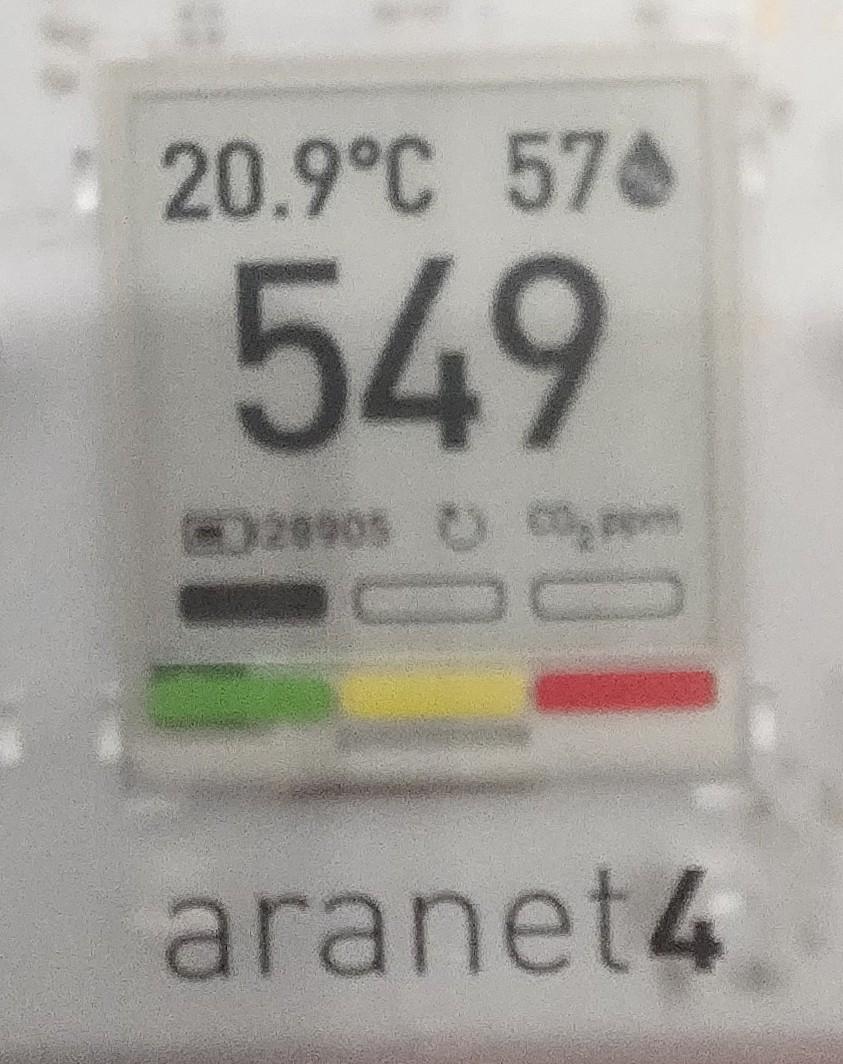
So, after a full day yesterday (0900-1730) of 150-200 odd people in the lecture theatre, this was the reading at the end, as the last speaker was receiving their koha.
For those not as familiar with the readings, it was 518 outside just now, so this is basically "fresh air". My (big, government) office NEVER falls below 850, and meeting rooms often climb to over 2000 inside 20 mins.
A packed peak time commuter train on recirculated air is about 1600.
So this is AMAZING.
@Phil_Tanner do you have information on the filtration/ventilation system that makes it like this, and if they did it on purpose?
-
A constitution should be based on what is the right way to behave and engage (tikanga), and a value of community.
While Māori representation in parliament is important, it is not decolonisation. It's an adornment to it.
How do we shift from constitutional dialogue to constitutional kōrero. Not to just replace it with a Māori word, but to have a concept for our ministers to approach things with a Māori perspective.
It provides a space for people to disagree with the outcome, and still have their perspective and voice to still be held.
-
How do we shift from constitutional dialogue to constitutional kōrero. Not to just replace it with a Māori word, but to have a concept for our ministers to approach things with a Māori perspective.
It provides a space for people to disagree with the outcome, and still have their perspective and voice to still be held.
And that's a wrap. (Well, technically there's a field trip to Porirua Harbour this afternoon, but with the weather warnings and flooding, I'm giving that a miss).
Thank you all for your favourites, boosts, and supportive comments while I live tweeted this.
I have no doubt there's a fair few autocucumber errors that slipped in while I was madly posting... but i tried to be true to the intent of the speakers words even when I couldn't keep up fast enough to be 100% accurate.
-
And that's a wrap. (Well, technically there's a field trip to Porirua Harbour this afternoon, but with the weather warnings and flooding, I'm giving that a miss).
Thank you all for your favourites, boosts, and supportive comments while I live tweeted this.
I have no doubt there's a fair few autocucumber errors that slipped in while I was madly posting... but i tried to be true to the intent of the speakers words even when I couldn't keep up fast enough to be 100% accurate.
So most of the words in these posts have not been mine, but those of others. I hope i was clear when it was my voice, but if in doubt (or it was a particularly insightful remark), you should assume someone else said it.
I really loved this conference, and live tooting it reminded me of the good old days of Twitter, where I could find other attendees and see their interpretations of what was being said, and pick up other quotes i missed.
Another thing stolen from us. 🥺
-
So most of the words in these posts have not been mine, but those of others. I hope i was clear when it was my voice, but if in doubt (or it was a particularly insightful remark), you should assume someone else said it.
I really loved this conference, and live tooting it reminded me of the good old days of Twitter, where I could find other attendees and see their interpretations of what was being said, and pick up other quotes i missed.
Another thing stolen from us. 🥺
E mihi ana ki a koe mō te rangapū ki roto te haerenga i ēnei rā.
Thank you for coming along with me these last few days.
I am certainly thinking more about what I can do to build a better society, what that looks like, and how I can help move the dial in all the aspects of my life.
#KiaTikaKiaPono... Me kia kaha hoki, kia māia, me te mea nui; kia manawanui e hoa mā.