Almost 50 cities in France have already done away with paid tickets...
-
I have heard some people use the term "free at the point of service", but not only is this not catchy, it isn't really accurate either. Drugs are not funded equally, dental care and mental healthcare are not all covered, disability support is so limited that people have to self-insure for glasses.
"Crowdsourced healthcare" is very cozy, but it feels a little more scattershot than it really is. I think "taxpayer funded healthcare" is probably a more accurate term. I don't know if it's catchy enough to replace "free healthcare".
I'm open to ideas here. I would definitely like a better term to just start using.
-
Almost 50 cities in France have already done away with paid tickets... "Nearly three million people in France can now use urban public transport without paying a fare. That number is likely to grow after the municipal elections... given the proliferation of proposals to make urban transport at least partially free."
-
-
Almost 50 cities in France have already done away with paid tickets... "Nearly three million people in France can now use urban public transport without paying a fare. That number is likely to grow after the municipal elections... given the proliferation of proposals to make urban transport at least partially free."
@GeofCox hey, liebe @mainz_de das wäre hier in unserer Stadt doch auch super, oder? Ich habe am letzten 0-Euro-Samstag mit Geschäftsleuten in der Mainzer Innenstadt gesprochen: da ist so viel mehr los als an anderen Samstagen. Prüft doch mal ob eine sukzessive Ausweitung auf alle Samstage möglich wäre... #Verkehrswende #mobilitat
-
North American standard reply of "we can't do that here, we're not a place that does good things for our people".
@the5thColumnist @GeofCox Although looks at Albuquerque...
-
Almost 50 cities in France have already done away with paid tickets... "Nearly three million people in France can now use urban public transport without paying a fare. That number is likely to grow after the municipal elections... given the proliferation of proposals to make urban transport at least partially free."
@GeofCox I hope Germany wilk follow suite, only makes sense
-
Almost 50 cities in France have already done away with paid tickets... "Nearly three million people in France can now use urban public transport without paying a fare. That number is likely to grow after the municipal elections... given the proliferation of proposals to make urban transport at least partially free."
Among the benefits of using taxes to subsidizing public transport are freeing cities from smog, more rapid commutes, fuller usage of trains, less land devoted to cars and parking, much less pollution.
To me, those aims are worth the cost of the taxes required to meet them. Users also avoid the cost of buying, using, and maintaining ever larger cars.
This is the sort of thing Detroit automakers and friends destroyed in America in the 1920s.
-
Almost 50 cities in France have already done away with paid tickets... "Nearly three million people in France can now use urban public transport without paying a fare. That number is likely to grow after the municipal elections... given the proliferation of proposals to make urban transport at least partially free."
@GeofCox offboard payment, or no payment at all, improves boarding times (dwell times) which is a huge factor in transit speed. it doesn't just help the poor, it helps everyone by making transit faster and better. even if you drive a car, you want transit to be fast because more people will take it, leaving road space for you.
-
Almost 50 cities in France have already done away with paid tickets... "Nearly three million people in France can now use urban public transport without paying a fare. That number is likely to grow after the municipal elections... given the proliferation of proposals to make urban transport at least partially free."
@GeofCox I'm currently in Serbia and the local transit in both Belgrade and Niš is completely free for everyone including tourists. There are no passes. You just hop on and off whatever bus or tram you need. They all seem to come at a very regular like 6-9 minute intervals. Very high ridership/utilization, which keeps a lot of cars off the roads.
-
Almost 50 cities in France have already done away with paid tickets... "Nearly three million people in France can now use urban public transport without paying a fare. That number is likely to grow after the municipal elections... given the proliferation of proposals to make urban transport at least partially free."
@GeofCox I’ve always wondered what the cost of fares collection is.
Systems, apps, account management, back office, ticket machines, readers, maintenance, inspectors, updates, fare negotiations teams, press releases, explanatory documents.
It’s quite a cost.
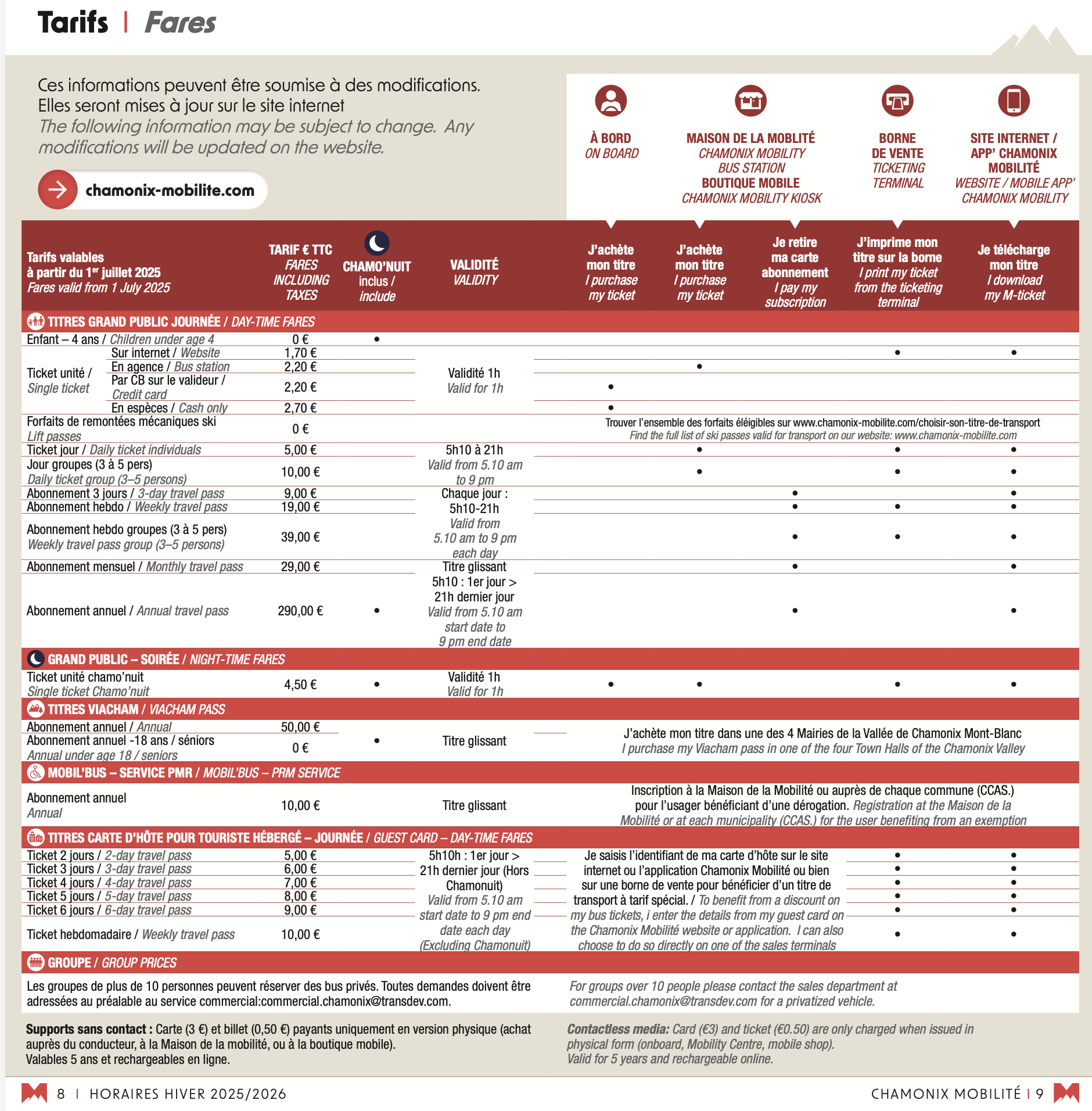
I'm in Chamonix at the moment, and I’m driving and cycling rather than using the bus because this is just too complicated for me.
-
@GeofCox I'm currently in Serbia and the local transit in both Belgrade and Niš is completely free for everyone including tourists. There are no passes. You just hop on and off whatever bus or tram you need. They all seem to come at a very regular like 6-9 minute intervals. Very high ridership/utilization, which keeps a lot of cars off the roads.
And many have commented that keeping cars off the road is good for everyone - even motorists - and not only because it reduces their environmental impact. It's a very direct benefit for those that sometimes have to use cars - less traffic, easier parking/loading would have been nice for me recently when I had to help my daughter move between apartments in Paris...
-
@GeofCox I'm currently in Serbia and the local transit in both Belgrade and Niš is completely free for everyone including tourists. There are no passes. You just hop on and off whatever bus or tram you need. They all seem to come at a very regular like 6-9 minute intervals. Very high ridership/utilization, which keeps a lot of cars off the roads.
@Infoseepage @GeofCox Is there any published research showing that it has generated a reduction in car use? I've had a search and haven't been able to find any.
-
@Infoseepage @GeofCox Is there any published research showing that it has generated a reduction in car use? I've had a search and haven't been able to find any.
@plock @GeofCox You don't really have to show that directly. If you can show increased ridership of the system relative to when it was operating under pay-to-use, then those riders came from somewhere and the place they came from is cars and other modes of transit. Granted some of those other modes of transit might have been bicycles and foot traffic, but not all.
-
@plock @GeofCox You don't really have to show that directly. If you can show increased ridership of the system relative to when it was operating under pay-to-use, then those riders came from somewhere and the place they came from is cars and other modes of transit. Granted some of those other modes of transit might have been bicycles and foot traffic, but not all.
@plock @GeofCox My experience of both Serbian cities where I used the bus is that they don't have much of the problems I associate with heavy reliance on cars and motor vehicles. There's only a slight degree of rush hour effect compared to American cities and the majority of the time the traffic is pretty calm and I have no issues crossing streets as a pedestrian.
-
@plock @GeofCox You don't really have to show that directly. If you can show increased ridership of the system relative to when it was operating under pay-to-use, then those riders came from somewhere and the place they came from is cars and other modes of transit. Granted some of those other modes of transit might have been bicycles and foot traffic, but not all.
@Infoseepage @GeofCox You've provided the refutation of your own argument there.
And we can see that in practice in, for example, Tallinn. When passenger transport was made free at the point of use, usage increased, but car use didn't reduce. The increased usage came from a mix of reduced active travel and increased journeys overall.
So, yes, you do have to show it directly.
-
@Infoseepage @GeofCox You've provided the refutation of your own argument there.
And we can see that in practice in, for example, Tallinn. When passenger transport was made free at the point of use, usage increased, but car use didn't reduce. The increased usage came from a mix of reduced active travel and increased journeys overall.
So, yes, you do have to show it directly.
Equally, of course, traffic might have increased far more without free public transport.
-
@Infoseepage @GeofCox You've provided the refutation of your own argument there.
And we can see that in practice in, for example, Tallinn. When passenger transport was made free at the point of use, usage increased, but car use didn't reduce. The increased usage came from a mix of reduced active travel and increased journeys overall.
So, yes, you do have to show it directly.
@plock @GeofCox If your argument against this is "Rich people didn't actually give up their cars, it is just that tired poor people on foot and bicycles prefer to use a (shared) vehicle..." than that is a non-starter of an argument for me. Free transit is a social good. Please don't come back at me with "Well, if they don't bike they'll be fat."
-
Equally, of course, traffic might have increased far more without free public transport.
@GeofCox @plock My city (Seattle) is finally getting some light rail. A lot of people that are for mass transit were actually against the proposals because they weren't comprehensive enough and weren't heavy rail. Light rail simply doesn't move enough people and the projections were that population increases were going to result in far greater traffic by the time the system was in place. I'm not big on half measures. Go big or go home.
-
Equally, of course, traffic might have increased far more without free public transport.
It is, of course, possible that at the exact moment that passenger transport became free at the point of use, the underlying levels of car use suddenly and drastically increased for completely unconnected reasons, precisely cancelling out a simultaneous reduction in underlying car use driven by the change in approach to passenger transport.
Possible, but not particularly plausible.
-
@plock @GeofCox If your argument against this is "Rich people didn't actually give up their cars, it is just that tired poor people on foot and bicycles prefer to use a (shared) vehicle..." than that is a non-starter of an argument for me. Free transit is a social good. Please don't come back at me with "Well, if they don't bike they'll be fat."
Lovely straw man there!