Almost 50 cities in France have already done away with paid tickets...
-
Almost 50 cities in France have already done away with paid tickets... "Nearly three million people in France can now use urban public transport without paying a fare. That number is likely to grow after the municipal elections... given the proliferation of proposals to make urban transport at least partially free."
@GeofCox I’ve always wondered what the cost of fares collection is.
Systems, apps, account management, back office, ticket machines, readers, maintenance, inspectors, updates, fare negotiations teams, press releases, explanatory documents.
It’s quite a cost.
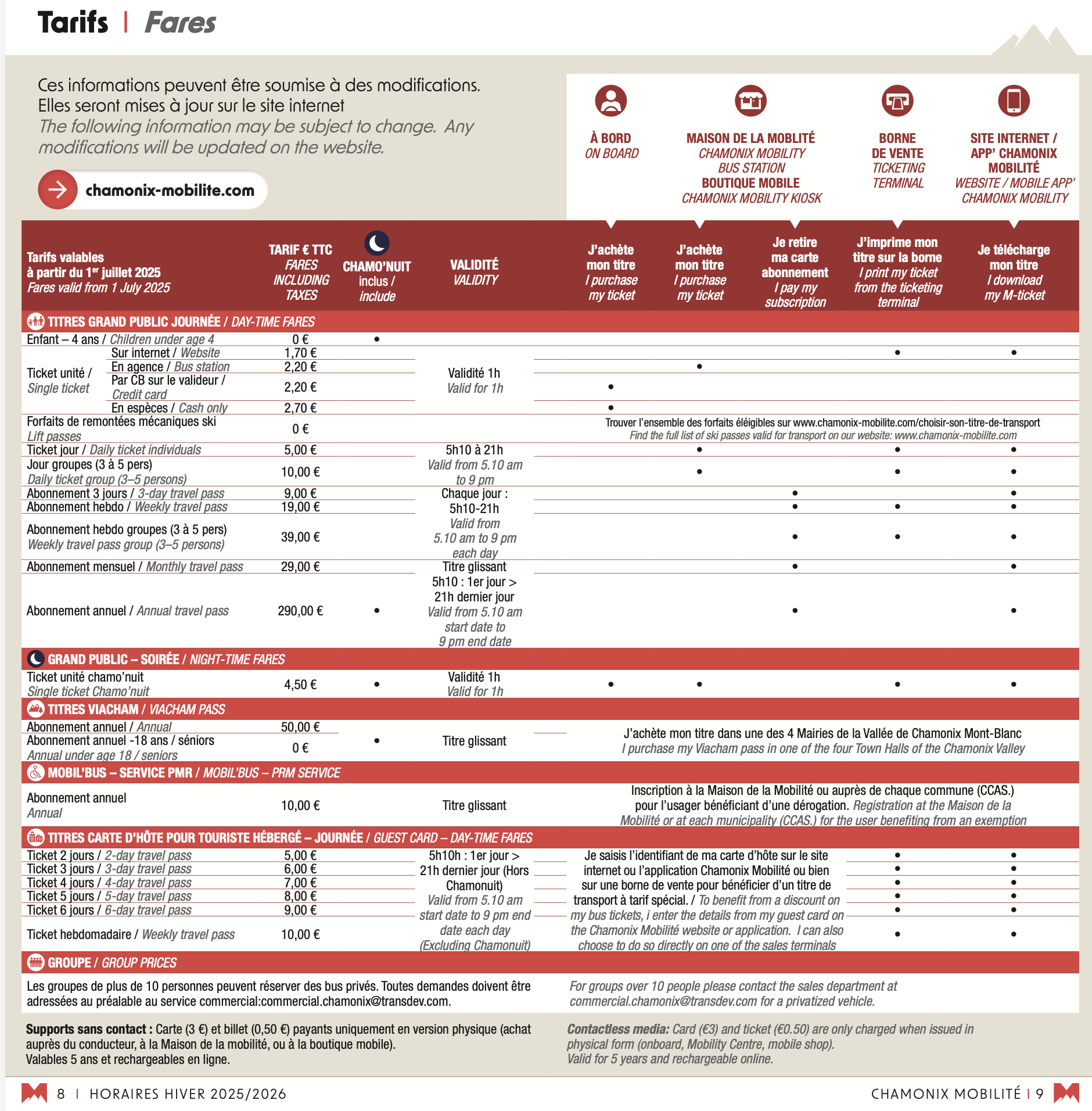
I'm in Chamonix at the moment, and I’m driving and cycling rather than using the bus because this is just too complicated for me.
-
@GeofCox I'm currently in Serbia and the local transit in both Belgrade and Niš is completely free for everyone including tourists. There are no passes. You just hop on and off whatever bus or tram you need. They all seem to come at a very regular like 6-9 minute intervals. Very high ridership/utilization, which keeps a lot of cars off the roads.
And many have commented that keeping cars off the road is good for everyone - even motorists - and not only because it reduces their environmental impact. It's a very direct benefit for those that sometimes have to use cars - less traffic, easier parking/loading would have been nice for me recently when I had to help my daughter move between apartments in Paris...
-
@GeofCox I'm currently in Serbia and the local transit in both Belgrade and Niš is completely free for everyone including tourists. There are no passes. You just hop on and off whatever bus or tram you need. They all seem to come at a very regular like 6-9 minute intervals. Very high ridership/utilization, which keeps a lot of cars off the roads.
@Infoseepage @GeofCox Is there any published research showing that it has generated a reduction in car use? I've had a search and haven't been able to find any.
-
@Infoseepage @GeofCox Is there any published research showing that it has generated a reduction in car use? I've had a search and haven't been able to find any.
@plock @GeofCox You don't really have to show that directly. If you can show increased ridership of the system relative to when it was operating under pay-to-use, then those riders came from somewhere and the place they came from is cars and other modes of transit. Granted some of those other modes of transit might have been bicycles and foot traffic, but not all.
-
@plock @GeofCox You don't really have to show that directly. If you can show increased ridership of the system relative to when it was operating under pay-to-use, then those riders came from somewhere and the place they came from is cars and other modes of transit. Granted some of those other modes of transit might have been bicycles and foot traffic, but not all.
@plock @GeofCox My experience of both Serbian cities where I used the bus is that they don't have much of the problems I associate with heavy reliance on cars and motor vehicles. There's only a slight degree of rush hour effect compared to American cities and the majority of the time the traffic is pretty calm and I have no issues crossing streets as a pedestrian.
-
@plock @GeofCox You don't really have to show that directly. If you can show increased ridership of the system relative to when it was operating under pay-to-use, then those riders came from somewhere and the place they came from is cars and other modes of transit. Granted some of those other modes of transit might have been bicycles and foot traffic, but not all.
@Infoseepage @GeofCox You've provided the refutation of your own argument there.
And we can see that in practice in, for example, Tallinn. When passenger transport was made free at the point of use, usage increased, but car use didn't reduce. The increased usage came from a mix of reduced active travel and increased journeys overall.
So, yes, you do have to show it directly.
-
@Infoseepage @GeofCox You've provided the refutation of your own argument there.
And we can see that in practice in, for example, Tallinn. When passenger transport was made free at the point of use, usage increased, but car use didn't reduce. The increased usage came from a mix of reduced active travel and increased journeys overall.
So, yes, you do have to show it directly.
Equally, of course, traffic might have increased far more without free public transport.
-
@Infoseepage @GeofCox You've provided the refutation of your own argument there.
And we can see that in practice in, for example, Tallinn. When passenger transport was made free at the point of use, usage increased, but car use didn't reduce. The increased usage came from a mix of reduced active travel and increased journeys overall.
So, yes, you do have to show it directly.
@plock @GeofCox If your argument against this is "Rich people didn't actually give up their cars, it is just that tired poor people on foot and bicycles prefer to use a (shared) vehicle..." than that is a non-starter of an argument for me. Free transit is a social good. Please don't come back at me with "Well, if they don't bike they'll be fat."
-
Equally, of course, traffic might have increased far more without free public transport.
@GeofCox @plock My city (Seattle) is finally getting some light rail. A lot of people that are for mass transit were actually against the proposals because they weren't comprehensive enough and weren't heavy rail. Light rail simply doesn't move enough people and the projections were that population increases were going to result in far greater traffic by the time the system was in place. I'm not big on half measures. Go big or go home.
-
Equally, of course, traffic might have increased far more without free public transport.
It is, of course, possible that at the exact moment that passenger transport became free at the point of use, the underlying levels of car use suddenly and drastically increased for completely unconnected reasons, precisely cancelling out a simultaneous reduction in underlying car use driven by the change in approach to passenger transport.
Possible, but not particularly plausible.
-
@plock @GeofCox If your argument against this is "Rich people didn't actually give up their cars, it is just that tired poor people on foot and bicycles prefer to use a (shared) vehicle..." than that is a non-starter of an argument for me. Free transit is a social good. Please don't come back at me with "Well, if they don't bike they'll be fat."
Lovely straw man there!
-
It is, of course, possible that at the exact moment that passenger transport became free at the point of use, the underlying levels of car use suddenly and drastically increased for completely unconnected reasons, precisely cancelling out a simultaneous reduction in underlying car use driven by the change in approach to passenger transport.
Possible, but not particularly plausible.
@plock @GeofCox Are there any sorts of graphs of historical data on car use in this particular city over time? A lot of cities systematically gather data on roadway use to assist in their planning efforts. At least in the past this was measured by cords run across major roads, which would log whenever a vehicle drove over them. Because different types of vehicles have different wheel bases, you can discriminate between a car and a truck for instance.
-
It is, of course, possible that at the exact moment that passenger transport became free at the point of use, the underlying levels of car use suddenly and drastically increased for completely unconnected reasons, precisely cancelling out a simultaneous reduction in underlying car use driven by the change in approach to passenger transport.
Possible, but not particularly plausible.
Now that really doesn't make sense - if the measure of car use (and the measure of public transit use) was merely immediate, not over a much longer period, there may have been many specific time-limited factors involved.
-
@plock @GeofCox Are there any sorts of graphs of historical data on car use in this particular city over time? A lot of cities systematically gather data on roadway use to assist in their planning efforts. At least in the past this was measured by cords run across major roads, which would log whenever a vehicle drove over them. Because different types of vehicles have different wheel bases, you can discriminate between a car and a truck for instance.
@plock @GeofCox Bill Gates and Paul Allen actually started a company prior to Microsoft to process this data using computers. Prior to that enterprise, the data had just been recorded on paper tape.
Seems perfectly feasible to me that free transit both alleviated some traffic, but during that same time road usage was on the increase due to increased urbanization or population in that particular city and so that the one thing did not fully offset the other.
-
@plock @GeofCox Are there any sorts of graphs of historical data on car use in this particular city over time? A lot of cities systematically gather data on roadway use to assist in their planning efforts. At least in the past this was measured by cords run across major roads, which would log whenever a vehicle drove over them. Because different types of vehicles have different wheel bases, you can discriminate between a car and a truck for instance.
@Infoseepage@mastodon.socia
Why are you suddenly interested in data?
I thought this was all stuff that you didn't have to show directly!
-
Now that really doesn't make sense - if the measure of car use (and the measure of public transit use) was merely immediate, not over a much longer period, there may have been many specific time-limited factors involved.
"there may have been many specific time-limited factors involved"
The nature of which is left as an exercise for the reader!
-
@plock @GeofCox Bill Gates and Paul Allen actually started a company prior to Microsoft to process this data using computers. Prior to that enterprise, the data had just been recorded on paper tape.
Seems perfectly feasible to me that free transit both alleviated some traffic, but during that same time road usage was on the increase due to increased urbanization or population in that particular city and so that the one thing did not fully offset the other.
And I'm sure you could find a way to convince yourself that increased urbanization or population in the city was the reason for a 40 percent reduction in journeys made on foot.
But, to reach conclusions which are meaningful, data has to be analysed sensibly, rather than desperately contorted to fit a contradictory predetermined conclusion.
-
And I'm sure you could find a way to convince yourself that increased urbanization or population in the city was the reason for a 40 percent reduction in journeys made on foot.
But, to reach conclusions which are meaningful, data has to be analysed sensibly, rather than desperately contorted to fit a contradictory predetermined conclusion.
-
@plock @GeofCox My personal experience with it from my perspective of a tourist in a foreign land is it it really, really great and convenient. The system has had obviously high ridership in the cities I've been and that is a good thing, whether it is keeping cars off the road or just helping people with tired feet.
-
@plock @GeofCox My personal experience with it from my perspective of a tourist in a foreign land is it it really, really great and convenient. The system has had obviously high ridership in the cities I've been and that is a good thing, whether it is keeping cars off the road or just helping people with tired feet.
@plock @GeofCox The buses and trams spend less time at stops and more time moving, because nobody is fishing for change, cards, etc. and all the doors are available for use as entrances, exits, since there are no fares to collect. Getting on and off a bus is easy as efficient and there are knock on effects all throughout the system. The system MOVES rather than ACCOUNTS.