Why waste money on commercial, fossil fuel derived fertilisers when you can make your own?
-
Why waste money on commercial, fossil fuel derived fertilisers when you can make your own? Very cheaply too.
Give the garden centre aisles of horrific horticultural chemicals a miss and do your plants, our insects, wildlife and the planet a favour instead.
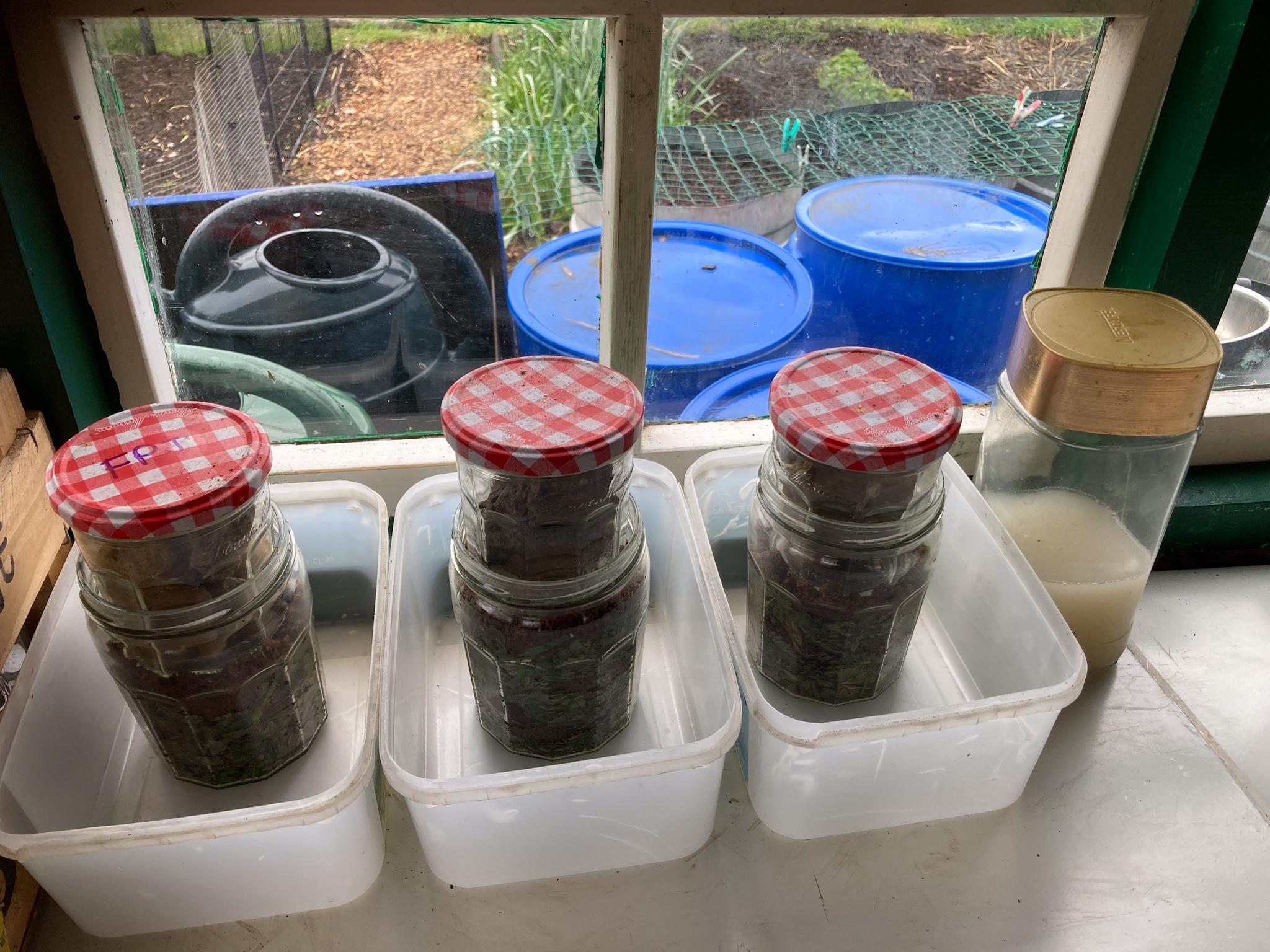
Fermented nettle plant juice and lactic acid bacteria being made for the price of some rice and some brown sugar. #GrowYourOwn #Gardening #Allotment #ClimateAction
@Broadfork Yay! Thanks for posting. Tagging for an early #SolarPunkSunday
-
Why waste money on commercial, fossil fuel derived fertilisers when you can make your own? Very cheaply too.
Give the garden centre aisles of horrific horticultural chemicals a miss and do your plants, our insects, wildlife and the planet a favour instead.
Fermented nettle plant juice and lactic acid bacteria being made for the price of some rice and some brown sugar. #GrowYourOwn #Gardening #Allotment #ClimateAction
@Broadfork Here in Germany we had the problem that sheep were needed to keep the landscale but nobody wanted their wool - sheep have to be shaved regularly. The wool was deposited or even burned. Since some years they make fetilizer pellets from sheep wool. It helps the shepherder and is a the ground.
-
@Broadfork Here in Germany we had the problem that sheep were needed to keep the landscale but nobody wanted their wool - sheep have to be shaved regularly. The wool was deposited or even burned. Since some years they make fetilizer pellets from sheep wool. It helps the shepherder and is a the ground.
@Irisfreundin Wool pellets are sold here too but they are very expensive.
-
@Irisfreundin Wool pellets are sold here too but they are very expensive.
@Broadfork Regarding that they're degraded over months and can not be washed out as every water-soluble substance, it's not so expensive. And where to get all the nettles ? I have only two small corners and they're needed for caterpillars.
-
Why waste money on commercial, fossil fuel derived fertilisers when you can make your own? Very cheaply too.
Give the garden centre aisles of horrific horticultural chemicals a miss and do your plants, our insects, wildlife and the planet a favour instead.
Fermented nettle plant juice and lactic acid bacteria being made for the price of some rice and some brown sugar. #GrowYourOwn #Gardening #Allotment #ClimateAction
@Broadfork Sounds good, what's the recipe? Rice, brown sugar, nettles (does it have to be nettles? What about dock or mallows or oxalis? That's what I've got as weeds). In a jar - how much, how long...?
-
Why waste money on commercial, fossil fuel derived fertilisers when you can make your own? Very cheaply too.
Give the garden centre aisles of horrific horticultural chemicals a miss and do your plants, our insects, wildlife and the planet a favour instead.
Fermented nettle plant juice and lactic acid bacteria being made for the price of some rice and some brown sugar. #GrowYourOwn #Gardening #Allotment #ClimateAction
@Broadfork This looks different from the "put nettles and water in a bucket, and wait for a week" recipe, which I know ("Brennesseljauche" in German).
Can you give some more details on your recipe, or some link? -
@Broadfork Regarding that they're degraded over months and can not be washed out as every water-soluble substance, it's not so expensive. And where to get all the nettles ? I have only two small corners and they're needed for caterpillars.
@Irisfreundin They may not be expensive to you, great that’s the case.
One UK example https://www.islandfarmshop.com/products/garden-wool-pellets-british-rare-breed-sheep-wool
A 1.4 kg pack of wool pellets at £13.99 for recommended usage rate in a flower border of 1 kg per 2.5 m2 is not a viable option for me, irrespective of the benefits of use.
Nettles grow abundantly. I have a nettle patch on the plot from which I take very little & leave plenty for the wildlife.
Other plants can be used for making broad spectrum plant ferments: comfrey, weeds etc.
-
@Broadfork Sounds good, what's the recipe? Rice, brown sugar, nettles (does it have to be nettles? What about dock or mallows or oxalis? That's what I've got as weeds). In a jar - how much, how long...?
@jjmcgaffey 2 products.
For LAB: wash/scrunch rice through the same water a few times. Set aside out of direct sun with cloth over top. 3 layers form, keep the mid layer. Compost the rest. The mid layer is fridge stable LAB pure stock.
To make the amendment: mix pure stock 1:10 with milk. Cover and set aside as above. 3 layers form. Compost upper layer and lower sediment layer.
Mid layer fridge stable LAB. Mix with = quantity brown sugar for shelf stable. Dilute 1:1000 water to use. 1/2
-
@jjmcgaffey 2 products.
For LAB: wash/scrunch rice through the same water a few times. Set aside out of direct sun with cloth over top. 3 layers form, keep the mid layer. Compost the rest. The mid layer is fridge stable LAB pure stock.
To make the amendment: mix pure stock 1:10 with milk. Cover and set aside as above. 3 layers form. Compost upper layer and lower sediment layer.
Mid layer fridge stable LAB. Mix with = quantity brown sugar for shelf stable. Dilute 1:1000 water to use. 1/2
@jjmcgaffey FPJ: use any broad spectrum plant material. Nettles, dandelion etc.
Pick leaves in am on dry day. Add = quantities plant material to brown sugar. Pre mix or add in layers. Cover top layer with sugar with a weight on top to initiate osmosis. Keep material submerged.
Cover and store out of sunlight for up to a week. Then slowly drip liquid out. E.g. sieve into a jar. This is fridge FPJ.
Add apple cider vinegar to residual material for shelf stable FPJ. Dilute 1:1000 to 1:500 2/2
-
@Broadfork This looks different from the "put nettles and water in a bucket, and wait for a week" recipe, which I know ("Brennesseljauche" in German).
Can you give some more details on your recipe, or some link?@pink The FPJ is different to a water extract. It’s a more concentrated liquid feed to be diluted 1:1000 to 1:500 with rainwater. It can also be made long term shelf stable after a vinegar extract.
In a UK climate if kept cool and out of sunlight the initial FPJ liquid is stable long enough to use over a growing season without refrigeration.
(See my replies to @jjmcgaffey for instructions).
The amendments (with many more) are from this book:
#Gardening #ClimateAction #Amendments #SolarPunk -
@jjmcgaffey FPJ: use any broad spectrum plant material. Nettles, dandelion etc.
Pick leaves in am on dry day. Add = quantities plant material to brown sugar. Pre mix or add in layers. Cover top layer with sugar with a weight on top to initiate osmosis. Keep material submerged.
Cover and store out of sunlight for up to a week. Then slowly drip liquid out. E.g. sieve into a jar. This is fridge FPJ.
Add apple cider vinegar to residual material for shelf stable FPJ. Dilute 1:1000 to 1:500 2/2
@Broadfork Thanks! Lots of good info.
-
R relay@relay.infosec.exchange shared this topic
-
@jjmcgaffey 2 products.
For LAB: wash/scrunch rice through the same water a few times. Set aside out of direct sun with cloth over top. 3 layers form, keep the mid layer. Compost the rest. The mid layer is fridge stable LAB pure stock.
To make the amendment: mix pure stock 1:10 with milk. Cover and set aside as above. 3 layers form. Compost upper layer and lower sediment layer.
Mid layer fridge stable LAB. Mix with = quantity brown sugar for shelf stable. Dilute 1:1000 water to use. 1/2
@Broadfork maybe I'm being daft but what does the LAB acronym mean? I'm trying to backwards engineer what you use the rice and milk solution for
-
@pink The FPJ is different to a water extract. It’s a more concentrated liquid feed to be diluted 1:1000 to 1:500 with rainwater. It can also be made long term shelf stable after a vinegar extract.
In a UK climate if kept cool and out of sunlight the initial FPJ liquid is stable long enough to use over a growing season without refrigeration.
(See my replies to @jjmcgaffey for instructions).
The amendments (with many more) are from this book:
#Gardening #ClimateAction #Amendments #SolarPunk@Broadfork But why make so much effort with jars in your kitchen when you can just ferment all the weeds you pull from your beds in a water bucket outside like @pink suggested? Throw in your wash or leftovers from sourdough production, too. Then you even have yeast and lacto bacillus in it. Take a piss in that same bucket or throw in your chicken manure or worm tea/compost and give it a good stir. Doesn't need a laboratory, it's not rocket science. Or if it is, please educate me!
-
@Broadfork maybe I'm being daft but what does the LAB acronym mean? I'm trying to backwards engineer what you use the rice and milk solution for
@laurenheywood Lactic Acid Bacteria.
I normally would explain the acronyms but I was limited by the character space.
I use LAB in several ways:
As a foliar spray.
As a soil drench to improve tilth.
It aids root and leaf growth.
It feeds soil biology.
I add it to compost.
I soak transplants and seeds in it.Our site chair is trialling using some of my LAB to improve tilth of soil that’s spent all last year under mypex. I’ve used some to turn a compacted path into a tilthed bed in 3 wks.
-
R relay@relay.mycrowd.ca shared this topic