The Fukushima disaster, in which 23,000 people died, was one of the most consequential events I covered.
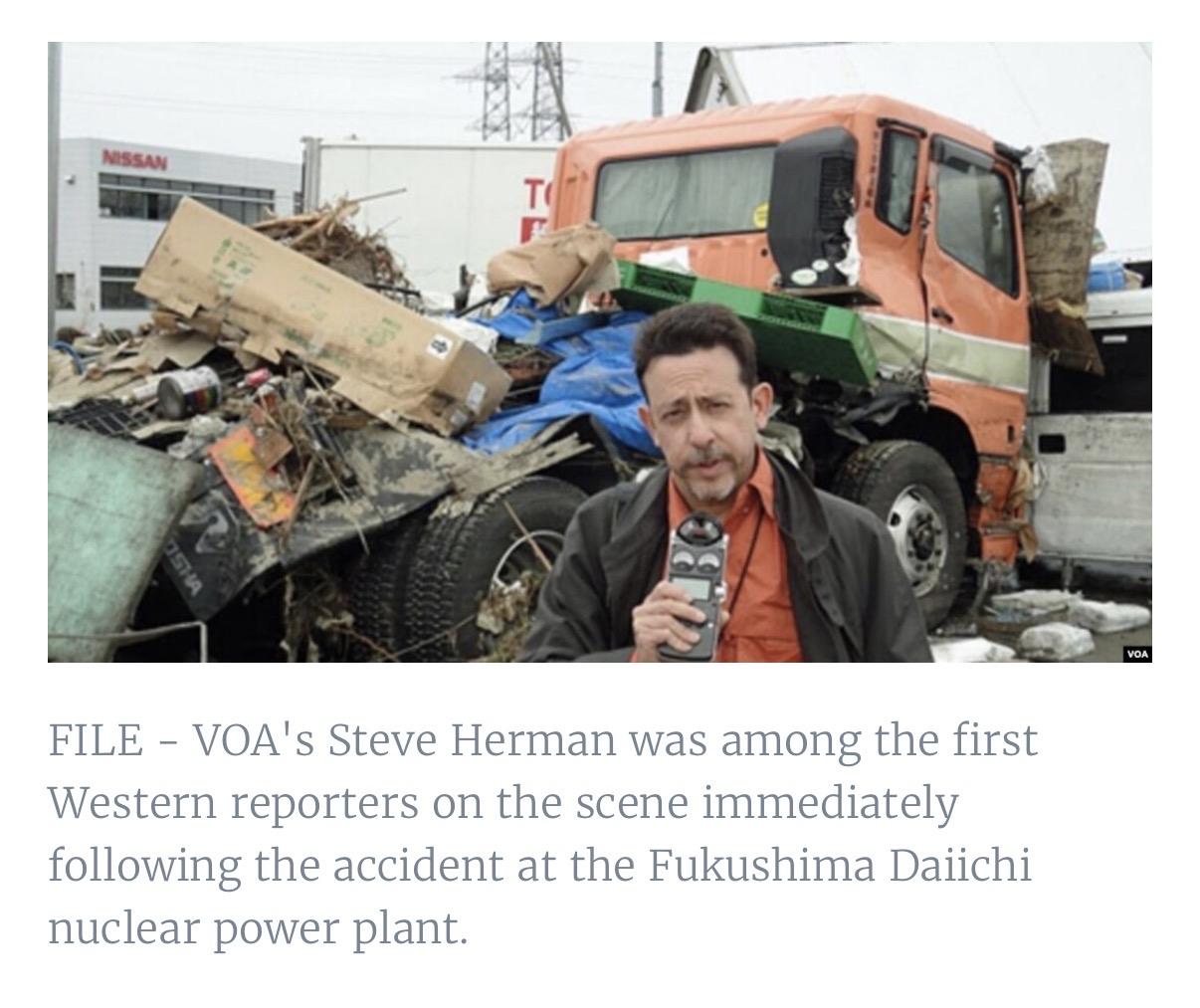
-
The Fukushima disaster, in which 23,000 people died, was one of the most consequential events I covered. It began 15 years ago today. A quake triggered a tsunami, which destroyed a nuclear power plant. Three reactors melted down. The radioactive cleanup could last a century and cost $1 trillion.
@newsguyusa Steve, I think people are getting confused by this post.
The death toll for the tsunami was around 20K with around 2500 still missing presumed dead. The death toll for the nuclear disaster was about 1.
https://en.wikipedia.org/wiki/2011_T%C5%8Dhoku_earthquake_and_tsunami
-
@newsguyusa "The Fukushima disaster, in which 23,000 people died." Why are you uttering such misleading sentences?
@David @newsguyusa he's mixing up the tsunami and the nuclear disaster.
-
@pluralistic You wouldn't forward antivaccine narratives. Look this one up and you'll see why this is the same. Be responsible about what you post.
@mickevk @pluralistic that's unfair; Steve's a professional journalist who provides great news coverage here. He's mixed up the tsunami deaths and the nuclear plant deaths. It's a subtle mistake but not disinformation.
-
@newsguyusa @pluralistic the first sentence of this post is too close to fake news. 23k people didn't died from "Fukushima disaster", but from the tsunami.
@motofix @newsguyusa @pluralistic It's an honest mistake, I think.
-
Politely, alarmist bullshit.
23,000 people died in the great Tōhoku Earthquake and Tsunami. The reactor meltdowns at the Fukushima Daiichi plant *were a sideshow* which didn't directly kill anyone at the time: if the operators hadn't put the diesel fuel for the backup generators somewhere stupid, or had built the sea wall just one metre higher, the meltdowns wouldn't have happened. (The reactors survived the quake intact, the meltdown happened when the coolant pumps stopped.)
@cstross @newsguyusa That's not correct. The deaths counted are from the evacuation, not the earthquake/tsunami. They didn't die from falling concrete or drowning. They were largely people who were old or had health conditions who were subjected to stress during the evacuation from the fallout area: https://en.wikipedia.org/wiki/Fukushima_nuclear_accident_casualties
-
The Fukushima disaster, in which 23,000 people died, was one of the most consequential events I covered. It began 15 years ago today. A quake triggered a tsunami, which destroyed a nuclear power plant. Three reactors melted down. The radioactive cleanup could last a century and cost $1 trillion.
-
Politely, alarmist bullshit.
23,000 people died in the great Tōhoku Earthquake and Tsunami. The reactor meltdowns at the Fukushima Daiichi plant *were a sideshow* which didn't directly kill anyone at the time: if the operators hadn't put the diesel fuel for the backup generators somewhere stupid, or had built the sea wall just one metre higher, the meltdowns wouldn't have happened. (The reactors survived the quake intact, the meltdown happened when the coolant pumps stopped.)
@cstross @newsguyusa Steve has been reporting news for VOA and on the Fediverse for years. I think this is an honest mistake, not intentional bullshit.
-
... and only you know the real numbers?
Gut feelings aren't facts. Feel free to source your claims with reputable sources.
@troed
The nature of deaths by environmental radiation is that they are anonymous, but mathematically certain. So, easy to deny, but clearly existing. @meltedcheese @newsguyusa @David -
@cstross @newsguyusa That's not correct. The deaths counted are from the evacuation, not the earthquake/tsunami. They didn't die from falling concrete or drowning. They were largely people who were old or had health conditions who were subjected to stress during the evacuation from the fallout area: https://en.wikipedia.org/wiki/Fukushima_nuclear_accident_casualties
@cstross @newsguyusa Estimates are that the increased cancers caused if people had stayed in place would have been about 1500, so overall mortality would probably have been lower if people had sheltered in place, but it was considered the best course of action in the moment to evacuate half a million people: https://cancerhistoryproject.com/article/the-fukushima-daiichi-nuclear-accident-10-years-later/
-
@troed
The nature of deaths by environmental radiation is that they are anonymous, but mathematically certain. So, easy to deny, but clearly existing. @meltedcheese @newsguyusa @DavidFeel free to back up your gut feeling (eg. "clearly") with reputable sources.
-
Feel free to back up your gut feeling (eg. "clearly") with reputable sources.
-
-
@mickevk @pluralistic that's unfair; Steve's a professional journalist who provides great news coverage here. He's mixed up the tsunami deaths and the nuclear plant deaths. It's a subtle mistake but not disinformation.
@evan @pluralistic Maybe it is! I don't know the context of the journalist, only the context of the narrative. However, he's not taking it down?
-
@cstross @newsguyusa Steve has been reporting news for VOA and on the Fediverse for years. I think this is an honest mistake, not intentional bullshit.
@evan As a professional journalist @newsguyusa should know the importance of fact checking and source validation.
-
... and only you know the real numbers?
Gut feelings aren't facts. Feel free to source your claims with reputable sources.
@troed @newsguyusa @David I was there, a scientist working for the US Gov., and on the loop with access to both embassy and military info as it emerged. As you can imagine, the Japanese government wanted to carefully control public information as did TEPCO, and the US respected their wishes. With the US info on one hand and the Japan/Tepco public statements on the other, I’m quite confident in asserting that the situation was considerably more dangerous than was ever revealed. We were given a three day supply of iodine tabs and told to evacuate. So no, I have only my lived experience and information I gained from sources I can’t cite. Not ideal, I understand.
-
@troed @newsguyusa @David I was there, a scientist working for the US Gov., and on the loop with access to both embassy and military info as it emerged. As you can imagine, the Japanese government wanted to carefully control public information as did TEPCO, and the US respected their wishes. With the US info on one hand and the Japan/Tepco public statements on the other, I’m quite confident in asserting that the situation was considerably more dangerous than was ever revealed. We were given a three day supply of iodine tabs and told to evacuate. So no, I have only my lived experience and information I gained from sources I can’t cite. Not ideal, I understand.
You are the source for the claim that Tepco rounded up homeless people for cleanup work who later died?
-
@cstross @newsguyusa Steve has been reporting news for VOA and on the Fediverse for years. I think this is an honest mistake, not intentional bullshit.
@evan I would say this is the kind of mistake a professional journalist should never, ever make. I’d be far more forgiving of a casual commenter but, as he said, he was there.
-
R relay@relay.mycrowd.ca shared this topic
-
@evan As a professional journalist @newsguyusa should know the importance of fact checking and source validation.
@cstross @newsguyusa Fair enough.
-
@newsguyusa Steve, I think people are getting confused by this post.
The death toll for the tsunami was around 20K with around 2500 still missing presumed dead. The death toll for the nuclear disaster was about 1.
https://en.wikipedia.org/wiki/2011_T%C5%8Dhoku_earthquake_and_tsunami
It might be useful to also tag @newsguyusa and @newsguy.bsky.social
-
You are the source for the claim that Tepco rounded up homeless people for cleanup work who later died?
@troed @newsguyusa @David After so many years, I cannot point you towards the original source. Consider my comment as a potential lead for your own research. TEPCO itself would not be the ones doing this. They hired numerous companies to provide workers. At least one of those companies was reported to have “recruited” the homeless. The degree of persuasion involved is unclear.







 ️
️