Skip to content
  • Categories
  • Recent
  • Tags
  • Popular
  • World
  • Users
  • Groups
Skins
  • Light
  • Brite
  • Cerulean
  • Cosmo
  • Flatly
  • Journal
  • Litera
  • Lumen
  • Lux
  • Materia
  • Minty
  • Morph
  • Pulse
  • Sandstone
  • Simplex
  • Sketchy
  • Spacelab
  • United
  • Yeti
  • Zephyr
  • Dark
  • Cyborg
  • Darkly
  • Quartz
  • Slate
  • Solar
  • Superhero
  • Vapor

  • Default (Cyborg)
  • No Skin
Collapse
Brand Logo

CIRCLE WITH A DOT

  1. Home
  2. Uncategorized
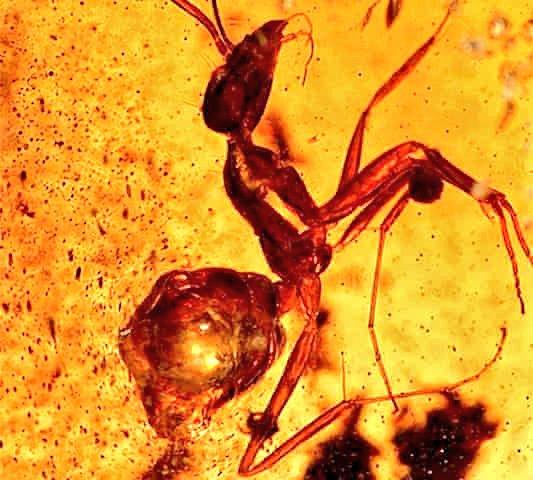
  3. Usually I don't post things older than the late Palaeolithic period, but #insects embedded in amber never cease to amaze me - the sheer age!

Usually I don't post things older than the late Palaeolithic period, but #insects embedded in amber never cease to amaze me - the sheer age!

Scheduled Pinned Locked Moved Uncategorized
insects
15 Posts 9 Posters 0 Views
  • Oldest to Newest
  • Newest to Oldest
  • Most Votes
Reply
  • Reply as topic
Log in to reply
This topic has been deleted. Only users with topic management privileges can see it.
  • ninawillburger@social.anoxinon.deN This user is from outside of this forum
    ninawillburger@social.anoxinon.deN This user is from outside of this forum
    ninawillburger@social.anoxinon.de
    wrote last edited by
    #1

    Usually I don't post things older than the late Palaeolithic period, but #insects embedded in amber never cease to amaze me - the sheer age!

    This ant preserved in its finest detail is some 50-million-year old.

    Found in Gujarat, India.

    📷 Photo: University of Bonn

    Link Preview Image
    davep@infosec.exchangeD futurebird@sauropods.winF em@lsbt.meE strepsipzerg@scicomm.xyzS 4 Replies Last reply
    0
    • ninawillburger@social.anoxinon.deN ninawillburger@social.anoxinon.de

      Usually I don't post things older than the late Palaeolithic period, but #insects embedded in amber never cease to amaze me - the sheer age!

      This ant preserved in its finest detail is some 50-million-year old.

      Found in Gujarat, India.

      📷 Photo: University of Bonn

      Link Preview Image
      davep@infosec.exchangeD This user is from outside of this forum
      davep@infosec.exchangeD This user is from outside of this forum
      davep@infosec.exchange
      wrote last edited by
      #2

      @ninawillburger You should add a little text bubble saying "Oh, bollocks". It's probably the last thing he thought.

      Edit: he was a she.

      futurebird@sauropods.winF 1 Reply Last reply
      0
      • davep@infosec.exchangeD davep@infosec.exchange

        @ninawillburger You should add a little text bubble saying "Oh, bollocks". It's probably the last thing he thought.

        Edit: he was a she.

        futurebird@sauropods.winF This user is from outside of this forum
        futurebird@sauropods.winF This user is from outside of this forum
        futurebird@sauropods.win
        wrote last edited by
        #3

        @davep @ninawillburger

        *she

        davep@infosec.exchangeD fandasin@social.linux.pizzaF 2 Replies Last reply
        0
        • ninawillburger@social.anoxinon.deN ninawillburger@social.anoxinon.de

          Usually I don't post things older than the late Palaeolithic period, but #insects embedded in amber never cease to amaze me - the sheer age!

          This ant preserved in its finest detail is some 50-million-year old.

          Found in Gujarat, India.

          📷 Photo: University of Bonn

          Link Preview Image
          futurebird@sauropods.winF This user is from outside of this forum
          futurebird@sauropods.winF This user is from outside of this forum
          futurebird@sauropods.win
          wrote last edited by
          #4

          @ninawillburger

          I always find inclusions haunting.

          https://sauropods.win/@futurebird/116234289541805386

          1 Reply Last reply
          0
          • futurebird@sauropods.winF futurebird@sauropods.win

            @davep @ninawillburger

            *she

            davep@infosec.exchangeD This user is from outside of this forum
            davep@infosec.exchangeD This user is from outside of this forum
            davep@infosec.exchange
            wrote last edited by
            #5

            @futurebird @ninawillburger Yikes! Right you are!

            1 Reply Last reply
            0
            • ninawillburger@social.anoxinon.deN ninawillburger@social.anoxinon.de

              Usually I don't post things older than the late Palaeolithic period, but #insects embedded in amber never cease to amaze me - the sheer age!

              This ant preserved in its finest detail is some 50-million-year old.

              Found in Gujarat, India.

              📷 Photo: University of Bonn

              Link Preview Image
              em@lsbt.meE This user is from outside of this forum
              em@lsbt.meE This user is from outside of this forum
              em@lsbt.me
              wrote last edited by
              #6

              @ninawillburger @futurebird

              em@lsbt.meE 1 Reply Last reply
              0
              • em@lsbt.meE em@lsbt.me

                @ninawillburger @futurebird

                em@lsbt.meE This user is from outside of this forum
                em@lsbt.meE This user is from outside of this forum
                em@lsbt.me
                wrote last edited by
                #7

                @ninawillburger @futurebird damn, you were faster

                1 Reply Last reply
                0
                • ninawillburger@social.anoxinon.deN ninawillburger@social.anoxinon.de

                  Usually I don't post things older than the late Palaeolithic period, but #insects embedded in amber never cease to amaze me - the sheer age!

                  This ant preserved in its finest detail is some 50-million-year old.

                  Found in Gujarat, India.

                  📷 Photo: University of Bonn

                  Link Preview Image
                  strepsipzerg@scicomm.xyzS This user is from outside of this forum
                  strepsipzerg@scicomm.xyzS This user is from outside of this forum
                  strepsipzerg@scicomm.xyz
                  wrote last edited by
                  #8

                  @ninawillburger and yes it pretty much looks like a modern ant already, it's quite fascinating

                  1 Reply Last reply
                  0
                  • futurebird@sauropods.winF futurebird@sauropods.win

                    @davep @ninawillburger

                    *she

                    fandasin@social.linux.pizzaF This user is from outside of this forum
                    fandasin@social.linux.pizzaF This user is from outside of this forum
                    fandasin@social.linux.pizza
                    wrote last edited by
                    #9

                    @futurebird

                    How can you tell? (sorry, I'm totally ignorant when it comes to...well any biology🤦)

                    @davep @ninawillburger

                    futurebird@sauropods.winF 1 Reply Last reply
                    0
                    • fandasin@social.linux.pizzaF fandasin@social.linux.pizza

                      @futurebird

                      How can you tell? (sorry, I'm totally ignorant when it comes to...well any biology🤦)

                      @davep @ninawillburger

                      futurebird@sauropods.winF This user is from outside of this forum
                      futurebird@sauropods.winF This user is from outside of this forum
                      futurebird@sauropods.win
                      wrote last edited by
                      #10

                      @FandaSin @davep @ninawillburger

                      How can you tell the sex of an ant? Generally if the ant has no wings it's female. All worker ants are female. Male ants are very rare and in most species they will have wings. So if you see an ant without wings (most ants) it's female.

                      If you see an ant that has wings it's called an "alate" there is a 50/50 chance it's female in that case. Queen alates tend to have larger heads, male alates have very small heads and big eyes.

                      Bees are also mostly female.

                      fandasin@social.linux.pizzaF fritzoids@mas.toF asweetgentleman@mstdn.socialA medeavanamonde@beige.partyM 4 Replies Last reply
                      0
                      • futurebird@sauropods.winF futurebird@sauropods.win

                        @FandaSin @davep @ninawillburger

                        How can you tell the sex of an ant? Generally if the ant has no wings it's female. All worker ants are female. Male ants are very rare and in most species they will have wings. So if you see an ant without wings (most ants) it's female.

                        If you see an ant that has wings it's called an "alate" there is a 50/50 chance it's female in that case. Queen alates tend to have larger heads, male alates have very small heads and big eyes.

                        Bees are also mostly female.

                        fandasin@social.linux.pizzaF This user is from outside of this forum
                        fandasin@social.linux.pizzaF This user is from outside of this forum
                        fandasin@social.linux.pizza
                        wrote last edited by
                        #11

                        @futurebird

                        Thank you so much for expanding my knowledge and explaining that to me.👍
                        Really appreciated.

                        @davep @ninawillburger

                        1 Reply Last reply
                        0
                        • futurebird@sauropods.winF futurebird@sauropods.win

                          @FandaSin @davep @ninawillburger

                          How can you tell the sex of an ant? Generally if the ant has no wings it's female. All worker ants are female. Male ants are very rare and in most species they will have wings. So if you see an ant without wings (most ants) it's female.

                          If you see an ant that has wings it's called an "alate" there is a 50/50 chance it's female in that case. Queen alates tend to have larger heads, male alates have very small heads and big eyes.

                          Bees are also mostly female.

                          fritzoids@mas.toF This user is from outside of this forum
                          fritzoids@mas.toF This user is from outside of this forum
                          fritzoids@mas.to
                          wrote last edited by
                          #12

                          @futurebird @FandaSin @davep @ninawillburger

                          male bees (I think the same goes for male ants) are only around for a certain part of the year.
                          When the mating season is over worker bees will drag their brothers (who do not work... all they do is sleep, eat, try to fertilize a queen bee) out of the hive to starve and freeze.

                          davep@infosec.exchangeD 1 Reply Last reply
                          0
                          • fritzoids@mas.toF fritzoids@mas.to

                            @futurebird @FandaSin @davep @ninawillburger

                            male bees (I think the same goes for male ants) are only around for a certain part of the year.
                            When the mating season is over worker bees will drag their brothers (who do not work... all they do is sleep, eat, try to fertilize a queen bee) out of the hive to starve and freeze.

                            davep@infosec.exchangeD This user is from outside of this forum
                            davep@infosec.exchangeD This user is from outside of this forum
                            davep@infosec.exchange
                            wrote last edited by
                            #13

                            @fritzoids @futurebird @FandaSin @ninawillburger

                            <bucks my ideas up sharpish>

                            1 Reply Last reply
                            0
                            • futurebird@sauropods.winF futurebird@sauropods.win

                              @FandaSin @davep @ninawillburger

                              How can you tell the sex of an ant? Generally if the ant has no wings it's female. All worker ants are female. Male ants are very rare and in most species they will have wings. So if you see an ant without wings (most ants) it's female.

                              If you see an ant that has wings it's called an "alate" there is a 50/50 chance it's female in that case. Queen alates tend to have larger heads, male alates have very small heads and big eyes.

                              Bees are also mostly female.

                              asweetgentleman@mstdn.socialA This user is from outside of this forum
                              asweetgentleman@mstdn.socialA This user is from outside of this forum
                              asweetgentleman@mstdn.social
                              wrote last edited by
                              #14

                              @futurebird
                              @FandaSin @davep @ninawillburger "So if you see an ant without wings (most ants) it's female".

                              The opposite of Gelflings then?

                              #DarkCrystal

                              1 Reply Last reply
                              0
                              • futurebird@sauropods.winF futurebird@sauropods.win

                                @FandaSin @davep @ninawillburger

                                How can you tell the sex of an ant? Generally if the ant has no wings it's female. All worker ants are female. Male ants are very rare and in most species they will have wings. So if you see an ant without wings (most ants) it's female.

                                If you see an ant that has wings it's called an "alate" there is a 50/50 chance it's female in that case. Queen alates tend to have larger heads, male alates have very small heads and big eyes.

                                Bees are also mostly female.

                                medeavanamonde@beige.partyM This user is from outside of this forum
                                medeavanamonde@beige.partyM This user is from outside of this forum
                                medeavanamonde@beige.party
                                wrote last edited by
                                #15

                                @futurebird @FandaSin @davep @ninawillburger

                                Every june, near the solstice, the ants who lived under my cottage and kept the termites away would have a flight. The archway to my porch would be arc’s with alates and attendants.

                                I’d sit with them and watch

                                1 Reply Last reply
                                0
                                Reply
                                • Reply as topic
                                Log in to reply
                                • Oldest to Newest
                                • Newest to Oldest
                                • Most Votes


                                • Login

                                • Login or register to search.
                                • First post
                                  Last post
                                0
                                • Categories
                                • Recent
                                • Tags
                                • Popular
                                • World
                                • Users
                                • Groups