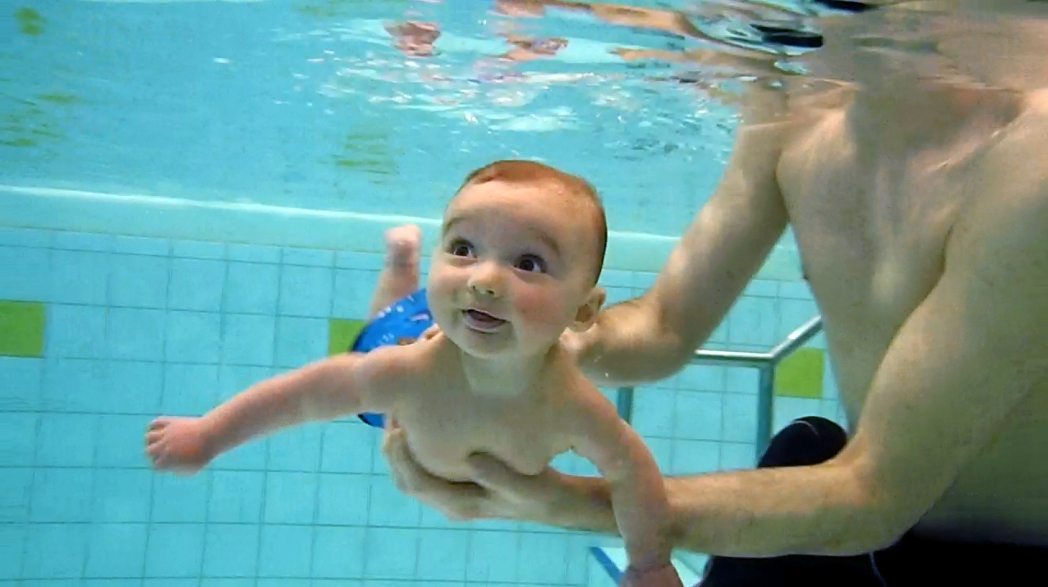
Do you know the tingly feeling of being on the verge of a new hobby?
-
I still triggered my "out, now!" reflex a couple of times, especially when trying to go a bit deeper, and staying vertical. Gonna try practicing this every time I go swim!
Also – turns out holding my breath, closing my eyes, pinching my nose with one hand, and then diving is not a problem at all. My fear seems to be specifically about water entering my nose.
How did y'all learn how to do this?!

@blinry oh, I had the same issue when trying to learn crawl swimming and never really got around it (but also am not really regularly swimming). Not that much of a problem to explicitly dive (but never managed long times), but more splashing water into the nose / eyes (?) and managing to breath enough to actively swim.
Maybe I should try again to learn this?
-
I still triggered my "out, now!" reflex a couple of times, especially when trying to go a bit deeper, and staying vertical. Gonna try practicing this every time I go swim!
Also – turns out holding my breath, closing my eyes, pinching my nose with one hand, and then diving is not a problem at all. My fear seems to be specifically about water entering my nose.
How did y'all learn how to do this?!
Deleted because I don’t really know what I am doing

Deleted
Ask a certified trainer what the breathing techniques are.
-
I still triggered my "out, now!" reflex a couple of times, especially when trying to go a bit deeper, and staying vertical. Gonna try practicing this every time I go swim!
Also – turns out holding my breath, closing my eyes, pinching my nose with one hand, and then diving is not a problem at all. My fear seems to be specifically about water entering my nose.
How did y'all learn how to do this?!
@blinry I'm a certified life guard (well never worked as one but ages ago I made that course to be able t work as one. It would need refreshing to work though.)
I'm a decent swimmer, trying to go once a week.
Getting water up your nose is awful. Always. I hate it.
But it doesn't happen often.
For swimming (in opposition to diving) the key is to constantly breath out, when under water. (And breath in when over water.)It needs practice. But at some point it becomes "natural".
-
@blinry I'm a certified life guard (well never worked as one but ages ago I made that course to be able t work as one. It would need refreshing to work though.)
I'm a decent swimmer, trying to go once a week.
Getting water up your nose is awful. Always. I hate it.
But it doesn't happen often.
For swimming (in opposition to diving) the key is to constantly breath out, when under water. (And breath in when over water.)It needs practice. But at some point it becomes "natural".
@blinry When I learned to properly crawl/freestyle like 15 years ago, I often panicked when water came up my nose or when I swallowed pool water.
As long as I could just hold my breath, it was okay but when trying to cross a pool, breathing is needed and took a lot of practice to make it work.
The first time I managed a 25m pool was such a huge achivement. Same with the first 50m pool.
This shit is hard. Keeping the energy up to be properly floating while breathing and moving forward. Damn.
-
I still triggered my "out, now!" reflex a couple of times, especially when trying to go a bit deeper, and staying vertical. Gonna try practicing this every time I go swim!
Also – turns out holding my breath, closing my eyes, pinching my nose with one hand, and then diving is not a problem at all. My fear seems to be specifically about water entering my nose.
How did y'all learn how to do this?!
@blinry I never had issues swimming or my face under water.
But I absolutely failed at snorkelling - I could not make myself breath with my face underwater. The instructor spent some time and still now luck.
-
@blinry I'm a certified life guard (well never worked as one but ages ago I made that course to be able t work as one. It would need refreshing to work though.)
I'm a decent swimmer, trying to go once a week.
Getting water up your nose is awful. Always. I hate it.
But it doesn't happen often.
For swimming (in opposition to diving) the key is to constantly breath out, when under water. (And breath in when over water.)It needs practice. But at some point it becomes "natural".
@zweifeln Oh neat, props to you for having guarded lives!

To clarify, do you always breathe out through your nose when underwater? Or sometimes also through the mouth? A book I've looked at is ambiguous about that.
Rationally, I think that if your face points down underwater, water shouldn't really go into the nose anyway, if the "pressure matches"? But I'm not too sure about that.
-
@blinry When I learned to properly crawl/freestyle like 15 years ago, I often panicked when water came up my nose or when I swallowed pool water.
As long as I could just hold my breath, it was okay but when trying to cross a pool, breathing is needed and took a lot of practice to make it work.
The first time I managed a 25m pool was such a huge achivement. Same with the first 50m pool.
This shit is hard. Keeping the energy up to be properly floating while breathing and moving forward. Damn.
@blinry My recommendation: go slow. Just being under water blowing bubbles is good training. Getting used to the sensation with the face under water helps to feel less stressed about it.
When that becomes more "natural" you might start more about technic, distance, speed … but that's for later.
-
@zweifeln Oh neat, props to you for having guarded lives!
To clarify, do you always breathe out through your nose when underwater? Or sometimes also through the mouth? A book I've looked at is ambiguous about that.
Rationally, I think that if your face points down underwater, water shouldn't really go into the nose anyway, if the "pressure matches"? But I'm not too sure about that.
@blinry Actually I'm not sure, it's always the nose.
For me, it's more "get the air out" … whether nose or mouth, I don't think it matters much. Just keep the pressure to push it out and don't breath in / suck water in. -
R relay@relay.publicsquare.global shared this topic
-
@blinry Actually I'm not sure, it's always the nose.
For me, it's more "get the air out" … whether nose or mouth, I don't think it matters much. Just keep the pressure to push it out and don't breath in / suck water in.@blinry Some people swim with these clips (?) that close your nose. They obviously always breath in and out through the mouth when swimming.
I never tried one of these. But maybe that's something you wanna try? So there can't be any water in your nose.
-
@foosel That pressure adaption makes a lot of sense! When I was trying my bubble-blowing today, I suspected that this is probably something people pick up by practicing, and which learning resources don't seem to be talking about explicitly…
@blinry you've got this!
 I took it up intuitively at 3-4 years of age, so I hope it'll go quickly for you!
Humans are pretty amazing in that regard and surprisingly well adapted, did you read about the diving reflex?
-
I still triggered my "out, now!" reflex a couple of times, especially when trying to go a bit deeper, and staying vertical. Gonna try practicing this every time I go swim!
Also – turns out holding my breath, closing my eyes, pinching my nose with one hand, and then diving is not a problem at all. My fear seems to be specifically about water entering my nose.
How did y'all learn how to do this?!
@blinry
In the last two months I had two swimming lessons for breast stroke. I could do that before, but I was very far from doing it "right". I think I ended up changing 95% of my movements and rhythm. So I'd highly recommend a good teacher, along with plenty practice on your own, in between lessons. -
I still triggered my "out, now!" reflex a couple of times, especially when trying to go a bit deeper, and staying vertical. Gonna try practicing this every time I go swim!
Also – turns out holding my breath, closing my eyes, pinching my nose with one hand, and then diving is not a problem at all. My fear seems to be specifically about water entering my nose.
How did y'all learn how to do this?!
@blinry For me, I noticed when going swimming after quite some years not going, I needed ~30min to get back into the rhythm of breathing. Once it aligns with your movements, the water stays out of your way, kind of automatically.
But how to get there initially, I don't know. There's some technique to it that can be learned. But fundamentally, maybe it's just getting used to it.
(Though people also say that about jumping in with your head first. That still seems completely absurd to me.) -
I still triggered my "out, now!" reflex a couple of times, especially when trying to go a bit deeper, and staying vertical. Gonna try practicing this every time I go swim!
Also – turns out holding my breath, closing my eyes, pinching my nose with one hand, and then diving is not a problem at all. My fear seems to be specifically about water entering my nose.
How did y'all learn how to do this?!
@blinry Good question, but I can't remember, that was way to long ago.
But I do remember us doing those exercises when doing scuba diving tryouts. -
I still triggered my "out, now!" reflex a couple of times, especially when trying to go a bit deeper, and staying vertical. Gonna try practicing this every time I go swim!
Also – turns out holding my breath, closing my eyes, pinching my nose with one hand, and then diving is not a problem at all. My fear seems to be specifically about water entering my nose.
How did y'all learn how to do this?!
@blinry I put on *all* of the protective gear at the beginning. Wax for the ears, nose clip, swim cap, and big snorkeling goggles. The nose clip got annoying after a while, and I was more comfortable with my face in the water by then, so I'm not using that anymore, but googles and ear plugs are staying (public pools are loud! And I don't like water in my ears, or my eyes). I'll still wear the cap if I feel like it, mostly to protect my hair and for not losing the earplugs.
-
I still triggered my "out, now!" reflex a couple of times, especially when trying to go a bit deeper, and staying vertical. Gonna try practicing this every time I go swim!
Also – turns out holding my breath, closing my eyes, pinching my nose with one hand, and then diving is not a problem at all. My fear seems to be specifically about water entering my nose.
How did y'all learn how to do this?!
I was forced into swimming lessons as a schoolboy and largely hated it. Not good at it, either. Sports at school was 95% humiliation and at most 5% fun.
Learned diving sort-of like you do now, by myself, in shallow water, on my own, in my own pace. For me, the issue was opening my eyes under water.
Years later, voluntarely took a course to learn different ways to swim. Never learned the crawl, though, as I was suffering from a common cold when that was taught.
-
I still triggered my "out, now!" reflex a couple of times, especially when trying to go a bit deeper, and staying vertical. Gonna try practicing this every time I go swim!
Also – turns out holding my breath, closing my eyes, pinching my nose with one hand, and then diving is not a problem at all. My fear seems to be specifically about water entering my nose.
How did y'all learn how to do this?!
I'm now in week 4 of Ruth Kazez' training plan to swim 1500 meters straight! It's really fun!
I made this diagram showing how the plan is structured for myself, maybe it can be useful for someone!
Read more about it here: https://blinry.org/visual-0-to-1500/

-
I'm now in week 4 of Ruth Kazez' training plan to swim 1500 meters straight! It's really fun!
I made this diagram showing how the plan is structured for myself, maybe it can be useful for someone!
Read more about it here: https://blinry.org/visual-0-to-1500/
I've been practicing to put my face in the water every day, and it's getting easier.
One thing that really helped was getting swimming goggles! Not having water in my eyes helps me focus on breathing.
For practicing, I slowly graduated from the tiny warm relaxation pool to a pool used to teach swimming, and then to the 25-meter, which is often less busy.
On Monday, I managed to swim the full 25 meters in breast stroke, with my face going in the water for each stroke for the first time!

-
R relay@relay.an.exchange shared this topic