
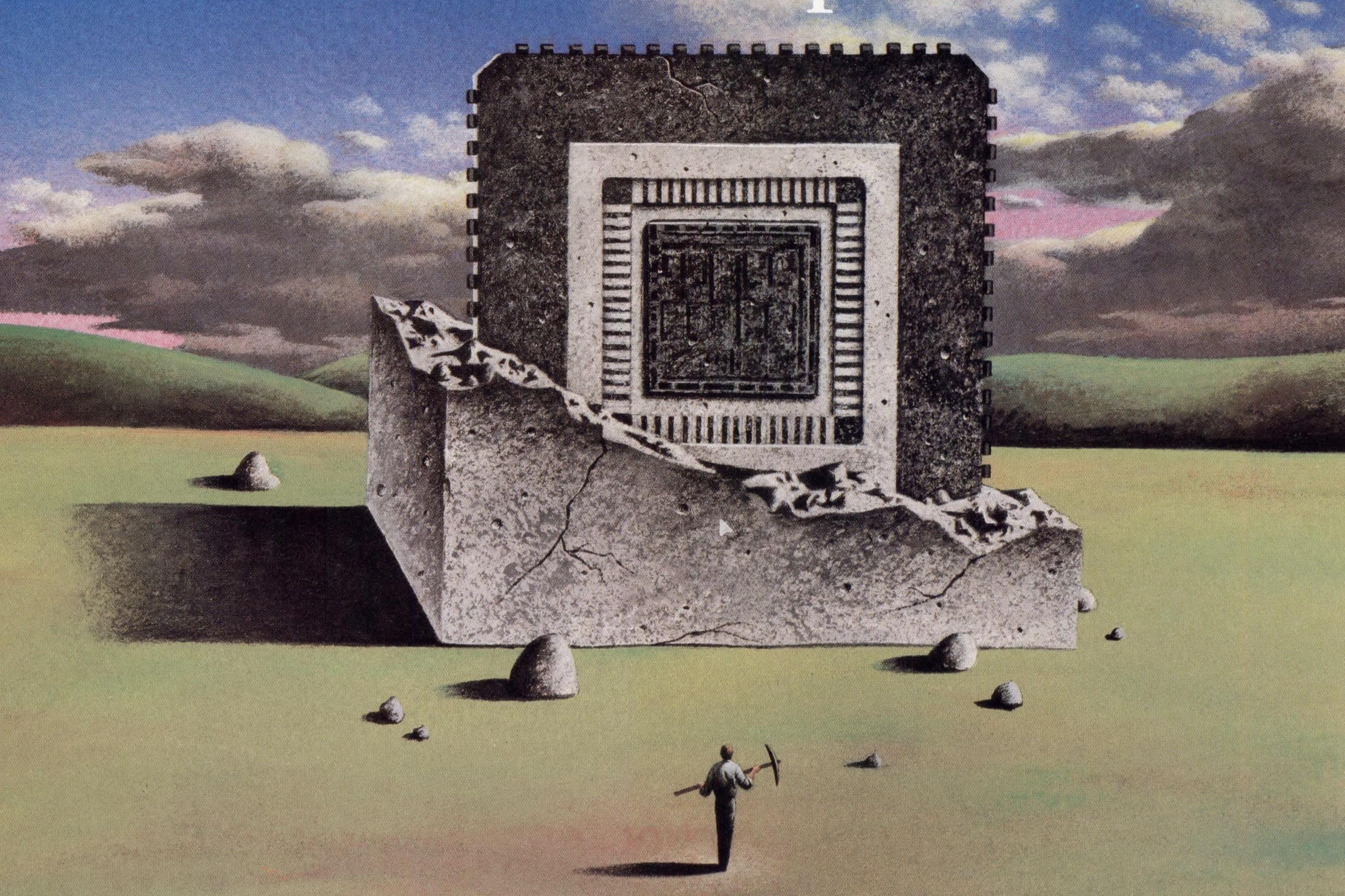
To think all of this amazing art is buried in 40-year-old computer magazines.
This one is from the July 1988 issue of "VLSI Systems Design."

 O
O
To think all of this amazing art is buried in 40-year-old computer magazines.
This one is from the July 1988 issue of "VLSI Systems Design."
@aanee It’s very interesting to see how they solved these problems before the modern standard infrastructure and protocols were in place.
These types of solutions only existed for a few years, but they had to make do with what they had.
This is some proto- @prahou art right here.

The art in these ads is incredible. This one for ChipCrafter by SeattleSilicon is pretty great.
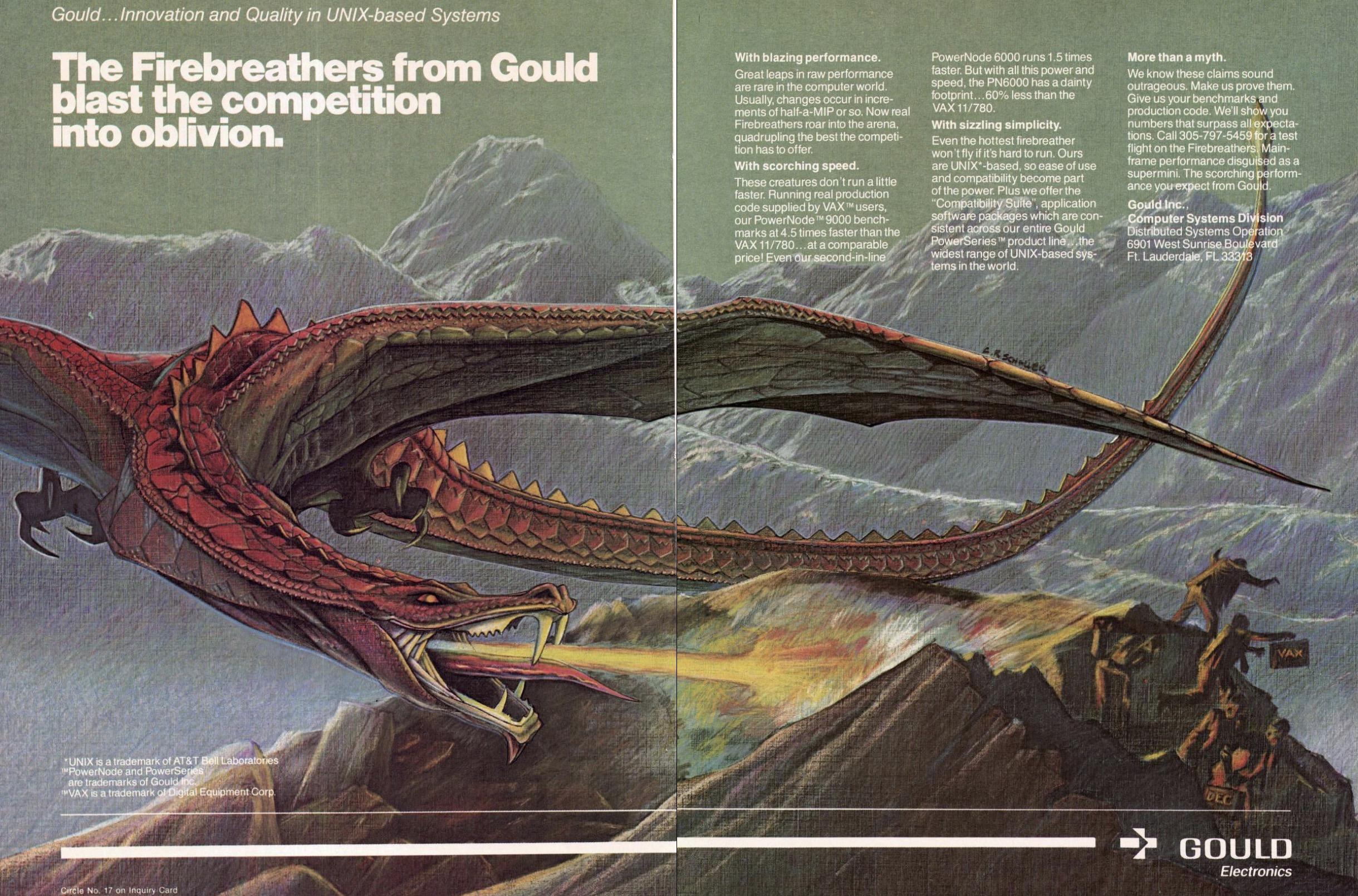
This is an original ad for a #UNIX computer company.
No AI art here! You can see the artist’s signature over the dragon’s wing.
Here’s an ad for cross-compilers and assemblers for UNIX environments.
My favorite detail here is this brag: “Over the past 3 years, we’ve built over 1MB of working code.” Cross-compilers, assemblers, simulators, and debuggers targeting six architectures across a dozen hosts. This code was dense.
The 80’s #UNIX wars were a wild time.
It’s also very fun to read the articles from the time and see what they were predicting for the future. “UNIX for the masses” was a popular topic.
wivax was a VAX at Wang Laboratories in Lowell, MA where Cadmus was based.
The TELEX number printed right next to it is also interesting. This represents telegraph infrastructure and the infant internet, side by side in a transitional moment.
Please don’t be shocked, but I’ve been reading old #UNIX Review magazines on Archive.org, as one does. I’ve been finding a number of interesting artifacts throughout. This June 1984 ad by Cadmus Computer Systems listed a #USENET address: !wivax!cadmus.
This is a UUCP bang path, for the kids who don’t know. The ! separates relay hops, it’s a literal routing instruction. Get to the backbone, reach wivax, forward to cadmus.
No DNS.
Machines screamed at each other to swap data.