Do you really "own" your data? It depends – if it's stored in a proprietary, closed format from a single vendor, maybe not. Learn more about Document Freedom Day, which we celebrated in various places recently: https://blog.documentfoundation.org/blog/2026/04/15/libreoffice-at-document-freedom-day-in-noida-india/ #foss #openSource #freesoftware #openstandards
 L
L
libreoffice@fosstodon.org
@libreoffice@fosstodon.org
Posts
-
Do you really "own" your data? -
Join the #LibreOffice community at events around the world!Join the #LibreOffice community at events around the world! We were recently at the Chemnitzer Linux-Tage in Germany, for instance: https://blog.documentfoundation.org/blog/2026/04/14/libreoffice-at-the-chemnitzer-linux-tage-2026/ #foss #openSource #freesoftware
-
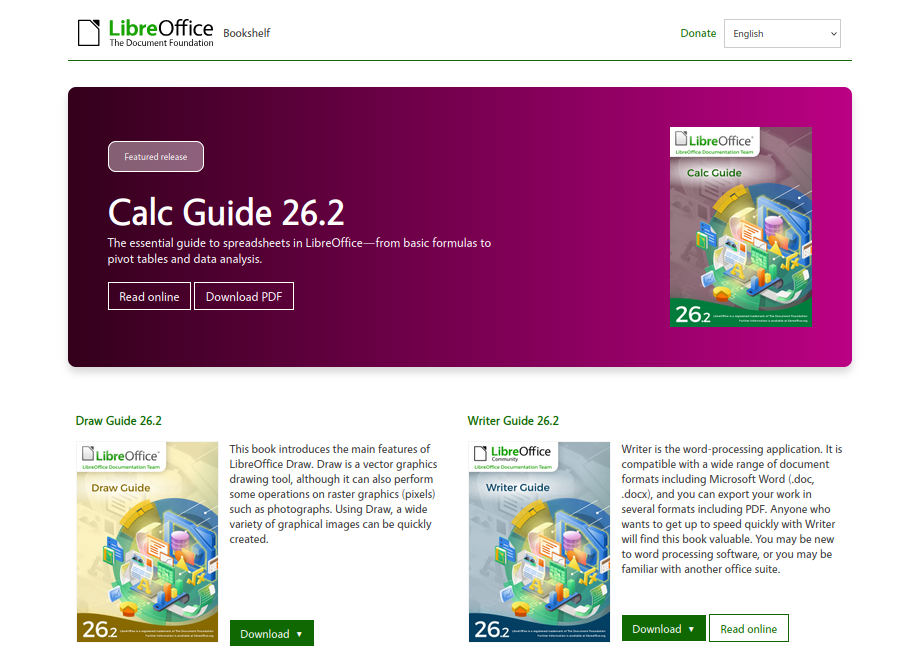
The #LibreOffice Bookshelf got a redesign 😊 https://blog.documentfoundation.org/blog/2026/04/13/the-libreoffice-bookshelf-had-a-facelift/ #foss #openSource #freesoftware #documentation -
Open Letter to some Collabora DevelopersOpen Letter to some Collabora Developers
https://blog.documentfoundation.org/blog/2026/04/11/open-letter-to-developers/
-
Q&A about Media Articles and Forum CommentsQ&A about Media Articles and Forum Comments
https://blog.documentfoundation.org/blog/2026/04/10/qa-about-media-articles-and-forum-comments/
-
LibreOffice State of the Project (April 2025 – March 2026)We are releasing the updated State of the Project Slide Deck, based on data extracted from the LibreOffice dashboard and the Matomo repositoryLibreOffice State of the Project (April 2025 – March 2026)
We are releasing the updated State of the Project Slide Deck, based on data extracted from the LibreOffice dashboard and the Matomo repository.
We have started to publish these slide decks in January 2026, to provide a transparent overview about the progress of the project through some of the most significant measures of development, downloads and donations data collected by the marketing team at TDF.
https://blog.documentfoundation.org/blog/2026/04/09/libreoffice-state-of-the-project/
@libreoffice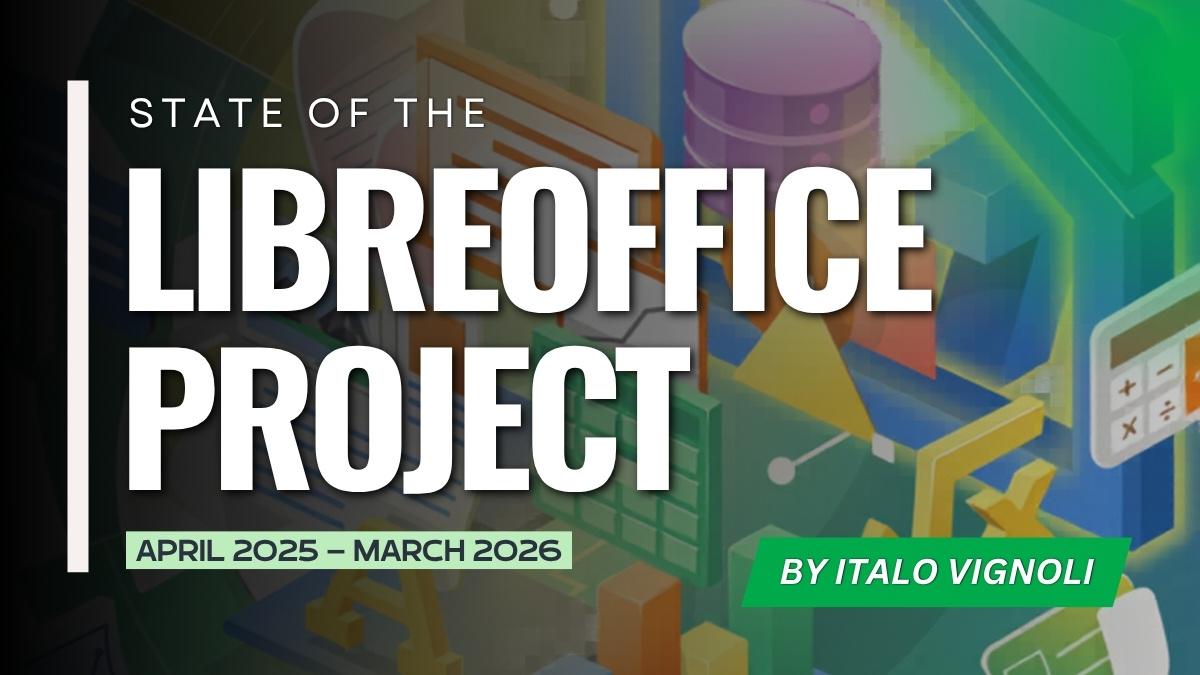
-
Our sense of meritocracyA project that confuses meritocracy with the dominance of a single type of contributor fails to live up to its own values.Our sense of meritocracy
A project that confuses meritocracy with the dominance of a single type of contributor fails to live up to its own values. And a project that bends to the interests of some contributors, at the expense of future generations, is a form of appropriation masked by the language of fairness.
Meritocracy is a complex, multifaceted concept that is worth grappling with in order to build something that future generations will be happy to inherit.
https://blog.documentfoundation.org/blog/2026/04/07/our-sense-of-meritocracy/
@tdforg -
Ideally, we would have preferred to avoid this post.Ideally, we would have preferred to avoid this post. However, the articles and comments published in response to Collabora’s and Michael Meeks’ biased posts compel us to provide this background information on the events that led to the current situation.
https://blog.documentfoundation.org/blog/2026/04/05/lets-put-an-end-to-the-speculation/
-
Comment about Collabora blog post@Scott_Trakker A big chunk of code commits is currently done by Collabora developers, but not all, and there are many other things in a project (like QA, translations, documentation, design etc.) which are done by hundreds of people also outside of Collabora. And TDF is taking on new developers. So don't worry, LibreOffice will not only be developed further, but a lot of work is being done, even outside of the ecosystem!
-
Document formats: a mystery to manyDocument formats: a mystery to many
A licence tells you who owns the software, while the format tells you who owns the data.
ODF has to be native, default, and by design.

Document formats: a mystery to many - TDF Community Blog
Euro-Office’s announcement – which sees IONOS, Nextcloud and other companies coming together to create a European alternative to office productivity software – has predictably sparked a wave of comments. Most of these focus on the issue of licensing: is the code open source? Who controls the repository? What are the conditions for forking, modifying or implementing it? While these are all valid questions, they fail to address the most important issue. The fact that almost no one is asking the question that matters tells us something significant about how the debate on digital sovereignty has been framed and who benefits from that framing. A licence tells you who owns the software, while the format tells you who owns the data A licence can be renegotiated, modified or updated. The history of FLOSS is full of projects that have changed governance models, divided communities, or changed course under new management. Licence terms are important, but they operate at the level of the software artefact. The native document format operates at a completely different level. It is the encoding level of every document produced, archived, and exchanged by institutions that adopt the software. It is the invisible structure of administrative memory within

TDF Community Blog (blog.documentfoundation.org)
-
Comment about Collabora blog postComment about Collabora blog post
Comment about Collabora blog post - TDF Community Blog
Many people have asked The Document Foundation for its official position on what Collabora announced in a blog post. This is not the first announcement of this kind in FLOSS environments, nor will it be the last. Collabora feels that it has to invest in a specific product that differs from traditional, full-featured office suites such as LibreOffice. They are, of course, free to take this approach based on the MPL licence. However, Collabora has framed this as a direct consequence of the Membership Committee’s decision to remove Collabora employees from TDF membership based on the recently approved Community Bylaws. The Community Bylaws require that employees of companies involved in legal disputes with The Document Foundation be removed from TDF membership because, in the past, people made decisions in the interest of their employers rather than in the interest of The Document Foundation. We would prefer to avoid further discussion about who is responsible for what, as this would lead to endless debates that would not benefit the project as a whole (i.e. The Document Foundation, its ecosystem companies, and its volunteer contributors). Unfortunately, a series of wrong decisions in the past have turned into an ongoing problem which has
TDF Community Blog (blog.documentfoundation.org)
-
Euro-Office: sovereign in name only, or in reality too?Euro-Office: sovereign in name only, or in reality too?
The announcement of the Euro-Office is welcome news. The coalition is credible, the governance is sound and the timing is perfect. Europe needs office software, and we are delighted to see such significant players allocating resources to make it happen.
However, we have a question. It is not meant to be hostile, but it is the only question that matters.What is the native document format of Euro-Office?
https://blog.documentfoundation.org/blog/2026/04/01/euro-office/
-
Say hello to Neil Roberts, new #LibreOffice developer focusing on scripting support 👋 https://blog.documentfoundation.org/blog/2026/03/29/say-hello-to-neil-roberts-new-libreoffice-developer-focusing-on-scripting-support/ #foss #openSource #freesoftwareSay hello to Neil Roberts, new #LibreOffice developer focusing on scripting support
 https://blog.documentfoundation.org/blog/2026/03/29/say-hello-to-neil-roberts-new-libreoffice-developer-focusing-on-scripting-support/ #foss #openSource #freesoftware
 -
As Open Document Format (ODF) is more widely adopted, it's becoming clear: THIS is the future.As Open Document Format (ODF) is more widely adopted, it's becoming clear: THIS is the future. A fully open, documented and standardised format – unlike Microsoft's "Transitional" OOXML: https://blog.documentfoundation.org/blog/2026/03/27/odf-is-the-future-ooxml-is-the-past/
-
A double-pack of updates: #LibreOffice 26.2.2 and 25.8.6 are now available.A double-pack of updates: #LibreOffice 26.2.2 and 25.8.6 are now available. All users are recommended to stay up-to-date: https://blog.documentfoundation.org/blog/2026/03/26/libreoffice-26-2-2-and-libreoffice-25-8-6/ #foss #openSource #freesoftware
-
@libreoffice Hey guys, did you see this news ?https://www.clubic.com/actualite-605653-l-allemagne-impose-l-odf-et-exclut-le-format-microsoft-la-souverainete-numerique-commence-par-vos-fichiers.html@SamLeLuxo Yes, we posted about it several days ago: https://blog.documentfoundation.org/blog/2026/03/23/dear-europe/

-
@libreoffice I spent the weekend converting my Apple Pages, Numbers, and KeyNote files to LibreOffice.@inverseatascii Glad to hear it! Support for files made in Apple's office apps is provided by this library, part of the Document Liberation Project: https://wiki.documentfoundation.org/DLP/Libraries/libetonyek – Maybe you can share your experiences on the mailing list for it: https://www.documentliberation.org/contact/
-
Document Freedom Day – because the format is the message: https://blog.documentfoundation.org/blog/2026/03/25/document-freedom-day/Document Freedom Day – because the format is the message: https://blog.documentfoundation.org/blog/2026/03/25/document-freedom-day/
-
Bonjour @libreoffice Good news, bad news@Chtixof That website is not from us.
-
Dear Europe: Germany has shown the way forward, by making the Open Document Format (ODF) mandatory within its sovereign digital infrastructure.@swggrkllr3rd Are you talking about https://libretranslate.com ? Then if so, you need to talk to them about it. (That's not from us.)