
Skip to content
  • Categories
  • Recent
  • Tags
  • Popular
  • World
  • Users
  • Groups
Skins
  • Light
  • Brite
  • Cerulean
  • Cosmo
  • Flatly
  • Journal
  • Litera
  • Lumen
  • Lux
  • Materia
  • Minty
  • Morph
  • Pulse
  • Sandstone
  • Simplex
  • Sketchy
  • Spacelab
  • United
  • Yeti
  • Zephyr
  • Dark
  • Cyborg
  • Darkly
  • Quartz
  • Slate
  • Solar
  • Superhero
  • Vapor

  • Default (Cyborg)
  • No Skin
Collapse
Brand Logo

CIRCLE WITH A DOT

kathhayhoe@fediscience.orgK

kathhayhoe@fediscience.org

@kathhayhoe@fediscience.org
About
Posts
3
Topics
3
Shares
0
Groups
0
Followers
0
Following
0

View Original

Posts

Recent Best Controversial

  • One of the most common objections I hear to climate action is: “But what about China?”
    kathhayhoe@fediscience.orgK kathhayhoe@fediscience.org

    One of the most common objections I hear to climate action is: “But what about China?”

    The person making this argument usually goes on to claim that China is doing nothing, while everyone else is making sacrifices. But that’s not what the data show.

    Here’s the reality:

    * As the U.S. doubles down on fossil fuels and blocks new wind and solar projects, its emissions are ticking up.

    * In contrast, China’s emissions appear to have peaked — and may now be starting to decline.

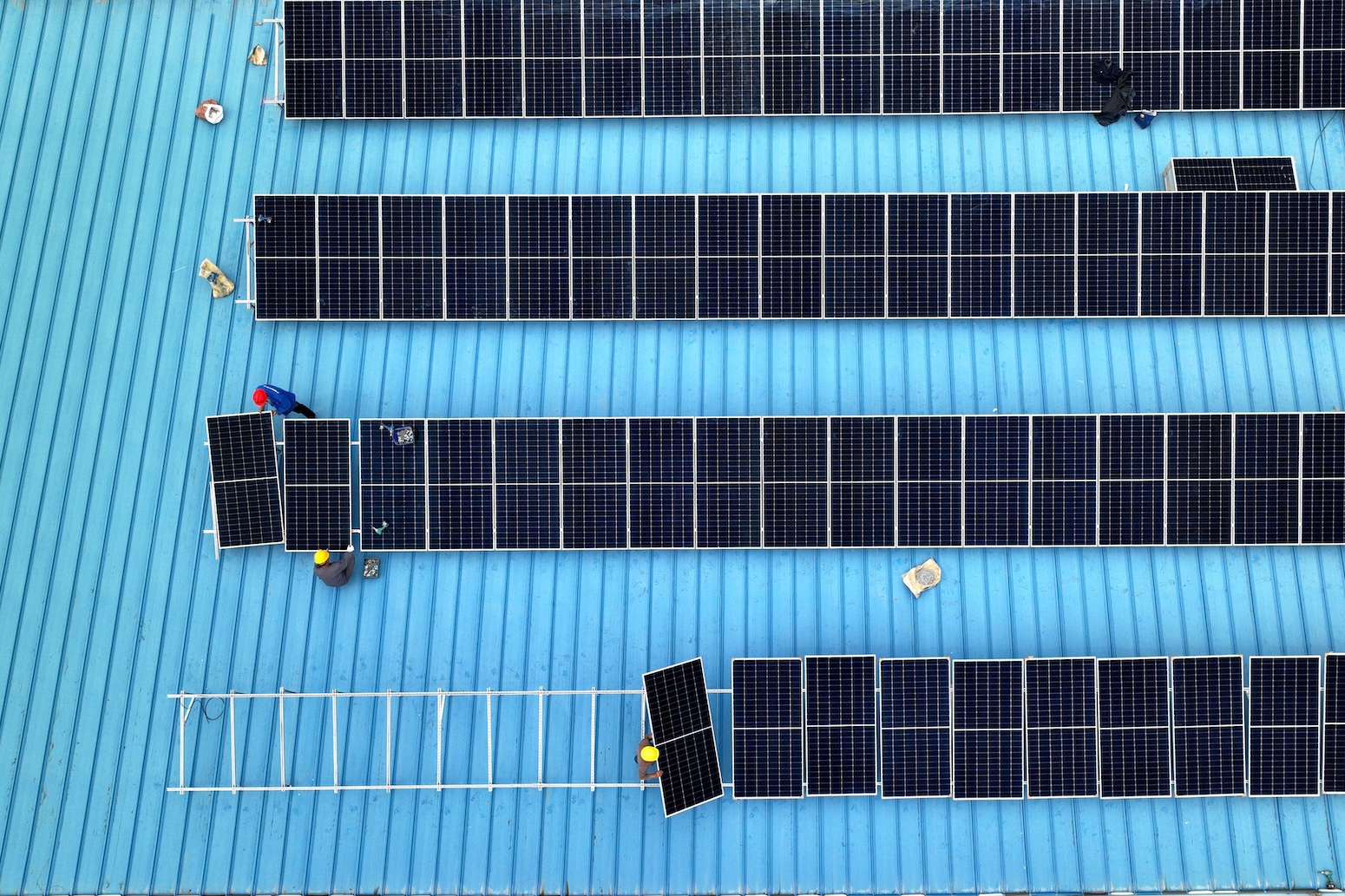
    * Last year, China installed a full half of all the world's new wind and solar energy.

    * Over the past two years, China installed more new solar power each year than the U.S. has installed in total across its entire history.

    * China's clean exports alone are cutting CO2 outside its borders by 1% year on year.

    Of course no country can fix climate change on its own. But just as it's a global problem, progress in one place helps everyone.
    Link Preview Image
    Analysis: China’s CO2 emissions have now been ‘flat or falling’ for 21 months - Carbon Brief

    China’s carbon dioxide (CO2) emissions fell by 1% in the final quarter of 2025, likely securing a decline of 0.3% for the full year as a whole.

    favicon

    Carbon Brief (www.carbonbrief.org)

    Uncategorized

  • Since the United States Environmental Protection Agency issued its Endangerment Finding in 2009, the scientific evidence connecting greenhouse gas emissions to health impacts from climate change has only grown stronger.
    kathhayhoe@fediscience.orgK kathhayhoe@fediscience.org

    Since the United States Environmental Protection Agency issued its Endangerment Finding in 2009, the scientific evidence connecting greenhouse gas emissions to health impacts from climate change has only grown stronger.

    Over the past two decades, I’ve contributed to this body of research myself: quantifying the risks posed by rising CO₂ levels to people, infrastructure and the natural systems we depend on, and authoring multiple U.S. National Climate Assessments.

    These authoritative and exhaustive reports helped build the scientific foundation that underpins the Endangerment Finding, and their conclusions weren’t based on ideology. They were rooted in rigorous, peer‑reviewed evidence; evidence that has only become clearer with time.

    Research today shows that climate change is increasing the risk of allergies, dementia, fertility, heart disease, mortality and so much more. Maintaining science‑based policies isn’t just prudent—it’s the reliable foundation we need to build a safer, healthier and more resilient future.

    Read more of my statement here: https://www.nature.org/en-us/newsroom/epa-repeal-endangerment-finding/

    Uncategorized

  • For a long time, Twitter was the best place to share and find the latest science.
    kathhayhoe@fediscience.orgK kathhayhoe@fediscience.org

    For a long time, Twitter was the best place to share and find the latest science. Until the algorithm changed, that is.

    Overnight, my posts went from thousands to dozens of views, while the trolling I received skyrocketed. Instead of tens of hateful replies, I started getting thousands of them.

    Where were scientists supposed to go? I tried Mastodon, LinkedIn, and other platforms: but nothing really clicked. Then along came Bluesky.

    It takes a while to regrow a community: but a new survey of 830 scientists by @whysharksmatter and Julia Wester now finds that "for every reported professional benefit that scientists once gained from Twitter, scientists can now gain that benefit more effectively on Bluesky than on Twitter."

    If you're interested, you can find me (and my 20+ climate starter packs) here: https://bsky.app/profile/katharinehayhoe.com

    Read more about their study here: https://academic.oup.com/icb/article-abstract/65/3/538/8196180?login=false

    Uncategorized
  • Login

  • Login or register to search.
  • First post
    Last post
0
  • Categories
  • Recent
  • Tags
  • Popular
  • World
  • Users
  • Groups