Please excuse me while I'm having a little existential crisis, lol.
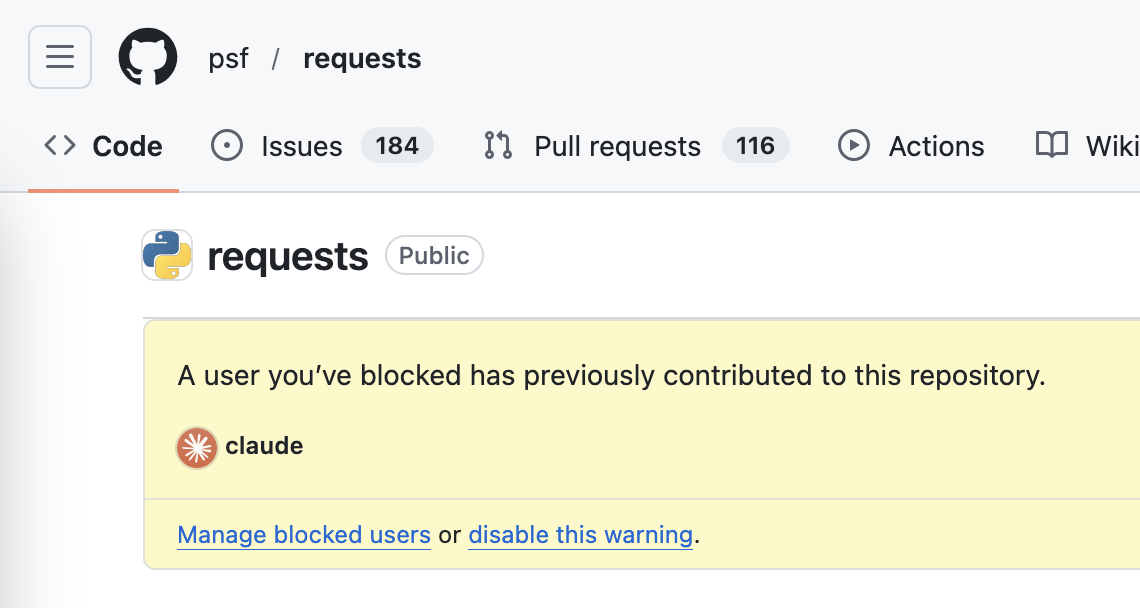
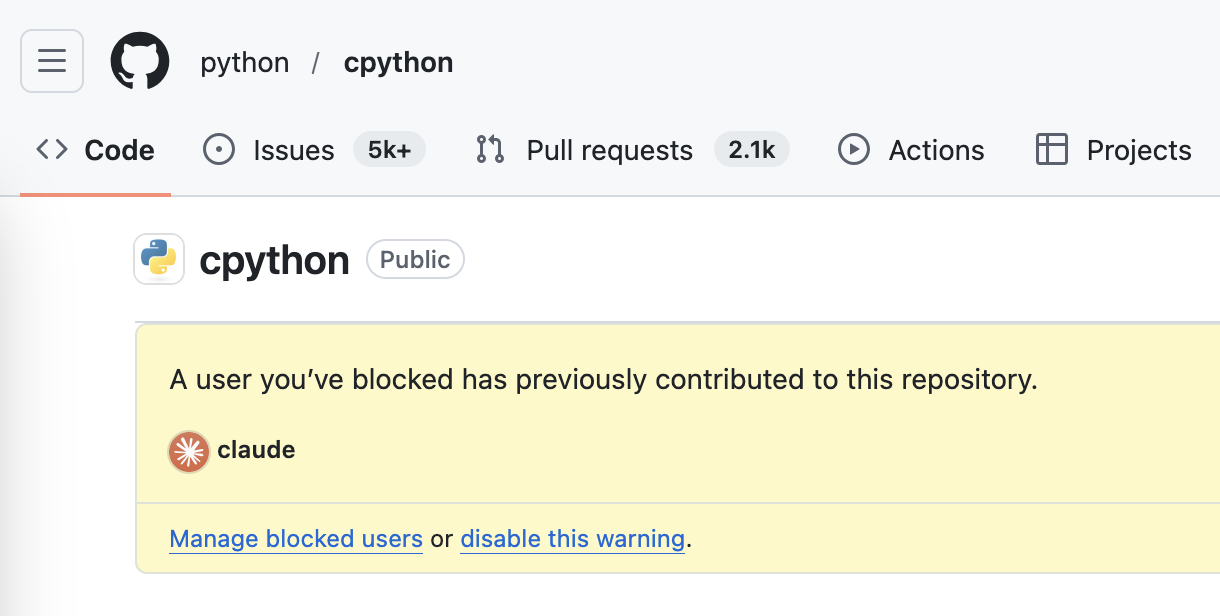
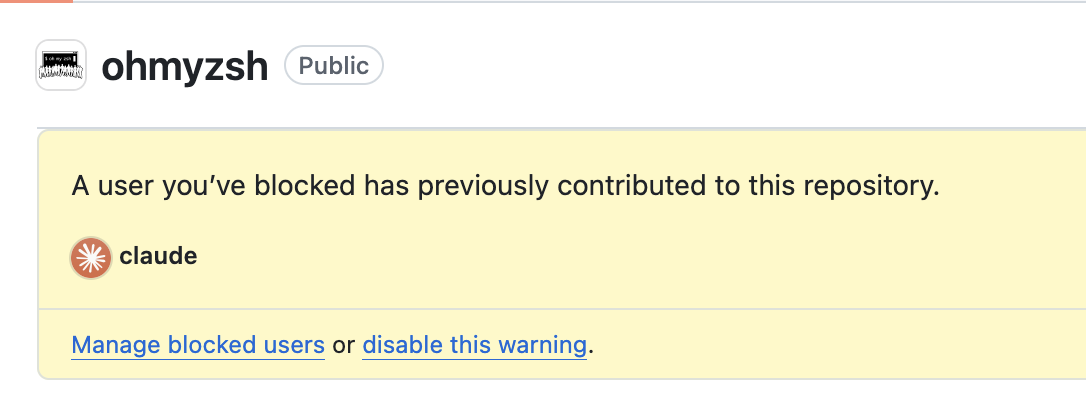
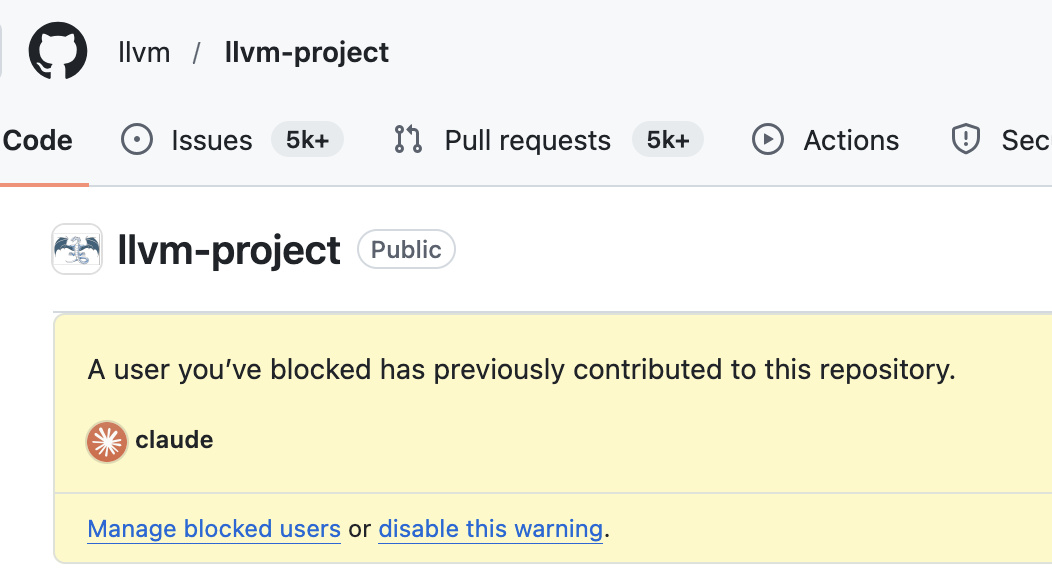
-
-
@nina_kali_nina @bstacey it's not going to be a single project. In some cases it is going to be as simple as changing settings in existing software – like flipping fedi instances from blocklists to allow-lists.
Code foundries also already have existing affordances useful for this.
This is pretty fscking sad, but we've been feeding Big Tech with our code, with our blogposts, with our shitposts, for so long and what we got back from it is *gestures at everything*…
-
-
@nina_kali_nina @bstacey I do think we need a "web of human trust" of some sort.
Instead of default-open systems where we ban bad actors, we will have to move to default-closed systems where we explicitly allow people trusted by current members of a given community.
@rysiek @nina_kali_nina @bstacey the issue with that is it doesn't really work for anything online where a lot of the time you kinda just stumble upon something by chance and get involved; I for one sure as hell didn't have anyone to introduce me into most of the communities I've been a part of over the years; I simply joined out of the blue and slowly became a part of it. -
@lispi314 @bstacey @rysiek I'm a bit privileged here, you can imagine a worse situation. but I've started my open-source journey back in 2005 from a deeply rural place; I didn't know a single person who'd code, and my best bet at learning about the community was going to libraries, sending letters (at first it was letters, not emails), visiting large cities for events (8 hours by bus one way!). It's not what we're used to, but it used to work and maybe it can work again.
-
@lispi314 @reiddragon @bstacey @rysiek well, I'm a counter example to this: https://tech.lgbt/@nina_kali_nina/116181763047346401
-
@nina_kali_nina I really, really hope there will be some push to have “AI free” software and hardware recognized. Much like we have ogm free for food. So you can know and choose accordingly.
@loredema @nina_kali_nina This would be great, but I worry that this would invite AI companies to train on anything labeled as "AI free"..

-
@lispi314 @bstacey @rysiek @nina_kali_nina if I had to rely on someone I knew irl to introduce me into online tech communities, I wouldn't have been a part of any of it.
Tech communities are few in Romania, none was around where I grew up, and most of them are very superficial, into shit like "look how the new iPhone has a sharper camera! you can see it if you zoom in until you can count the pixels!".
Personally I've only met like 3 people who were serious enough about it to do shit like running Linux, flashing their phones, getting involved in open source stuff etc. (and all of them I met years after I got into it myself online). -
Please excuse me while I'm having a little existential crisis, lol.
And if that wasn't bad enough, Mozilla has embraced AI (in its code, too), while Linux considers relaxing AI code policy and has some examples of patches co-authored by LLMs.
I am still yet to think hard about what I want to do about it. But the world I knew is no more.
@nina_kali_nina once again i am sad there isn't a kernel with the same model as linux (aka just a kernel, you can swap out everything else)
the distro model is good, actually, as it gives several pre made configurations (both meanings) that cater to different usecases, and it's a lot easier to switch distributions than to switch for example from freebsd to netbsd
-
@lispi314 @reiddragon @bstacey @rysiek well, I'm a counter example to this: https://tech.lgbt/@nina_kali_nina/116181763047346401
@nina_kali_nina @lispi314 @bstacey @rysiek I didn't even have access to a library with programming books; my local school did have a library but all the books were either literature or natural sciences, and most were older than my parents so they wouldn't lend those. Events were also just not a thing. -
@nina_kali_nina once again i am sad there isn't a kernel with the same model as linux (aka just a kernel, you can swap out everything else)
the distro model is good, actually, as it gives several pre made configurations (both meanings) that cater to different usecases, and it's a lot easier to switch distributions than to switch for example from freebsd to netbsd
@SRAZKVT
i liked the world. it was nice
@nina_kali_nina -
@rysiek @nina_kali_nina @bstacey the issue with that is it doesn't really work for anything online where a lot of the time you kinda just stumble upon something by chance and get involved; I for one sure as hell didn't have anyone to introduce me into most of the communities I've been a part of over the years; I simply joined out of the blue and slowly became a part of it.
@reiddragon yes. I am not saying I am happy about any of this.
But also, I said "web of human trust" for a reason. If my instance has your instance on an allow-list, and your instance has a third instance on the allow-list, my instance should implicitly trust the third instance.
That way we can have that chance discovery of things.
Also, posts could be public, but replies only available to instances within the "web of human trust". Same with code.
-
@nina_kali_nina once again i am sad there isn't a kernel with the same model as linux (aka just a kernel, you can swap out everything else)
the distro model is good, actually, as it gives several pre made configurations (both meanings) that cater to different usecases, and it's a lot easier to switch distributions than to switch for example from freebsd to netbsd
@nina_kali_nina also we should standardise os interfaces (for userspace drivers mostly) so that if a kernel implementation goes to shit you can move to another one
everything should be replaceable
that's how you truly control and own your computer
-
@reiddragon yes. I am not saying I am happy about any of this.
But also, I said "web of human trust" for a reason. If my instance has your instance on an allow-list, and your instance has a third instance on the allow-list, my instance should implicitly trust the third instance.
That way we can have that chance discovery of things.
Also, posts could be public, but replies only available to instances within the "web of human trust". Same with code.
@reiddragon I am spitballing here, I don't have a whole coherent, complete system in my head. But I see these kinds of "web of human trust" shaped systems as a possible counter to the slop.
-
@reiddragon yes. I am not saying I am happy about any of this.
But also, I said "web of human trust" for a reason. If my instance has your instance on an allow-list, and your instance has a third instance on the allow-list, my instance should implicitly trust the third instance.
That way we can have that chance discovery of things.
Also, posts could be public, but replies only available to instances within the "web of human trust". Same with code.
@rysiek @bstacey @nina_kali_nina ok but how does one get in to begin with? You need someone to vouch for you, but if you start as a complete outsider then you're just boned unless someone is willing to take a chance and vouch for someone they don't know. -
@nina_kali_nina also we should standardise os interfaces (for userspace drivers mostly) so that if a kernel implementation goes to shit you can move to another one
everything should be replaceable
that's how you truly control and own your computer
@nina_kali_nina this is something i wish the BSDs had, but nope, although they share roots, they greatly diverged, and no standardisations outside of posix was made
-
@rysiek @bstacey @nina_kali_nina ok but how does one get in to begin with? You need someone to vouch for you, but if you start as a complete outsider then you're just boned unless someone is willing to take a chance and vouch for someone they don't know.
@reiddragon yes, that's correct.
I said I am not happy with it. I prefer a world where the open web can remain open, where public repos are not flooded with slop, and where social media are not scraped to feed the slop generators.
But I don't know that we can keep that world.
So I am trying to figure out how to deal with that. We've had loose "webs of human trust" throughout human history. Some fared better, some worse. No system is perfect.
-
@reiddragon yes, that's correct.
I said I am not happy with it. I prefer a world where the open web can remain open, where public repos are not flooded with slop, and where social media are not scraped to feed the slop generators.
But I don't know that we can keep that world.
So I am trying to figure out how to deal with that. We've had loose "webs of human trust" throughout human history. Some fared better, some worse. No system is perfect.
@reiddragon as far as allowing outsiders is concerned, maybe the answer is: low threshold of initial trust and introduction, but effective response to any kind of abuse (including unleashing slop generators on the community)?
That's how a bunch of fedi instances work already. Registrations require mod approval, with a pretty low bar. But once approved, if an account is being abusive, it gets banned quickly and effectively.
-
@reiddragon yes, that's correct.
I said I am not happy with it. I prefer a world where the open web can remain open, where public repos are not flooded with slop, and where social media are not scraped to feed the slop generators.
But I don't know that we can keep that world.
So I am trying to figure out how to deal with that. We've had loose "webs of human trust" throughout human history. Some fared better, some worse. No system is perfect.
@rysiek @bstacey @nina_kali_nina We could have a few spaces like that for when the old timers just want to chill, but we really can't make them the default. We need the open spaces to stay for the outsiders to have a way in. "Proving grounds", if you may. -
@reiddragon as far as allowing outsiders is concerned, maybe the answer is: low threshold of initial trust and introduction, but effective response to any kind of abuse (including unleashing slop generators on the community)?
That's how a bunch of fedi instances work already. Registrations require mod approval, with a pretty low bar. But once approved, if an account is being abusive, it gets banned quickly and effectively.
@rysiek @bstacey @nina_kali_nina I guess, but that's basically just an open system with a human-powered captcha. I don't disagree with doing things like that (so far it's been working well enough on fedi instances that employ that), but I wouldn't qualify that as a "default-closed system" as you described in the initial post.