Skip to content
  • Categories
  • Recent
  • Tags
  • Popular
  • World
  • Users
  • Groups
Skins
  • Light
  • Brite
  • Cerulean
  • Cosmo
  • Flatly
  • Journal
  • Litera
  • Lumen
  • Lux
  • Materia
  • Minty
  • Morph
  • Pulse
  • Sandstone
  • Simplex
  • Sketchy
  • Spacelab
  • United
  • Yeti
  • Zephyr
  • Dark
  • Cyborg
  • Darkly
  • Quartz
  • Slate
  • Solar
  • Superhero
  • Vapor

  • Default (Cyborg)
  • No Skin
Collapse
Brand Logo

CIRCLE WITH A DOT

  1. Home
  2. Uncategorized
  3. @mariusor @smallcircles @evan I’m not sure I completely follow.

@mariusor @smallcircles @evan I’m not sure I completely follow.

Scheduled Pinned Locked Moved Uncategorized
31 Posts 6 Posters 0 Views
  • Oldest to Newest
  • Newest to Oldest
  • Most Votes
Reply
  • Reply as topic
Log in to reply
This topic has been deleted. Only users with topic management privileges can see it.
  • mariusor@metalhead.clubM mariusor@metalhead.club

    @steve OK, but why?

    I feel like I explained my position relatively clearly, I would like to understand yours, even though I feel some animosity has started to crop up.

    @smallcircles @evan

    steve@social.technoetic.comS This user is from outside of this forum
    steve@social.technoetic.comS This user is from outside of this forum
    steve@social.technoetic.com
    wrote last edited by
    #20

    @mariusor @smallcircles @evan No animosity here. However, I’m not sure how to explain it more clearly. I’m referring to C2S as described in chapter 6 of the ActivityPub specification (and the conformance profiles in Section 2.1). It sounded to me like you’re using a more general definition of “client”, which is fine, just different in significant ways (if it only dereferences and renders AP data).

    smallcircles@social.coopS 1 Reply Last reply
    0
    • steve@social.technoetic.comS steve@social.technoetic.com

      @mariusor @smallcircles @evan No animosity here. However, I’m not sure how to explain it more clearly. I’m referring to C2S as described in chapter 6 of the ActivityPub specification (and the conformance profiles in Section 2.1). It sounded to me like you’re using a more general definition of “client”, which is fine, just different in significant ways (if it only dereferences and renders AP data).

      smallcircles@social.coopS This user is from outside of this forum
      smallcircles@social.coopS This user is from outside of this forum
      smallcircles@social.coop
      wrote last edited by
      #21

      @steve @mariusor @evan

      He he, language is hard. A case of terminology overload and clashing terms. Domain driven design has the clearly defined bounded context here which is the scope within which terms are valid. Forming a consistency boundary. These context lines are blurred in fediverse talk. 😅

      evan@cosocial.caE 1 Reply Last reply
      0
      • mariusor@metalhead.clubM mariusor@metalhead.club

        @thisismissem I have just implemented that for the GoActivityPub servers and it's easier than it sounds.

        The only important step required is to convert the client authorization token (presumably an OAuth2 bearer token) to a valid actor and then further to a valid Private Key with which to sign the remote request. After that the only thing remaining is to pipe verbatim the received response to the client...

        @steve @smallcircles @evan

        thisismissem@hachyderm.ioT This user is from outside of this forum
        thisismissem@hachyderm.ioT This user is from outside of this forum
        thisismissem@hachyderm.io
        wrote last edited by
        #22

        @mariusor @steve @smallcircles @evan well, your server *knows* it's access token to user mapping, so then you're just doing authorised fetch as that actor from server side

        1 Reply Last reply
        1
        0
        • benpate@mastodon.socialB benpate@mastodon.social

          @thisismissem @steve @mariusor @smallcircles @evan

          Just checking my memory.. this concept exists already, yes?

          Link Preview Image
          ActivityPub/Primer/proxyUrl endpoint - W3C Wiki

          favicon

          (www.w3.org)

          Are you just saying that the new API spec should include this? Or am I missing something?

          thisismissem@hachyderm.ioT This user is from outside of this forum
          thisismissem@hachyderm.ioT This user is from outside of this forum
          thisismissem@hachyderm.io
          wrote last edited by
          #23

          @benpate @steve @mariusor @smallcircles @evan i'm not sure proxyUrl does what I'm thinking of here

          1 Reply Last reply
          1
          0
          • evan@cosocial.caE evan@cosocial.ca

            @benpate @thisismissem @steve @mariusor @smallcircles

            Yes, proxyUrl already exists. There's a use case here:

            Link Preview Image
            Remote object access · Issue #10 · swicg/activitypub-api

            "As an ActivityPub client developer, I want a reliable method for accessing objects on remote servers with the user's authorization, so I can read private or followers-only data."

            favicon

            GitHub (github.com)

            The only other way I've seen this use case discussed is with client-side HTTP Signature keys. There's some kind of negotiation between the server and the client, and then the client can make requests to remote servers using HTTP Signature and a key it controls.

            thisismissem@hachyderm.ioT This user is from outside of this forum
            thisismissem@hachyderm.ioT This user is from outside of this forum
            thisismissem@hachyderm.io
            wrote last edited by
            #24

            @evan @benpate @steve @mariusor @smallcircles my understanding of proxyUrl is that it's just fetching a remote object, but without forwarding authorization

            For many cases you want to forward the request as the authenticated user to the remote server, not doing the request anonymously

            mariusor@metalhead.clubM 1 Reply Last reply
            1
            0
            • thisismissem@hachyderm.ioT thisismissem@hachyderm.io

              @evan @benpate @steve @mariusor @smallcircles my understanding of proxyUrl is that it's just fetching a remote object, but without forwarding authorization

              For many cases you want to forward the request as the authenticated user to the remote server, not doing the request anonymously

              mariusor@metalhead.clubM This user is from outside of this forum
              mariusor@metalhead.clubM This user is from outside of this forum
              mariusor@metalhead.club
              wrote last edited by
              #25

              @thisismissem it's not explicitly saying to forward authorization, but to me that's implied from "require authentication":

              proxyUrl: Endpoint URI so this actor's clients may access remote ActivityStreams objects which require authentication to access

              Link Preview Image
              ActivityPub

              favicon

              (w3c.github.io)

              @evan @benpate @steve @smallcircles

              evan@cosocial.caE 1 Reply Last reply
              1
              0
              • mariusor@metalhead.clubM mariusor@metalhead.club

                @thisismissem it's not explicitly saying to forward authorization, but to me that's implied from "require authentication":

                proxyUrl: Endpoint URI so this actor's clients may access remote ActivityStreams objects which require authentication to access

                Link Preview Image
                ActivityPub

                favicon

                (w3c.github.io)

                @evan @benpate @steve @smallcircles

                evan@cosocial.caE This user is from outside of this forum
                evan@cosocial.caE This user is from outside of this forum
                evan@cosocial.ca
                wrote last edited by
                #26

                @mariusor I have implemented it requiring OAuth on one side and using HTTP Signature on the other. I think you need to use the user's authorization for private content or to respect personal blocks. It sucks for caching but ¯\_(ツ)_/¯

                @thisismissem @benpate @steve @smallcircles

                mariusor@metalhead.clubM benpate@mastodon.socialB thisismissem@hachyderm.ioT 3 Replies Last reply
                1
                0
                • evan@cosocial.caE evan@cosocial.ca

                  @mariusor I have implemented it requiring OAuth on one side and using HTTP Signature on the other. I think you need to use the user's authorization for private content or to respect personal blocks. It sucks for caching but ¯\_(ツ)_/¯

                  @thisismissem @benpate @steve @smallcircles

                  mariusor@metalhead.clubM This user is from outside of this forum
                  mariusor@metalhead.clubM This user is from outside of this forum
                  mariusor@metalhead.club
                  wrote last edited by
                  #27

                  @evan yes, that's how I did it too, only in my case the private key of the actor that is authorized by OAuth2 token is used to generate the signature for the proxy fetch. This makes it that servers that implement object ACLs based on the recipients list (which GoActivityPub servers are) are not serving 403s for fetches.

                  1 Reply Last reply
                  1
                  0
                  • evan@cosocial.caE evan@cosocial.ca

                    @mariusor I have implemented it requiring OAuth on one side and using HTTP Signature on the other. I think you need to use the user's authorization for private content or to respect personal blocks. It sucks for caching but ¯\_(ツ)_/¯

                    @thisismissem @benpate @steve @smallcircles

                    benpate@mastodon.socialB This user is from outside of this forum
                    benpate@mastodon.socialB This user is from outside of this forum
                    benpate@mastodon.social
                    wrote last edited by
                    #28

                    Yeah, this is how I'd expect it to work (with the possible addition of *also* allowing cookie auth on the client side)

                    But yeah. Locally authenticated user from my client -> my server, then HTTP signature from my server -> your server

                    @evan @mariusor @thisismissem @steve @smallcircles

                    evan@cosocial.caE 1 Reply Last reply
                    2
                    0
                    • benpate@mastodon.socialB benpate@mastodon.social

                      Yeah, this is how I'd expect it to work (with the possible addition of *also* allowing cookie auth on the client side)

                      But yeah. Locally authenticated user from my client -> my server, then HTTP signature from my server -> your server

                      @evan @mariusor @thisismissem @steve @smallcircles

                      evan@cosocial.caE This user is from outside of this forum
                      evan@cosocial.caE This user is from outside of this forum
                      evan@cosocial.ca
                      wrote last edited by
                      #29

                      @benpate

                      With all the standard warnings around proxies!

                      @mariusor @thisismissem @steve @smallcircles

                      1 Reply Last reply
                      1
                      0
                      • smallcircles@social.coopS smallcircles@social.coop

                        @steve @mariusor @evan

                        He he, language is hard. A case of terminology overload and clashing terms. Domain driven design has the clearly defined bounded context here which is the scope within which terms are valid. Forming a consistency boundary. These context lines are blurred in fediverse talk. 😅

                        evan@cosocial.caE This user is from outside of this forum
                        evan@cosocial.caE This user is from outside of this forum
                        evan@cosocial.ca
                        wrote last edited by
                        #30

                        @smallcircles @steve @mariusor

                        I think in particular the terms "publisher" and "consumer" from AS2 and "client" and "server" from AP don't always map cleanly, especially with HTTP POST requests.

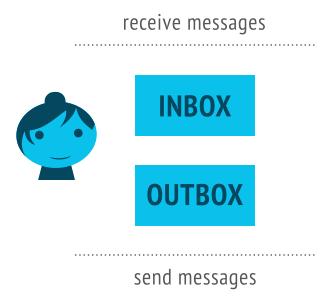
                        When a client delivers an activity to the actor's outbox, the client is the publisher of that activity, and the server is the consumer.

                        Same when a sending server (publisher) delivers an activity to a receiving server (consumer).

                        1 Reply Last reply
                        1
                        0
                        • evan@cosocial.caE evan@cosocial.ca

                          @mariusor I have implemented it requiring OAuth on one side and using HTTP Signature on the other. I think you need to use the user's authorization for private content or to respect personal blocks. It sucks for caching but ¯\_(ツ)_/¯

                          @thisismissem @benpate @steve @smallcircles

                          thisismissem@hachyderm.ioT This user is from outside of this forum
                          thisismissem@hachyderm.ioT This user is from outside of this forum
                          thisismissem@hachyderm.io
                          wrote last edited by
                          #31

                          @evan @mariusor @benpate @steve @smallcircles yeah, it's the only way to do it.

                          But this infrastructure actually is what enables things like the AT Protocol "proxy through my PDS to the bluesky app view" or "proxy through my PDS to a custom feed generator" functionality.

                          That's how that all works.

                          1 Reply Last reply
                          1
                          0
                          • R relay@relay.an.exchange shared this topic
                            R relay@relay.mycrowd.ca shared this topic

                          Reply
                          • Reply as topic
                          Log in to reply
                          • Oldest to Newest
                          • Newest to Oldest
                          • Most Votes


                          • Login

                          • Login or register to search.
                          • First post
                            Last post
                          0
                          • Categories
                          • Recent
                          • Tags
                          • Popular
                          • World
                          • Users
                          • Groups