
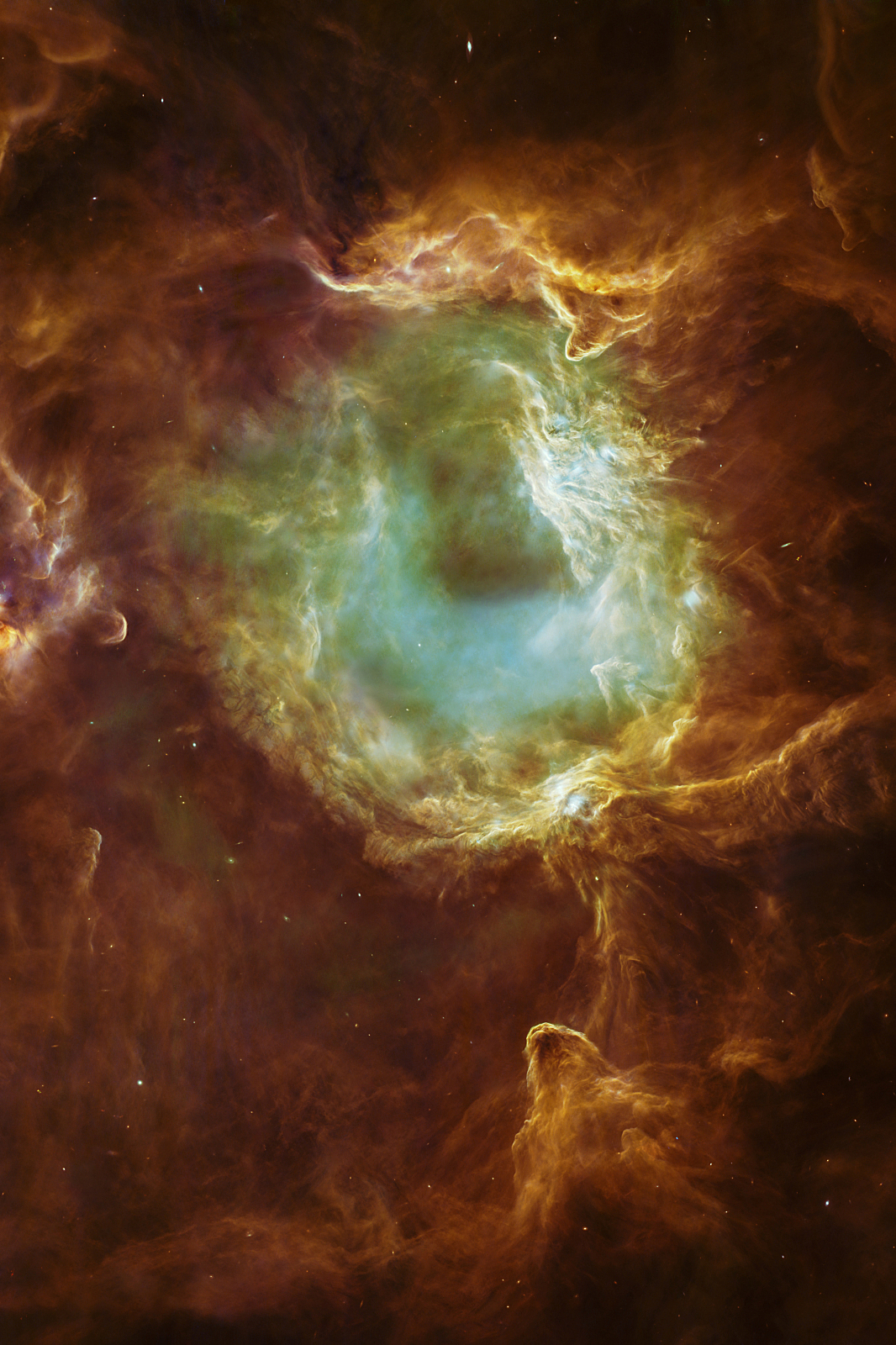
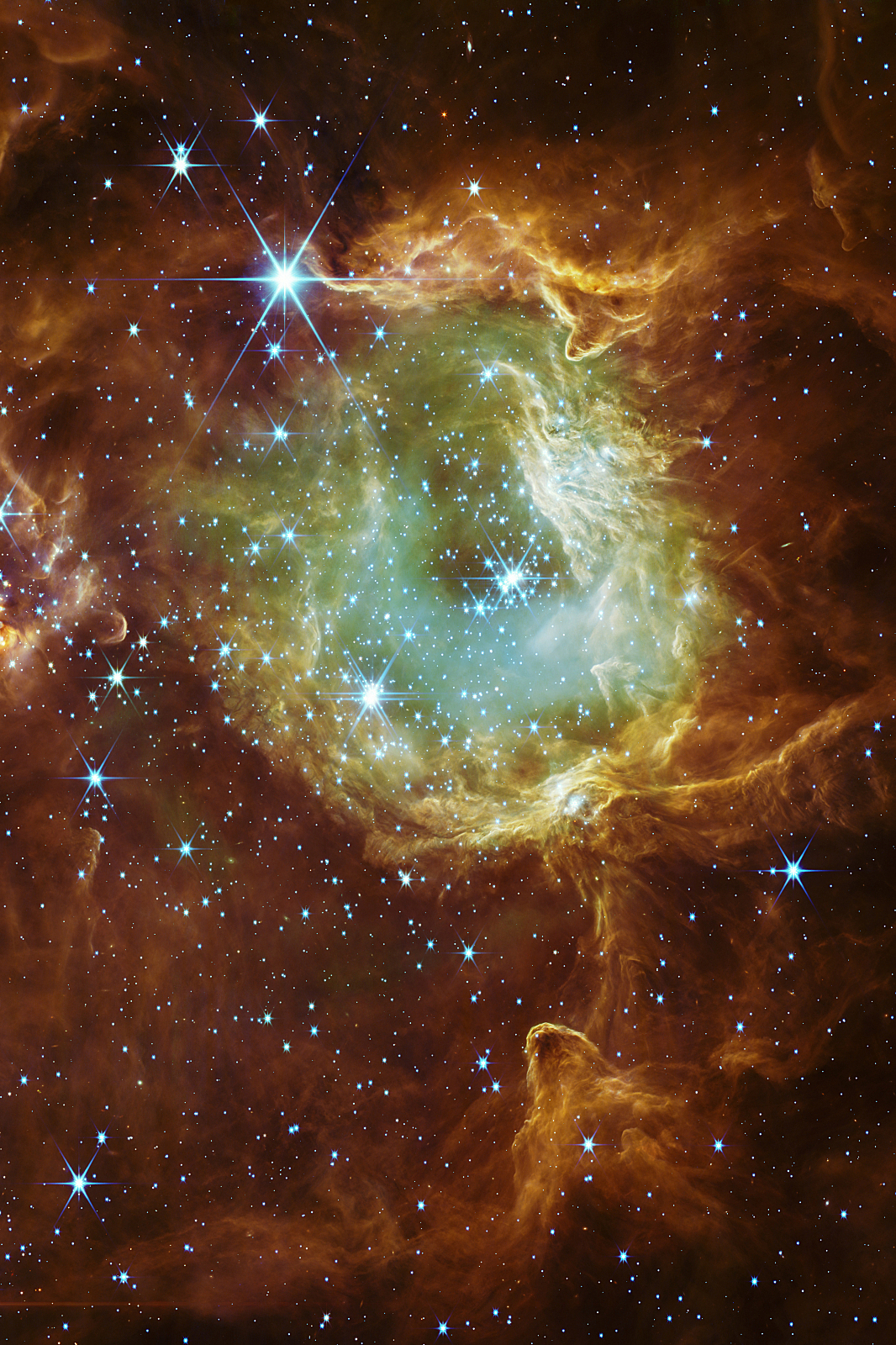
This is my attempt at processing James Webb Space Telescope (JWST) data of Sh 2-305.
Uncategorized
1
Posts
1
Posters
9
Views
-
This is my attempt at processing James Webb Space Telescope (JWST) data of Sh 2-305. It is an emission nebula usually visible in red (H II emission), but it is displayed here in false-color infrared. Blue areas emit higher-energy photons than red regions. This area is a stellar nursery where gas and dust remnants from supernovae or collisions form new stars. The three versions show the nebula only, with galaxies only, and with everything else.
A great deal of work went into creating a clean nebula image with as few artifacts as possible. After data extraction and initial stretching with #Siril, the single monochrome filter images were combined, processed, and cropped in #GIMP. The combined image was then run through #StarNet++ to remove most of the stars. Since StarNet++ does not work well with JWST data, it leaves artifacts for every star, especially the brighter ones, whose long spikes typical of JWST overlay large parts of the image. I therefore had to remove each star artifact manually using the clone and healing tools in GIMP. This took tens of hours to complete. #GMIC additionally helped reduce banding. As such, this is an artistic interpretation by me and is not scientifically accurate. The full resolution versions can be downloaded from https://www.picturavis.com/index?/tags/1204-jwst (these JWST images are crazily detailed).
The person responsible for this JWST proposal is Mark McCaughrean of the Max-Planck-Institut für Astronomie in Heidelberg. He also shared an initial version of the uncropped processed image: https://www.flickr.com/photos/markmccaughrean/55209728128/
Attribution: NASA/ESA/CSA
Telescope: JWST/NIRCam
Proposal ID: 4547
Observation description: The stellar & sub-stellar initial mass function in Sharpless 305: imaging
Release date: 02.04.2026
Filters (mapping): F140M (blue), F150W+162M (light blue), F182M (blue-green), F212N (green), F300M (light green), F335M (yellow), F360M (orange), F444W (red)
#Sharpless305 #Sh2305 #JWST #JamesWebb #NIRCam #Nebula #SpaceTelescope #astrophotography #DeepSky #DigiKam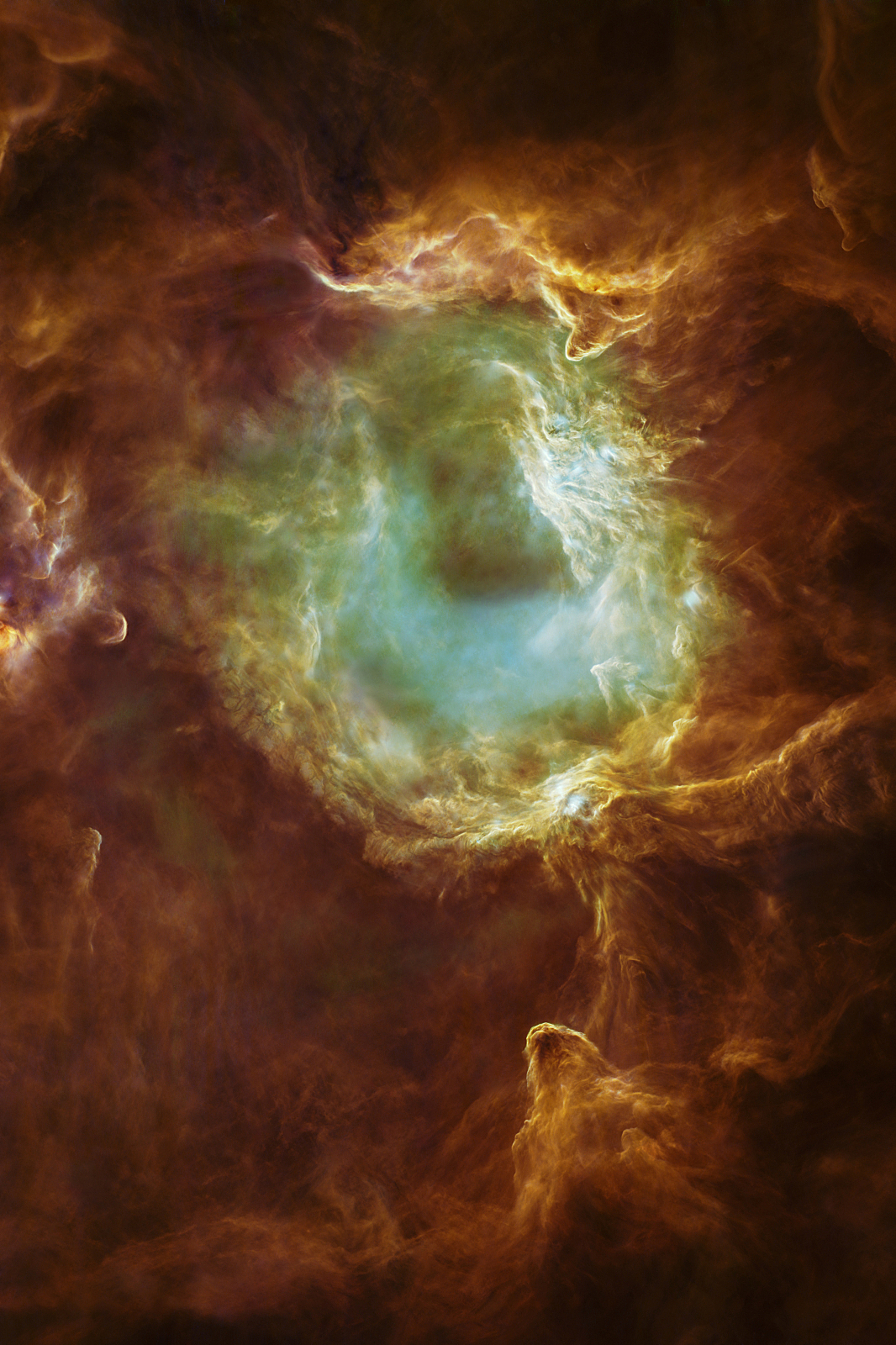
-
R relay@relay.infosec.exchange shared this topic
