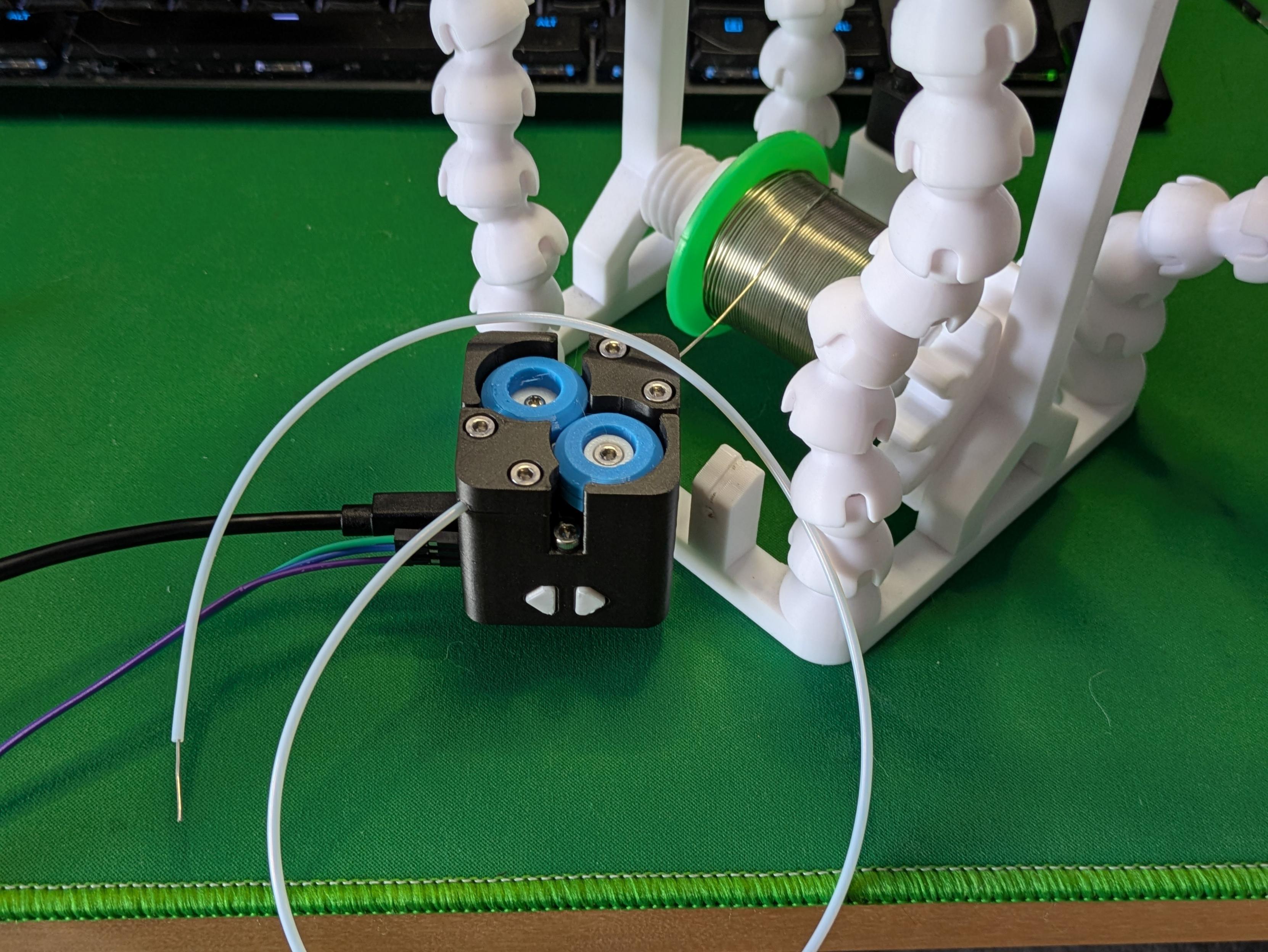
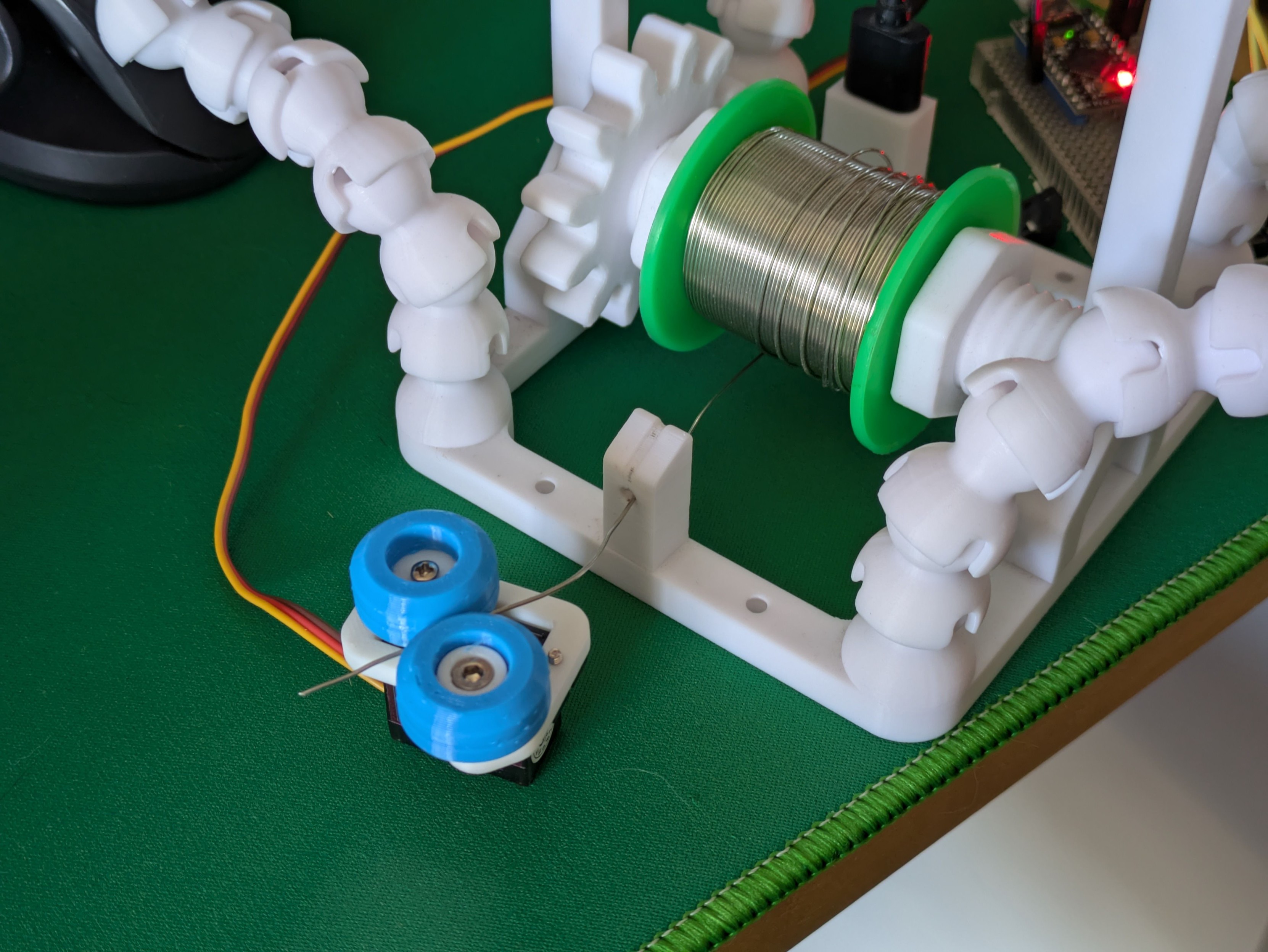
Proof of concept: A servo motor, a little platform with an opposing wheel, and two TPU tyres with a tiny groove down the middle will very capably grab a length of solder and push/pull it.
-
Proof of concept: A servo motor, a little platform with an opposing wheel, and two TPU tyres with a tiny groove down the middle will very capably grab a length of solder and push/pull it.
This is part 1 of the next addition to my soldering station: a pen that precisely pays out solder wire as it's needed.
I have some continuous rotation servos and some 1mm ID PTFE tubing in the mail. This should be a quick, fruitful project. #3DPrinting #Arduino #maker #SolderingStation
-
Proof of concept: A servo motor, a little platform with an opposing wheel, and two TPU tyres with a tiny groove down the middle will very capably grab a length of solder and push/pull it.
This is part 1 of the next addition to my soldering station: a pen that precisely pays out solder wire as it's needed.
I have some continuous rotation servos and some 1mm ID PTFE tubing in the mail. This should be a quick, fruitful project. #3DPrinting #Arduino #maker #SolderingStation
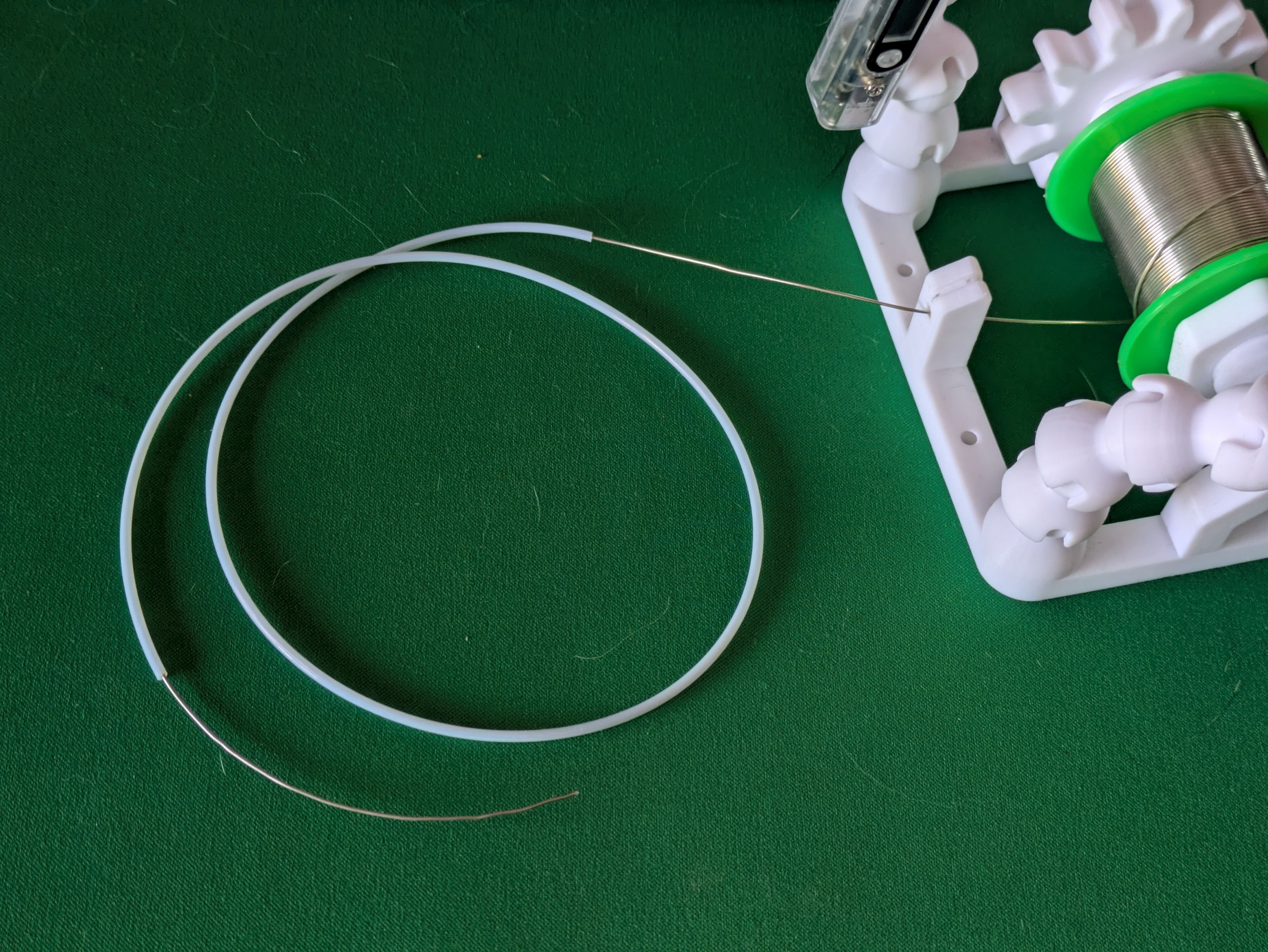
Using the same principle as a bowden tube on a 3D printer, I can easily push 0.8mm solder through a PTFE tube with an inner diameter of 1mm. This is super flexible and movable and should flawlessly transport solder from the reel to the solder pen at the other end of the tube.
-
Using the same principle as a bowden tube on a 3D printer, I can easily push 0.8mm solder through a PTFE tube with an inner diameter of 1mm. This is super flexible and movable and should flawlessly transport solder from the reel to the solder pen at the other end of the tube.
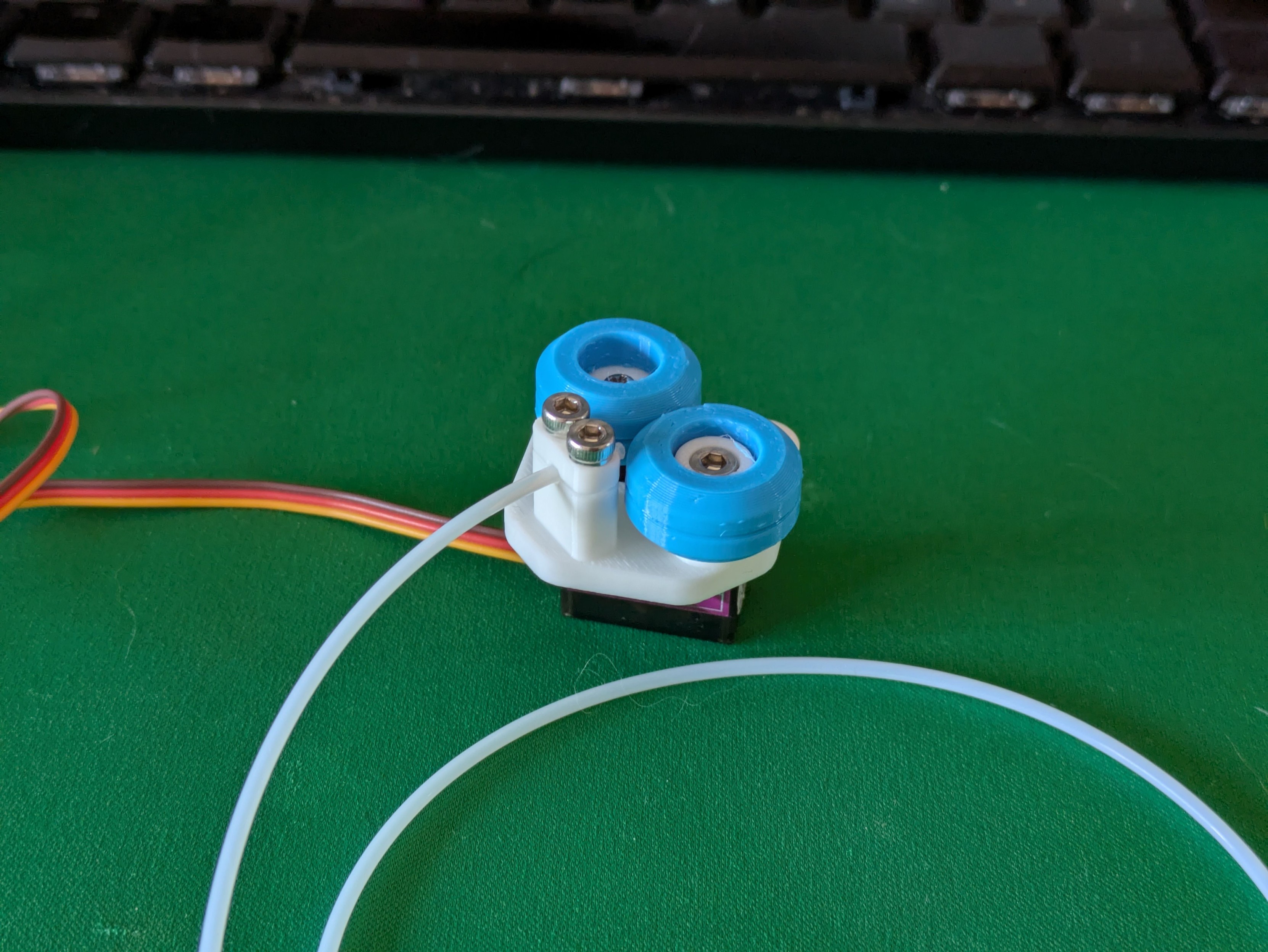
And a first go at lining up the tube with the rollers on the platform to help me think about the best way to do that bit. I won't go any further on this iteration since the continuous servos are actually due to arrive today and I expect them to have slightly different proportions so I will need to remake the whole platform soon anyway.
-
And a first go at lining up the tube with the rollers on the platform to help me think about the best way to do that bit. I won't go any further on this iteration since the continuous servos are actually due to arrive today and I expect them to have slightly different proportions so I will need to remake the whole platform soon anyway.
Tiny robot makes a whining sound and smoothly extrudes a length of solder wire (and then falls over because it doesn't have enough weight to pull on the spool and just pulls itself over instead).
That I think is the proof-of-concept for the base done - there are tweaks to make and some more electronics to stuff inside but those are details.
Should I design a little cover to snap/screw on top of this or should the wheels stay visible like this?
-
Tiny robot makes a whining sound and smoothly extrudes a length of solder wire (and then falls over because it doesn't have enough weight to pull on the spool and just pulls itself over instead).
That I think is the proof-of-concept for the base done - there are tweaks to make and some more electronics to stuff inside but those are details.
Should I design a little cover to snap/screw on top of this or should the wheels stay visible like this?
Continuous rotation servo + a 608 size bearing and TPU wheels + PTFE tubing + fewer 3D printed parts than you'd think + actually securing this contraption to my soldering station = a computer-controlled power feed for solder wire, for those long electronics assembly sessions.
Even before starting on the second part (the actual pen with buttons you hold at the other end of the tube) this is a serious project milestone and I'm very happy with it. #maker #3DPrinting #SolderingStation
-
Continuous rotation servo + a 608 size bearing and TPU wheels + PTFE tubing + fewer 3D printed parts than you'd think + actually securing this contraption to my soldering station = a computer-controlled power feed for solder wire, for those long electronics assembly sessions.
Even before starting on the second part (the actual pen with buttons you hold at the other end of the tube) this is a serious project milestone and I'm very happy with it. #maker #3DPrinting #SolderingStation
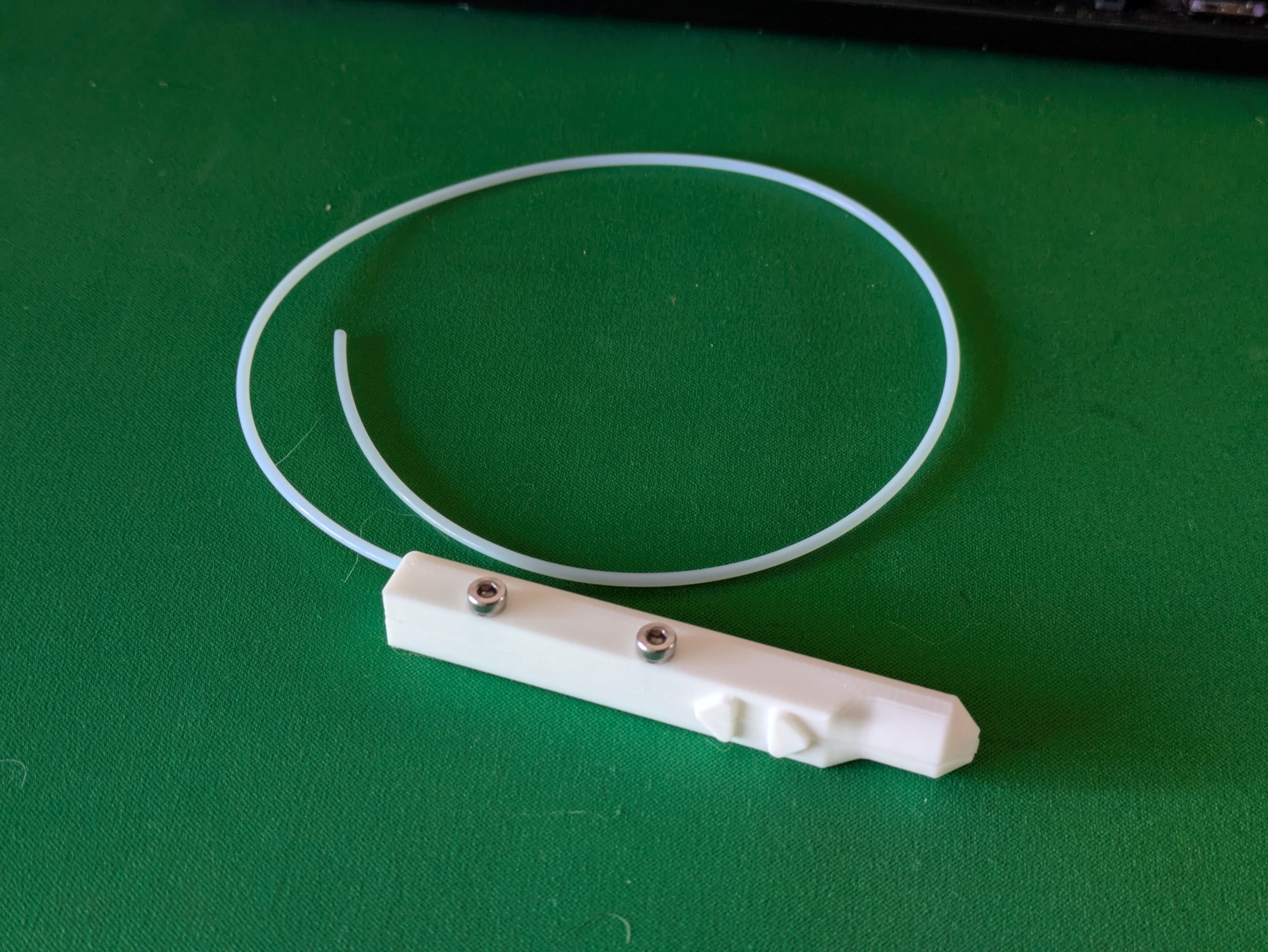
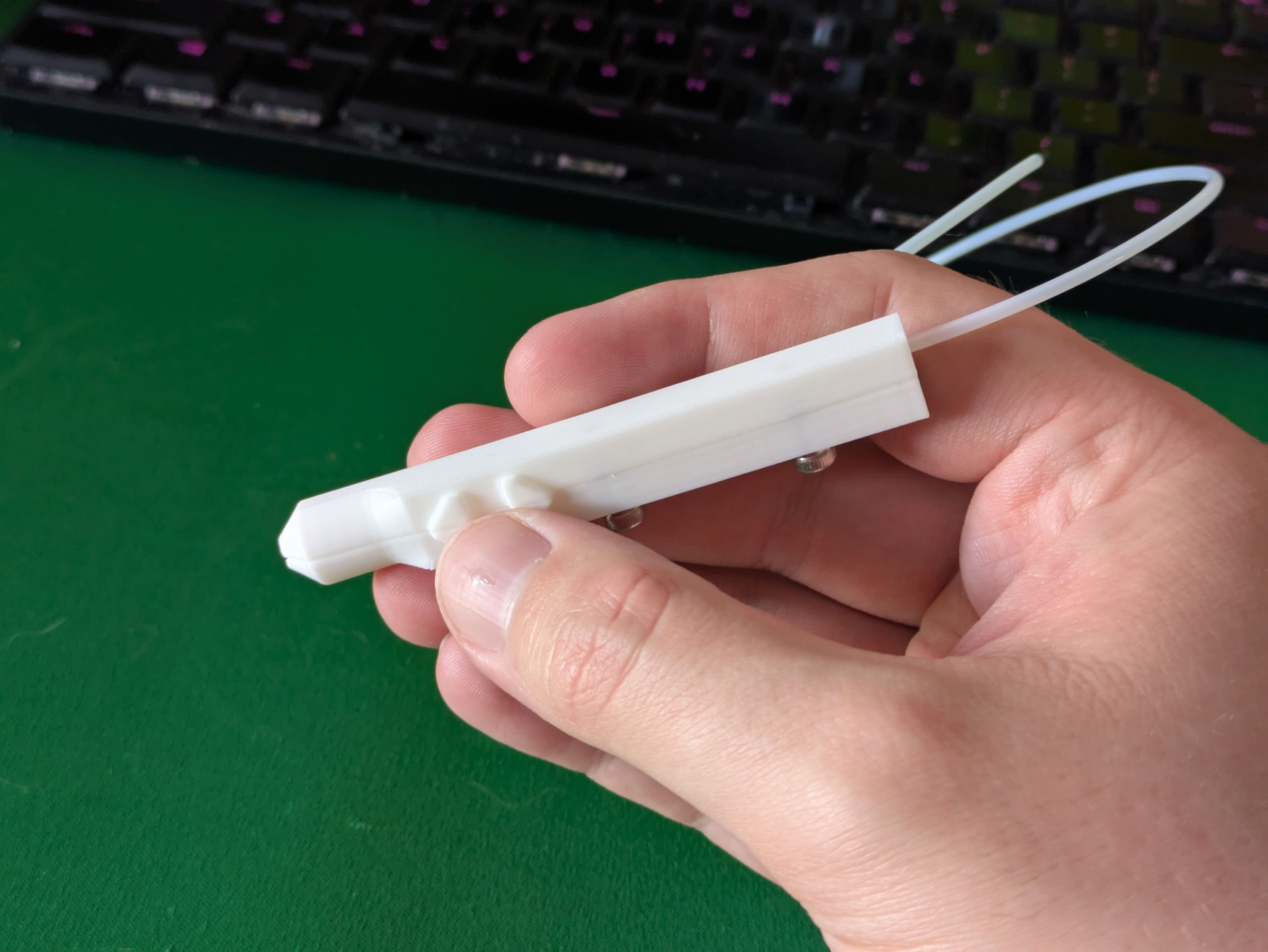
A first pass at the shape of the solder pen itself. A 1.25mm diameter pipe through the body of the pen allows for the PTFE tube to be threaded in easily.
A cutout for a very slim PCB with two tactile buttons and a 3-pin header will also run through most of the pen - currently the buttons are just solid to get a feel for it in the hand.
-
A first pass at the shape of the solder pen itself. A 1.25mm diameter pipe through the body of the pen allows for the PTFE tube to be threaded in easily.
A cutout for a very slim PCB with two tactile buttons and a 3-pin header will also run through most of the pen - currently the buttons are just solid to get a feel for it in the hand.
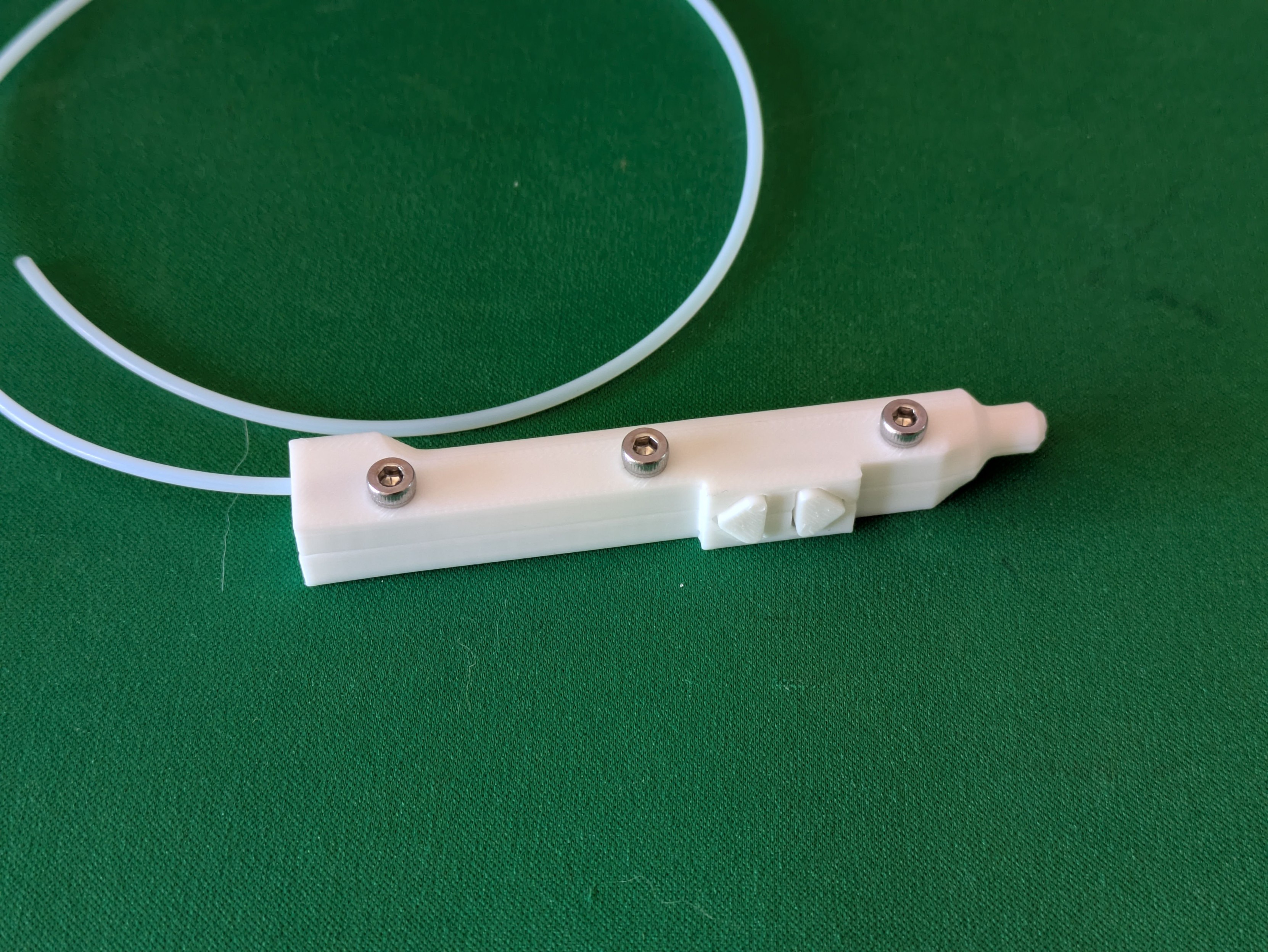
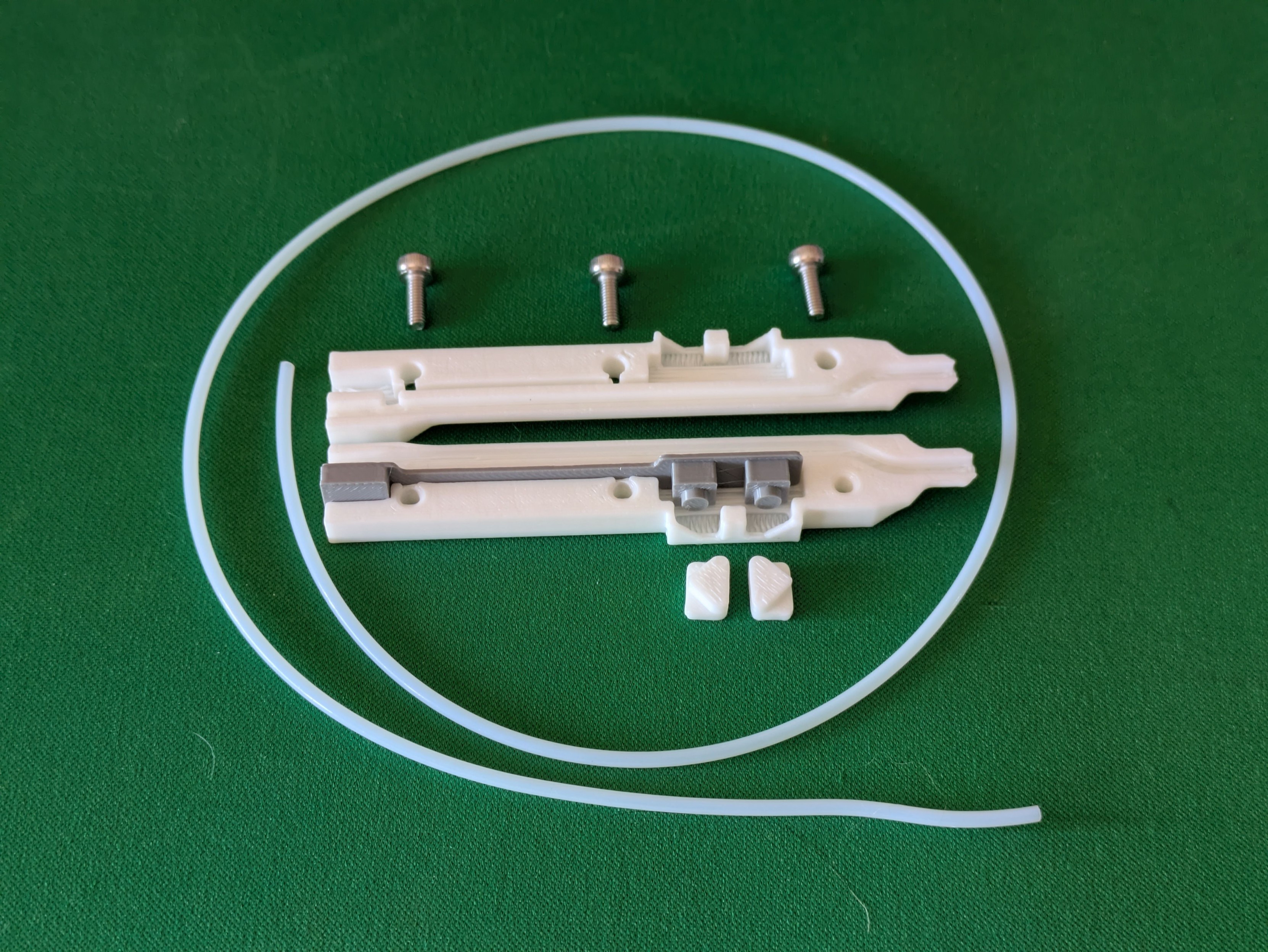
Behold: the prototype solder feeder pen, and the parts it's made up of. The grey bit is a facsimile of the circuit board I've designed to slot in here - it just routes two tactile buttons to a three pin socket (one to each button with a pullup resistor in the microcontroller, and a common ground).
The thinnest PCB that JLC will sell me without charging me more is 0.8mm, so there's a 1mm clearance in the print for it to slot in securely.
Time to order some electronics!
-
Behold: the prototype solder feeder pen, and the parts it's made up of. The grey bit is a facsimile of the circuit board I've designed to slot in here - it just routes two tactile buttons to a three pin socket (one to each button with a pullup resistor in the microcontroller, and a common ground).
The thinnest PCB that JLC will sell me without charging me more is 0.8mm, so there's a 1mm clearance in the print for it to slot in securely.
Time to order some electronics!
Printed another simulacra, this time of what I think the mainboard in my solder feeder will look like, and test-fitted it in an experimental base.
I need to squish a Pro Micro clone, two tactile buttons, a connector for the pen electronics and another one internally for the servo into one half of the base (the other half is mostly servo body) - I'm pretty happy with how this prototype slots and locks in.
-
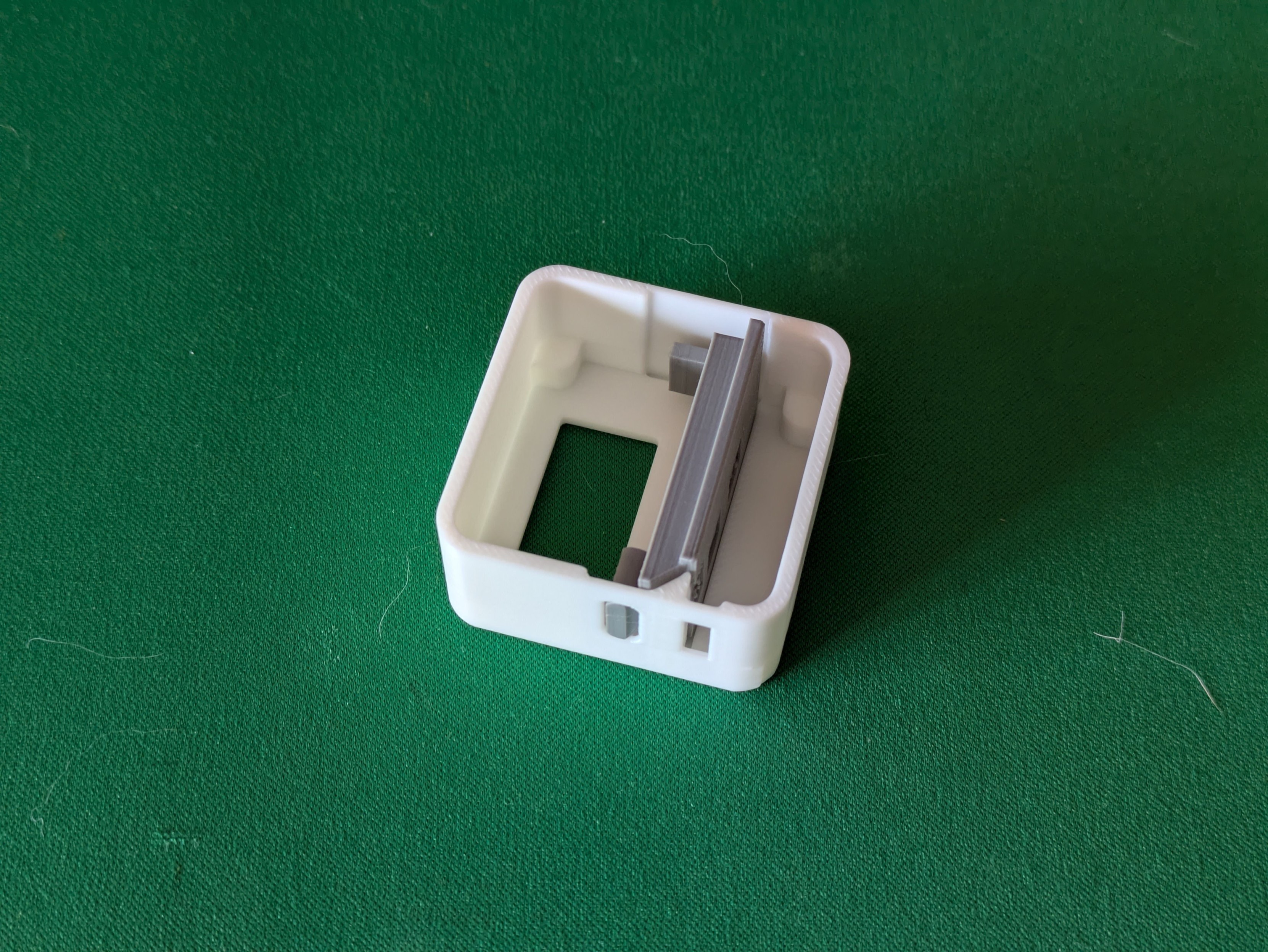
Printed another simulacra, this time of what I think the mainboard in my solder feeder will look like, and test-fitted it in an experimental base.
I need to squish a Pro Micro clone, two tactile buttons, a connector for the pen electronics and another one internally for the servo into one half of the base (the other half is mostly servo body) - I'm pretty happy with how this prototype slots and locks in.
Have now designed and ordered the main PCB for my solder feeder. It's entirely unlabeled because my SVG outline didn't appear for some reason but that won't stop this prototype from happening.
This PCB layout looks chaotic as hell, but it'll make sense once stuff's been soldered to it - it's double-sided and has to situate stuff in precise places in a very small box.
For my own benefit in a couple of weeks: Pen buttons are pins 2/3, main buttons are pins 4/5, servo is on pin 6.
-
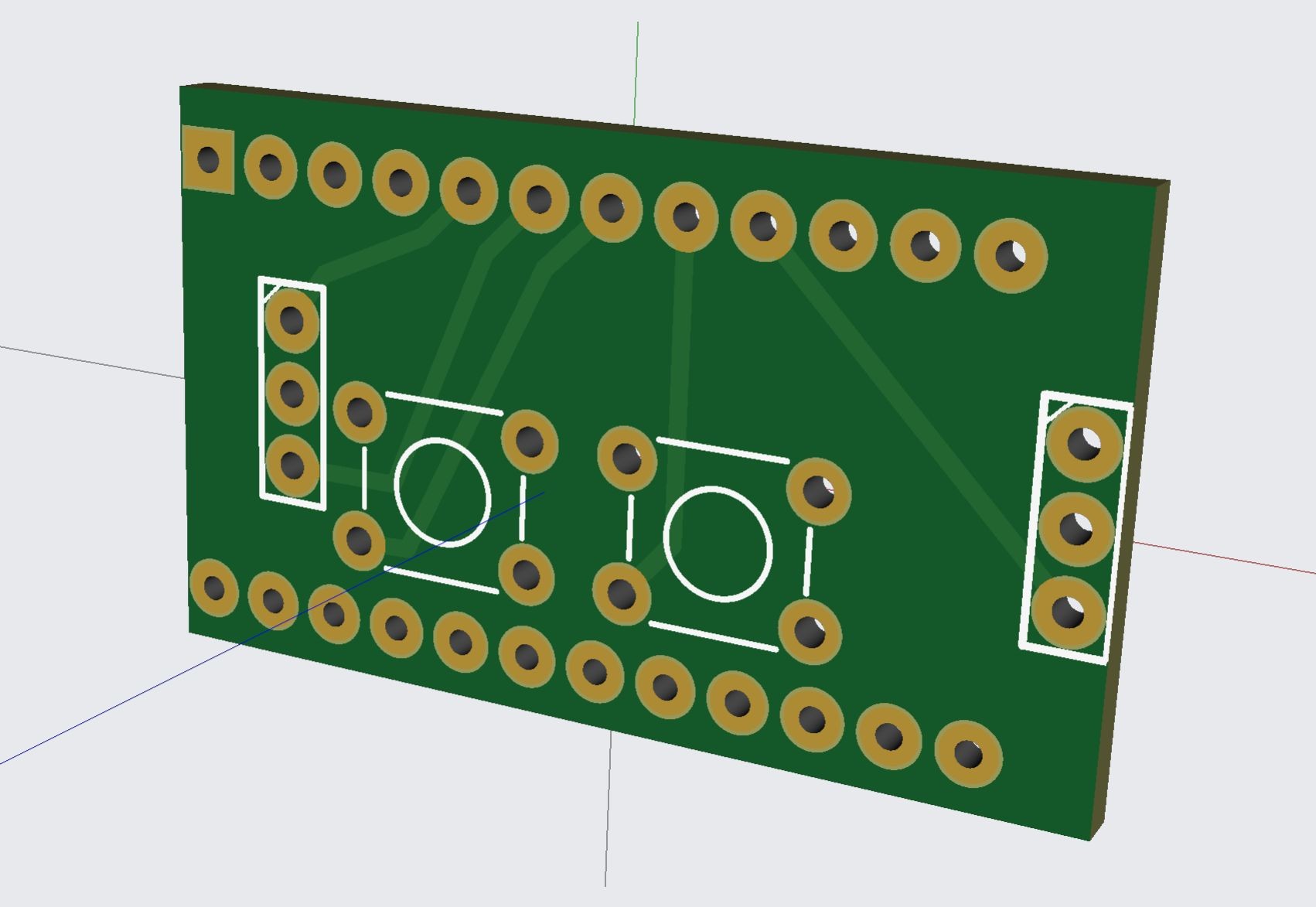
Have now designed and ordered the main PCB for my solder feeder. It's entirely unlabeled because my SVG outline didn't appear for some reason but that won't stop this prototype from happening.
This PCB layout looks chaotic as hell, but it'll make sense once stuff's been soldered to it - it's double-sided and has to situate stuff in precise places in a very small box.
For my own benefit in a couple of weeks: Pen buttons are pins 2/3, main buttons are pins 4/5, servo is on pin 6.
I appear to have ordered some PCBs exactly at Chinese new year. I absolutely cannot begrudge them that so I guess this project gets shelved for a while longer than planned.
-
I appear to have ordered some PCBs exactly at Chinese new year. I absolutely cannot begrudge them that so I guess this project gets shelved for a while longer than planned.
Both sets of PCBs for this project are now in the mail. Might have to remember not to have any bright project ideas in February in future to avoid getting stymied by the Spring Festival.
-
Both sets of PCBs for this project are now in the mail. Might have to remember not to have any bright project ideas in February in future to avoid getting stymied by the Spring Festival.
Success! Very small PCBs have arrived.
The long ones are 0.8mm thick - I think I could snap one if I wanted, but it's not going to happen by accident.
Also there are five of each and I bought plenty of everything else, so if anyone else in Australia thinks they might like a solder feeder pen, sing out.
-
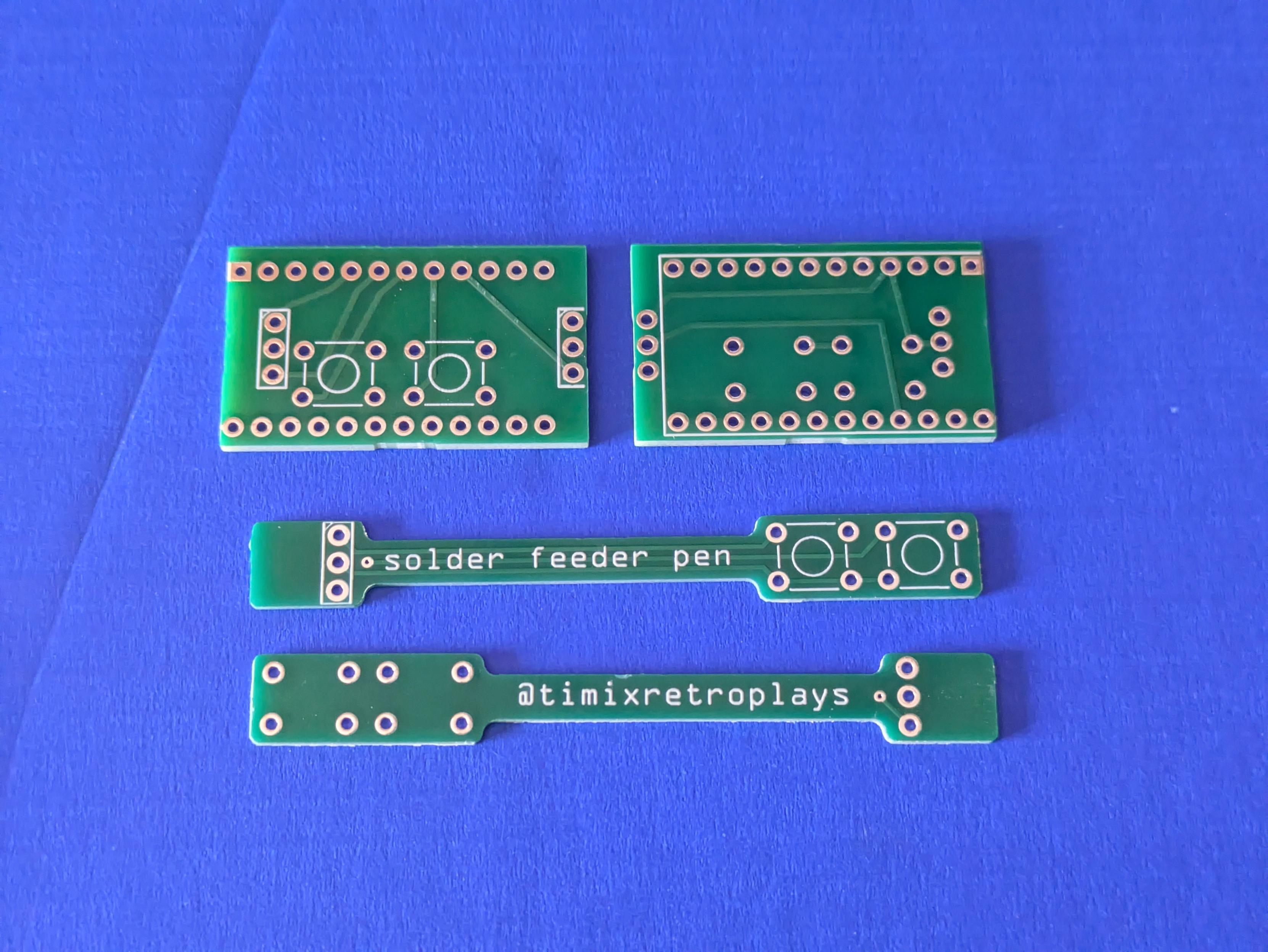
Success! Very small PCBs have arrived.
The long ones are 0.8mm thick - I think I could snap one if I wanted, but it's not going to happen by accident.
Also there are five of each and I bought plenty of everything else, so if anyone else in Australia thinks they might like a solder feeder pen, sing out.
That moment you realise, just as the solder is cooling down on the very last component, that you made a mistake weeks ago and put the pad for a component on the wrong side of the board and prototype #1 is garbage without rework
-
That moment you realise, just as the solder is cooling down on the very last component, that you made a mistake weeks ago and put the pad for a component on the wrong side of the board and prototype #1 is garbage without rework
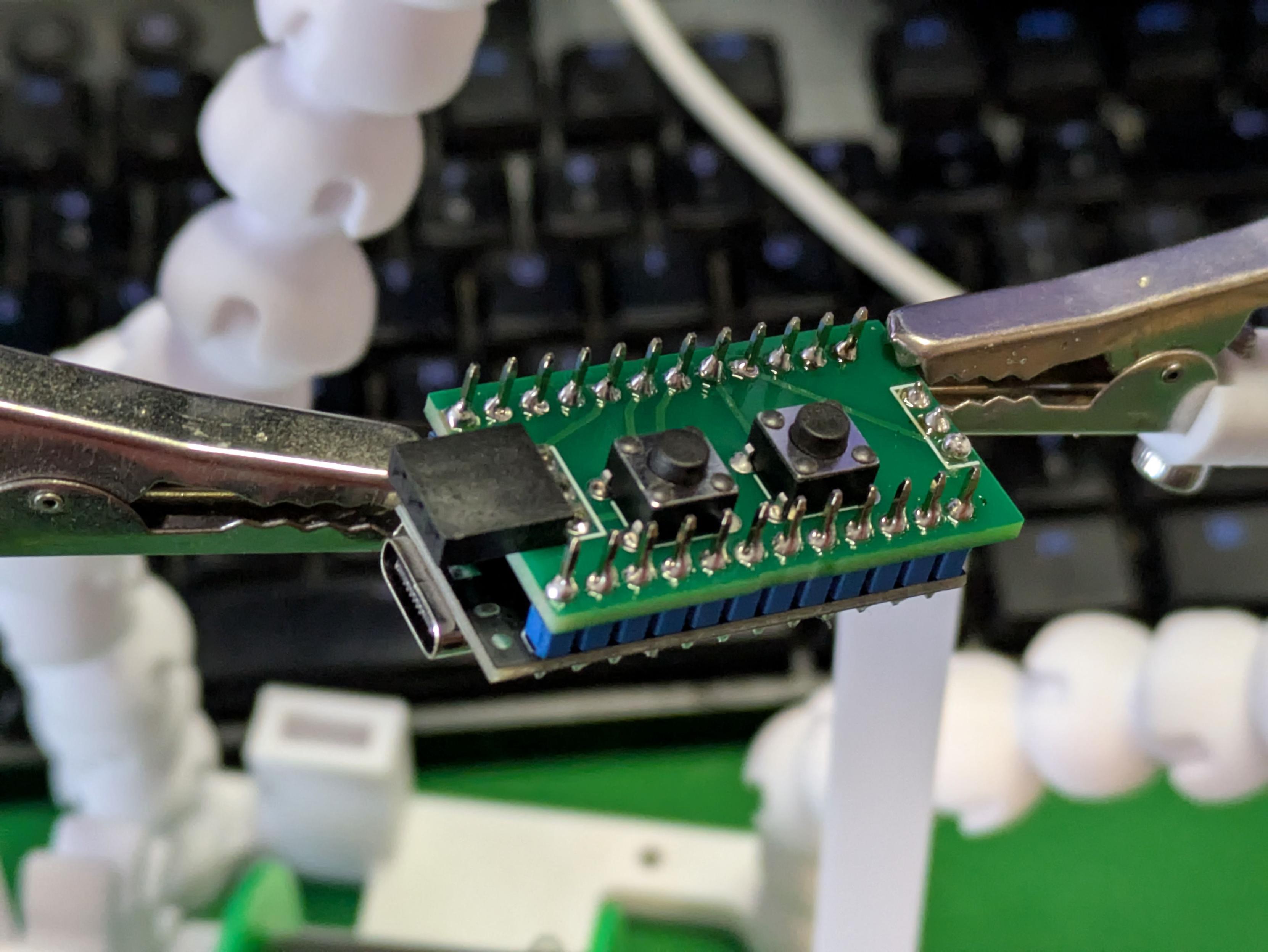
Not my best, not my worst - but for a V1.000 of something that is unreasonably crammed into as tiny a space as I could imagine, it's come together pretty well.
This is the mainboard for my solder feeder - the 3-pin socket near the Pro Micro's USB port is the connection out to the pen itself, the 3 pins at the back end go to the continuous rotation servo that actually moves stuff, and there are four buttons - the two on the main body will be for fast feeding, the two on the pen for slow.
-
Not my best, not my worst - but for a V1.000 of something that is unreasonably crammed into as tiny a space as I could imagine, it's come together pretty well.
This is the mainboard for my solder feeder - the 3-pin socket near the Pro Micro's USB port is the connection out to the pen itself, the 3 pins at the back end go to the continuous rotation servo that actually moves stuff, and there are four buttons - the two on the main body will be for fast feeding, the two on the pen for slow.
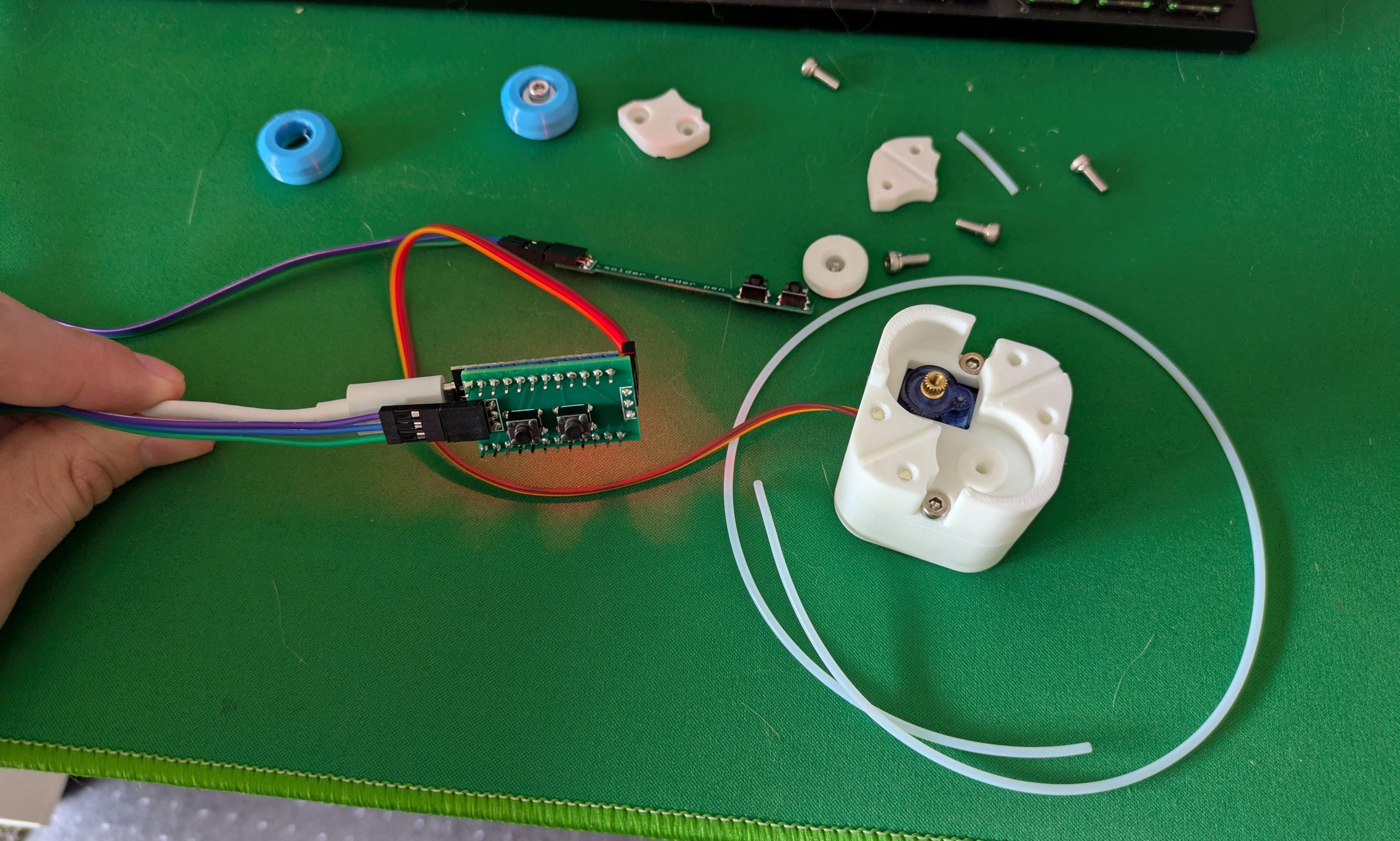
Well, the electronics seem to work correctly - all four buttons can make the servo run back and forth - but now there is a new problem: the servo suddenly looks and sounds underpowered, moving much more slowly than it did when everything was on the breadboard.
No code changes, and the extra electronics are just input-pullup buttons. Not sure why it'd behave differently now. A new spare servo acts exactly the same, and it's the same whether powered from VCC or RAW.
-
Well, the electronics seem to work correctly - all four buttons can make the servo run back and forth - but now there is a new problem: the servo suddenly looks and sounds underpowered, moving much more slowly than it did when everything was on the breadboard.
No code changes, and the extra electronics are just input-pullup buttons. Not sure why it'd behave differently now. A new spare servo acts exactly the same, and it's the same whether powered from VCC or RAW.
Now witness the power of this fully armed and operational solder feeder!
The power issue I think came down to a crappy Pro Micro clone board - another successfully flashed once and then permanently died, so the one in this short clip is actually the third one I've tried. It also sometimes cuts out until it's power cycled - I think it's overloading a cheap 5V regulator, version 2 will be powered from RAW rather than VCC.
This Works. Time to finish the enclosure. #3DPrinting #Electronics
-
Now witness the power of this fully armed and operational solder feeder!
The power issue I think came down to a crappy Pro Micro clone board - another successfully flashed once and then permanently died, so the one in this short clip is actually the third one I've tried. It also sometimes cuts out until it's power cycled - I think it's overloading a cheap 5V regulator, version 2 will be powered from RAW rather than VCC.
This Works. Time to finish the enclosure. #3DPrinting #Electronics
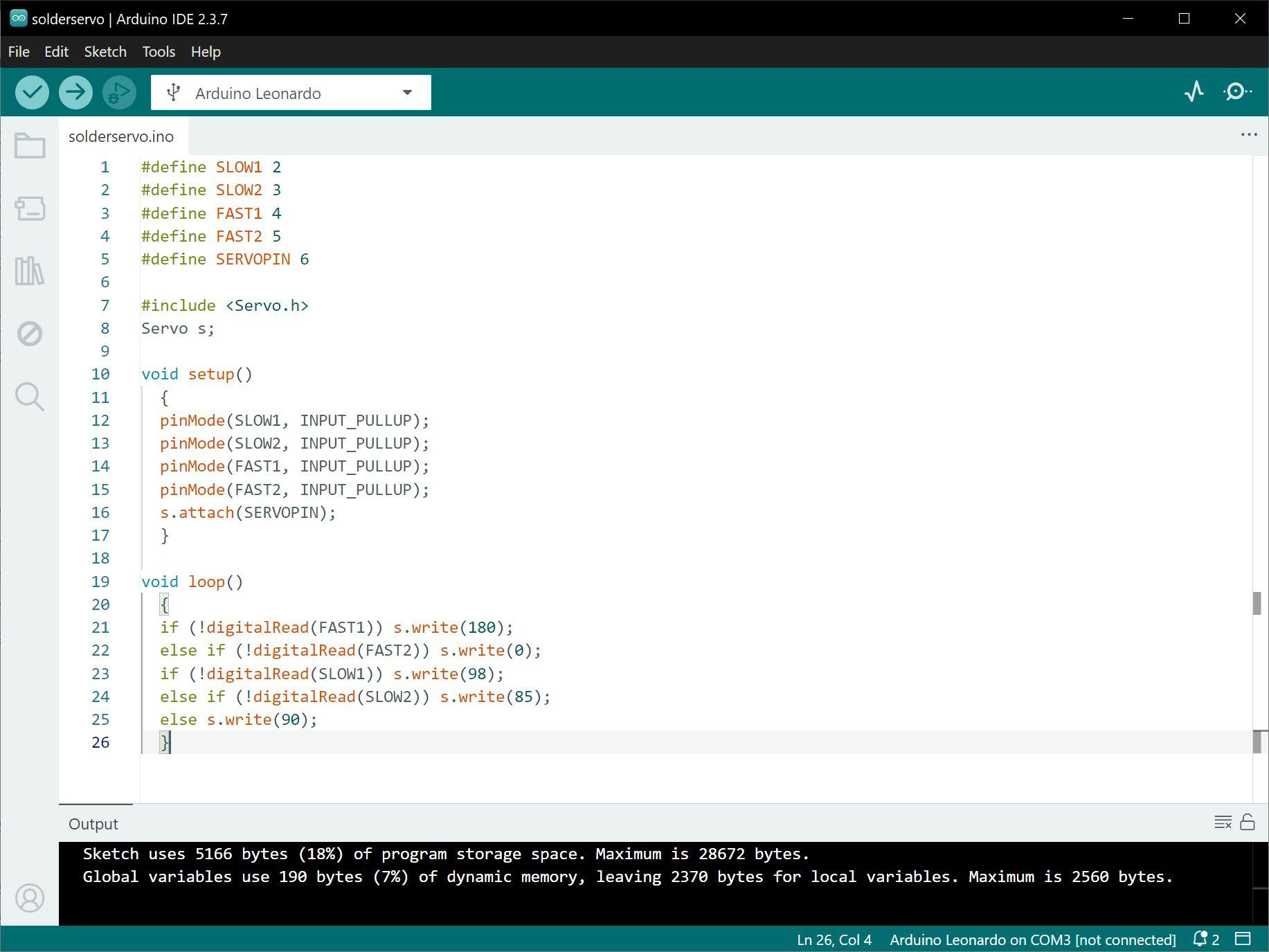
The code for this thing is dead simple - it reads from four buttons, then an if-then-else tree says what the servo does.
A regular servo gets commanded to positions expressed in degrees - 0 is fully one way, 90 centred, 180 fully the other. A continuous rotation servo like this one takes the same commands, but those values become relative speeds - so zero and 180 are full speed one way or the other, and 98 and 85 are the closest values I could get working for the slow feed option. #Arduino
-
The code for this thing is dead simple - it reads from four buttons, then an if-then-else tree says what the servo does.
A regular servo gets commanded to positions expressed in degrees - 0 is fully one way, 90 centred, 180 fully the other. A continuous rotation servo like this one takes the same commands, but those values become relative speeds - so zero and 180 are full speed one way or the other, and 98 and 85 are the closest values I could get working for the slow feed option. #Arduino
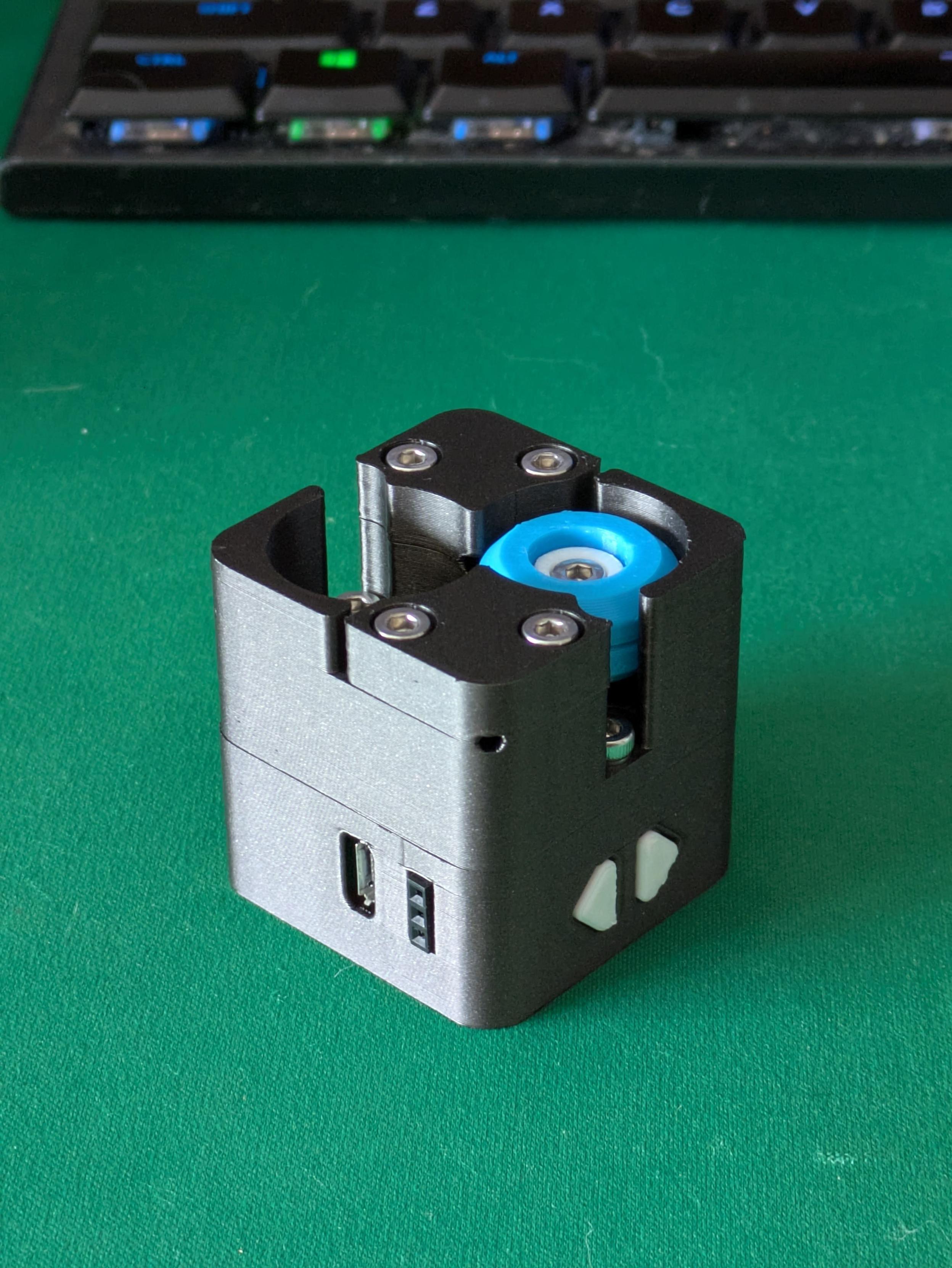
My completely arbitrary obsession with stuffing the entire workings of this thing into an equally arbitrary 4x4x4cm cube because that's how big a square I drew in Rhino 3D on day one of this project is... resulting in a pretty nice little clockwork-looking object.
I'm not loving the "Iron Grey Metallic PLA Metal" filament as much as I would for this though, that might be prettier for more monolithic parts but I think I want something more matte for this project in the end. #3DPrinting
-
My completely arbitrary obsession with stuffing the entire workings of this thing into an equally arbitrary 4x4x4cm cube because that's how big a square I drew in Rhino 3D on day one of this project is... resulting in a pretty nice little clockwork-looking object.
I'm not loving the "Iron Grey Metallic PLA Metal" filament as much as I would for this though, that might be prettier for more monolithic parts but I think I want something more matte for this project in the end. #3DPrinting
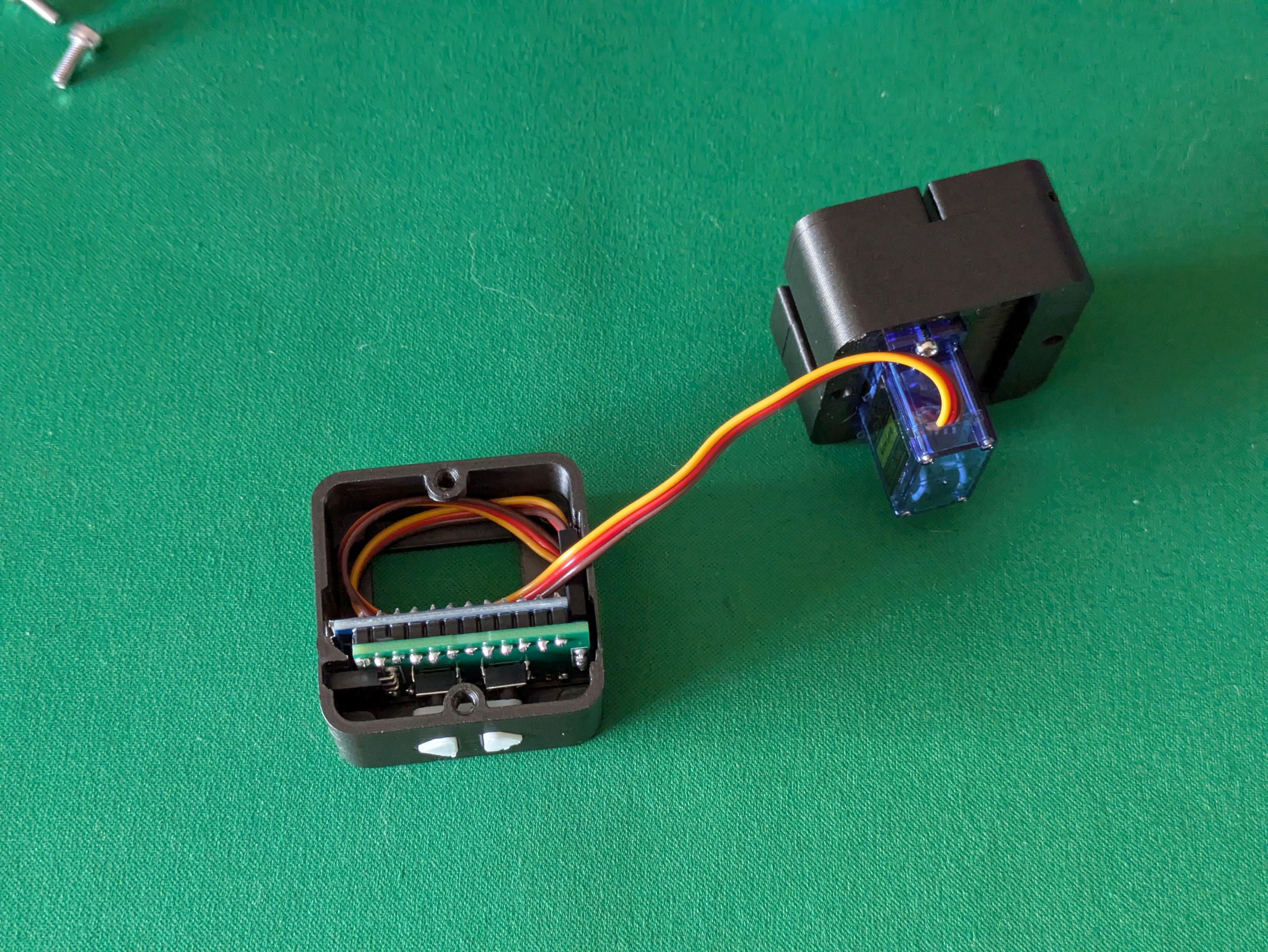
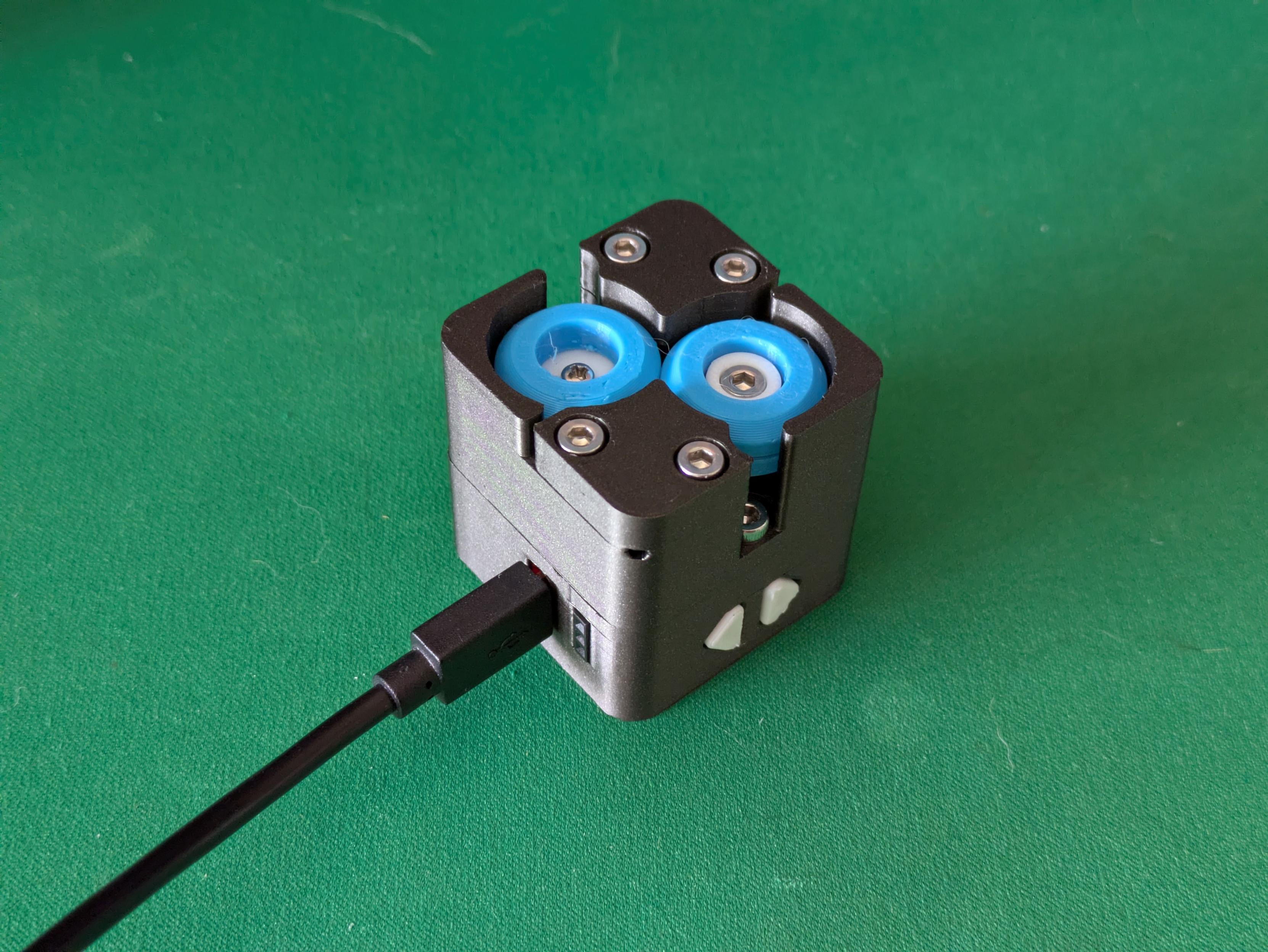
Holy crap I got the entire servo's cable in there - and it's powered up and spins when I press the buttons.
It spins the *wrong way*, but that's okay - that USB socket there is the Pro Micro so it's very easily reprogrammable. #Arduino
-
Holy crap I got the entire servo's cable in there - and it's powered up and spins when I press the buttons.
It spins the *wrong way*, but that's okay - that USB socket there is the Pro Micro so it's very easily reprogrammable. #Arduino
The fully assembled solder feeder, now attached to the front of my #SolderingStation. It replaces the simple little stand I previously used to just bend the end of my solder wire over - that's still attached next to it in case I ever want it again.
I think the trick with this filament is to print with super low layer height, and enable ironing - the top of this thing looks like machined delrin or something.
Last step is finishing the feeder pen itself.