Skip to content
  • Categories
  • Recent
  • Tags
  • Popular
  • World
  • Users
  • Groups
Skins
  • Light
  • Brite
  • Cerulean
  • Cosmo
  • Flatly
  • Journal
  • Litera
  • Lumen
  • Lux
  • Materia
  • Minty
  • Morph
  • Pulse
  • Sandstone
  • Simplex
  • Sketchy
  • Spacelab
  • United
  • Yeti
  • Zephyr
  • Dark
  • Cyborg
  • Darkly
  • Quartz
  • Slate
  • Solar
  • Superhero
  • Vapor

  • Default (Cyborg)
  • No Skin
Collapse
Brand Logo

CIRCLE WITH A DOT

  1. Home
  2. Uncategorized
  3. Ants That (Probably) Do Not Exist

Ants That (Probably) Do Not Exist

Scheduled Pinned Locked Moved Uncategorized
36 Posts 10 Posters 0 Views
  • Oldest to Newest
  • Newest to Oldest
  • Most Votes
Reply
  • Reply as topic
Log in to reply
This topic has been deleted. Only users with topic management privileges can see it.
  • grumpydad@infosec.exchangeG grumpydad@infosec.exchange

    @futurebird Nooooo.....

    khleedril@cyberplace.socialK This user is from outside of this forum
    khleedril@cyberplace.socialK This user is from outside of this forum
    khleedril@cyberplace.social
    wrote last edited by
    #20

    @grumpydad @futurebird MASSIVE ants.

    grumpydad@infosec.exchangeG futurebird@sauropods.winF 2 Replies Last reply
    0
    • datarama@hachyderm.ioD datarama@hachyderm.io

      @futurebird I mean, we probably wouldn't even realize for a long time if actual current-day ants started using tiny flint chips as handaxes, but there'd very likely be nothing left at all in a hundred years, let alone 200 million.

      But I'm also not really sure how useful flint tools would even be for ants? They live in a world where surface tension is a bigger worry than gravity is, and I'm not sure how much useful work they'd even be able to do with stone tools that they can't do with their natural bodies.

      futurebird@sauropods.winF This user is from outside of this forum
      futurebird@sauropods.winF This user is from outside of this forum
      futurebird@sauropods.win
      wrote last edited by
      #21

      @datarama

      The ways ant use their front legs and mandibles astound me. For example, if an ant needs to dig she my pick up a ball of dirt and move it in her mandibles as you'd expect. But if the soil is dry and sandy she will turn around and fling dirt between her four back legs using her two front legs.

      Ants use their front legs to deftly position objects so they can pick them up in their mandibles at the correct angle, they use their antennae and front legs to pack down sand.

      futurebird@sauropods.winF datarama@hachyderm.ioD 2 Replies Last reply
      0
      • futurebird@sauropods.winF futurebird@sauropods.win

        @Phosphenes @datarama

        I think it would be like what you find in ants today. The individuals are very intelligent as far as insects go, and make a wide range of complex choices, learn, and adapt their environments.

        The colony intelligence is like an overlay. The individuals might seem simple, but together they would casually and incrementally do astounding things without totally understanding what they were doing.

        So... "both."

        datarama@hachyderm.ioD This user is from outside of this forum
        datarama@hachyderm.ioD This user is from outside of this forum
        datarama@hachyderm.io
        wrote last edited by
        #22

        @futurebird @Phosphenes Individual bees are *shockingly* intelligent. They need to be, really - they need to communicate as complex things to each other as ants do, but they can't leave chemical trails (obviously) so they need a more complex system of "talking" to each other and good memory.

        Ants' "collective intelligence" can accomplish more things than bees', though, precisely because they can coordinate rapidly in ways that bees can't.

        futurebird@sauropods.winF 1 Reply Last reply
        0
        • futurebird@sauropods.winF futurebird@sauropods.win

          @datarama

          The ways ant use their front legs and mandibles astound me. For example, if an ant needs to dig she my pick up a ball of dirt and move it in her mandibles as you'd expect. But if the soil is dry and sandy she will turn around and fling dirt between her four back legs using her two front legs.

          Ants use their front legs to deftly position objects so they can pick them up in their mandibles at the correct angle, they use their antennae and front legs to pack down sand.

          futurebird@sauropods.winF This user is from outside of this forum
          futurebird@sauropods.winF This user is from outside of this forum
          futurebird@sauropods.win
          wrote last edited by
          #23

          @datarama

          There is just so much complexity and responsiveness in the way ants manipulate their environment, in just their basic locomotion that I think we take for granted.

          I think about how one would program a robot to do such things and my mind boggles.

          How does the ant decide *how* to move the soil? It could be as simple as trying each more energy intensive method until one works. But that still means that the ants must have some notion of the abstract goal of moving the soil.

          futurebird@sauropods.winF 1 Reply Last reply
          0
          • futurebird@sauropods.winF futurebird@sauropods.win

            @datarama

            There is just so much complexity and responsiveness in the way ants manipulate their environment, in just their basic locomotion that I think we take for granted.

            I think about how one would program a robot to do such things and my mind boggles.

            How does the ant decide *how* to move the soil? It could be as simple as trying each more energy intensive method until one works. But that still means that the ants must have some notion of the abstract goal of moving the soil.

            futurebird@sauropods.winF This user is from outside of this forum
            futurebird@sauropods.winF This user is from outside of this forum
            futurebird@sauropods.win
            wrote last edited by
            #24

            @datarama

            I've seen ants with larger mandibles using their head like a snow plow to move debris.

            Is that just an instinctive pattern, or do the ants invent these ways of solving the problem?

            Once an ant finds a method thats effective she sticks to it and does it more often. So I think there must be some learning. And little ants never do the "snow plow" move because presumably, if they tried it, it wouldn't be as effective.

            1 Reply Last reply
            0
            • futurebird@sauropods.winF futurebird@sauropods.win

              @datarama

              The ways ant use their front legs and mandibles astound me. For example, if an ant needs to dig she my pick up a ball of dirt and move it in her mandibles as you'd expect. But if the soil is dry and sandy she will turn around and fling dirt between her four back legs using her two front legs.

              Ants use their front legs to deftly position objects so they can pick them up in their mandibles at the correct angle, they use their antennae and front legs to pack down sand.

              datarama@hachyderm.ioD This user is from outside of this forum
              datarama@hachyderm.ioD This user is from outside of this forum
              datarama@hachyderm.io
              wrote last edited by
              #25

              @futurebird That's sorta what I mean. Are there really anything an ant (even a hypothetical sapient one) would ever need to do that it'd need to carry around a piece of sharpened stone for? It seems to me a primate-scale approach more than an ant-scale one.

              (If I were to do a fictional ant civilization, I'd let the "spark of sapience" be associated with some kind of genome manipulation rather than with primate-style toolmaking or even symbolic language. Seems a lot more antish! 🙂 )

              futurebird@sauropods.winF 1 Reply Last reply
              0
              • datarama@hachyderm.ioD datarama@hachyderm.io

                @futurebird @Phosphenes Individual bees are *shockingly* intelligent. They need to be, really - they need to communicate as complex things to each other as ants do, but they can't leave chemical trails (obviously) so they need a more complex system of "talking" to each other and good memory.

                Ants' "collective intelligence" can accomplish more things than bees', though, precisely because they can coordinate rapidly in ways that bees can't.

                futurebird@sauropods.winF This user is from outside of this forum
                futurebird@sauropods.winF This user is from outside of this forum
                futurebird@sauropods.win
                wrote last edited by
                #26

                @datarama @Phosphenes

                I tend to think that one of the reasons you see intelligence develop across living things is for group coordination.

                datarama@hachyderm.ioD 1 Reply Last reply
                0
                • datarama@hachyderm.ioD datarama@hachyderm.io

                  @futurebird That's sorta what I mean. Are there really anything an ant (even a hypothetical sapient one) would ever need to do that it'd need to carry around a piece of sharpened stone for? It seems to me a primate-scale approach more than an ant-scale one.

                  (If I were to do a fictional ant civilization, I'd let the "spark of sapience" be associated with some kind of genome manipulation rather than with primate-style toolmaking or even symbolic language. Seems a lot more antish! 🙂 )

                  futurebird@sauropods.winF This user is from outside of this forum
                  futurebird@sauropods.winF This user is from outside of this forum
                  futurebird@sauropods.win
                  wrote last edited by
                  #27

                  @datarama

                  If ants could make very sharp blades they might be useful. For surgery or manipulating plant seeds.

                  datarama@hachyderm.ioD 1 Reply Last reply
                  0
                  • futurebird@sauropods.winF futurebird@sauropods.win

                    Ants That (Probably) Do Not Exist

                    1. Cave Ants
                    2. Sea Ants
                    3. Time Ants
                    4. Space Ants
                    5. Cloud Ants
                    6. Ice Ants

                    gcoleman@social.coopG This user is from outside of this forum
                    gcoleman@social.coopG This user is from outside of this forum
                    gcoleman@social.coop
                    wrote last edited by
                    #28

                    @futurebird Ants need to level themselves up if they're going to catch up with Pikmin!

                    Link Preview Image
                    1 Reply Last reply
                    0
                    • khleedril@cyberplace.socialK khleedril@cyberplace.social

                      @grumpydad @futurebird MASSIVE ants.

                      grumpydad@infosec.exchangeG This user is from outside of this forum
                      grumpydad@infosec.exchangeG This user is from outside of this forum
                      grumpydad@infosec.exchange
                      wrote last edited by
                      #29

                      @khleedril @futurebird 😨

                      1 Reply Last reply
                      0
                      • futurebird@sauropods.winF futurebird@sauropods.win

                        @datarama @Phosphenes

                        I tend to think that one of the reasons you see intelligence develop across living things is for group coordination.

                        datarama@hachyderm.ioD This user is from outside of this forum
                        datarama@hachyderm.ioD This user is from outside of this forum
                        datarama@hachyderm.io
                        wrote last edited by
                        #30

                        @futurebird @Phosphenes Octopuses are solitary, though.

                        futurebird@sauropods.winF 1 Reply Last reply
                        0
                        • khleedril@cyberplace.socialK khleedril@cyberplace.social

                          @grumpydad @futurebird MASSIVE ants.

                          futurebird@sauropods.winF This user is from outside of this forum
                          futurebird@sauropods.winF This user is from outside of this forum
                          futurebird@sauropods.win
                          wrote last edited by
                          #31

                          @khleedril @grumpydad

                          There is some evidence that ants were once a bit larger. But probably the largest ants alive today are as large as they have ever been (about 2cm long for workers 3cm for queens)

                          Ants the size of apples could rule the world. I think we all know that. Think about coconut crab ants. Someday perhaps.

                          1 Reply Last reply
                          0
                          • datarama@hachyderm.ioD datarama@hachyderm.io

                            @futurebird @Phosphenes Octopuses are solitary, though.

                            futurebird@sauropods.winF This user is from outside of this forum
                            futurebird@sauropods.winF This user is from outside of this forum
                            futurebird@sauropods.win
                            wrote last edited by
                            #32

                            @datarama @Phosphenes

                            Yeah. So not always. But I do think it's a driving factor in some cases.

                            datarama@hachyderm.ioD 1 Reply Last reply
                            0
                            • futurebird@sauropods.winF futurebird@sauropods.win

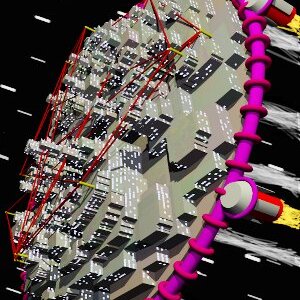
                              That old psudoscience story about a vast vanished ancient civilization that lived on early earth and left little evidence that they existed.

                              But they were ants. They live 200 million years ago and left for space and we find out about them when they return in their space habitats to check on the old home planet and see how things are going.

                              rayhindle@mastodon.socialR This user is from outside of this forum
                              rayhindle@mastodon.socialR This user is from outside of this forum
                              rayhindle@mastodon.social
                              wrote last edited by
                              #33

                              @futurebird WhAt happens when they find out it has been taken over by a psudo-inteligent ape?

                              Link Preview Image
                              1 Reply Last reply
                              0
                              • futurebird@sauropods.winF futurebird@sauropods.win

                                @datarama

                                If ants could make very sharp blades they might be useful. For surgery or manipulating plant seeds.

                                datarama@hachyderm.ioD This user is from outside of this forum
                                datarama@hachyderm.ioD This user is from outside of this forum
                                datarama@hachyderm.io
                                wrote last edited by
                                #34

                                @futurebird Sure, but I'm not sure there'd be any good way to make a sharp flint blade that scale. Possibly obsidian ones?

                                But, again, I think it'd be more antish to figure out a way to spawn a few workers on-demand with incredibly sharp mandibles (perhaps with zinc blades, like leafcutters?) than to make a sharp piece of stone or glass to carry around.

                                futurebird@sauropods.winF 1 Reply Last reply
                                0
                                • futurebird@sauropods.winF futurebird@sauropods.win

                                  @datarama @Phosphenes

                                  Yeah. So not always. But I do think it's a driving factor in some cases.

                                  datarama@hachyderm.ioD This user is from outside of this forum
                                  datarama@hachyderm.ioD This user is from outside of this forum
                                  datarama@hachyderm.io
                                  wrote last edited by
                                  #35

                                  @futurebird @Phosphenes In humans, it *definitely* is - and in general, high intelligence tends to be associated with social behaviour. Caveat: Humans define "high intelligence" as "acting somewhat like humans do", and we're highly social, so...

                                  1 Reply Last reply
                                  0
                                  • datarama@hachyderm.ioD datarama@hachyderm.io

                                    @futurebird Sure, but I'm not sure there'd be any good way to make a sharp flint blade that scale. Possibly obsidian ones?

                                    But, again, I think it'd be more antish to figure out a way to spawn a few workers on-demand with incredibly sharp mandibles (perhaps with zinc blades, like leafcutters?) than to make a sharp piece of stone or glass to carry around.

                                    futurebird@sauropods.winF This user is from outside of this forum
                                    futurebird@sauropods.winF This user is from outside of this forum
                                    futurebird@sauropods.win
                                    wrote last edited by
                                    #36

                                    @datarama

                                    I think that's sensible. Ants might also find a method to make their mandible sharper for such purposes. So the tools might be more like body modifications.

                                    1 Reply Last reply
                                    0
                                    • R relay@relay.infosec.exchange shared this topic
                                    Reply
                                    • Reply as topic
                                    Log in to reply
                                    • Oldest to Newest
                                    • Newest to Oldest
                                    • Most Votes


                                    • Login

                                    • Login or register to search.
                                    • First post
                                      Last post
                                    0
                                    • Categories
                                    • Recent
                                    • Tags
                                    • Popular
                                    • World
                                    • Users
                                    • Groups