Surprise Solar Boom in #Pakistan Helps Millions, But Harms Grid
-
Surprise Solar Boom in #Pakistan Helps Millions, But Harms Grid
"For corn grower, Mohammad Murtaza, installing panels has enabled him to slash his power bill by switching irrigation pumps from diesel or pricey electricity from the grid. Farmers like him are the latest to join the #solar craze, following households and factories, in a country where power prices for some have tripled since 2021 as the government cut subsidies to meet IMF loan requirements."
-
Surprise Solar Boom in #Pakistan Helps Millions, But Harms Grid
"For corn grower, Mohammad Murtaza, installing panels has enabled him to slash his power bill by switching irrigation pumps from diesel or pricey electricity from the grid. Farmers like him are the latest to join the #solar craze, following households and factories, in a country where power prices for some have tripled since 2021 as the government cut subsidies to meet IMF loan requirements."
What happened:
In 2021, Pakistan needed a loan.
The IMF offered a loan, but - as with many IMF loans - it came with strings attached."Pakistan and the IMF have agreed to restore energy sector viability as part of the bailout program, which includes cost cuts and privatization of state-owned power distribution companies."
And subsidies had to be done away with.
Predictably, electricity prices rose steeply. People started turning to solar PV.
-
What happened:
In 2021, Pakistan needed a loan.
The IMF offered a loan, but - as with many IMF loans - it came with strings attached."Pakistan and the IMF have agreed to restore energy sector viability as part of the bailout program, which includes cost cuts and privatization of state-owned power distribution companies."
And subsidies had to be done away with.
Predictably, electricity prices rose steeply. People started turning to solar PV.
Now, there is so much solar in #Pakistan, and such a wholesale abandonment of the expensive grid, that there's talk of “risk of a utility death spiral.”
“Pakistan’s [now privatised] distribution companies are losing every day as solar becomes attractive.”
But.
"The IMF has said retaining demand should be a key objective of reforms."Seems to be the terms and conditions of the IMF loan was responsible for this "crisis".
-
Now, there is so much solar in #Pakistan, and such a wholesale abandonment of the expensive grid, that there's talk of “risk of a utility death spiral.”
“Pakistan’s [now privatised] distribution companies are losing every day as solar becomes attractive.”
But.
"The IMF has said retaining demand should be a key objective of reforms."Seems to be the terms and conditions of the IMF loan was responsible for this "crisis".
The world should be happy that Pakistan has engaged in a transition to #CleanEnergy (almost entirely without subsidies, it should be added).
This is the much vaunted free market at work, man.
But now the privatised grid companies are wringing their hands and it would surprise no one if the IMF imposes further terms and conditions that are unlikely to benefit Pakistan. Think energy austerity.
Hypocrites.
-
The world should be happy that Pakistan has engaged in a transition to #CleanEnergy (almost entirely without subsidies, it should be added).
This is the much vaunted free market at work, man.
But now the privatised grid companies are wringing their hands and it would surprise no one if the IMF imposes further terms and conditions that are unlikely to benefit Pakistan. Think energy austerity.
Hypocrites.
@urlyman pointed me to this podcast with Fadhel Kaboub that starts with:
“If you divide the world into rich and poor countries – global north and global south – and you net out *all* the global financial transactions – meaning you include exports, imports, interest payments, debt payments, charity, foreign direct investment, including illicit transactions – you find that the global north takes $2 trillion a year from the global south.”
$2 tn a year.
https://www.planetcritical.com/p/decolonise-to-decarbonise-fadhel
-
@urlyman pointed me to this podcast with Fadhel Kaboub that starts with:
“If you divide the world into rich and poor countries – global north and global south – and you net out *all* the global financial transactions – meaning you include exports, imports, interest payments, debt payments, charity, foreign direct investment, including illicit transactions – you find that the global north takes $2 trillion a year from the global south.”
$2 tn a year.
https://www.planetcritical.com/p/decolonise-to-decarbonise-fadhel
"Economists Samir Amin and Arghiri Emmanuel described this as a “hidden transfer of value” from the South, which sustains high levels of income and consumption in the North. The drain takes place subtly and almost invisibly, without the overt violence of colonial occupation and therefore without provoking protest and moral outrage.
Today, the global North drains from the South commodities worth $2.2 trillion per year, in Northern prices."
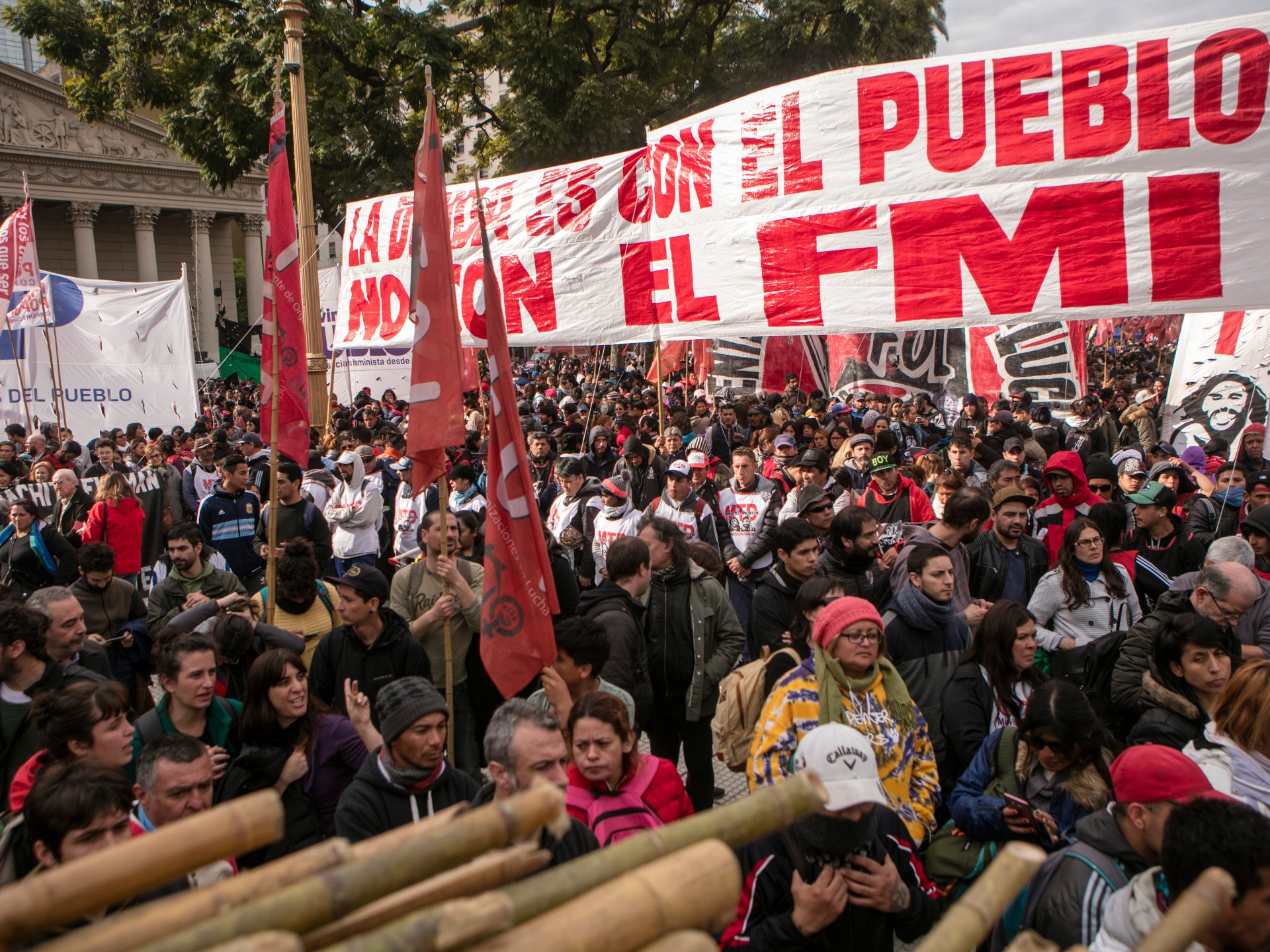
Rich countries drained $152tn from the global South since 1960
Imperialism never ended, it just changed form.
Al Jazeera (www.aljazeera.com)
-
"Economists Samir Amin and Arghiri Emmanuel described this as a “hidden transfer of value” from the South, which sustains high levels of income and consumption in the North. The drain takes place subtly and almost invisibly, without the overt violence of colonial occupation and therefore without provoking protest and moral outrage.
Today, the global North drains from the South commodities worth $2.2 trillion per year, in Northern prices."
Rich countries drained $152tn from the global South since 1960
Imperialism never ended, it just changed form.
Al Jazeera (www.aljazeera.com)
If you include the value of
"12 billion tons of embodied raw material equivalents, 822 million hectares of embodied land, 21 exajoules of embodied energy, and 188 million person-years of embodied labour, [the transfer is] worth $10.8 trillion in Northern prices."
That's for 2015 alone. -
If you include the value of
"12 billion tons of embodied raw material equivalents, 822 million hectares of embodied land, 21 exajoules of embodied energy, and 188 million person-years of embodied labour, [the transfer is] worth $10.8 trillion in Northern prices."
That's for 2015 alone."#Pakistan has gone from an inconsequential solar market to the sixth-largest in the world.
[It] is the latest sign that energy authorities are underestimating how much clean power the world demands — and that energy models can suffer from the same biases as their makers. Failing to grasp how much energy is wanted, and the things people in places like Pakistan might be willing to do to get it, leaves the world unprepared to build, fund, and plan for a cleaner future."

A surprise solar boom reveals a fatal flaw in our climate change projections
Energy forecasts keep underestimating the demand for power in developing countries of the Global South.

Vox (www.vox.com)
-
"#Pakistan has gone from an inconsequential solar market to the sixth-largest in the world.
[It] is the latest sign that energy authorities are underestimating how much clean power the world demands — and that energy models can suffer from the same biases as their makers. Failing to grasp how much energy is wanted, and the things people in places like Pakistan might be willing to do to get it, leaves the world unprepared to build, fund, and plan for a cleaner future."
A surprise solar boom reveals a fatal flaw in our climate change projections
Energy forecasts keep underestimating the demand for power in developing countries of the Global South.
Vox (www.vox.com)
"The pattern is that Western energy forecasters are continually surprised by how much energy people in developing countries will consume.
The world’s growing middle class isn’t waiting for permission to buy air conditioners. The task now is to make sure that the energy that powers them is clean — and that means having more than enough solar panels for Lahore as well as Copenhagen."
A surprise solar boom reveals a fatal flaw in our climate change projections
Energy forecasts keep underestimating the demand for power in developing countries of the Global South.
Vox (www.vox.com)
-
"The pattern is that Western energy forecasters are continually surprised by how much energy people in developing countries will consume.
The world’s growing middle class isn’t waiting for permission to buy air conditioners. The task now is to make sure that the energy that powers them is clean — and that means having more than enough solar panels for Lahore as well as Copenhagen."
A surprise solar boom reveals a fatal flaw in our climate change projections
Energy forecasts keep underestimating the demand for power in developing countries of the Global South.
Vox (www.vox.com)
"In yet another knee-jerk reaction to curb #RenewableEnergy growth through #solar net metering amid high grid electricity costs, [#Pakistan's] government on Thursday reduced the buyback rate by two-thirds to Rs10 per unit and scrapped net billing.
The decision [is] applicable to new net-metering consumers."
-
"In yet another knee-jerk reaction to curb #RenewableEnergy growth through #solar net metering amid high grid electricity costs, [#Pakistan's] government on Thursday reduced the buyback rate by two-thirds to Rs10 per unit and scrapped net billing.
The decision [is] applicable to new net-metering consumers."
Pakistan has, quietly and without subsidies, become the sixth-largest solar market in the world (see a few posts up in this thread). And now,
"Pakistan plans to ask Qatar to delay delivery of liquefied natural gas supply over the next five years as the South Asian country grapples with weak demand and mounting import costs."
-
Pakistan has, quietly and without subsidies, become the sixth-largest solar market in the world (see a few posts up in this thread). And now,
"Pakistan plans to ask Qatar to delay delivery of liquefied natural gas supply over the next five years as the South Asian country grapples with weak demand and mounting import costs."
"In 2024, Pakistan installed about 15 Gigawatts of solar panels; for context, the country’s total peak electricity demand is about 30 Gigawatts.
Households put so many panels on their rooftops that Pakistani cities now look visibly different on satellite maps."
Africa Is Buying a Record Number of Chinese Solar Panels
Energy-starved countries on the continent have reluctantly turned to coal and gas for decades. Cheap Chinese solar panels are now finally changing the calculus.
WIRED (www.wired.com)
These countries are leapfrogging "developed" countries which have painted themselves into a fossil fueled corner.
-
"In 2024, Pakistan installed about 15 Gigawatts of solar panels; for context, the country’s total peak electricity demand is about 30 Gigawatts.
Households put so many panels on their rooftops that Pakistani cities now look visibly different on satellite maps."
Africa Is Buying a Record Number of Chinese Solar Panels
Energy-starved countries on the continent have reluctantly turned to coal and gas for decades. Cheap Chinese solar panels are now finally changing the calculus.
WIRED (www.wired.com)
These countries are leapfrogging "developed" countries which have painted themselves into a fossil fueled corner.
Leapfrogging!
In May 2025, African countries imported a combined 1.57 GW of solar panels from China, an all time high. (Like adding three-fourths of the capacity of the Hoover Dam in one month.) The spike didn’t come from relatively affluent African countries like South Africa, but rather from nearly two dozen smaller nations.
Less developed countries, such as Chad, have imported enough solar panels to replace their country’s entire current power generation capacity."
Africa Is Buying a Record Number of Chinese Solar Panels
Energy-starved countries on the continent have reluctantly turned to coal and gas for decades. Cheap Chinese solar panels are now finally changing the calculus.
WIRED (www.wired.com)
-
Leapfrogging!
In May 2025, African countries imported a combined 1.57 GW of solar panels from China, an all time high. (Like adding three-fourths of the capacity of the Hoover Dam in one month.) The spike didn’t come from relatively affluent African countries like South Africa, but rather from nearly two dozen smaller nations.
Less developed countries, such as Chad, have imported enough solar panels to replace their country’s entire current power generation capacity."
Africa Is Buying a Record Number of Chinese Solar Panels
Energy-starved countries on the continent have reluctantly turned to coal and gas for decades. Cheap Chinese solar panels are now finally changing the calculus.
WIRED (www.wired.com)
"Solar panel imports will reduce fuel imports. The savings from avoiding diesel can repay the cost of a solar panel within six months in Nigeria, and even less in other countries. In nine of the top ten solar panel importers, the import value of refined petroleum eclipses the import value of solar panels by a factor of between 30 to 107."
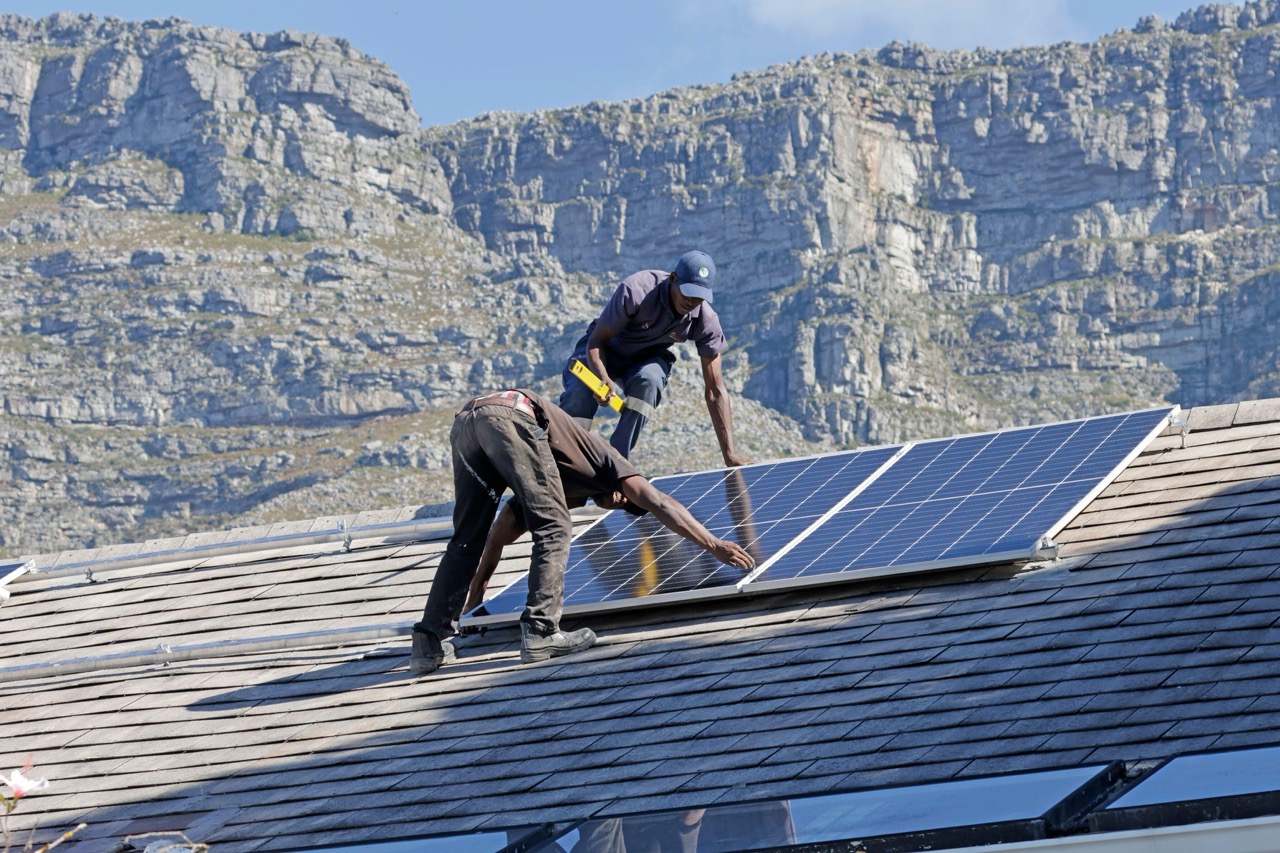
The first evidence of a take-off in solar in Africa | Ember
There has been a major pick-up in solar panel imports into Africa over the last 12 months - a shift that is likely to impact almost every country on the continent.

Ember (ember-energy.org)
-
"Solar panel imports will reduce fuel imports. The savings from avoiding diesel can repay the cost of a solar panel within six months in Nigeria, and even less in other countries. In nine of the top ten solar panel importers, the import value of refined petroleum eclipses the import value of solar panels by a factor of between 30 to 107."
The first evidence of a take-off in solar in Africa | Ember
There has been a major pick-up in solar panel imports into Africa over the last 12 months - a shift that is likely to impact almost every country on the continent.
Ember (ember-energy.org)
"What’s happening across Sub-Saharan Africa right now is the most ambitious infrastructure project in human history, except it’s not being built by governments or utilities or World Bank consortiums. It’s being built by startups selling solar panels to farmers on payment plans. And it’s working."
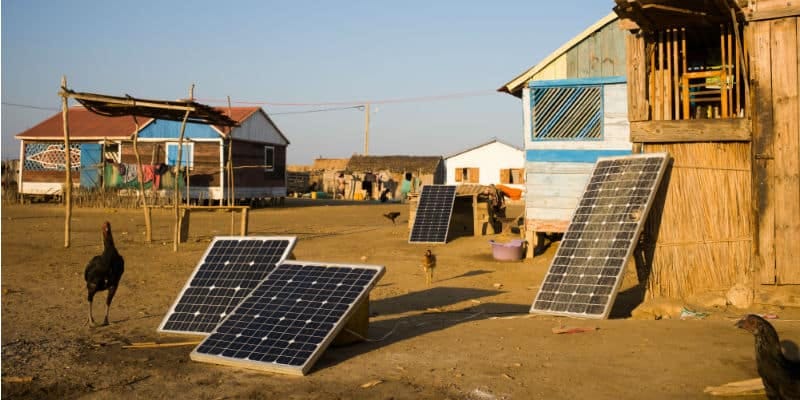
Why Solarpunk is already happening in Africa
Or: How Africa is building the future by skipping the past

(climatedrift.substack.com)
h/t @glynmoody
https://mastodon.social/@glynmoody/115558652174425347 -
"What’s happening across Sub-Saharan Africa right now is the most ambitious infrastructure project in human history, except it’s not being built by governments or utilities or World Bank consortiums. It’s being built by startups selling solar panels to farmers on payment plans. And it’s working."
Why Solarpunk is already happening in Africa
Or: How Africa is building the future by skipping the past
(climatedrift.substack.com)
h/t @glynmoody
https://mastodon.social/@glynmoody/115558652174425347Not in the news:
The electric fast-track for emerging markets
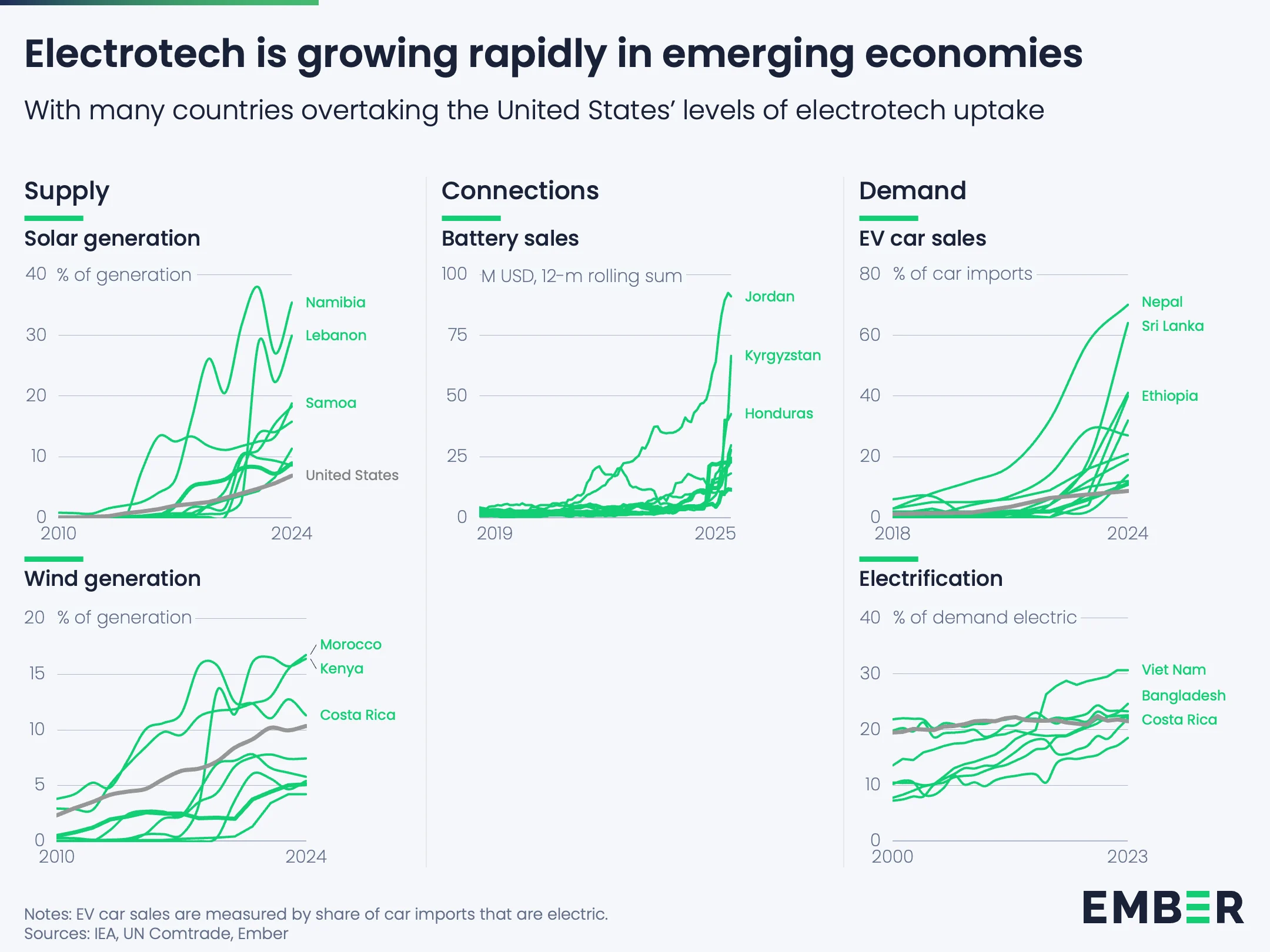
"How electrotech can serve the billion people left behind by the fossil system and open up a faster path to prosperity.Across supply, connections and end-use, #leapfrogging is already visible. Around half of CVF* nations, measured by electricity demand, have already surpassed the United States in solar penetration, and half in electrification"

The electric fast-track for emerging markets | Ember
How electrotech can serve the billion people left behind by the fossil system and open up a faster path to prosperity
Ember (ember-energy.org)
*74 member nations of the Climate Vulnerable Forum
-
Not in the news:
The electric fast-track for emerging markets
"How electrotech can serve the billion people left behind by the fossil system and open up a faster path to prosperity.Across supply, connections and end-use, #leapfrogging is already visible. Around half of CVF* nations, measured by electricity demand, have already surpassed the United States in solar penetration, and half in electrification"
The electric fast-track for emerging markets | Ember
How electrotech can serve the billion people left behind by the fossil system and open up a faster path to prosperity
Ember (ember-energy.org)
*74 member nations of the Climate Vulnerable Forum
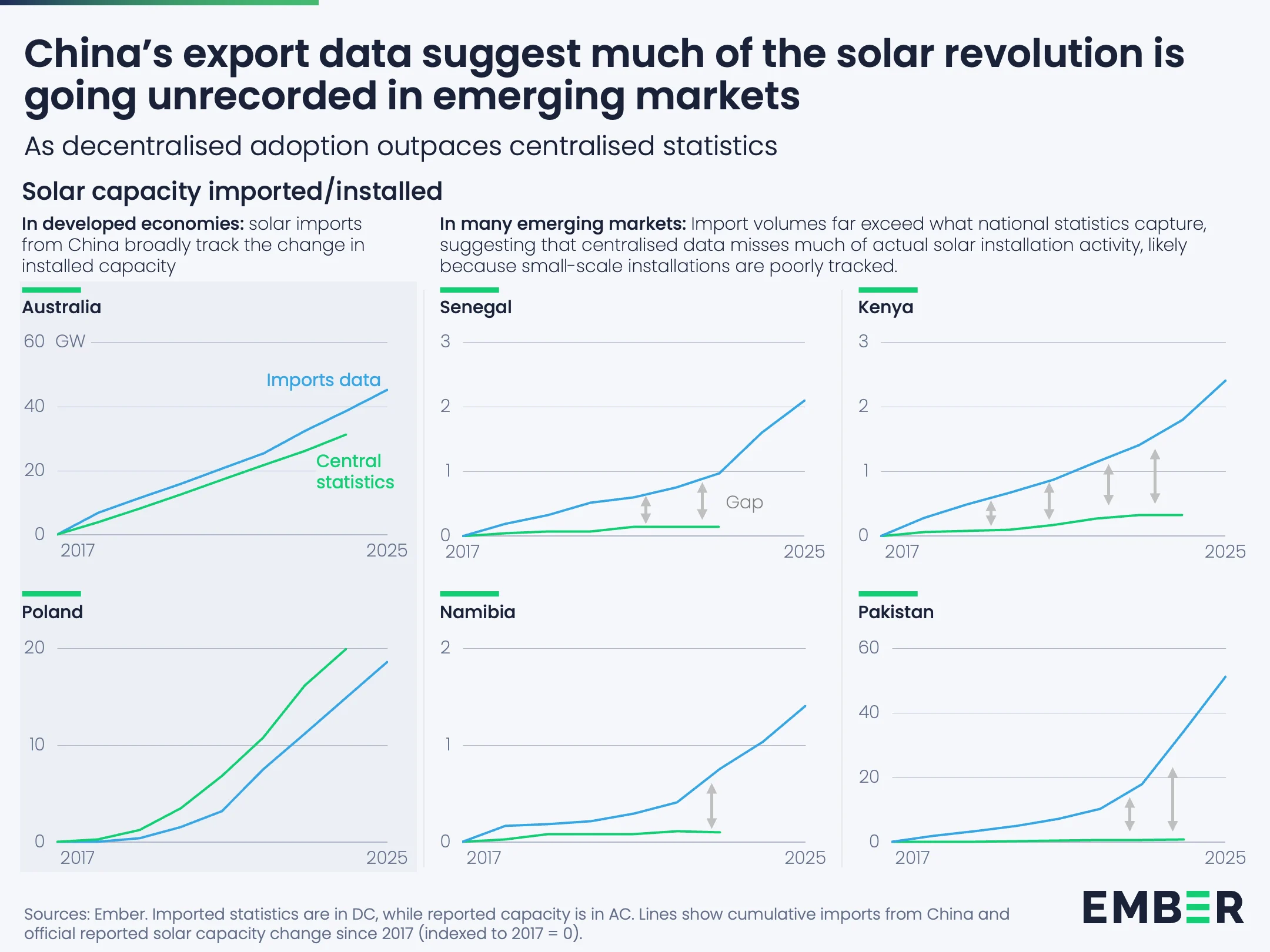
It's a quiet leapfrogging that's not in the news because "Change is outpacing the centralised statistics: for example, small solar panels on balconies and rooftops go largely unregistered in national figures. The gap between panels imported and capacity officially reported is large and growing."
The electric fast-track for emerging markets | Ember
How electrotech can serve the billion people left behind by the fossil system and open up a faster path to prosperity
Ember (ember-energy.org)
-
Not in the news:
The electric fast-track for emerging markets
"How electrotech can serve the billion people left behind by the fossil system and open up a faster path to prosperity.Across supply, connections and end-use, #leapfrogging is already visible. Around half of CVF* nations, measured by electricity demand, have already surpassed the United States in solar penetration, and half in electrification"
The electric fast-track for emerging markets | Ember
How electrotech can serve the billion people left behind by the fossil system and open up a faster path to prosperity
Ember (ember-energy.org)
*74 member nations of the Climate Vulnerable Forum
@CelloMomOnCars For me the most eye opening chart is the one on distributed v grid cost where for any distance the distributed grid crosses the centralised grid in 2035
That's quite a change the graphs are suggesting.
-
R relay@relay.infosec.exchange shared this topic
-
It's a quiet leapfrogging that's not in the news because "Change is outpacing the centralised statistics: for example, small solar panels on balconies and rooftops go largely unregistered in national figures. The gap between panels imported and capacity officially reported is large and growing."
The electric fast-track for emerging markets | Ember
How electrotech can serve the billion people left behind by the fossil system and open up a faster path to prosperity
Ember (ember-energy.org)
This is at the crux:
Macroeconomics: from fossil import drain to electric abundanceAnd the question for future energy choice: Fast-track or detour?
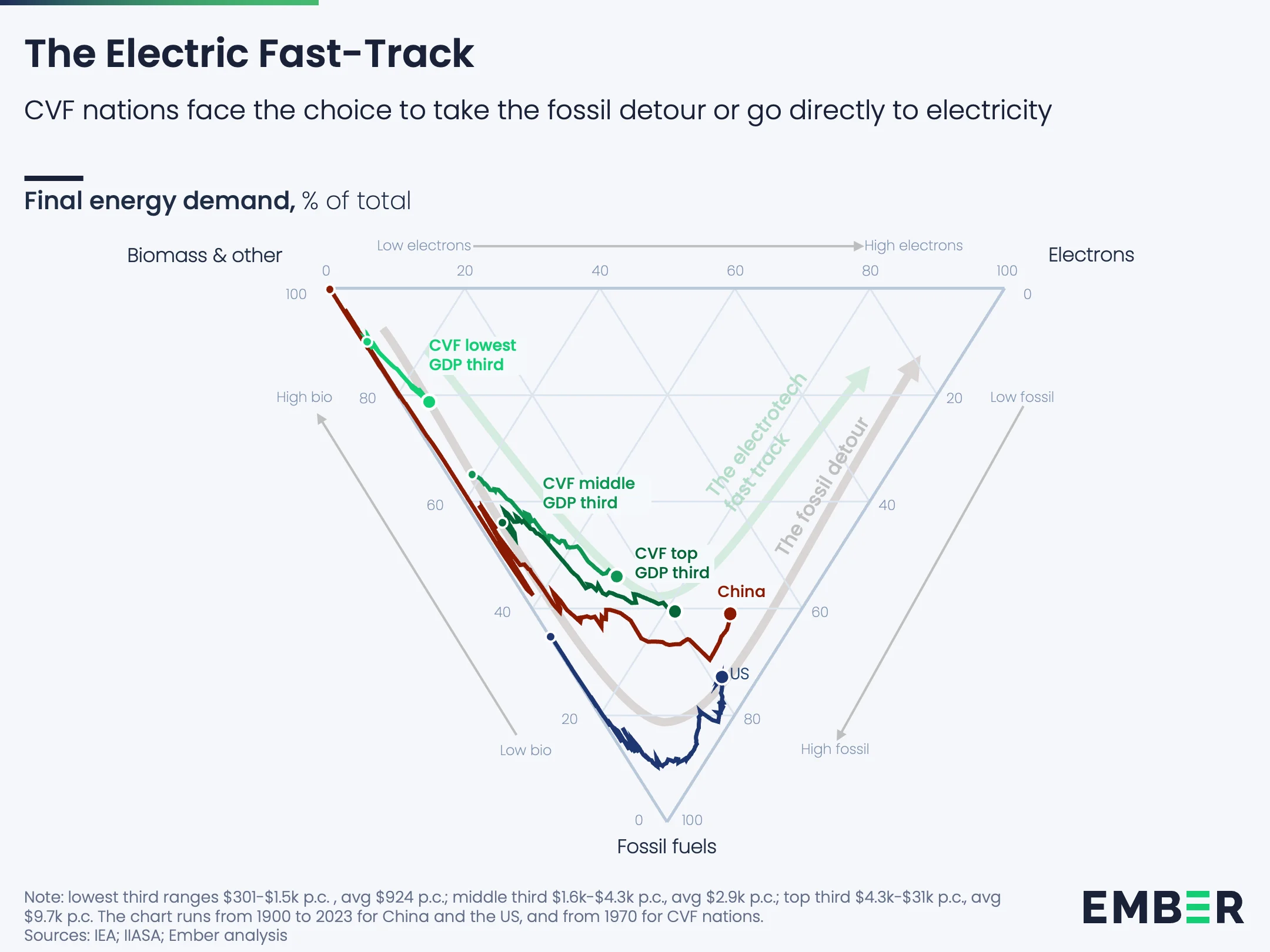
This is IMO one of the most compelling graphics on the leapfrogging:
Developed countries have made a fossil fuel detour on the way from biomass to clean energy, but countries who have not committed to fossil fuels can make a shortcut straight to clean energy.
The electric fast-track for emerging markets | Ember
How electrotech can serve the billion people left behind by the fossil system and open up a faster path to prosperity
Ember (ember-energy.org)
-
R relay@relay.mycrowd.ca shared this topic