I had such an interesting call today with someone from @ethereumfoundation about funding the #opensource ecosystem.
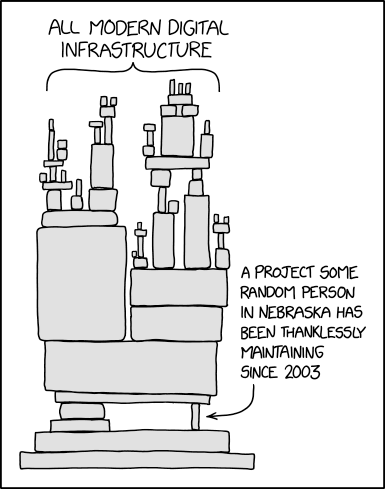
-
@Gina I like the concept, not the idea.
1. No part of this proposal needs a blockchain or Ethereum. Proposing this idea is a marketing effort by stapling an attractive idea to the side of an unattractive one.
2. Deriving a contribution-splitting model from an SBOM is interestingly difficult! Even more so if you try to walk a dependency tree instead of a flat list. How are contributions split? Equally among dependencies? Does every library dependency contribute equal value? To whom?
1/2
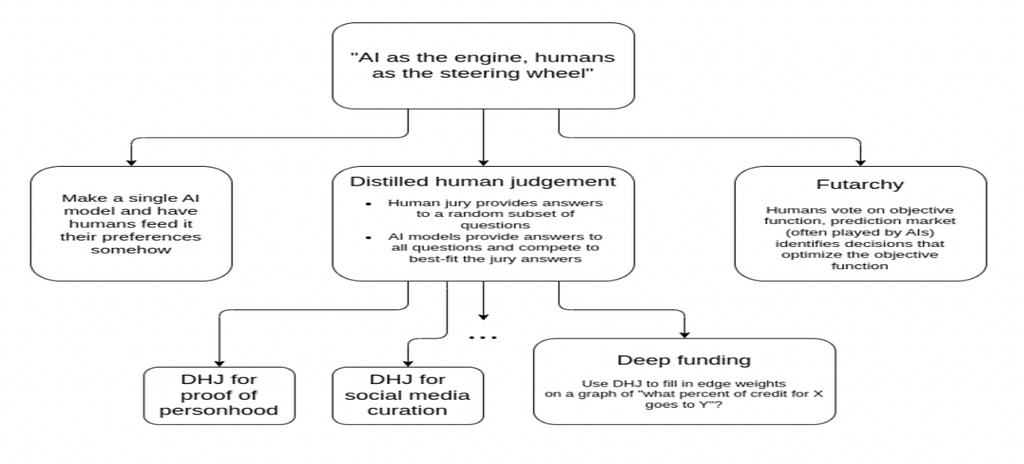
so one idea we've been working on for determining the split in contributions;
1. host a kaggle sort of data science competition where people predict the value of each dependency in an SBOM
2. collect ground truth data from maintainers for a subset
3. model with least error score gets its weights across entire SBOM
Deep Funding GG24 Web3 Tooling and Infra Round
GG24 Deep Funding Round Update The GG24 Dev Tooling and Web3 Infra Round approved $350,000 for allocation via deep funding, with Devansh Mehta, Clement Lesaege, Allan Niemerg as round operators and Conor Svenson & Andrew…

Gitcoin Governance (gov.gitcoin.co)
(not the EFer OP refers to, but i work on funding mechanisms there)
-
@projectmoon @Gina @ethereumfoundation
Im not the one that spoke to OP, but broadly blockchains help in price discovery which can be applied to getting weights across a large dependency graph
for example check out deep.seer.pm where we're trying to distribute $350k across 98 repos and their 3,677 dependencies
there's a genuine need for low overhead in weights to SBOM, unless you prefer government consultants like deloitte deciding how valuable dependencies are?
@devanshmehta@fosstodon.org @Gina@fosstodon.org @ethereumfoundation@mastodon.social how would you deal with repos that have no declared way of receiving funding? Which I assume is most of them?
-
R relay@relay.mycrowd.ca shared this topic