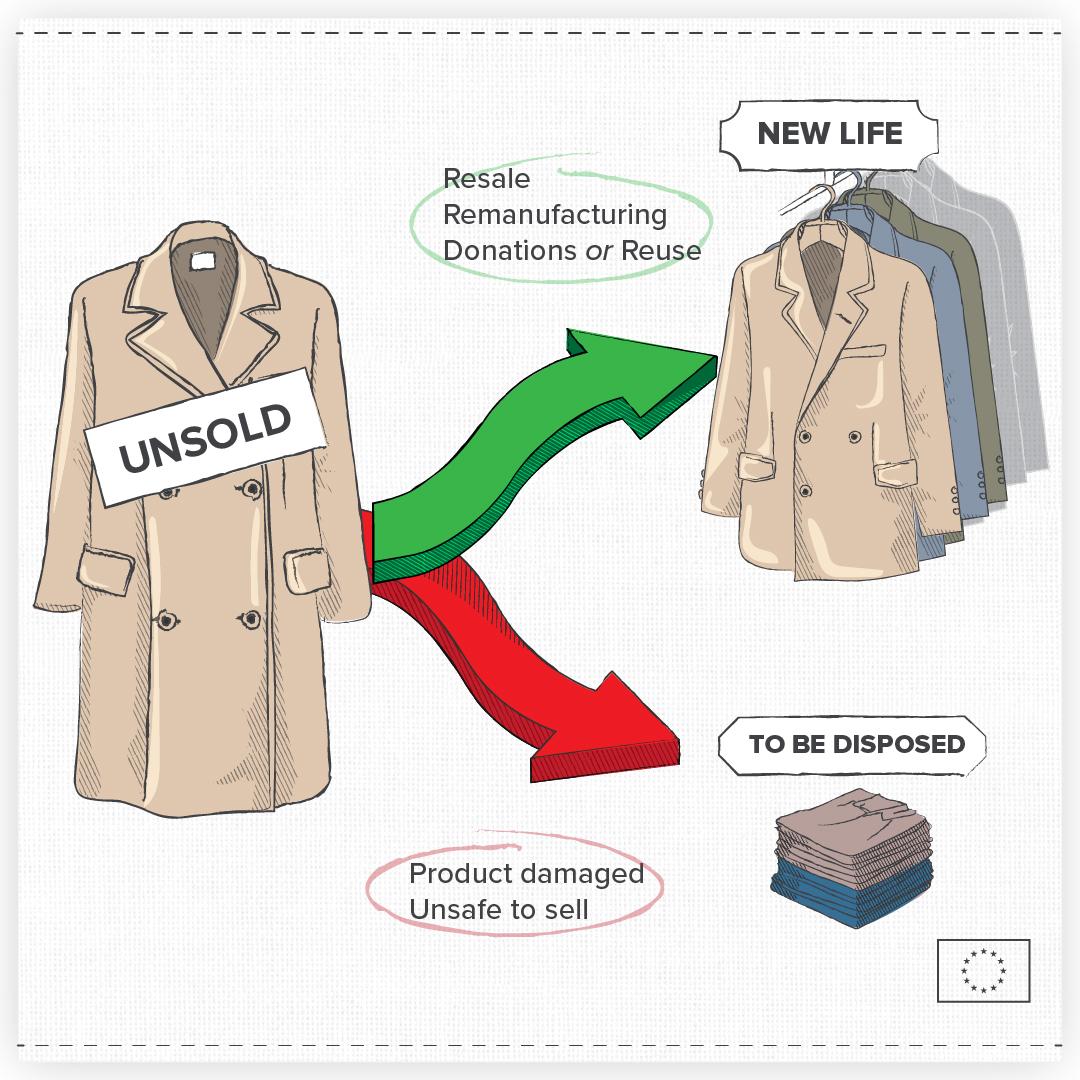
We're officially reducing the destruction of unsold clothing and footwear, a practice responsible for the loss of around 4-9% of Europe’s textiles.
-
We're officially reducing the destruction of unsold clothing and footwear, a practice responsible for the loss of around 4-9% of Europe’s textiles.
With the Ecodesign for Sustainable Products Regulation, we’re simplifying the process for businesses:
 Destruction is only allowed under clear exceptionsEasier ways to disclose how unsold goods are managed
Textile companies are encouraged to manage stock better and prioritise resale, donations, and reuse.
-
We're officially reducing the destruction of unsold clothing and footwear, a practice responsible for the loss of around 4-9% of Europe’s textiles.
With the Ecodesign for Sustainable Products Regulation, we’re simplifying the process for businesses:
Destruction is only allowed under clear exceptionsEasier ways to disclose how unsold goods are managedTextile companies are encouraged to manage stock better and prioritise resale, donations, and reuse.
> Product damaged
> Unsafe to sellDo you also prevent the companies from just damanging the products in order to dispose of them?
Like what we here in Germany often see with books (because of "Buchpreisbindung") is them getting a black edding across the edge of the pages (aka when it is closed and you look at the book from the side, top, or bottom) or using a paper cutter to strike across the cover once...
-
We're officially reducing the destruction of unsold clothing and footwear, a practice responsible for the loss of around 4-9% of Europe’s textiles.
With the Ecodesign for Sustainable Products Regulation, we’re simplifying the process for businesses:
Destruction is only allowed under clear exceptionsEasier ways to disclose how unsold goods are managedTextile companies are encouraged to manage stock better and prioritise resale, donations, and reuse.
@EUCommission
Hi!
How would it regulate the practise of "selling" the clothes to Africa (or other places) where they then are destroyed by a third party? I guess my question is, how easy will it be to fraud these new rules? -
R relay@relay.an.exchange shared this topic
-
> Product damaged
> Unsafe to sellDo you also prevent the companies from just damanging the products in order to dispose of them?
Like what we here in Germany often see with books (because of "Buchpreisbindung") is them getting a black edding across the edge of the pages (aka when it is closed and you look at the book from the side, top, or bottom) or using a paper cutter to strike across the cover once...
@agowa338 @EUCommission I have to agree with Klaus Frank. The company themselves destroying the product even though the product was perfectly fine is already common in the US. Similar to how they skirt the polyester recycling costs by simply producing excess polyester that then goes directly into the recycling process. So it's easier to recycle and more products can be sold with the upmark of using "recycled polyester"
-
@agowa338 @EUCommission I have to agree with Klaus Frank. The company themselves destroying the product even though the product was perfectly fine is already common in the US. Similar to how they skirt the polyester recycling costs by simply producing excess polyester that then goes directly into the recycling process. So it's easier to recycle and more products can be sold with the upmark of using "recycled polyester"
I feel like these kinds of actions should constitute fraud and when done systemically - well the usual for fraud (make it more severe).
And maybe even set an incentive so that tax authorities will look at it and come after such companies for doing that...
-
We're officially reducing the destruction of unsold clothing and footwear, a practice responsible for the loss of around 4-9% of Europe’s textiles.
With the Ecodesign for Sustainable Products Regulation, we’re simplifying the process for businesses:
Destruction is only allowed under clear exceptionsEasier ways to disclose how unsold goods are managedTextile companies are encouraged to manage stock better and prioritise resale, donations, and reuse.
@EUCommission that donation better not mean “shipping tonnes of textile waste to Africa where it fills the shores like a rotting fabric tsunami”.
-
@EUCommission
Hi!
How would it regulate the practise of "selling" the clothes to Africa (or other places) where they then are destroyed by a third party? I guess my question is, how easy will it be to fraud these new rules?@LegoBrickOnFire @EUCommission
I'm thinking of a literal mountain of discarded fast fashion items in Chile. They outlawed destroying them so now they sit in an open air high desert landscape with no plans to do anything about it -
We're officially reducing the destruction of unsold clothing and footwear, a practice responsible for the loss of around 4-9% of Europe’s textiles.
With the Ecodesign for Sustainable Products Regulation, we’re simplifying the process for businesses:
Destruction is only allowed under clear exceptionsEasier ways to disclose how unsold goods are managedTextile companies are encouraged to manage stock better and prioritise resale, donations, and reuse.
@EUCommission
Why do European pages still ask for permission to be jerks with my data? Lol, i thought you had regulations and stuff
-
We're officially reducing the destruction of unsold clothing and footwear, a practice responsible for the loss of around 4-9% of Europe’s textiles.
With the Ecodesign for Sustainable Products Regulation, we’re simplifying the process for businesses:
Destruction is only allowed under clear exceptionsEasier ways to disclose how unsold goods are managedTextile companies are encouraged to manage stock better and prioritise resale, donations, and reuse.
@EUCommission that sounds like great news. Companies are far to profit focused and loose the bigger picture being forced to manage stock better can have a great environmental impact and improve business margins for companies that effectively reuse assets while reducing the greenhouse footprint from the industry as a whole as there is less waste.
-
@EUCommission
Why do European pages still ask for permission to be jerks with my data? Lol, i thought you had regulations and stuff@RnDanger @EUCommission
They should give you the option to opt out or easily set preferences if they don't give you an easy eay to opt out then the company is using malicious compliance just staying within the law, hoping you'll get bored of scrolling& clicking.
It's the pages that don't flag this up that are scraping your data without your consent. -
We're officially reducing the destruction of unsold clothing and footwear, a practice responsible for the loss of around 4-9% of Europe’s textiles.
With the Ecodesign for Sustainable Products Regulation, we’re simplifying the process for businesses:
Destruction is only allowed under clear exceptionsEasier ways to disclose how unsold goods are managedTextile companies are encouraged to manage stock better and prioritise resale, donations, and reuse.
@EUCommission
I smell loopholes galore. Like selling to a garbage company outside the EU, so the EU does nothing & the EU based business / company in question does not get prosecuted for the crimes being perpetrated abroad thanks to their products being dumped abroad. The very crimes this post seems to think this law will stop.
The main problem is expecting businesses to be 100% honest in their self reporting on what is genuinely sold for redistribution & what genuinely was not fit for resale. -
We're officially reducing the destruction of unsold clothing and footwear, a practice responsible for the loss of around 4-9% of Europe’s textiles.
With the Ecodesign for Sustainable Products Regulation, we’re simplifying the process for businesses:
Destruction is only allowed under clear exceptionsEasier ways to disclose how unsold goods are managedTextile companies are encouraged to manage stock better and prioritise resale, donations, and reuse.
@EUCommission I read it on Facebook and thought it was a joke, no one can make such dumb decisions and yet here we are
-
@RnDanger @EUCommission
They should give you the option to opt out or easily set preferences if they don't give you an easy eay to opt out then the company is using malicious compliance just staying within the law, hoping you'll get bored of scrolling& clicking.
It's the pages that don't flag this up that are scraping your data without your consent.@Soldusty @EUCommission
Oh, i guess i thought the problem was when they used a full screen page block that demands access to your data before it continues to function. Like i thought the point was to reduce the amount of data collected, not just to make jerks more obvious -
R relay@relay.infosec.exchange shared this topic