Thinking more about energy upgrades in the lab: i have a 2U that just acts as a host for a bunch of FPGA devkits to run jtag/uart hosts etc.
-
Thinking more about energy upgrades in the lab: i have a 2U that just acts as a host for a bunch of FPGA devkits to run jtag/uart hosts etc.
I can shut it down if I can manage to connect the relevant USB devices to the VM server (and if they work in passthrough).
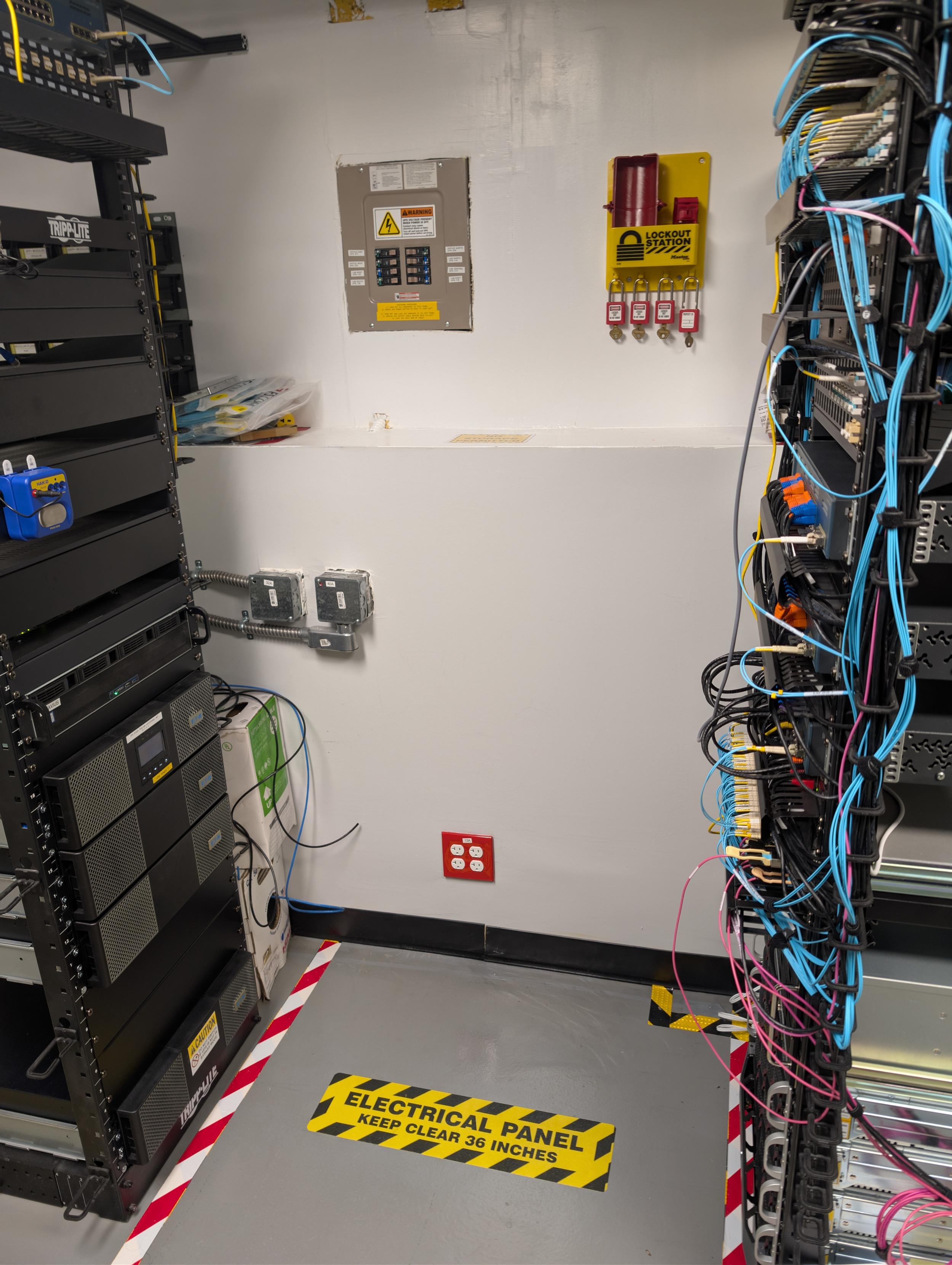
The problem is that the cable is going to have to go from the bottom of the rack at right up and over into the tray and down to the rack at left before reaching the hub.
What are the odds of this working well with normal (not active) usb cables? How reliable are active cables, does the added latency sometimes break devices?
-
Thinking more about energy upgrades in the lab: i have a 2U that just acts as a host for a bunch of FPGA devkits to run jtag/uart hosts etc.
I can shut it down if I can manage to connect the relevant USB devices to the VM server (and if they work in passthrough).
The problem is that the cable is going to have to go from the bottom of the rack at right up and over into the tray and down to the rack at left before reaching the hub.
What are the odds of this working well with normal (not active) usb cables? How reliable are active cables, does the added latency sometimes break devices?
@azonenberg Assuming a 5 M cable will reach and you only need 2.0 HS, passive should be fine and in spec. There are some 10 M ones with a lump in the middle that's just a USB hub. The 5 m limit is due to latency not loss.
Edit: on 2.0.
-
@azonenberg Assuming a 5 M cable will reach and you only need 2.0 HS, passive should be fine and in spec. There are some 10 M ones with a lump in the middle that's just a USB hub. The 5 m limit is due to latency not loss.
Edit: on 2.0.
@dlharmon yeah 5m feels like it'd be tight i need to actually run a flex tape but I'm ballparking i need about 2 vertical on one rack to the tray, 1.5 on the other, 2 horizontally in tray between the racks, and a bit of slop for bend radius etc.
So I'm guessing I probably want more like 6-7m to route the cable comfortably
-
Thinking more about energy upgrades in the lab: i have a 2U that just acts as a host for a bunch of FPGA devkits to run jtag/uart hosts etc.
I can shut it down if I can manage to connect the relevant USB devices to the VM server (and if they work in passthrough).
The problem is that the cable is going to have to go from the bottom of the rack at right up and over into the tray and down to the rack at left before reaching the hub.
What are the odds of this working well with normal (not active) usb cables? How reliable are active cables, does the added latency sometimes break devices?
@azonenberg
USB cables are highly unreliable.
I (we) had many troubles with them in our deployed labs when length exceed 5m.
Cable quality is responsible for part of that state, interference immunity for the other part.
I can only recommend you to pass through USB -> RJ45 converters to forward signals (and stick to USB2, USB3 is much more annoying with cable length) -
@azonenberg
USB cables are highly unreliable.
I (we) had many troubles with them in our deployed labs when length exceed 5m.
Cable quality is responsible for part of that state, interference immunity for the other part.
I can only recommend you to pass through USB -> RJ45 converters to forward signals (and stick to USB2, USB3 is much more annoying with cable length) -
Thinking more about energy upgrades in the lab: i have a 2U that just acts as a host for a bunch of FPGA devkits to run jtag/uart hosts etc.
I can shut it down if I can manage to connect the relevant USB devices to the VM server (and if they work in passthrough).
The problem is that the cable is going to have to go from the bottom of the rack at right up and over into the tray and down to the rack at left before reaching the hub.
What are the odds of this working well with normal (not active) usb cables? How reliable are active cables, does the added latency sometimes break devices?
@azonenberg I have a 25' active FO SS cable I used to connect a Saleae to my desktop, Works great. I have a 50' FO 2.0 cable I use for debugging a image sensor out the window in the other room, works great.
https://www.amazon.com/dp/B0179MXKU8?ref_=ppx_hzod_title_dt_b_fed_asin_title_0_0&th=1
-
Thinking more about energy upgrades in the lab: i have a 2U that just acts as a host for a bunch of FPGA devkits to run jtag/uart hosts etc.
I can shut it down if I can manage to connect the relevant USB devices to the VM server (and if they work in passthrough).
The problem is that the cable is going to have to go from the bottom of the rack at right up and over into the tray and down to the rack at left before reaching the hub.
What are the odds of this working well with normal (not active) usb cables? How reliable are active cables, does the added latency sometimes break devices?
@azonenberg For bridging a similar gap, I got one of those optical Thunderbolt/USB4 cables (15 metres!) and put a Thunderbolt hub on the other end. That comes with a XHCI controller for the classic USB devices, so it doesn’t matter that the optical cable lacks the legacy data pair.
Probably not the cheapest solution, and requires a USB4/TB capable host.