From Lisa McNally (LinkedIn):
-
From Lisa McNally (LinkedIn):
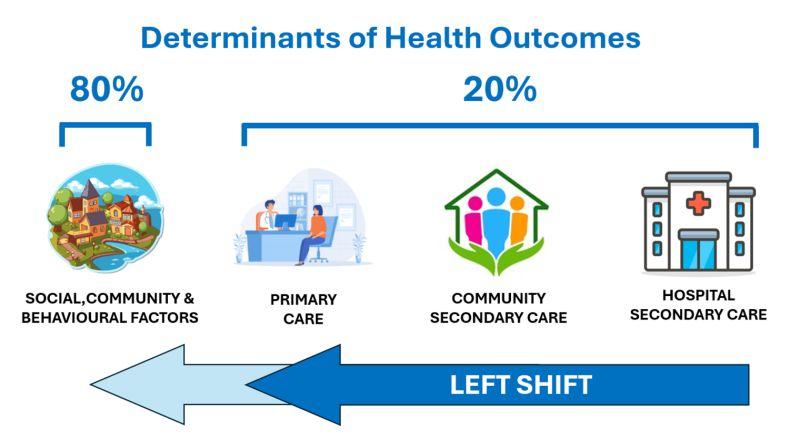
'We know from decades of research that only 20% of health outcomes are determined by clinical factors. The other 80% is determined by other factors... our home, education, employment, environment, health behaviours and social connections.
This 80% can be influenced through investment in communities. Investment of time, funding, trust and (most importantly) power...'
1/2
-
From Lisa McNally (LinkedIn):
'We know from decades of research that only 20% of health outcomes are determined by clinical factors. The other 80% is determined by other factors... our home, education, employment, environment, health behaviours and social connections.
This 80% can be influenced through investment in communities. Investment of time, funding, trust and (most importantly) power...'
1/2
From Lisa McNally (LinkedIn) [continues]:
'So have we got the balance right? When we talk about improving health, do we spend 80% of our time talking about communities?'
On one hand I agree we need to focus more on structural issues, but on the other hand, I worry that the inclusion of 'behavioural factors' will compound the victim blaming we have already seen in areas such as obesity (see post earlier this week).
Nonetheless an important message!
2/2
-
From Lisa McNally (LinkedIn):
'We know from decades of research that only 20% of health outcomes are determined by clinical factors. The other 80% is determined by other factors... our home, education, employment, environment, health behaviours and social connections.
This 80% can be influenced through investment in communities. Investment of time, funding, trust and (most importantly) power...'
1/2
@ChrisMayLA6 Within those other factors pollution seems to be one of the bigger problems. It supports dementia, heart diseases, respiratorial problems, chronical diseases starting in childhood, development problems, cancer, allergies.
-
@ChrisMayLA6 Within those other factors pollution seems to be one of the bigger problems. It supports dementia, heart diseases, respiratorial problems, chronical diseases starting in childhood, development problems, cancer, allergies.
@ChrisMayLA6 And with microplastics and nanoparticles everywhere, not only in our food but even in our blood & brains we don't even know yet, what this will cause.
-
From Lisa McNally (LinkedIn):
'We know from decades of research that only 20% of health outcomes are determined by clinical factors. The other 80% is determined by other factors... our home, education, employment, environment, health behaviours and social connections.
This 80% can be influenced through investment in communities. Investment of time, funding, trust and (most importantly) power...'
1/2
Upstream investment in human flourishing would pay enormous dividends in health and quality of life.
-
R relay@relay.mycrowd.ca shared this topic