Somewhere at the French-Swiss border.
-
Somewhere at the French-Swiss border.
 French border agent:
Excuse me sir, what is in the truck? Do you have anything to declare? Truck driver: Just a cloud of 92 #antiprotons in an innovative portable cryogenic Penning trap. French border agent: 🫠 🫠 🫠 I'm sorry, I think I owe you some money or something. I don't have the right form to deal with antimatter.
BASE experiment at CERN succeeds in transporting antimatter
Today, in a world first, a team of scientists from the BASE experiment at CERN successfully transported a trap filled with antiprotons in a truck across the Laboratory’s main site. The team managed to accumulate a cloud of 92 antiprotons in an innovative portable cryogenic Penning trap, then disconnect it from the experimental facility, load it onto a truck and continue experiment operation after transport. This is a remarkable achievement, given that antimatter is very difficult to preserve, as it annihilates upon contact with matter. This world premiere is a test, the ultimate aim being to transport antiprotons to other European laboratories, such as Heinrich Heine University Düsseldorf (HHU), where very-high-precision measurements of the antiproton properties could be performed. Antimatter is a naturally occurring class of particles that is almost identical to ordinary matter except that the electric charge and magnetic moment are reversed. According to the laws of physics, the Big Bang should have produced equal amounts of matter and antimatter. These equal-but-opposite particles would have quickly annihilated each other, leaving an empty Universe. However, our Universe contains predominantly matter, and this imbalance has baffled scientists for decades. Physicists suspect that there are hidden differences that may explain why matter survived and antimatter all but disappeared. To deepen our understanding of antimatter, the BASE collaboration aims to precisely measure the properties of antiprotons, such as their intrinsic magnetic moment, and then compare these measurements with those taken with protons. But they now face a problem: “The machines and equipment in CERN’s ‘antimatter factory’, where BASE is located, generate magnetic field fluctuations that limit how far we can push our precision measurements,” explains Stefan Ulmer, Spokesperson of BASE. These fluctuations are minuscule, of the order of one billionth of a tesla, 20 000 times smaller than the magnetic field of the earth, and undetectable outside the building. “However, the precision of the measurements taken in BASE is such that gaining an even deeper understanding of the fundamental properties of antiprotons will require moving the experiment out of the building.”, says Stefan Ulmer. CERN’s “antimatter factory” is the only place in the world where antiprotons can be produced, stored and studied. Two successive decelerators, the Antiproton Decelerator (AD) and the Extra Low Energy Antiproton ring (ELENA), provide several experiments with low-energy antiprotons – the lower their energy, the easier they can be stored and studied. Among these experiments, BASE holds long-standing records for containing antiprotons for more than one year, and the experiment has invented this pioneering approach in order to move on to the next stage: transporting antiprotons to an offline space for more precise experiments as well as sharing them with others. That’s why they developed the BASE-STEP trap: an apparatus designed to store and transport antiprotons. “Our aim with BASE-STEP is to be able to trap antiprotons and deliver them to our precision laboratories at a dedicated space at CERN, HHU, Leibnitz University Hannover and perhaps other laboratories that are capable of performing very-high-precision antiproton measurements, which unfortunately is not possible in the antimatter factory,” explains Christian Smorra, the Leader of BASE-STEP. “We validated the feasibility of the project with protons last year, but what we achieved today with antiprotons is a huge leap forward towards our objective.” BASE-STEP is small enough to be loaded onto a truck and fit through ordinary laboratory doors, and it can withstand the bumps and vibrations of transport. The current apparatus – which includes a superconducting magnet, liquid helium cryogenic cooling, power reserves and a vacuum chamber that traps the antiparticles using magnetic and electric fields – weighs 1000 kilograms: much more compact than BASE or any other existing system used to study antimatter. “To reach our first destination – our dedicated precision laboratory at HHU in Germany – would take us at least 8 hours,” says Christian Smorra. “This means we’d have to keep the trap’s superconducting magnet at a temperature below 8.2 K for that long. So, in addition to the liquid helium , we’d need to have a generator to power a cryocooler on the truck. We are currently investigating this possibility.” Nevertheless, the greatest challenge remains on arrival at the destination: to transfer the antiprotons to the experiment without them vanishing. “Transporting antimatter is a pioneering and ambitious project, and I congratulate the BASE collaboration on this impressive milestone. We are at the beginning of an exciting scientific journey that will allow us to further deepen our understanding of antimatter,” says CERN Director for Research and Computing, Gautier Hamel de Monchenault. Further information: The media kit about the Antimatter transport is available here.
CERN (home.cern)
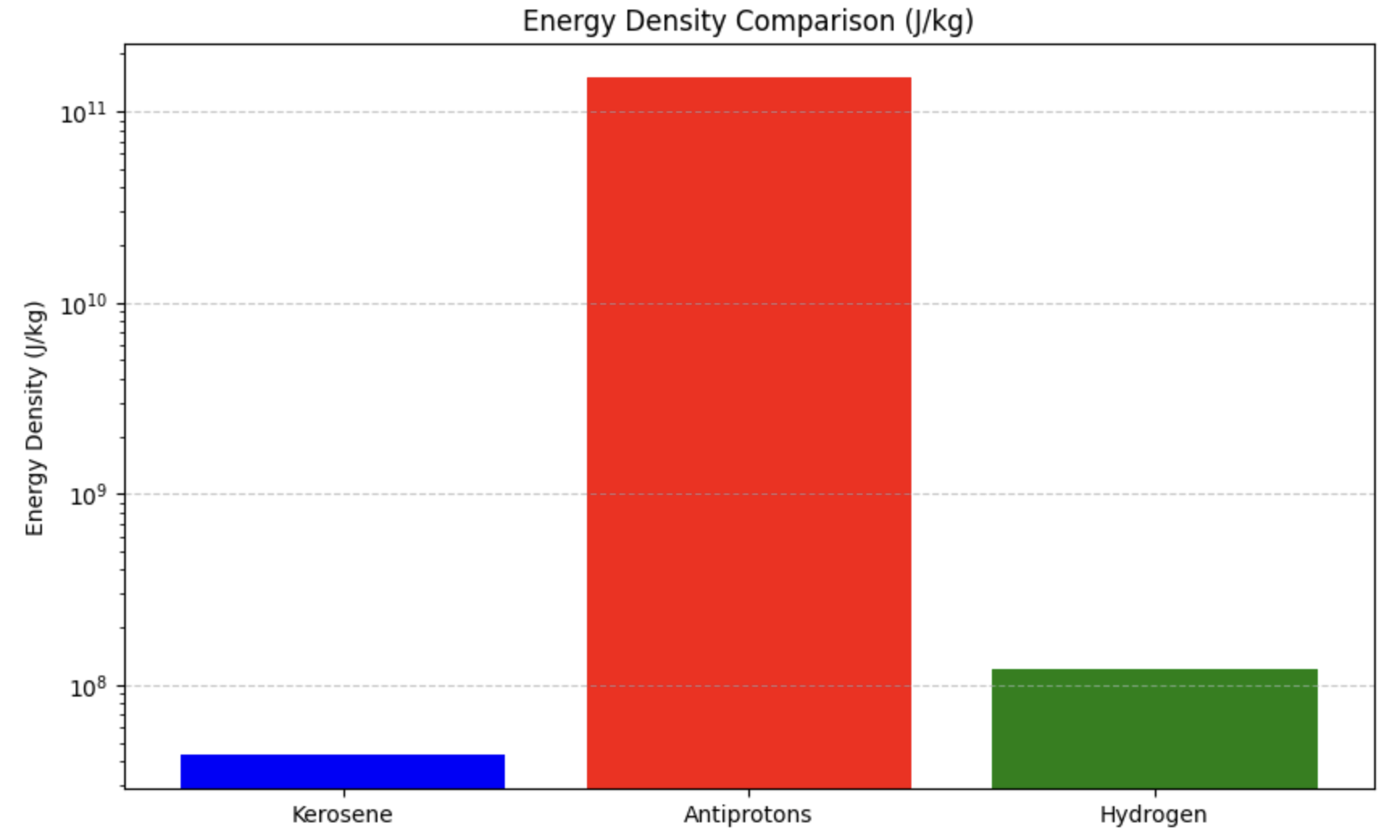
All I want for Christmas is a long-range A380-like aircraft powered by antimatter.
Too many wars have been fought over earth-destroying dinosaur juice.
-
Somewhere at the French-Swiss border.
French border agent:
Excuse me sir, what is in the truck? Do you have anything to declare? Truck driver: Just a cloud of 92 #antiprotons in an innovative portable cryogenic Penning trap. French border agent: 🫠 🫠 🫠 I'm sorry, I think I owe you some money or something. I don't have the right form to deal with antimatter.BASE experiment at CERN succeeds in transporting antimatter
Today, in a world first, a team of scientists from the BASE experiment at CERN successfully transported a trap filled with antiprotons in a truck across the Laboratory’s main site. The team managed to accumulate a cloud of 92 antiprotons in an innovative portable cryogenic Penning trap, then disconnect it from the experimental facility, load it onto a truck and continue experiment operation after transport. This is a remarkable achievement, given that antimatter is very difficult to preserve, as it annihilates upon contact with matter. This world premiere is a test, the ultimate aim being to transport antiprotons to other European laboratories, such as Heinrich Heine University Düsseldorf (HHU), where very-high-precision measurements of the antiproton properties could be performed. Antimatter is a naturally occurring class of particles that is almost identical to ordinary matter except that the electric charge and magnetic moment are reversed. According to the laws of physics, the Big Bang should have produced equal amounts of matter and antimatter. These equal-but-opposite particles would have quickly annihilated each other, leaving an empty Universe. However, our Universe contains predominantly matter, and this imbalance has baffled scientists for decades. Physicists suspect that there are hidden differences that may explain why matter survived and antimatter all but disappeared. To deepen our understanding of antimatter, the BASE collaboration aims to precisely measure the properties of antiprotons, such as their intrinsic magnetic moment, and then compare these measurements with those taken with protons. But they now face a problem: “The machines and equipment in CERN’s ‘antimatter factory’, where BASE is located, generate magnetic field fluctuations that limit how far we can push our precision measurements,” explains Stefan Ulmer, Spokesperson of BASE. These fluctuations are minuscule, of the order of one billionth of a tesla, 20 000 times smaller than the magnetic field of the earth, and undetectable outside the building. “However, the precision of the measurements taken in BASE is such that gaining an even deeper understanding of the fundamental properties of antiprotons will require moving the experiment out of the building.”, says Stefan Ulmer. CERN’s “antimatter factory” is the only place in the world where antiprotons can be produced, stored and studied. Two successive decelerators, the Antiproton Decelerator (AD) and the Extra Low Energy Antiproton ring (ELENA), provide several experiments with low-energy antiprotons – the lower their energy, the easier they can be stored and studied. Among these experiments, BASE holds long-standing records for containing antiprotons for more than one year, and the experiment has invented this pioneering approach in order to move on to the next stage: transporting antiprotons to an offline space for more precise experiments as well as sharing them with others. That’s why they developed the BASE-STEP trap: an apparatus designed to store and transport antiprotons. “Our aim with BASE-STEP is to be able to trap antiprotons and deliver them to our precision laboratories at a dedicated space at CERN, HHU, Leibnitz University Hannover and perhaps other laboratories that are capable of performing very-high-precision antiproton measurements, which unfortunately is not possible in the antimatter factory,” explains Christian Smorra, the Leader of BASE-STEP. “We validated the feasibility of the project with protons last year, but what we achieved today with antiprotons is a huge leap forward towards our objective.” BASE-STEP is small enough to be loaded onto a truck and fit through ordinary laboratory doors, and it can withstand the bumps and vibrations of transport. The current apparatus – which includes a superconducting magnet, liquid helium cryogenic cooling, power reserves and a vacuum chamber that traps the antiparticles using magnetic and electric fields – weighs 1000 kilograms: much more compact than BASE or any other existing system used to study antimatter. “To reach our first destination – our dedicated precision laboratory at HHU in Germany – would take us at least 8 hours,” says Christian Smorra. “This means we’d have to keep the trap’s superconducting magnet at a temperature below 8.2 K for that long. So, in addition to the liquid helium , we’d need to have a generator to power a cryocooler on the truck. We are currently investigating this possibility.” Nevertheless, the greatest challenge remains on arrival at the destination: to transfer the antiprotons to the experiment without them vanishing. “Transporting antimatter is a pioneering and ambitious project, and I congratulate the BASE collaboration on this impressive milestone. We are at the beginning of an exciting scientific journey that will allow us to further deepen our understanding of antimatter,” says CERN Director for Research and Computing, Gautier Hamel de Monchenault. Further information: The media kit about the Antimatter transport is available here.
CERN (home.cern)
@fj c'est fou !!
-
All I want for Christmas is a long-range A380-like aircraft powered by antimatter.
Too many wars have been fought over earth-destroying dinosaur juice.
@fj Did... did the Antonov/Dassault COOLER
 MRIYA of my dreams just get even cooler??
Veza85UE (@Veza85UE@eupolicy.social)
Attached: 1 image @R1Rail@pouet.chapril.org Antonov/Dassault COOLER 🇪🇺 MRIYA Specifications: * BIGGER * blackjack * nukes * crew required to wear standard issue Maison Henry Jullien Pacific S01 at all times #європейськамрія #StrategicAirliftButMakeItCunty

EUpolicy.social - A Mastodon server for the EU bubble (eupolicy.social)
-
Somewhere at the French-Swiss border.
French border agent:
Excuse me sir, what is in the truck? Do you have anything to declare? Truck driver: Just a cloud of 92 #antiprotons in an innovative portable cryogenic Penning trap. French border agent: 🫠 🫠 🫠 I'm sorry, I think I owe you some money or something. I don't have the right form to deal with antimatter.BASE experiment at CERN succeeds in transporting antimatter
Today, in a world first, a team of scientists from the BASE experiment at CERN successfully transported a trap filled with antiprotons in a truck across the Laboratory’s main site. The team managed to accumulate a cloud of 92 antiprotons in an innovative portable cryogenic Penning trap, then disconnect it from the experimental facility, load it onto a truck and continue experiment operation after transport. This is a remarkable achievement, given that antimatter is very difficult to preserve, as it annihilates upon contact with matter. This world premiere is a test, the ultimate aim being to transport antiprotons to other European laboratories, such as Heinrich Heine University Düsseldorf (HHU), where very-high-precision measurements of the antiproton properties could be performed. Antimatter is a naturally occurring class of particles that is almost identical to ordinary matter except that the electric charge and magnetic moment are reversed. According to the laws of physics, the Big Bang should have produced equal amounts of matter and antimatter. These equal-but-opposite particles would have quickly annihilated each other, leaving an empty Universe. However, our Universe contains predominantly matter, and this imbalance has baffled scientists for decades. Physicists suspect that there are hidden differences that may explain why matter survived and antimatter all but disappeared. To deepen our understanding of antimatter, the BASE collaboration aims to precisely measure the properties of antiprotons, such as their intrinsic magnetic moment, and then compare these measurements with those taken with protons. But they now face a problem: “The machines and equipment in CERN’s ‘antimatter factory’, where BASE is located, generate magnetic field fluctuations that limit how far we can push our precision measurements,” explains Stefan Ulmer, Spokesperson of BASE. These fluctuations are minuscule, of the order of one billionth of a tesla, 20 000 times smaller than the magnetic field of the earth, and undetectable outside the building. “However, the precision of the measurements taken in BASE is such that gaining an even deeper understanding of the fundamental properties of antiprotons will require moving the experiment out of the building.”, says Stefan Ulmer. CERN’s “antimatter factory” is the only place in the world where antiprotons can be produced, stored and studied. Two successive decelerators, the Antiproton Decelerator (AD) and the Extra Low Energy Antiproton ring (ELENA), provide several experiments with low-energy antiprotons – the lower their energy, the easier they can be stored and studied. Among these experiments, BASE holds long-standing records for containing antiprotons for more than one year, and the experiment has invented this pioneering approach in order to move on to the next stage: transporting antiprotons to an offline space for more precise experiments as well as sharing them with others. That’s why they developed the BASE-STEP trap: an apparatus designed to store and transport antiprotons. “Our aim with BASE-STEP is to be able to trap antiprotons and deliver them to our precision laboratories at a dedicated space at CERN, HHU, Leibnitz University Hannover and perhaps other laboratories that are capable of performing very-high-precision antiproton measurements, which unfortunately is not possible in the antimatter factory,” explains Christian Smorra, the Leader of BASE-STEP. “We validated the feasibility of the project with protons last year, but what we achieved today with antiprotons is a huge leap forward towards our objective.” BASE-STEP is small enough to be loaded onto a truck and fit through ordinary laboratory doors, and it can withstand the bumps and vibrations of transport. The current apparatus – which includes a superconducting magnet, liquid helium cryogenic cooling, power reserves and a vacuum chamber that traps the antiparticles using magnetic and electric fields – weighs 1000 kilograms: much more compact than BASE or any other existing system used to study antimatter. “To reach our first destination – our dedicated precision laboratory at HHU in Germany – would take us at least 8 hours,” says Christian Smorra. “This means we’d have to keep the trap’s superconducting magnet at a temperature below 8.2 K for that long. So, in addition to the liquid helium , we’d need to have a generator to power a cryocooler on the truck. We are currently investigating this possibility.” Nevertheless, the greatest challenge remains on arrival at the destination: to transfer the antiprotons to the experiment without them vanishing. “Transporting antimatter is a pioneering and ambitious project, and I congratulate the BASE collaboration on this impressive milestone. We are at the beginning of an exciting scientific journey that will allow us to further deepen our understanding of antimatter,” says CERN Director for Research and Computing, Gautier Hamel de Monchenault. Further information: The media kit about the Antimatter transport is available here.
CERN (home.cern)
@fj you can pay the duties on antimatter with antimony
-
Somewhere at the French-Swiss border.
French border agent:
Excuse me sir, what is in the truck? Do you have anything to declare? Truck driver: Just a cloud of 92 #antiprotons in an innovative portable cryogenic Penning trap. French border agent: 🫠 🫠 🫠 I'm sorry, I think I owe you some money or something. I don't have the right form to deal with antimatter.BASE experiment at CERN succeeds in transporting antimatter
Today, in a world first, a team of scientists from the BASE experiment at CERN successfully transported a trap filled with antiprotons in a truck across the Laboratory’s main site. The team managed to accumulate a cloud of 92 antiprotons in an innovative portable cryogenic Penning trap, then disconnect it from the experimental facility, load it onto a truck and continue experiment operation after transport. This is a remarkable achievement, given that antimatter is very difficult to preserve, as it annihilates upon contact with matter. This world premiere is a test, the ultimate aim being to transport antiprotons to other European laboratories, such as Heinrich Heine University Düsseldorf (HHU), where very-high-precision measurements of the antiproton properties could be performed. Antimatter is a naturally occurring class of particles that is almost identical to ordinary matter except that the electric charge and magnetic moment are reversed. According to the laws of physics, the Big Bang should have produced equal amounts of matter and antimatter. These equal-but-opposite particles would have quickly annihilated each other, leaving an empty Universe. However, our Universe contains predominantly matter, and this imbalance has baffled scientists for decades. Physicists suspect that there are hidden differences that may explain why matter survived and antimatter all but disappeared. To deepen our understanding of antimatter, the BASE collaboration aims to precisely measure the properties of antiprotons, such as their intrinsic magnetic moment, and then compare these measurements with those taken with protons. But they now face a problem: “The machines and equipment in CERN’s ‘antimatter factory’, where BASE is located, generate magnetic field fluctuations that limit how far we can push our precision measurements,” explains Stefan Ulmer, Spokesperson of BASE. These fluctuations are minuscule, of the order of one billionth of a tesla, 20 000 times smaller than the magnetic field of the earth, and undetectable outside the building. “However, the precision of the measurements taken in BASE is such that gaining an even deeper understanding of the fundamental properties of antiprotons will require moving the experiment out of the building.”, says Stefan Ulmer. CERN’s “antimatter factory” is the only place in the world where antiprotons can be produced, stored and studied. Two successive decelerators, the Antiproton Decelerator (AD) and the Extra Low Energy Antiproton ring (ELENA), provide several experiments with low-energy antiprotons – the lower their energy, the easier they can be stored and studied. Among these experiments, BASE holds long-standing records for containing antiprotons for more than one year, and the experiment has invented this pioneering approach in order to move on to the next stage: transporting antiprotons to an offline space for more precise experiments as well as sharing them with others. That’s why they developed the BASE-STEP trap: an apparatus designed to store and transport antiprotons. “Our aim with BASE-STEP is to be able to trap antiprotons and deliver them to our precision laboratories at a dedicated space at CERN, HHU, Leibnitz University Hannover and perhaps other laboratories that are capable of performing very-high-precision antiproton measurements, which unfortunately is not possible in the antimatter factory,” explains Christian Smorra, the Leader of BASE-STEP. “We validated the feasibility of the project with protons last year, but what we achieved today with antiprotons is a huge leap forward towards our objective.” BASE-STEP is small enough to be loaded onto a truck and fit through ordinary laboratory doors, and it can withstand the bumps and vibrations of transport. The current apparatus – which includes a superconducting magnet, liquid helium cryogenic cooling, power reserves and a vacuum chamber that traps the antiparticles using magnetic and electric fields – weighs 1000 kilograms: much more compact than BASE or any other existing system used to study antimatter. “To reach our first destination – our dedicated precision laboratory at HHU in Germany – would take us at least 8 hours,” says Christian Smorra. “This means we’d have to keep the trap’s superconducting magnet at a temperature below 8.2 K for that long. So, in addition to the liquid helium , we’d need to have a generator to power a cryocooler on the truck. We are currently investigating this possibility.” Nevertheless, the greatest challenge remains on arrival at the destination: to transfer the antiprotons to the experiment without them vanishing. “Transporting antimatter is a pioneering and ambitious project, and I congratulate the BASE collaboration on this impressive milestone. We are at the beginning of an exciting scientific journey that will allow us to further deepen our understanding of antimatter,” says CERN Director for Research and Computing, Gautier Hamel de Monchenault. Further information: The media kit about the Antimatter transport is available here.
CERN (home.cern)
@fj appreciate them explaining their work in English. They’re so excited!
-
@fj appreciate them explaining their work in English. They’re so excited!
@nuthatch CERN has two official working languages: English and French.
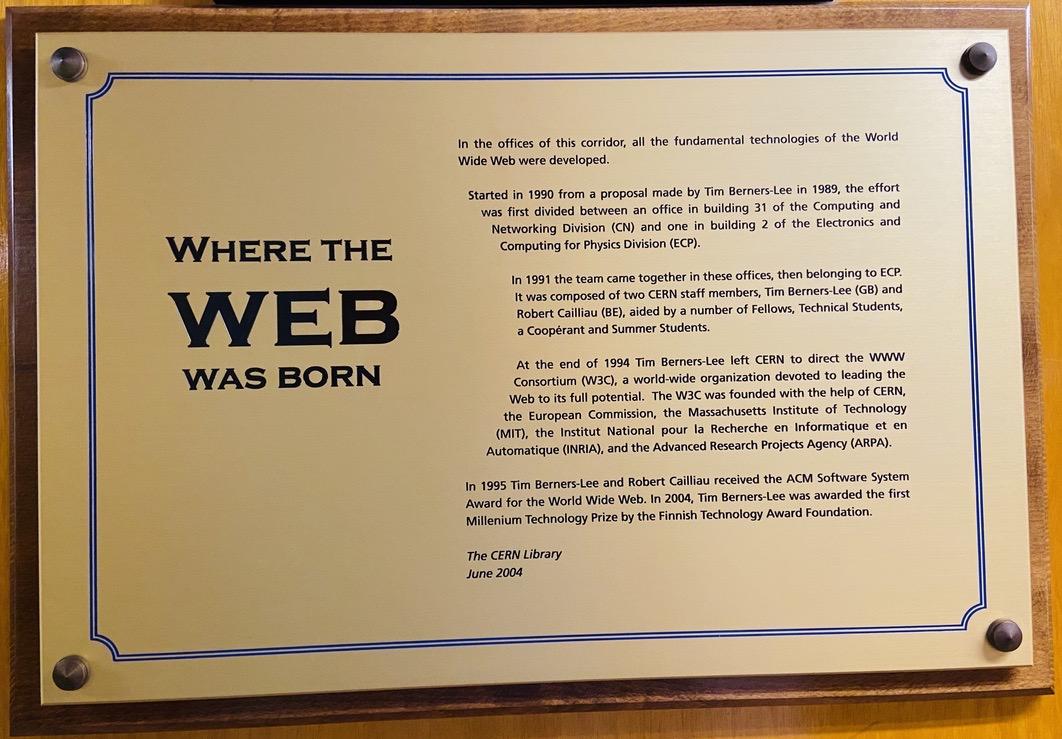
And in practice on scientific matters, English is the leading language. Birth place of the Web too!
https://hr.web.cern.ch/language
-
Somewhere at the French-Swiss border.
French border agent:
Excuse me sir, what is in the truck? Do you have anything to declare? Truck driver: Just a cloud of 92 #antiprotons in an innovative portable cryogenic Penning trap. French border agent: 🫠 🫠 🫠 I'm sorry, I think I owe you some money or something. I don't have the right form to deal with antimatter.BASE experiment at CERN succeeds in transporting antimatter
Today, in a world first, a team of scientists from the BASE experiment at CERN successfully transported a trap filled with antiprotons in a truck across the Laboratory’s main site. The team managed to accumulate a cloud of 92 antiprotons in an innovative portable cryogenic Penning trap, then disconnect it from the experimental facility, load it onto a truck and continue experiment operation after transport. This is a remarkable achievement, given that antimatter is very difficult to preserve, as it annihilates upon contact with matter. This world premiere is a test, the ultimate aim being to transport antiprotons to other European laboratories, such as Heinrich Heine University Düsseldorf (HHU), where very-high-precision measurements of the antiproton properties could be performed. Antimatter is a naturally occurring class of particles that is almost identical to ordinary matter except that the electric charge and magnetic moment are reversed. According to the laws of physics, the Big Bang should have produced equal amounts of matter and antimatter. These equal-but-opposite particles would have quickly annihilated each other, leaving an empty Universe. However, our Universe contains predominantly matter, and this imbalance has baffled scientists for decades. Physicists suspect that there are hidden differences that may explain why matter survived and antimatter all but disappeared. To deepen our understanding of antimatter, the BASE collaboration aims to precisely measure the properties of antiprotons, such as their intrinsic magnetic moment, and then compare these measurements with those taken with protons. But they now face a problem: “The machines and equipment in CERN’s ‘antimatter factory’, where BASE is located, generate magnetic field fluctuations that limit how far we can push our precision measurements,” explains Stefan Ulmer, Spokesperson of BASE. These fluctuations are minuscule, of the order of one billionth of a tesla, 20 000 times smaller than the magnetic field of the earth, and undetectable outside the building. “However, the precision of the measurements taken in BASE is such that gaining an even deeper understanding of the fundamental properties of antiprotons will require moving the experiment out of the building.”, says Stefan Ulmer. CERN’s “antimatter factory” is the only place in the world where antiprotons can be produced, stored and studied. Two successive decelerators, the Antiproton Decelerator (AD) and the Extra Low Energy Antiproton ring (ELENA), provide several experiments with low-energy antiprotons – the lower their energy, the easier they can be stored and studied. Among these experiments, BASE holds long-standing records for containing antiprotons for more than one year, and the experiment has invented this pioneering approach in order to move on to the next stage: transporting antiprotons to an offline space for more precise experiments as well as sharing them with others. That’s why they developed the BASE-STEP trap: an apparatus designed to store and transport antiprotons. “Our aim with BASE-STEP is to be able to trap antiprotons and deliver them to our precision laboratories at a dedicated space at CERN, HHU, Leibnitz University Hannover and perhaps other laboratories that are capable of performing very-high-precision antiproton measurements, which unfortunately is not possible in the antimatter factory,” explains Christian Smorra, the Leader of BASE-STEP. “We validated the feasibility of the project with protons last year, but what we achieved today with antiprotons is a huge leap forward towards our objective.” BASE-STEP is small enough to be loaded onto a truck and fit through ordinary laboratory doors, and it can withstand the bumps and vibrations of transport. The current apparatus – which includes a superconducting magnet, liquid helium cryogenic cooling, power reserves and a vacuum chamber that traps the antiparticles using magnetic and electric fields – weighs 1000 kilograms: much more compact than BASE or any other existing system used to study antimatter. “To reach our first destination – our dedicated precision laboratory at HHU in Germany – would take us at least 8 hours,” says Christian Smorra. “This means we’d have to keep the trap’s superconducting magnet at a temperature below 8.2 K for that long. So, in addition to the liquid helium , we’d need to have a generator to power a cryocooler on the truck. We are currently investigating this possibility.” Nevertheless, the greatest challenge remains on arrival at the destination: to transfer the antiprotons to the experiment without them vanishing. “Transporting antimatter is a pioneering and ambitious project, and I congratulate the BASE collaboration on this impressive milestone. We are at the beginning of an exciting scientific journey that will allow us to further deepen our understanding of antimatter,” says CERN Director for Research and Computing, Gautier Hamel de Monchenault. Further information: The media kit about the Antimatter transport is available here.
CERN (home.cern)
@fj CERN can just smuggle anything through their own cross-border tunnel network no?

-
Somewhere at the French-Swiss border.
French border agent:
Excuse me sir, what is in the truck? Do you have anything to declare? Truck driver: Just a cloud of 92 #antiprotons in an innovative portable cryogenic Penning trap. French border agent: 🫠 🫠 🫠 I'm sorry, I think I owe you some money or something. I don't have the right form to deal with antimatter.BASE experiment at CERN succeeds in transporting antimatter
Today, in a world first, a team of scientists from the BASE experiment at CERN successfully transported a trap filled with antiprotons in a truck across the Laboratory’s main site. The team managed to accumulate a cloud of 92 antiprotons in an innovative portable cryogenic Penning trap, then disconnect it from the experimental facility, load it onto a truck and continue experiment operation after transport. This is a remarkable achievement, given that antimatter is very difficult to preserve, as it annihilates upon contact with matter. This world premiere is a test, the ultimate aim being to transport antiprotons to other European laboratories, such as Heinrich Heine University Düsseldorf (HHU), where very-high-precision measurements of the antiproton properties could be performed. Antimatter is a naturally occurring class of particles that is almost identical to ordinary matter except that the electric charge and magnetic moment are reversed. According to the laws of physics, the Big Bang should have produced equal amounts of matter and antimatter. These equal-but-opposite particles would have quickly annihilated each other, leaving an empty Universe. However, our Universe contains predominantly matter, and this imbalance has baffled scientists for decades. Physicists suspect that there are hidden differences that may explain why matter survived and antimatter all but disappeared. To deepen our understanding of antimatter, the BASE collaboration aims to precisely measure the properties of antiprotons, such as their intrinsic magnetic moment, and then compare these measurements with those taken with protons. But they now face a problem: “The machines and equipment in CERN’s ‘antimatter factory’, where BASE is located, generate magnetic field fluctuations that limit how far we can push our precision measurements,” explains Stefan Ulmer, Spokesperson of BASE. These fluctuations are minuscule, of the order of one billionth of a tesla, 20 000 times smaller than the magnetic field of the earth, and undetectable outside the building. “However, the precision of the measurements taken in BASE is such that gaining an even deeper understanding of the fundamental properties of antiprotons will require moving the experiment out of the building.”, says Stefan Ulmer. CERN’s “antimatter factory” is the only place in the world where antiprotons can be produced, stored and studied. Two successive decelerators, the Antiproton Decelerator (AD) and the Extra Low Energy Antiproton ring (ELENA), provide several experiments with low-energy antiprotons – the lower their energy, the easier they can be stored and studied. Among these experiments, BASE holds long-standing records for containing antiprotons for more than one year, and the experiment has invented this pioneering approach in order to move on to the next stage: transporting antiprotons to an offline space for more precise experiments as well as sharing them with others. That’s why they developed the BASE-STEP trap: an apparatus designed to store and transport antiprotons. “Our aim with BASE-STEP is to be able to trap antiprotons and deliver them to our precision laboratories at a dedicated space at CERN, HHU, Leibnitz University Hannover and perhaps other laboratories that are capable of performing very-high-precision antiproton measurements, which unfortunately is not possible in the antimatter factory,” explains Christian Smorra, the Leader of BASE-STEP. “We validated the feasibility of the project with protons last year, but what we achieved today with antiprotons is a huge leap forward towards our objective.” BASE-STEP is small enough to be loaded onto a truck and fit through ordinary laboratory doors, and it can withstand the bumps and vibrations of transport. The current apparatus – which includes a superconducting magnet, liquid helium cryogenic cooling, power reserves and a vacuum chamber that traps the antiparticles using magnetic and electric fields – weighs 1000 kilograms: much more compact than BASE or any other existing system used to study antimatter. “To reach our first destination – our dedicated precision laboratory at HHU in Germany – would take us at least 8 hours,” says Christian Smorra. “This means we’d have to keep the trap’s superconducting magnet at a temperature below 8.2 K for that long. So, in addition to the liquid helium , we’d need to have a generator to power a cryocooler on the truck. We are currently investigating this possibility.” Nevertheless, the greatest challenge remains on arrival at the destination: to transfer the antiprotons to the experiment without them vanishing. “Transporting antimatter is a pioneering and ambitious project, and I congratulate the BASE collaboration on this impressive milestone. We are at the beginning of an exciting scientific journey that will allow us to further deepen our understanding of antimatter,” says CERN Director for Research and Computing, Gautier Hamel de Monchenault. Further information: The media kit about the Antimatter transport is available here.
CERN (home.cern)
@fj And they said there were no plausible plots left for the Fast and Furious franchise!
Get in loser, we're going antimatter transport heisting!
-
R relay@relay.an.exchange shared this topic
-
@fj CERN can just smuggle anything through their own cross-border tunnel network no?
-
All I want for Christmas is a long-range A380-like aircraft powered by antimatter.
Too many wars have been fought over earth-destroying dinosaur juice.
@fj Where is good ol U235 in this graph?
-
All I want for Christmas is a long-range A380-like aircraft powered by antimatter.
Too many wars have been fought over earth-destroying dinosaur juice.
@fj Sounds like you're throwing a Hail Mary.
-
All I want for Christmas is a long-range A380-like aircraft powered by antimatter.
Too many wars have been fought over earth-destroying dinosaur juice.
@fj if only antimatter can energy efficient be created...
-
All I want for Christmas is a long-range A380-like aircraft powered by antimatter.
Too many wars have been fought over earth-destroying dinosaur juice.
@fj Considering that they only have 92 anti-protons in their jar ... how much would it cost to fuel an airplane? And what would be the weight, including their traps?
-
R relay@relay.infosec.exchange shared this topic